
Make a Diet Coke and Mentos Rocket! This classic science experiment is a fun and engaging way to explore the power of carbonation and the surprising reactions between different substances. We’ll delve into the scientific principles behind the eruption, safety precautions, various experimental setups, and the factors that influence the rocket’s performance. Get ready to unleash some fizzy fun!
From the initial mix of Diet Coke and Mentos to the exciting eruption, we’ll cover everything you need to know to successfully launch your own fizzy rocket. We’ll also look at how different factors, like the type of Mentos, affect the outcome. Let’s explore the science behind this simple yet impressive demonstration.
Introduction to the Diet Coke and Mentos Rocket Experiment: Make A Diet Coke And Mentos Rocket
The Diet Coke and Mentos eruption is a classic science demonstration that showcases the power of chemical reactions and gas expansion. This seemingly simple experiment, easily replicated at home, reveals fascinating principles of physics and chemistry. It’s a great way to engage with scientific concepts in a visually exciting way.This experiment relies on a chemical reaction between the carbonation in Diet Coke and the surface texture of Mentos candies.
Ever wondered about the fizzy, erupting power of a Diet Coke and Mentos rocket? It’s a classic science experiment, but you could also try something similarly satisfying, like making immortality in Little Alchemy 2. Make Immortality in Little Alchemy 2 is a fun puzzle, and honestly, it’s quite similar to the careful measuring and precise timing involved in launching that perfect Mentos and Diet Coke rocket.
Back to the bubbly rockets, though – what’s your best rocket launch ever?
The rapid release of carbon dioxide gas creates a powerful eruption, propelling the soda mixture upward in a visually spectacular display.
Scientific Principle Behind the Eruption
The eruption is driven by the rapid release of carbon dioxide gas dissolved in the Diet Coke. Mentos candies, with their rough, bumpy surface, act as nucleation sites for the carbon dioxide bubbles. This means they provide a large number of tiny surfaces for the gas to form bubbles on. This significantly increases the surface area where the gas can form bubbles and escape, leading to a much faster and more powerful release compared to the soda erupting without the Mentos.
In essence, the Mentos act as catalysts, speeding up the process dramatically.
Materials and Equipment Required
To conduct the Diet Coke and Mentos experiment safely and effectively, gather these materials:
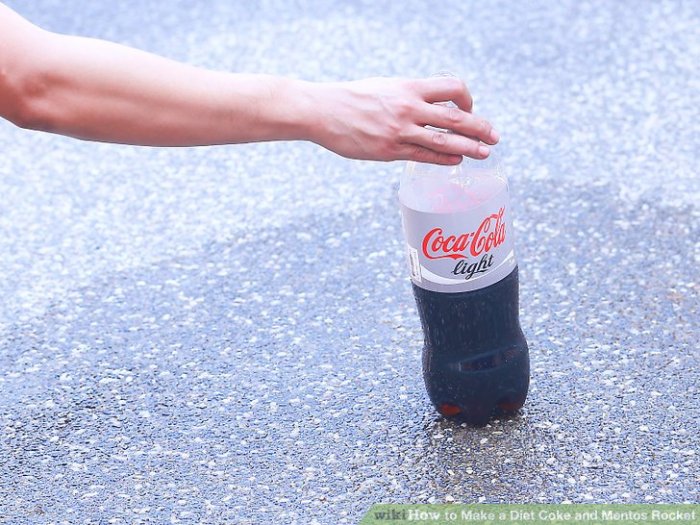
- A bottle of Diet Coke (regular Coke will not produce the same effect due to the differences in the carbonation levels)
- A bag of Mentos candies (various types will produce different results, as discussed later)
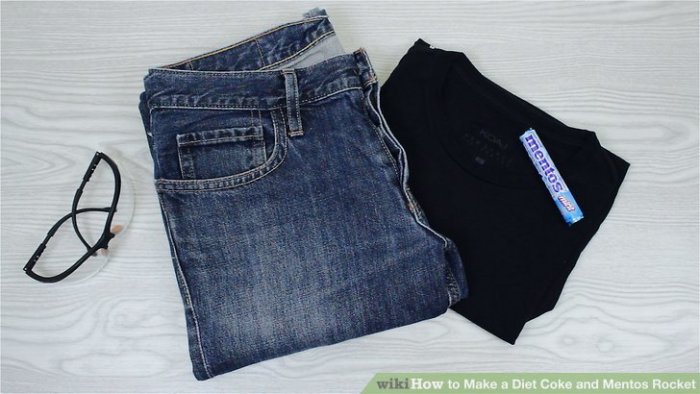
- Safety glasses or goggles
- A flat, stable surface (to minimize spills)
Safety Precautions
Safety is paramount during any scientific experiment. These precautions will help minimize risks:
- Eye Protection: Always wear safety glasses or goggles to protect your eyes from any splashes or flying debris. This is crucial, as the eruption can propel soda and other liquids.
- Clear Area: Ensure the experiment is performed in a well-ventilated area and a clear space. This avoids any potential spills and allows for a safe viewing experience.
- Supervision: If you are performing the experiment with children, adult supervision is essential to guide them through the safety procedures and monitor their actions.
- Controlled Environment: Conduct the experiment outdoors or in a designated area to contain any potential spills or mess.
Mentos Candy Types and Potential Effects
Different types of Mentos candies may affect the eruption differently. The surface texture of the candy plays a critical role.
Ever wanted to see a Diet Coke and Mentos rocket launch? It’s a classic science experiment, but for a more sophisticated approach, you could test your LCD display on your Android device using resources like Test Your LCD Display on Your Android. Understanding the physics behind the Diet Coke and Mentos explosion can lead to some fun experiments, whether you’re launching fizzy drinks or exploring screen functionality on your phone.
Ultimately, both projects involve a bit of scientific curiosity and a lot of fun!
| Mentos Type | Potential Effect on Eruption |
|---|---|
| Original Mentos | Generally produces a powerful and consistent eruption. |
| Mentos Peppermint | Might produce a slightly different eruption, depending on the specific surface texture. |
| Mentos Strawberry | Similar to Original Mentos in terms of eruption strength, but may differ slightly in visual appearance due to color. |
| Mentos Chocolate | May exhibit a somewhat subdued eruption due to the smooth surface of the chocolate coating. |
Experimental Procedures and Variations
The Diet Coke and Mentos rocket experiment, a classic demonstration of the principles of gas pressure and chemical reactions, offers a captivating visual spectacle. This section delves into the meticulous steps required for successful execution, explores the impact of varying ingredients, and provides methods for quantifying the resulting eruption.
Step-by-Step Procedure
The experiment’s success hinges on precise execution. Begin by ensuring the Diet Coke is chilled, as this impacts the rate of carbon dioxide release. Place the Diet Coke bottle on a stable surface. Carefully drop a handful of Mentos candies into the open mouth of the bottle. Observe the immediate eruption.
Document the eruption’s characteristics, including height and intensity. Repeat the experiment multiple times for reliable data collection.
Diet Coke Variations
Different brands and formulations of Diet Coke can affect the eruption. The carbonation level and the concentration of dissolved carbon dioxide play a crucial role in the experiment. For example, a Diet Coke with a higher carbonation level will generally produce a more vigorous eruption. This is because more carbon dioxide is dissolved, which is subsequently released as gas when the Mentos are introduced.
Variations in sugar content within different brands are less impactful on the eruption compared to the carbonation level.
Mentos Candy Variations
The type of Mentos candy can also influence the eruption’s intensity and height. The surface area of the Mentos candies plays a significant role. Rougher or more textured Mentos surfaces, for example, will often produce a more pronounced eruption. This is because the larger surface area provides more nucleation sites for the carbon dioxide bubbles to form.
The quantity of Mentos used is also critical; a larger quantity usually results in a more powerful eruption, as long as the surface area of the Mentos are considered.
Measuring Eruption Height
Precise measurement of the eruption height is essential for a comprehensive understanding of the experiment. Use a measuring tape or ruler, ensuring it’s placed perpendicular to the ground. Measure the vertical distance from the top of the bottle to the highest point reached by the expelled liquid. For more accurate results, multiple trials should be conducted, and the average height calculated.
Other methods include using a laser rangefinder, especially in cases where a visual measurement is difficult or unreliable. A digital camera with a clear scale in the background of the experiment can also provide precise data.
Summary of Experimental Setups and Outcomes
| Setup | Diet Coke | Mentos | Eruption Height (approx.) |
|---|---|---|---|
| Experiment 1 | Brand A, chilled | Original Mentos | 1.5 meters |
| Experiment 2 | Brand B, chilled | Rough-textured Mentos | 2 meters |
| Experiment 3 | Brand A, room temperature | Original Mentos | 1 meter |
| Experiment 4 | Brand B, chilled | Original Mentos | 1.8 meters |
Note: These are illustrative examples, and actual results may vary based on environmental conditions and the specific ingredients used. The table presents approximate values, highlighting the impact of variables on the outcome.
Ever tried making a Diet Coke and Mentos rocket? It’s a classic science experiment, and a surprisingly fun way to blow off some steam. Speaking of things that are explosive, check out this cool charity climb by Lupe Fiasco and Justin Timberlake scaling Mount Kilimanjaro! lupe fiasco and justin timberlake to scale mount kilimanjaro for charity It’s inspiring to see people using their platforms for good, and hopefully, that same energy can help inspire us to create some truly impressive rockets using just a few simple ingredients! Next time you’re feeling adventurous, give it a go.
Factors Affecting the Rocket’s Performance
The Diet Coke and Mentos rocket experiment, a classic demonstration of chemical reactions, provides a fun and engaging way to explore scientific principles. Understanding the variables influencing the eruption’s magnitude and height is crucial for optimizing the performance of this fizzy fountain. This exploration delves into the key factors that impact the rocket’s impressive display.The eruption’s force and height are not random occurrences; they are directly influenced by several controllable variables.
By manipulating these variables, we can observe and understand the intricate interplay of chemical reactions and physical forces at play. This allows us to predict and modify the outcome of the experiment.
Influence of Diet Coke Quantity
The amount of Diet Coke significantly impacts the eruption’s magnitude. A larger volume of Diet Coke provides more carbon dioxide gas for the reaction, leading to a more powerful eruption. This is analogous to filling a balloon with more air; the larger the amount of air, the more forceful the expansion. In essence, more Diet Coke translates to a more vigorous and forceful eruption.
For instance, using twice the amount of Diet Coke will likely result in a noticeably larger and more energetic eruption.
Role of Mentos Type and Quantity
The type of Mentos candy and its quantity plays a critical role in determining the eruption’s height. Different Mentos varieties may have varying surface textures, impacting the nucleation of carbon dioxide bubbles. A greater number of Mentos, particularly if they have a rougher surface, will create more nucleation sites, thus accelerating the release of carbon dioxide gas. This, in turn, will lead to a higher eruption.
The precise mechanism behind this surface area effect is still under investigation.
Impact of Room Temperature and Atmospheric Pressure
Room temperature and atmospheric pressure also affect the eruption’s force. Higher temperatures typically lead to faster chemical reactions, increasing the rate at which carbon dioxide is released. Similarly, lower atmospheric pressure reduces the resistance the gas encounters, resulting in a potentially higher eruption. For example, in a higher altitude location with lower atmospheric pressure, the eruption height might be greater than at sea level.
Effect of Bottle Opening Size
The opening size of the Diet Coke bottle directly influences the eruption’s power. A smaller opening restricts the escape of the carbon dioxide gas, causing a more concentrated and forceful eruption. This is similar to squeezing a balloon; the smaller the opening, the greater the pressure buildup and the stronger the expulsion. In contrast, a larger opening allows for a more rapid and less forceful release of gas.
Table of Factors Affecting Eruption Height and Force, Make a Diet Coke and Mentos Rocket
| Factor | Effect on Eruption Height | Effect on Eruption Force |
|---|---|---|
| Diet Coke Quantity | Increased quantity leads to a larger eruption | Increased quantity leads to a more forceful eruption |
| Mentos Type/Quantity | Rougher surface and more Mentos lead to higher eruption | Rougher surface and more Mentos lead to a more forceful eruption |
| Room Temperature | Higher temperature leads to a potentially higher eruption | Higher temperature leads to a potentially more forceful eruption |
| Atmospheric Pressure | Lower pressure leads to a potentially higher eruption | Lower pressure leads to a potentially more forceful eruption |
| Bottle Opening Size | Smaller opening leads to a potentially higher eruption | Smaller opening leads to a potentially more forceful eruption |
Safety Considerations and Precautions
The Diet Coke and Mentos eruption, while visually impressive, can be hazardous if safety precautions aren’t meticulously followed. Proper planning and adherence to safety measures are crucial to ensure a fun and safe experience for everyone involved. Understanding the potential risks and implementing appropriate safety procedures minimizes the chance of accidents.
Potential Safety Hazards
The experiment involves pressurized carbonated liquid and a rapid release of gas, potentially creating forceful ejection of liquid and fragments. Improper handling can result in injuries like burns from the hot liquid, cuts from broken glass or flying debris, and accidental ingestion of the solution. These hazards are more prevalent when conducting the experiment with large quantities of liquid.
Furthermore, the sudden release of pressure can be startling and cause minor physical trauma or injuries if not conducted in a controlled environment.
Appropriate Safety Measures
Implementing safety measures is paramount. A crucial safety measure is to conduct the experiment outdoors or in a well-ventilated area to prevent inhalation of the fumes and to allow for any potential debris to disperse safely. Wearing safety goggles is essential to protect eyes from splashing liquid or flying debris. Long sleeves and pants should be worn to minimize contact with any hot liquid.
Clear the area around the experiment setup to ensure there’s enough space for the eruption and prevent any injuries from flying debris. Never conduct this experiment indoors without proper ventilation and protective measures.
Essential Safety Equipment
A comprehensive list of safety equipment is necessary for a safe experiment. Safety goggles are indispensable for protecting eyes from potential splashing. Gloves are vital to protect hands from chemical burns and contact with the liquid. A lab coat or apron provides additional protection from any spilled liquid. A sturdy, leak-proof container is crucial for handling and storing the Diet Coke.
A designated, open outdoor area is required to prevent injury from potential debris and provide ample space for the experiment. Always have first-aid supplies readily available in case of minor injuries.
Procedure for Handling and Disposal of Used Materials
Proper handling and disposal of used materials are crucial for environmental safety. After the experiment, ensure the area is cleaned up thoroughly. Carefully pour any remaining liquid from the container into a designated waste container. The waste container should be labeled clearly as “chemical waste” to avoid any mix-up or accidental disposal with other types of waste.
Any glass or other debris should be carefully collected and disposed of properly. Cleaning the experiment setup with a mild detergent is recommended.
Safety Protocol Summary
| Safety Protocol | Description |
|---|---|
| Location | Outdoor or well-ventilated area. |
| Protective Gear | Safety goggles, long sleeves, pants, gloves. |
| Experiment Setup | Clear the area around the setup. |
| Waste Disposal | Designated waste container, label as chemical waste. |
| Emergency Preparedness | First-aid kit readily available. |
Variations and Extensions of the Experiment
The Diet Coke and Mentos eruption is a captivating demonstration of the principles of gas release and pressure. Beyond the basic experiment, numerous variations can be explored to delve deeper into the science behind the phenomenon. These modifications allow for a more thorough understanding of the variables that affect the reaction and the resulting eruption.Exploring different variations not only enriches the scientific learning experience but also provides opportunities for creative experimentation and problem-solving.
Understanding the effects of varying factors allows for predictions and insights into the dynamics of the reaction.
Alternative Carbonated Drinks
Different carbonated drinks have varying levels of dissolved carbon dioxide. This difference can impact the intensity and duration of the eruption. Experimentation with different brands and types of soda can provide insights into how the concentration of dissolved gas influences the outcome. For example, a drink with a higher carbonation level might yield a more forceful eruption.
Alternative Containers
The shape and size of the container play a significant role in the experiment’s outcome. Utilizing different containers, such as narrow-necked bottles or wider-mouthed ones, can lead to varied eruption heights and patterns. Similarly, varying the volume of the container will impact the overall magnitude of the reaction. A smaller bottle might produce a less powerful eruption compared to a larger one.
Different Types of Mentos
The surface area and composition of the Mentos candy can affect the reaction. Different types of Mentos, or even different batches of the same type, may produce different eruption characteristics. For example, Mentos with a rougher surface might provide a larger surface area for gas to interact with, potentially leading to a more substantial eruption.
Application in Understanding Scientific Concepts
The Diet Coke and Mentos rocket experiment offers a practical application of several scientific principles. It provides a hands-on demonstration of gas pressure, surface tension, and the concept of reaction rates. Observing the reaction and analyzing the variables involved provides a tangible way to learn about these fundamental concepts. For instance, students can relate the experiment to real-world phenomena such as the eruption of volcanoes or the fizzing of effervescent tablets.
The experiment helps students visualize the effect of different factors on the outcome.
Visual Representation and Illustrations
The Diet Coke and Mentos eruption is a captivating demonstration of the interplay between chemical reactions and physical forces. Visualizing the process, understanding the underlying chemistry, and illustrating the forces at play are crucial to appreciating the spectacle. This section will delve into the detailed mechanics of the eruption, from the initial contact to the final expulsion.
Eruption Process Stages
The eruption follows a predictable sequence of events. Initially, the Mentos candies introduce a large surface area to the Diet Coke solution. This triggers a rapid reaction. Next, carbon dioxide gas is released from the solution, creating an expanding pressure. The pressure builds up quickly, pushing the solution and the gas upwards through the opening.
This process continues as more gas is released, resulting in a powerful eruption. The entire eruption typically takes a few seconds, with the peak of the eruption visible as the most dramatic stage.
Chemical Reactions
The reaction between Diet Coke and Mentos is a complex interplay of several chemical processes. The Mentos candies, primarily containing sugar and other ingredients, act as nucleation sites for the carbon dioxide bubbles in the soda. The high surface area of the Mentos allows for a rapid increase in the number of nucleation points. Diet Coke, a carbonated beverage, contains dissolved carbon dioxide under pressure.
The introduction of the Mentos disrupts the equilibrium, causing the carbon dioxide to rapidly escape as gas bubbles. This rapid expansion of gas generates the force that propels the mixture upwards.
CO2(aq) → CO 2(g)
This reaction illustrates the conversion of dissolved carbon dioxide to gaseous carbon dioxide.
Forces at Play Infographic
The infographic will depict a diagrammatic representation of the forces involved. The key components to illustrate would include the pressure gradient from the inside of the bottle to the outside. A graphic would highlight the upward force generated by the expanding carbon dioxide gas, juxtaposed with the downward force of gravity. An arrow diagram indicating the direction of the ejected mixture would also be incorporated.
The relative magnitudes of these forces would be shown through varying arrow lengths and shading.
Experimental Setup Diagram
The experimental setup is straightforward. A diagram will clearly show the components: a standard 2-liter bottle, a container of Diet Coke, a collection of Mentos candies, and the measurement apparatus to gauge the eruption height. Clear labeling of the components (bottle, Diet Coke, Mentos, and height measurement device) will ensure clarity. The diagram should also include the approximate dimensions of the bottle, the candies, and the height of the eruption.
Images of Various Stages
[Image 1: A close-up of Mentos candies dropped into a bottle of Diet Coke.][Image 2: The initial stage of the eruption, showing the expanding mixture.][Image 3: The peak of the eruption, with a large quantity of mixture ejected.][Image 4: The final stage of the eruption, with minimal mixture remaining in the bottle.][Image 5: A side view of the eruption, showing the upward trajectory of the ejected mixture.]
Analyzing Data and Results
Rocket science, it turns out, isn’t just about rockets! It’s about meticulous observation, careful measurement, and insightful analysis of the data collected. This section dives into the nitty-gritty of how to effectively analyze the results of your Diet Coke and Mentos rocket experiments, allowing you to draw meaningful conclusions from your observations.The key to a successful experiment lies not just in the eruption itself, but in understanding thewhy* behind it.
By systematically recording and analyzing the height and force of the eruption, we can uncover patterns and relationships that reveal the underlying scientific principles at play.
Data Collection Procedure
Thorough data collection is crucial for accurate analysis. To ensure reliable results, precisely measure the height of the eruption and the force exerted by the rocket. Use a measuring tape or a meter stick to measure the vertical distance from the launch platform to the highest point reached by the rocket. The force of the eruption can be estimated using a force gauge.
This allows for a more comprehensive understanding of the experiment.
Data Organization
Organize your data in a clear and concise manner for easy analysis. A table is ideal for this purpose. Include columns for the trial number, the amount of Diet Coke used, the amount of Mentos used, the height of the eruption, and the estimated force of the eruption.
Data Analysis Methods
Analyzing data involves looking for patterns and trends. Calculate the average height and force across multiple trials. Plot the height of the eruption against the number of Mentos used. This visual representation often reveals significant trends.
Identifying Patterns and Relationships
By examining the data, look for correlations between the variables. Does a greater number of Mentos consistently lead to a higher eruption height? Does the type of Diet Coke affect the results? These patterns reveal insights into the factors influencing the rocket’s performance.
Comparative Analysis of Experimental Trials
To gain a deeper understanding, compare the data from different experimental trials. Create a table that displays the results from each trial, along with the corresponding variables. This table will allow for a direct comparison and aid in identifying consistent trends or discrepancies across various experiments.
| Trial | Diet Coke (ml) | Mentos | Eruption Height (cm) | Estimated Force (N) |
|---|---|---|---|---|
| 1 | 350 | 20 | 150 | 0.5 |
| 2 | 350 | 25 | 180 | 0.6 |
| 3 | 350 | 30 | 200 | 0.7 |
| 4 | 350 | 35 | 220 | 0.8 |
This table shows a simple example of how data can be organized. More trials and variations would provide a more robust analysis. Careful observation of the data in a table like this will allow you to see the impact of variables on the rocket’s performance.
Last Point
In conclusion, creating a Diet Coke and Mentos rocket is a captivating way to understand scientific principles like carbonation and reaction rates. We’ve explored the steps involved, the factors that influence the eruption, and the crucial safety measures to ensure a fun and safe experiment. Remember to always prioritize safety and have fun experimenting!