Bach’s Six Cello Suites: A Comprehensive History and Guide to the Essential Recordings

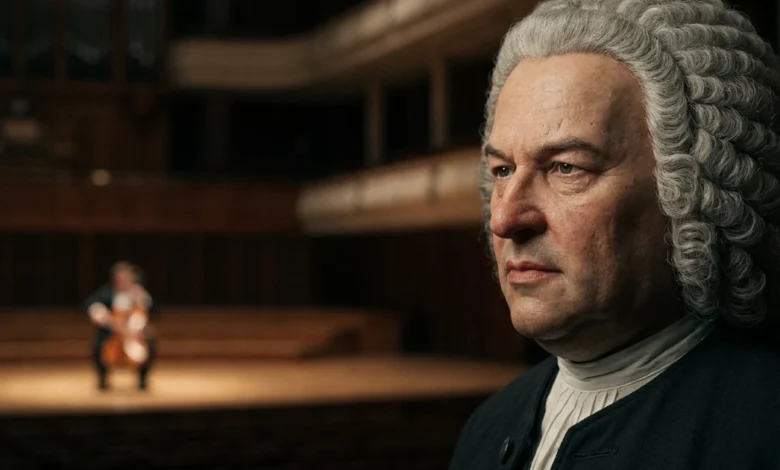
The six suites for unaccompanied cello by Johann Sebastian Bach represent one of the most profound achievements in the history of Western classical music, standing as a definitive pillar of the solo instrumental repertoire. Composed during a remarkably productive period in Bach’s career between 1717 and 1723, these works were created while the composer served as the Kapellmeister at the court of Anhalt-Köthen. Unlike his later tenure in Leipzig, where his duties were dominated by the production of sacred cantatas and liturgical music, the Köthen court was Calvinist, meaning there was no requirement for elaborate church music. This allowed Bach to focus his creative energies on secular chamber music, producing masterpieces such as the Brandenburg Concertos, the Well-Tempered Clavier, and the Sonatas and Partitas for solo violin. For nearly two centuries, these cello suites remained largely in the shadows, viewed primarily as technical exercises for students until a transformative discovery in the late 19th century elevated them to their current status as the "Old Testament" of the cello.
The Köthen Period and the Genesis of the Suites
The historical context of the suites is inextricably linked to the musical environment of the Köthen court and its patron, Prince Leopold. The Prince was an avid musician himself, playing the violin, viola da gamba, and harpsichord, and he maintained an exceptionally high-standard orchestra of approximately 18 musicians. Many of these players had been recruited from the disbanded Prussian court orchestra in Berlin, providing Bach with a virtuoso ensemble for which to write.
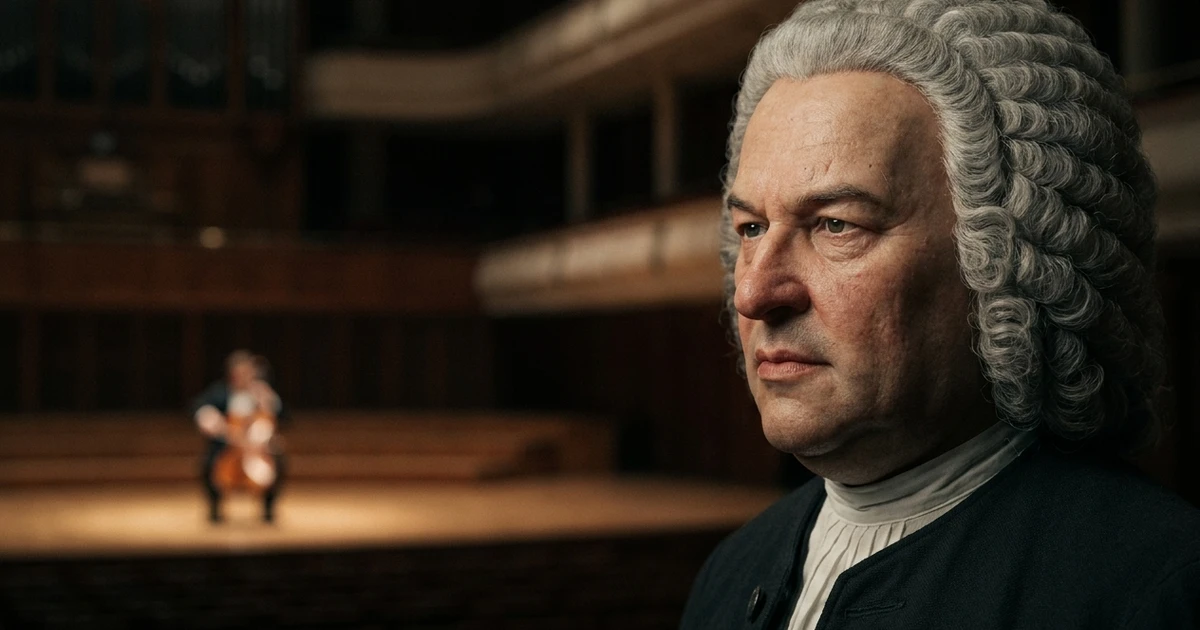
It is widely believed that Bach composed the suites for either Christian Bernhard Linigke or Christian Ferdinand Abel, the lead cellists at the court. The suites (BWV 1007–1012) demonstrate an intimate understanding of the cello’s physical capabilities and its potential for "implied polyphony"—a technique where a single melodic line suggests multiple voices and harmonic depth through the use of arpeggios and strategic register shifts.
The structural blueprint of the suites follows the traditional Baroque dance suite format, yet Bach expands the emotional and technical boundaries of each movement. Every suite begins with a free-form Prelude, followed by a standardized sequence of stylized dances: the Allemande, Courante, Sarabande, and Gigue. Between the Sarabande and the Gigue, Bach inserted "galanteries"—optional dances that vary between the suites, such as Minuets, Bourrées, or Gavottes.
The Timeline of Rediscovery: From Obscurity to the Concert Hall
For many years after Bach’s death in 1750, the suites were relegated to pedagogical use. Unlike the solo violin works, which enjoyed a slightly higher profile, the cello suites were considered too dry or technically cumbersome for public performance.
1717–1723: Bach composes the six suites in Köthen.
1824: Louis-Pierre Norblin publishes the first printed edition of the suites in Paris.
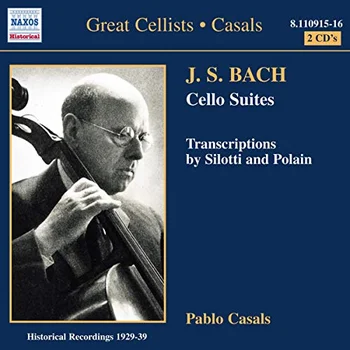
1889: A thirteen-year-old Pablo Casals discovers a tattered copy of the Grützmacher edition in a thrift shop in Barcelona. This event is cited by musicologists as the turning point for the suites’ legacy.
1901: Casals begins performing the suites in public, defying the conventional wisdom that they were merely "studies."
1936–1939: Casals records the first complete cycle of the suites at Abbey Road Studios in London and in Paris, cementing their status as masterpieces.
1979: Anner Bylsma releases the first complete recording on a period-accurate Baroque cello, sparking a revolution in historically informed performance (HIP).
The lack of an original autograph manuscript by Bach has created a unique challenge for performers. The primary source is a copy made by his second wife, Anna Magdalena Bach, around 1727–1731. Because her manuscript contains few indications for phrasing, dynamics, or articulation, every cellist must essentially become an editor, making personal decisions that significantly alter the character of the music.
Technical Innovations and Variations
While the first four suites are written for a standard four-string cello tuned in fifths (C-G-D-A), the final two suites introduce significant technical variations. The Fifth Suite in C Minor requires "scordatura," where the highest string is tuned down a whole step to G, creating a darker, more resonant tonal palette and facilitating specific chords. The Sixth Suite in D Major is even more distinct; it was written for a five-string instrument (likely a violoncello piccolo), which includes an additional high E string. This allows for an "orchestral" brightness and a virtuosic range that is difficult to replicate on a modern four-string instrument.
Essential Recordings: A Comparative Analysis
The recorded history of the Bach Cello Suites offers a fascinating look at how musical taste and scholarship have evolved over the last century. From the romanticism of the early 20th century to the lean, rhythmic focus of the modern era, the following recordings are considered the benchmarks of the discography.
The Historical Foundation: Pablo Casals
Pablo Casals’ recording remains the most significant in history. Recorded between 1936 and 1939, it captured the suites at the moment they were being introduced to the wider world. Casals treats the music with a rhetorical, speech-like quality. His playing is characterized by a rugged intensity and a flexible approach to rhythm (rubato) that gives the dances a living, breathing pulse. While modern listeners might find the audio quality dated or some of the faster passages slightly blurred, the emotional weight of his interpretation remains unparalleled. He famously practiced the suites for twelve years before ever performing one in public, and that deep familiarity is evident in every bar.
The Cultured Modern Standard: Pierre Fournier
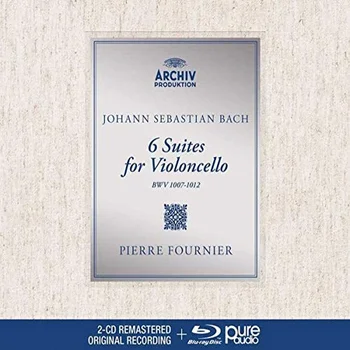
If Casals represents the "earthy" side of Bach, Pierre Fournier represents the "aristocratic." His 1960 recording for Archiv is often cited as the perfect entry point for new listeners. Playing on a modern cello with a refined, singing tone, Fournier avoids the extremes of tempo or eccentricity. His phrases are long and elegant, and his technique is impeccably smooth. This recording established the "French school" of Bach playing—poised, balanced, and profoundly musical without ever feeling over-sentimental.
The Muscular Approach: Heinrich Schiff
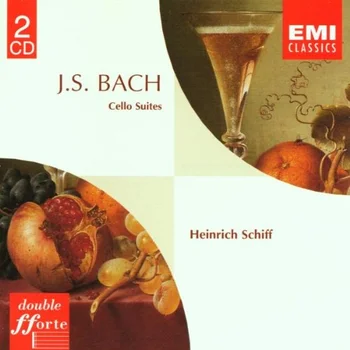
Heinrich Schiff’s 1984 recording offers a more robust alternative to the elegance of Fournier. Schiff’s tone is thick and focused, and his interpretations are marked by a strong sense of architectural structure. He isn’t afraid to let the bow "bite" the string, particularly in the more aggressive movements like the Gigues. This version is particularly favored by those who prefer a modern cello sound but want more "backbone" and energy than the smoother mid-century recordings provide.
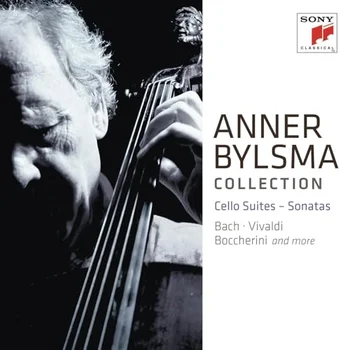
The Period Instrument Revolution: Anner Bylsma
Anner Bylsma’s 1979 recording was a watershed moment. By using gut strings, a Baroque bow, and a cello without an endpin (held between the legs), Bylsma stripped away the heavy vibrato and long-lined romanticism of his predecessors. The result is a sound that is transparent, agile, and highly rhythmic. Bylsma focuses on the "dance" aspect of the suites, utilizing the shorter, lighter strokes of the Baroque bow to create a sense of lift and air. This recording paved the way for all subsequent "historically informed" versions.
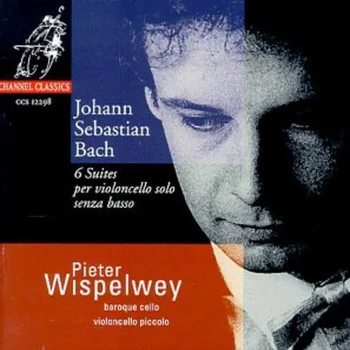
The Virtuosic Flare: Pieter Wispelwey
Pieter Wispelwey has revisited the suites multiple times, but his period-instrument accounts are particularly noted for their extroversion. Wispelwey brings a sense of improvisational freedom to the music, treating the ornaments and cadenzas with a playful, almost daring spirit. His use of a five-string cello for the Sixth Suite allows for a brilliant, ringing clarity in the high register that is often lost on modern instruments.
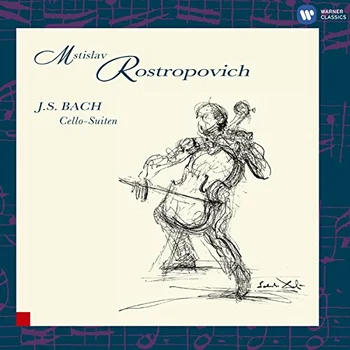
The Grand Drama: Mstislav Rostropovich
Recorded in the early 1990s in the cavernous acoustics of the Basilique Sainte-Madeleine in Vézelay, France, Rostropovich’s set is a monument to the "grand style." He waited until he was 64 years old to record the suites, feeling that he needed a lifetime of experience to do them justice. His interpretation is deeply personal, often slow and meditative, treating the music as a spiritual autobiography. While some critics find his approach too heavy for Baroque music, the sheer scale of his vision and the beauty of his tone make it an essential, if polarizing, document.
The Spiritual Journey: Steven Isserlis
Steven Isserlis views the six suites as a narrative arc—a spiritual journey that moves from the innocence of the First Suite to the "resurrection" of the Sixth. His playing is notable for its lack of ego; he uses a light touch and minimal vibrato, allowing the natural resonance of the cello to speak. His recording is praised for its "searching" quality, particularly in the Sarabandes, which he treats with a hushed, prayer-like reverence.
The Fluidity of Jean-Guihen Queyras
Jean-Guihen Queyras provides a bridge between the period and modern styles. Using a modern setup but informed by Baroque scholarship, his playing is exceptionally lucid. He treats each suite as a distinct "world," emphasizing the unique character of each key. His sense of timing is flexible but always grounded in a firm pulse, making his account feel like a natural, intimate conversation between the performer and the listener.
The Resonant Authenticity: David Watkin
David Watkin’s recording is a standout in the HIP category. Playing on gut strings with a profound understanding of Baroque counterpoint, Watkin manages to make the music sound both scholarly and spontaneous. His use of an original five-string cello for the Sixth Suite provides a historical resonance that is rare in modern recordings, capturing the specific "sheen" that Bach likely heard in the Köthen chapel.
The Late-Career Reflection: Yo-Yo Ma
Yo-Yo Ma has recorded the suites three times (1983, 1997, and 2018). His final version, "Six Evolutions," is the work of a master in his twilight years. It is more stripped-down and raw than his earlier, more polished versions. Ma embraces the physical sounds of the instrument—the scratch of the bow, the breath of the player—to create an atmosphere of intense intimacy. It is a storyteller’s Bach, focused on the narrative arc of a long life spent with these notes.
Broader Impact and Implications
The legacy of Bach’s Cello Suites extends far beyond the concert hall. They have become a universal symbol of human resilience and introspection. The First Suite Prelude is one of the most recognizable pieces of music in the world, appearing in countless films, commercials, and public memorials.
From a technical standpoint, the suites redefined the cello’s role in the musical hierarchy. They proved that the instrument, previously viewed mainly as a bass-line provider (basso continuo), was capable of carrying an entire evening of complex, polyphonic music alone. This paved the way for the great solo works of the 19th and 20th centuries by composers like Kodály, Britten, and Ligeti.
In the contemporary era, the suites continue to be a site of experimentation. Cellists today frequently collaborate with dancers, visual artists, and even electronic musicians to reinterpret Bach’s work. Despite the hundreds of recordings and thousands of performances given each year, the suites remain "open" music—a series of questions without fixed answers, allowing each generation of cellists to find their own voice within Bach’s enduring frame. The suites do not merely represent the summit of the cello repertoire; they represent a fundamental inquiry into the nature of melody, harmony, and the human spirit.