

Curl Your Hair With Socks sets the stage for this enthralling narrative, offering readers a glimpse into a story that is rich in detail and brimming with originality from the outset. This unconventional method, potentially tracing its roots to DIY beauty practices, allows for a fascinating exploration of hair styling using everyday household items. We’ll delve into the process, examining different sock types, preparation techniques, and maintenance strategies.
Discover how to achieve diverse hairstyles using this intriguing approach, exploring its variations and potential alternatives.
The method involves wrapping hair around socks of varying materials, creating curls of various sizes and shapes. This guide covers everything from choosing the right socks to achieving the desired look, emphasizing safety precautions and aftercare routines. We’ll also discuss alternative methods and variations, tailored for different hair types, making it a versatile approach for those looking to experiment with DIY styling.
Introduction to the Method
Sock-curling, a relatively new yet surprisingly effective hair-styling technique, involves using socks to create defined curls or waves in hair. While its exact origins are unclear, its popularity has risen in recent years, especially among those seeking a more affordable and accessible alternative to professional hair-styling methods. This method often proves a time-saving solution, especially for those with thick or voluminous hair.This technique leverages the unique properties of various fabrics, including the flexibility and shape-holding capacity of certain types of socks, to create intricate hair patterns.
The method’s effectiveness depends on the proper selection of socks and the meticulous execution of the steps involved. Understanding the basics and common materials involved can significantly enhance the results.
General Steps
The process of curling hair with socks involves a series of steps, carefully designed to achieve the desired curl pattern. A crucial aspect is the selection of the appropriate materials, which can significantly impact the outcome. Following these steps ensures a successful curl pattern and a lasting result.
- Preparation is key. Section the hair into manageable portions. Proper preparation ensures that the curls form evenly and that each section is effectively treated.
- Choosing the Right Socks: A variety of socks can be used, with different textures and materials influencing the curl pattern. Choosing the right socks for your hair type and desired curl pattern is crucial.
- Wrapping and Securing: Carefully wrap each section of hair with a sock, ensuring a snug but not overly tight fit. The wrapping technique determines the final curl shape and should be adapted to the specific hair type.
- Drying and Cooling: Allowing the hair to dry or cool in the wrapped state allows the curls to set. The time needed for drying depends on the hair type and the chosen sock material. Different hair types react differently to this method.
- Removal: Carefully remove the socks and style the hair as desired. Avoid tugging or pulling on the curls while removing the socks to prevent breakage.
Materials Used
This method relies on a few key materials, each playing a specific role in the process. The selection of appropriate materials directly influences the curl pattern and overall result.
| Materials | Description | Time Estimation (Approximate) |
|---|---|---|
| Socks (various types) | Cotton, nylon, or wool socks, with different textures and thickness, can all produce different curl patterns. | Variable (depends on drying time) |
| Hair clips/pins | Used to secure the hair sections and hold the sock wraps in place. | 5-10 minutes |
| Hairspray (optional) | Used to set the curls and maintain the shape. | Variable (depends on drying time) |
| Towel | Useful for absorbing excess moisture from the hair after drying. | Variable (depends on drying time) |
“The choice of sock material plays a significant role in determining the type of curl pattern achieved. Cotton socks, for instance, are known to produce more defined curls, while nylon socks might yield softer, less structured curls.”
Different Types of Socks and Fabrics
Choosing the right socks is crucial for achieving the desired curl pattern and preventing damage to your hair. Different materials react differently with your hair, influencing the final curl shape and overall results. Understanding the properties of various fabrics is key to optimizing the sock-curling technique.Different sock materials offer varying levels of stretch, friction, and heat retention, all of which play a role in how your hair curls.
The type of sock you use can directly impact the curl definition, tightness, and overall style you achieve.
Sock Material Impact on Curl Pattern
The material of the sock significantly influences the curl pattern and outcome. Cotton, wool, and silk each present unique characteristics that affect the curl formation.
Cotton socks, known for their softness and breathability, often create loose, wavy curls. Their gentle texture allows for a more relaxed curl, ideal for those seeking a less defined curl. Wool socks, due to their natural elasticity and friction, generally produce tighter, more defined curls, as the friction from the wool on the hair helps to create a more pronounced curl pattern.
Silk socks, with their smooth surface and natural properties, create a different type of curl, often producing voluminous and bouncy curls. The smooth texture of silk minimizes friction and allows the curls to maintain their shape.
Comparison of Sock Materials
| Sock Material | Curl Pattern | Advantages | Disadvantages |
|---|---|---|---|
| Cotton | Loose, wavy curls | Soft, breathable, generally affordable | May not create the tightest curls, less friction |
| Wool | Tighter, defined curls | Good elasticity, more friction, often holds curl better | Can be scratchy, may cause hair dryness if not properly moisturized |
| Silk | Voluminous, bouncy curls | Smooth texture, minimizes friction, potentially gentle on hair | May not create as tight curls as wool, more expensive than cotton or wool |
Ultimately, the best sock material for you will depend on your desired curl type and hair texture. Experimentation is key to finding the optimal sock type for achieving your perfect curls.
Preparation and Styling Techniques
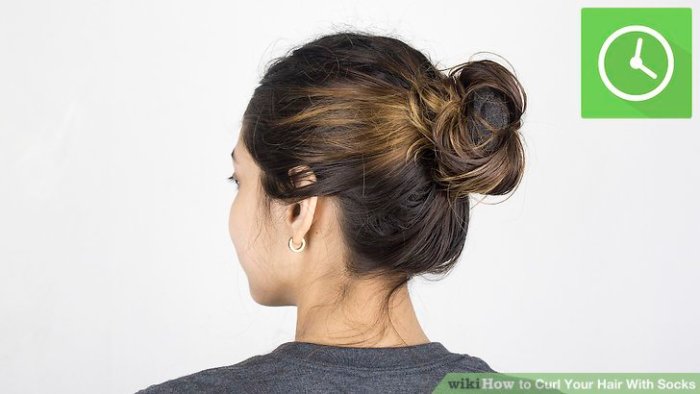
Sock-curling isn’t just about slipping socks over your hair; it’s a meticulous process that yields impressive results with the right preparation and technique. Understanding the pre-styling steps and the nuances of wrapping your hair around socks is key to achieving the desired curl pattern and longevity. Proper preparation minimizes frizz and maximizes the sock-curl’s effectiveness.The styling process encompasses the actual wrapping of hair around the socks and subsequent handling.
Different wrapping methods and subsequent styling techniques will produce varying curl patterns and hold. Experimentation with these techniques is essential for finding the best results for your hair type and desired look.
Preparing Your Hair
Thorough preparation before applying the socks is crucial for achieving the best curls. This involves cleansing and conditioning your hair appropriately, ensuring it’s ready for the sock wrapping process. Avoid using products with heavy silicones, as they can interfere with the sock’s ability to create curls.
- Deep Condition: A deep conditioning treatment is recommended at least 24 hours before sock-wrapping. This helps to hydrate and soften the hair, reducing breakage and enhancing curl definition.
- Cleanse: Wash your hair with a sulfate-free shampoo to remove product buildup and oils. A clarifying shampoo can be used to remove product buildup if necessary.
- Detangle: Gently detangle your hair with a wide-tooth comb or your fingers, starting from the ends and working your way up to the roots. This prevents breakage and ensures even distribution of the sock wrapping.
- Sectioning: Divide your hair into manageable sections. The smaller the sections, the tighter and more defined the curls will be. This ensures even heat distribution and curl formation throughout your hair.
Sock Wrapping Techniques
Different wrapping methods will result in different curl patterns. Experimentation is key to discovering your preferred technique.
- The Classic Wrap: This method involves wrapping sections of hair around the sock, securing the end with a hair tie. This produces relatively large curls.
- The Double Wrap: For a tighter curl, wrap a section of hair twice around the sock, creating a double layer of hair around the sock. This is a versatile technique that can result in medium to tight curls.
- The Twisted Wrap: Twist a section of hair before wrapping it around the sock. This can enhance the curl definition and create a more structured curl. This technique produces tight, spiral-shaped curls.
Styling Methods
Once your hair is wrapped, you can style it in a variety of ways, depending on the desired look.
- Overnight Styling: Leaving the sock wraps in overnight allows for maximum curl formation. Wake up to defined, bouncy curls that are ready to be styled further.
- Daytime Styling: For a quicker process, you can remove the wraps in the daytime and style your curls using your preferred techniques. This can involve techniques like braiding or using hairpins.
- Styling with Heat: Applying a low heat setting to the curls after removing the socks can enhance the definition and texture. Using a diffuser can help distribute heat evenly.
Troubleshooting
- Frizz: If your hair is prone to frizz, ensure your hair is thoroughly conditioned before wrapping and avoid excessive manipulation of the curls after removal.
- Hair breakage: If breakage is an issue, gently detangle and avoid using excessive force while wrapping or removing the socks.
Maintenance and Aftercare
Maintaining your sock-curled hair requires a little extra love and attention. Just because you’ve achieved those gorgeous curls doesn’t mean the work is over. Proper aftercare will help your curls stay defined, bouncy, and healthy, extending the lifespan of your beautiful style.The key to long-lasting sock curls lies in understanding how to best care for your hair after the sock-styling process.
Ever tried curling your hair with socks? It’s a surprisingly effective method, but sometimes, like when you’re trying to sleep through a thunderstorm, you just need a little extra help. Learning how to sleep through a thunderstorm can be just as important as the right sock-curling technique! Sleep Through a Thunderstorm might give you some tips on getting some peace and quiet, even if you have to wake up and check the weather forecast, and that will be great for your sock-curling session the next day.
So, whether you’re aiming for perfect curls or just a good night’s sleep, remember to prep properly!
This includes everything from detangling to product selection, ensuring your curls stay bouncy and defined.
Best Practices for Maintaining Sock Curls
Maintaining the beautiful curls achieved with the sock method involves a few key practices. Firstly, avoid harsh shampoos and conditioners. Opt for products specifically formulated for curly hair. Secondly, ensure you’re using the right amount of product. Too much can weigh down the curls, while too little may leave them looking dry and frizzy.
Finally, embrace the art of gentle handling. Avoid rough towel-drying and aggressive brushing, which can damage and disrupt your curls.
I’ve been experimenting with curling my hair with socks lately, and it’s surprisingly effective! To really enhance the whole experience, consider setting up a romantic bath – like the one detailed in this guide on Set up a Romantic Bath. The relaxing atmosphere helps create a perfect backdrop for styling those lovely curls. After all, even simple things like curling your hair with socks can be elevated with a little pampering!
Possible Issues and Solutions
Certain issues can arise during the sock-curling process or aftercare. Knowing how to address them quickly and effectively is crucial for maintaining your curls’ health and shape.
- Frizz: Excessive frizz can be a result of insufficient moisture or the use of harsh products. Use a moisturizing conditioner and avoid harsh combing or brushing, particularly when hair is wet.
- Dryness: Dry hair is prone to breakage and can affect the curl definition. Use a deep conditioning treatment weekly, focusing on the ends, which often dry out faster. Avoid excessive heat styling.
- Tangling: Tangling is a common issue with curly hair. Use a wide-tooth comb or your fingers to gently detangle hair when it’s wet or after applying a leave-in conditioner.
- Product Buildup: Over time, product buildup can lead to limp curls and a dull appearance. Use a clarifying shampoo every few weeks to remove product residue.
Detangling and Styling After Removal
Detangling and styling your hair after removing the socks is essential for maintaining those beautiful curls. The right technique can prevent breakage and keep your curls looking their best.
- Gentle Detangling: Use a wide-tooth comb to gently detangle your hair while it’s still wet. Start from the ends and work your way up to the roots, avoiding any harsh tugging or pulling.
- Product Application: Apply a curl-defining cream or mousse to your wet hair, focusing on the ends to add moisture and prevent frizz.
- Styling: Gently scrunch your hair with your hands to set the curls and enhance the definition. Avoid excessive brushing or heat styling, which can cause damage and make your curls appear frizzy.
Recommended Products
Several products can significantly enhance the sock-curling process and aftercare. These products help to keep your curls hydrated, defined, and healthy.
- Leave-in conditioner: A leave-in conditioner is an essential for maintaining moisture and preventing dryness, especially for curly hair.
- Curl cream or mousse: These products help define curls, provide hold, and prevent frizz.
- Hair oil: A lightweight hair oil can help add moisture and shine to your curls, keeping them healthy and hydrated.
- Wide-tooth comb: A wide-tooth comb is a crucial tool for detangling wet curly hair without causing breakage.
Maintenance Tips Summary
This table summarizes various maintenance tips and their associated benefits:
| Maintenance Tip | Benefit |
|---|---|
| Gentle detangling | Reduces breakage and maintains curl definition |
| Regular moisturizing | Keeps hair hydrated and prevents dryness |
| Use of specific products | Enhances curl definition, provides hold, and prevents frizz |
| Avoiding harsh towel drying | Reduces friction and prevents damage |
| Avoiding excessive heat styling | Maintains curl health and prevents frizz |
Variations and Alternatives
Socks aren’t the only way to achieve beautiful curls! Exploring alternative methods and variations in wrapping techniques allows for greater control and customization, catering to diverse hair types and desired styles. This section delves into several options beyond the classic sock method, enabling you to find the perfect curling technique for your unique needs.
Alternative Curling Methods
Beyond socks, several methods produce comparable curls. Braiding, twisting, and using heat tools like curling irons or wands offer diverse options. Each approach yields distinct results, impacting the curl’s definition and longevity.
Variations in Wrapping Techniques
Different wrapping techniques influence the curl’s shape and tightness. A tighter wrap generally yields more defined curls, while a looser wrap results in softer, less defined curls. Experimentation is key to discovering the ideal wrap for your hair and desired style.
- The French Twist Wrap: This method involves twisting sections of hair before wrapping, creating a more structured and defined curl. This technique is particularly beneficial for achieving tighter curls with more volume.
- The Double Wrap: Employing two layers of wrapping material, like socks or scarves, can enhance curl definition and prevent frizz. This technique is useful for those seeking increased hold and control.
- The “Donut” Method: Using a hair donut or similar tool, along with wrapping material, creates voluminous curls and can be used for creating a voluminous style.
Modifications for Different Hair Types
Hair type significantly impacts the sock curling method’s effectiveness. Understanding how to adapt the technique for various hair types—thick, thin, curly, or straight—is crucial for achieving the best results.
- Thick Hair: For thick hair, consider using multiple socks or multiple layers of wrapping material to provide adequate tension for curling. Applying a heat-safe styling product before wrapping can aid in achieving the desired curl definition.
- Thin Hair: Thin hair might benefit from a looser wrap and shorter wrapping times to avoid flattening the curls. Experimenting with different wrapping materials and techniques is essential to find the best approach for your hair type.
- Curly Hair: For curly hair, the sock method can enhance the natural curl pattern, adding definition or volume. Adjust the wrap based on your desired curl type, ensuring the wrapping material doesn’t overly restrict the natural curl.
- Straight Hair: Straight hair often requires more aggressive wrapping and longer wrapping times to create substantial curls. Employing multiple socks or other materials, combined with heat-safe styling products, can maximize the curling effect.
Adapting the Technique for Hairstyles
The sock curling method can be adapted to various hairstyles, allowing you to tailor the curls to your desired look.
Ever tried curling your hair with socks? It’s a surprisingly effective hack, but sometimes you need a little extra help managing your spreadsheets. Fortunately, you can easily edit Google Sheets on mobile, making it much easier to stay on top of things, like calculating the perfect sock-curling time. This newfound mobile spreadsheet accessibility really complements the sock-curling process, making sure you don’t miss a beat! Edit Google Sheets on Mobile Back to the sock-curling, though – it’s all about the right sock type and technique.
- Beach Waves: A looser wrap, combined with a shorter wrapping time, can produce beach waves. Using a variety of wrapping techniques, such as the French twist wrap, can create the desired style.
- Bouncy Curls: Employing a tighter wrap, along with heat-safe styling products, can produce bouncy curls. The addition of a hair donut or similar tool can further contribute to achieving this effect.
- Volume Boost: A double wrap, combined with wrapping materials like scarves, can boost volume. The addition of styling products, such as volumizing sprays, can enhance the effect.
Comparison Table of Variations and Alternatives
| Method | Advantages | Disadvantages |
|---|---|---|
| Sock Curling | Versatile, relatively inexpensive, easy to learn | Can be time-consuming, may require multiple socks |
| Braiding | Creates defined curls, relatively quick | Can be difficult for beginners, may not be suitable for all hair types |
| Twisting | Versatile, creates various curl patterns | May not be as effective for creating large curls |
| Curling Irons/Wands | Fast, precise curls | Requires heat, potential for damage if not used correctly |
Safety and Precautions: Curl Your Hair With Socks
Sock-curling, while a fun and potentially effective method, demands cautious attention to safety. Proper technique and understanding of potential risks are crucial to ensuring a positive and healthy hair-styling experience. This section Artikels the precautions to take to avoid any damage to your hair or scalp.Proper hair care is paramount during the sock-curling process. Hair, especially when heat-treated, is susceptible to damage if not adequately cared for.
Maintaining a healthy hair routine, incorporating moisturizing treatments, and ensuring the hair is in good condition before and after the curling process are critical aspects of safety.
Potential Risks and Hazards
Sock curling, like any hair styling method, carries potential risks. Improper sock selection, excessive heat, or prolonged styling can lead to heat damage, dryness, and breakage. The tightness of the socks can also cause pulling or breakage, if not carefully monitored. In extreme cases, hair loss might occur due to the combination of tight socks and improper care.
The type of fabric and its ability to retain heat can also affect the risk of damage.
Importance of Proper Hair Care
Maintaining healthy hair is essential before, during, and after the sock-curling process. A healthy scalp and hair are better equipped to withstand the heat and pressure involved. Moisturizing the hair, using appropriate heat protectants, and using a quality hair care regimen can help mitigate the risks. Hair that is already dry, damaged, or weakened is more prone to breakage during this process.
Heat Tool Safety Precautions
Using heat tools with the sock-curling method necessitates extra care. Never apply direct heat from a hairdryer or curling iron to the socks. The fabric can overheat and cause burns, especially with prolonged exposure. Always use a low to medium heat setting and keep a safe distance from the hair when using heat tools. Using a heat protectant spray before applying heat is recommended to shield the hair from extreme temperatures.
Avoiding Hair and Scalp Damage
To prevent damage to the hair and scalp, avoid using excessively tight socks. The pressure can lead to breakage and discomfort. Also, ensure the socks are not too small for your hair volume. Using socks with rough or scratchy fabrics can lead to irritation. Be mindful of the hair’s natural elasticity and strength; excessively tight socks can break it down.
Do’s and Don’ts for Safe Sock Curling
- Do: Use heat protectant spray before applying heat.
- Do: Ensure the socks are clean and dry before use.
- Do: Monitor the heat level and avoid overheating the socks.
- Do: Use appropriate hair care products after the process.
- Do: Allow the hair to cool down completely before removing the socks.
- Don’t: Use socks that are too tight or small for your hair.
- Don’t: Apply direct heat from a hairdryer or curling iron to the socks.
- Don’t: Leave the socks on for extended periods, especially on wet hair.
- Don’t: Use rough or scratchy fabrics for sock curling.
- Don’t: Over-stretch or pull on the hair while the socks are still on.
Illustrative Examples

Sock-curling offers a surprising array of styling possibilities, transforming your hair from everyday waves to elaborate, event-ready looks. Mastering the technique allows you to craft unique curl patterns and sizes, adapting the method to various occasions and personal preferences. This section dives into the diverse hairstyles achievable with this method.The sock-wrapping technique provides a versatile platform for creating customized curls.
From tight, defined spirals to loose, flowing waves, the method allows for a spectrum of possibilities. The key is understanding how different wrapping techniques and sock types influence the final curl pattern.
Different Hairstyle Variations
This method empowers you to achieve a range of styles, from casual beach waves to elaborate updos. The possibilities are limited only by your imagination and the wrapping techniques employed.
- Loose Waves: Employing a large sock, wrap the hair loosely, allowing for natural-looking, flowing waves. This style is perfect for everyday wear or a casual outing.
- Defined Curls: Using a smaller sock, wrap the hair tightly to create more defined, tighter curls. This style is ideal for adding volume and a more dramatic look.
- Spiral Curls: Wrap the hair in a spiral motion around the sock for tight, spiral-shaped curls. This technique is ideal for creating a more dramatic, textured style.
- Bouncy, Volume-Boosting Curls: Use a combination of sock sizes and wrapping methods to create a bouncy, voluminous look, perfect for adding a touch of elegance.
Achieving Specific Curl Sizes and Shapes, Curl Your Hair With Socks
The size and shape of the curls are directly influenced by the sock size and wrapping technique. Larger socks yield looser, more flowing curls, while smaller socks create tighter, more defined curls. Careful wrapping and strategic placement of the sock can further modify the curl’s shape and size.
- Achieving Larger Curls: Use larger socks, and wrap the hair loosely. The hair will naturally form looser curls as the sock provides more space.
- Creating Tight Curls: Use smaller socks, and wrap the hair tightly, ensuring a close fit. This creates tight, defined curls.
- Enhancing Curl Definition: For enhanced curl definition, consider wrapping sections of hair individually, or employing variations in wrapping techniques.
- Creating a Volume Boost: By wrapping hair in sections and layering wrapping techniques, you can create a fuller, more voluminous look.
Adapting the Method for Different Occasions
The versatility of sock-wrapping allows you to tailor the hairstyle to different events.
- Parties: Experiment with various wrapping techniques and sock sizes to create a bold and dynamic hairstyle. Incorporate accessories for an extra touch of elegance.
- Special Events: For a more formal occasion, opt for elegant curls or elaborate updos. Consider incorporating embellishments to enhance the style.
- Everyday Look: Create effortless waves using a large sock and loose wrapping for a relaxed, everyday look.
Hairstyle and Wrapping Technique Chart
| Hairstyle | Sock Wrapping Technique | Sock Size | Description |
|---|---|---|---|
| Loose Waves | Loose wraps, using larger socks | Large | Creates flowing, natural waves, ideal for casual wear. |
| Defined Curls | Tight wraps, using smaller socks | Small/Medium | Produces tight, defined curls, perfect for adding volume. |
| Spiral Curls | Spiral wrapping around the sock | Any size | Creates tight, spiral-shaped curls. |
| Updo | Tight wraps, using multiple socks or layering wrapping | Various sizes | Creates a structured updo with defined curls, ideal for special events. |
End of Discussion
In conclusion, curling your hair with socks is a surprisingly effective and affordable DIY method, offering a unique approach to hair styling. From selecting the perfect sock material to understanding proper wrapping techniques, this comprehensive guide provides a complete overview. While potentially requiring a bit of experimentation, the benefits of achieving desired curls without heat tools are substantial.
This guide offers insights into diverse styling options and safety precautions, enabling you to confidently experiment with this unconventional yet intriguing technique.