
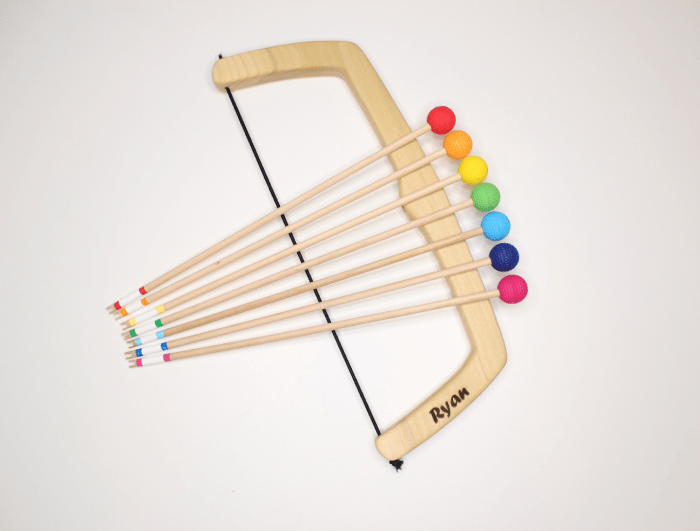
Make a Toy Bow and Arrow: Get ready for a fun DIY project! This guide will walk you through creating your own awesome toy bow and arrow, from choosing materials to final assembly. Learn about different types of wood, strings, and arrowheads to build your own unique set.
We’ll cover everything from gathering materials and tools to safety precautions and different design options. Whether you’re a seasoned crafter or a complete beginner, this detailed guide will equip you with the knowledge and steps to craft a fantastic toy bow and arrow.
Materials & Tools
Crafting a toy bow and arrow is a fun and engaging project that allows for creativity and learning about basic mechanics. Choosing the right materials and tools ensures a safe and enjoyable experience, while also considering the cost-effectiveness of each component. Understanding the pros and cons of different materials can help you select the best option for your needs.The following sections detail the necessary materials, tools, and their associated costs, as well as comparing different wood types for the bow.
Safety is paramount throughout the entire process.
Materials Needed
Selecting the appropriate materials is crucial for a successful and safe project. The quality of materials directly impacts the durability and performance of the finished product. The following list details the necessary components, categorized for clarity.
Crafting a toy bow and arrow is a fun project, requiring careful measurements and precise cuts. Thinking about the different materials needed for the bow and arrow, like wood and string, can be a great way to visualize the overlap and differences between them. Learning to construct a Venn Diagram, a visual tool for comparing and contrasting sets, might be helpful here, just like in Make a Venn Diagram.
Ultimately, building your own bow and arrow is a rewarding experience that helps with both practical skills and a little creative problem-solving.
- Wood: A sturdy piece of wood, such as a branch or dowel, is required for the bow. Consider the type of wood for its strength and flexibility. Examples include pine, birch, or even a strong type of bamboo.
- String: A strong, flexible string is necessary for the bowstring. Fishing line, nylon string, or even a durable cord can be used. Consider the material’s elasticity and tensile strength.
- Arrows: Wooden or bamboo shafts are needed for the arrows. These should be appropriately sized and tapered for proper flight.
- Nocks: Nocks are small notches cut into the arrowheads to secure the string.
- Arrowheads: These can be made of various materials, like plastic or wood. Their shape and size should be suitable for the intended use (toy arrows should not be sharp enough to cause harm). Blunt-ended arrowheads are a good choice for safety.
Tools Required
Using the correct tools and adhering to safety precautions is essential for a smooth and safe project. Proper tool usage prevents accidents and ensures a high-quality product.
- Saw: A handsaw or a utility knife can be used for cutting the wood for the bow and arrow shafts. Always use caution when handling sharp tools. Wear safety glasses or a face shield, and ensure the cutting area is well-ventilated.
- Sandpaper: Sandpaper is essential for smoothing the wood and creating a finished look. Various grits of sandpaper can be used to achieve different levels of smoothness. Wear a dust mask to prevent inhalation of wood dust.
- Drill/Screwdriver: For securing the arrowheads, a drill or screwdriver might be necessary. If using a drill, ensure to use the appropriate drill bit size and wear safety glasses.
- Measuring tools: A ruler or measuring tape will be necessary for ensuring the proper dimensions of the bow and arrow. This helps ensure accuracy and prevent mistakes.
Material Cost Comparison
The cost of materials can vary significantly depending on the quality and type of wood, string, and other components. Pine wood is typically less expensive than more exotic hardwoods. Fishing line or string from craft stores can also be significantly less costly than professional archery string. The overall cost should be carefully considered.
Wood Type Comparison
Different wood types have varying properties that affect the bow’s performance and durability. The table below highlights the pros and cons of using various woods for the toy bow.
| Wood Type | Pros | Cons |
|---|---|---|
| Pine | Affordable, readily available | Less strong, potentially less durable |
| Birch | Stronger and more durable than pine | More expensive than pine |
| Bamboo | Lightweight, strong, flexible | Can be more challenging to work with |
Design & Construction
Crafting a bow and arrow is a rewarding journey that combines artistry and precision. This section will delve into the steps involved in transforming raw materials into functional and beautiful archery equipment. We’ll explore the nuances of wood selection, shaping techniques, and the crucial aspects of safety when handling potentially dangerous materials. Furthermore, we’ll explore the design of arrowheads and arrow shafts.
Bow Construction
Selecting the right wood is paramount. Hardwoods like yew, osage orange, or hickory are renowned for their strength and elasticity, essential qualities for a durable bow. Softwoods like pine can be used, but may not offer the same level of performance. Consider the grain patterns, checking for any knots or imperfections. These can weaken the bow over time.
Once you’ve chosen your wood, carefully measure and mark the desired length and width. A proper bow design ensures optimal performance and safety.
Wood Measurement & Cutting
Accurate measurements are vital for a well-functioning bow. The bow’s length should be determined based on the archer’s draw length and intended use. The width and thickness of the bow also influence its strength and stability. Precise cuts are crucial for a smooth, balanced bow. Use a sharp saw or a specialized bow-making saw to minimize splintering.
Sharp tools and proper techniques are essential to prevent injury and ensure clean cuts. The correct cutting angle can enhance the bow’s aesthetic appeal.
Stringing the Bow
Stringing a bow requires meticulous attention to detail and safety precautions. Ensure the string is correctly positioned on the bow limbs, ensuring that the limbs are correctly oriented and aligned. Follow the manufacturer’s instructions or a reliable guide to prevent damage. A well-strung bow is crucial for proper arrow flight.
Arrowhead Design
Arrowhead designs vary greatly depending on the intended use. Broadheads are used for hunting, offering a larger surface area for penetration. Field points are more efficient for target practice. The design and material of the arrowhead affect the arrow’s flight and penetration. Different materials and shapes offer various advantages.
Experiment with different styles to discover what works best for your needs.
Arrow Shaft Construction
Arrow shafts are typically constructed from wood or a composite material. Accurate measurements of the shaft’s length and diameter are vital for consistent performance. The shaft’s material and dimensions influence its stability and accuracy. Different materials, such as bamboo, carbon fiber, or wood, offer distinct advantages in terms of strength, weight, and cost.
Bow and Arrow Designs
| Design | Description | Applications |
|---|---|---|
| Recurve Bow | A bow with distinct curves on its limbs. | Target shooting, hunting |
| Compound Bow | A bow with a complex system of cables and pulleys. | Hunting, target shooting |
| Longbow | A traditionally long and straight bow. | Target shooting, hunting |
| Self Bow | A bow made from a single piece of wood. | Target shooting, hunting |
Safety Considerations
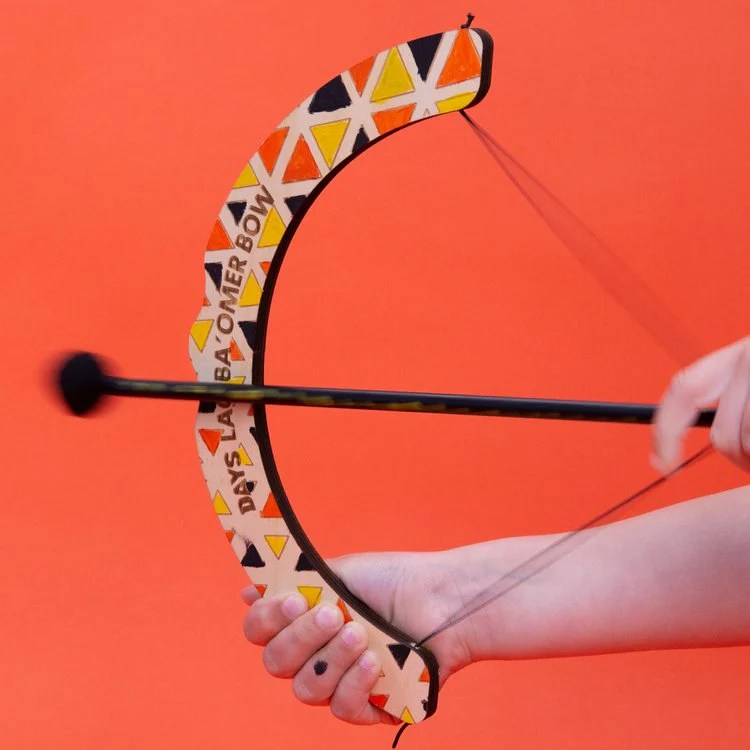
Crafting and using toy bows and arrows, while a fun activity, requires careful attention to safety. Proper handling of materials, tools, and the finished product is crucial to prevent accidents and injuries. This section details essential safety measures to ensure a safe and enjoyable experience for everyone involved, especially children.Understanding potential hazards and implementing preventative measures is paramount.
This includes selecting appropriate materials, ensuring proper supervision, and establishing safe storage practices. Following these guidelines minimizes the risk of injury and fosters a positive crafting environment.
Potential Safety Hazards
The materials and tools used in crafting toy bows and arrows can pose potential hazards if not handled with care. Sharp points on arrows, strong pulling force of the bowstring, and the risk of eye injury are some of the potential hazards. Incorrectly designed or constructed bows can also lead to unexpected snapping or malfunctioning.
Safe Handling Procedures
Implementing safe handling procedures is essential for preventing accidents. Ensure that all tools, such as knives or saws, are sharp and well-maintained. Using protective gear like safety glasses or gloves when handling sharp components is essential. Adhering to the manufacturer’s instructions for using materials and tools is critical. Supervisors must ensure that children are using the tools and materials in a way that is consistent with safety procedures.
Supervision for Children
Adequate supervision is crucial when children are involved in crafting or using toy bows and arrows. A responsible adult should always be present to guide and monitor children’s activities. Supervision ensures that children understand and follow safety procedures. The adult’s role includes monitoring children’s actions, ensuring proper handling of materials, and intervening if necessary to prevent accidents.
Examples of Appropriate Supervision
For example, when using a bow and arrow, a supervisor should ensure that the child holds the bow correctly, keeps their non-dominant hand behind the bow, and maintains a safe distance from other people. When crafting arrows, the supervisor should demonstrate the correct handling of the materials and tools. The supervisor should ensure that children do not use sharp objects like knives without proper supervision.
Young children may require more hands-on supervision.
Making a toy bow and arrow is a fun activity, perfect for a rainy afternoon. It’s a great way to get creative and channel your inner archer. Speaking of creative, did you hear about Tyler, the Creator’s new ice cream flavor? Tyler the creator unveils signature ice cream flavor It sounds delicious, and I’m definitely going to have to try it! Back to the bows and arrows though, the possibilities for decorations are endless.
Storage of Finished Toy Bow and Arrow, Make a Toy Bow and Arrow
Proper storage of the finished toy bow and arrow is essential to prevent accidents. Store bows and arrows in a safe place, away from children’s reach if possible. Ensure the arrows are stored separately from the bow. Avoid storing the toy in areas prone to damage, such as near fireplaces or other heat sources. Store the arrows in a case or container to prevent them from becoming misplaced or lost.
Choosing Age-Appropriate Materials and Tools
Selecting age-appropriate materials and tools is vital for safety. Using materials that are not suitable for the child’s age or ability can lead to injuries. For younger children, using soft, pliable materials or simplified tools is essential. Ensuring the materials are safe and non-toxic is critical. Materials that are easily breakable or have sharp edges should be avoided.
Consider using blunt-tipped arrows for younger children.
Variations & Alternatives
Making a toy bow and arrow can be a fun and engaging project, but the possibilities extend far beyond a simple design. Exploring different bow types, materials, and arrowheads opens up a world of creative options, allowing for adjustments in play experience and durability. This section will delve into various approaches, enabling you to tailor the toy to your specific needs and preferences.
Bow Types
Different bow types offer unique characteristics that influence the feel and performance of the toy. Understanding these differences can lead to a more enjoyable shooting experience. Recurve bows, with their distinctive curves, provide a more challenging and satisfying shooting experience compared to simpler designs. Longbows, known for their straight form, offer a smooth draw and are popular for their classic appeal.
- Recurve Bows: Recurve bows, characterized by their curved limbs, require more skill to draw and aim accurately. This makes them ideal for children who are already familiar with the principles of archery and want a more challenging toy. The added complexity of the draw and release provides a more engaging experience, encouraging focus and precision.
- Longbows: Longbows, with their straight limbs, are generally easier to draw and shoot than recurve bows. Their straightforward design makes them suitable for younger children or those new to archery, promoting a simpler yet satisfying shooting experience.
Alternative Materials
Beyond traditional wood, numerous alternative materials offer unique benefits for constructing a toy bow and arrow. These materials often affect the bow’s weight, durability, and play characteristics. Consider the balance between cost, ease of workability, and the desired aesthetic when selecting a material.
- PVC Pipe: PVC pipe is a readily available and relatively inexpensive material. Its lightweight nature makes it ideal for younger children or for creating bows with a lighter feel. However, PVC might not be as durable as wood or bamboo and may require more care in construction to avoid breakage.
- Bamboo: Bamboo, known for its strength and flexibility, is a sustainable and sturdy option. It provides a good balance between durability and ease of working with, making it a popular choice for toy bows. The natural grain and aesthetic appeal of bamboo can also add to the overall design appeal.
Arrowhead Types
The type of arrowhead significantly influences the play experience and safety. Different arrowhead designs offer varied levels of impact and play value. A well-chosen arrowhead enhances the fun of using the bow and arrow without compromising safety.
- Blunt Arrowheads: Blunt arrowheads are a safer alternative, reducing the risk of injury. These are perfect for younger children or when safety is a primary concern. Their lack of sharp points ensures a less aggressive play style.
- Fletched Arrowheads: Fletched arrowheads, with their feathers or vanes, enhance flight stability. They add an element of realism to the toy and can be more enjoyable for children who are keen on the principles of archery.
Material Comparison Table
| Material | Construction Method | Effectiveness | Durability | Cost |
|---|---|---|---|---|
| Wood | Carving, shaping | High | High | Medium |
| PVC Pipe | Cutting, shaping | Medium | Low | Low |
| Bamboo | Cutting, shaping | High | Medium | Medium |
Advanced Techniques (Optional)
Taking your homemade bow and arrow to the next level involves exploring advanced techniques for carving, shaping, and decorating. These techniques allow for greater precision, aesthetic appeal, and potentially, improved performance. While not essential for a functional toy, these additions can enhance the learning experience and the final product.Exploring advanced techniques allows for a deeper understanding of woodworking and design principles, enhancing the creativity and skill involved in crafting the toy.
This section dives into optional but rewarding methods for creating truly unique bows and arrows.
Making a toy bow and arrow is surprisingly satisfying. It’s a great way to channel your inner craftsman, and the process reminds me of the intricate details found in the workings of a vintage projector, especially those vintage projectors that sing their own melody, like the ones discussed in dirty projectors sing the melody. The focus needed to get the perfect balance and tension in the bow mirrors the precision required to make sure every piece of a projector aligns perfectly.
Ultimately, though, the goal is still the same – creating a fun toy for kids.
Carving and Shaping Advanced Techniques
Mastering the art of carving and shaping involves more than just basic cuts. Understanding wood grain patterns and using specialized tools, like gouges and chisels, is crucial for achieving intricate shapes and curves. Experimenting with different carving styles, from simple geometric patterns to more elaborate designs, can transform the bow’s appearance and functionality. Consider the grain direction when shaping the bow limbs for optimal strength and resilience.
Using a sanding block with progressively finer grits will ensure a smooth and polished finish.
Decorative Elements on Bows and Arrows
Adding decorative elements elevates the aesthetic appeal of the bow and arrows. Incorporating natural materials like feathers, dyed wood shavings, or resin can create unique patterns. Techniques such as inlaying, carving, or staining can transform a simple bow into a work of art. Consider the overall design of the bow when selecting decorative elements to create a cohesive aesthetic.
For example, a bow designed with a hunting theme might feature carvings of animals, while a bow for a child’s play might feature vibrant colors or cartoon characters.
Custom Arrowheads
Crafting custom arrowheads requires careful planning and precision. Beyond basic shapes like points and barbs, consider creating more complex designs. Experimenting with different materials, like hardened wood, bone, or metal, will allow for variations in durability and appearance. Consider the intended use of the arrowhead when choosing materials. For instance, a simple, wooden arrowhead might be suitable for a toy, while a metal arrowhead could be more durable for a target practice bow.
Using a template can help maintain consistent arrowhead shape and size.
Fletching for Improved Arrow Flight
Fletching, the addition of feathers or other materials to the arrow’s shaft, plays a crucial role in stabilizing the arrow’s flight. Experimenting with different feather types, arrangements, and sizes can influence the arrow’s trajectory and accuracy. Proper fletching technique is essential for achieving consistent and predictable results. Consider the arrow’s intended target and distance when choosing the type of fletching.
Different materials provide different levels of aerodynamic resistance.
Advanced Techniques Table
| Bow Type | Carving/Shaping Technique | Decorative Elements | Arrowhead Material | Fletching Type |
|---|---|---|---|---|
| Recurve Bow | Deep carvings, intricate curves, and consistent limb thickness | Inlaid wood, dyed feathers, or resin accents | Hardened wood or bone | Goose or turkey feathers, symmetrical placement |
| Longbow | Smooth, consistent limb curves, focus on wood grain direction | Natural wood grain enhancements, hand-carved designs | Hardened wood, bone, or horn | Duck or chicken feathers, symmetrical placement |
| Compound Bow | Precise shaping of limbs, use of clamps and jigs | Metallic accents, inlay designs, or hand-painted designs | Metal or hardened composite materials | Synthetic fletching materials for durability, precise placement |
Project Visualization
Bringing your homemade toy bow and arrow to life involves visualizing the final product and the steps to create it. This section details the finished product’s features, showcases the construction process, and provides a visual guide for measuring and cutting wood. It also compares different types of toy bows.This detailed visualization will ensure you have a clear picture of the project before you begin, leading to a more satisfying and successful outcome.
Finished Toy Bow and Arrow Features
The finished toy bow and arrow set should feature a sturdy, well-proportioned bow crafted from wood, with a smooth, even surface. The arrow should be similarly crafted from a light but strong material, like wood or bamboo, and have a sharp, pointed tip. The arrow should fit snugly in the arrow rest, providing consistent flight and accurate aiming. The overall design should be visually appealing and age-appropriate.
Construction Process Stages
The following stages illustrate the construction process, showcasing the materials used at each step.
- Stage 1: Wood Selection and Preparation. A piece of hardwood, such as birch or maple, is selected for the bow. The wood is sanded to a smooth surface to prevent splinters and ensure a comfortable grip. A straight, lightweight piece of wood, such as bamboo or a softwood, is selected for the arrow. The arrow shaft is prepared by sanding to prevent splinters.
- Stage 2: Bow Design and Shaping. The hardwood piece is marked for the bow’s curves, with precise measurements for the handle and limbs. The wood is then carefully shaped and carved to create the bow’s distinct curves, ensuring a balance between strength and flexibility. The arrow shaft is measured and marked for the nock and fletching points.
- Stage 3: Arrow Construction. The arrow shaft is notched at the appropriate point for the string to be attached, the nock. The fletching (feathers or plastic stabilizers) are attached to the arrow shaft to improve its flight stability. The arrowhead is affixed to the arrow.
- Stage 4: Bowstring Attachment. The bowstring is measured and tied to the bow’s nocks with appropriate knots to ensure a secure connection. The arrow nock fits into the bowstring rest, ensuring proper arrow placement.
Visual Guide for Wood Measurement and Cutting
This guide will illustrate how to measure and cut the wood for the bow, ensuring the correct dimensions and angles.
- Step 1: Measuring. Use a ruler and pencil to measure the desired length and width of the bow’s limbs and handle. Measure the arrow shaft length and the appropriate placement for the arrow nock.
- Step 2: Marking. Mark the measurements on the wood with a pencil. Ensure the marks are clear and accurate for a precise cut.
- Step 3: Cutting. Use a saw or a sharp knife to carefully cut along the marked lines, ensuring straight cuts for the bow limbs and handle. Use a sharp knife to cut the arrow shaft to the appropriate length.
Finished Product Visuals
The following images represent different poses and angles of the finished toy bow and arrow. These images showcase the bow’s design, curves, and handle. They show the arrow’s length and the way it fits into the bow rest.
(Visual representations of the finished bow and arrow in various poses and angles. The description of these visuals would be detailed, like the bow being held at different angles with the arrow nocked and ready to shoot. The arrow would be shown from the side and the top, with the fletching clearly visible.)
Comparison Table of Toy Bows and Arrows
This table compares different types of toy bows and arrows based on their materials, construction methods, and features.
| Type | Material | Construction | Features | Visual Example |
|---|---|---|---|---|
| Wooden Bow | Wood (e.g., birch, maple) | Hand-carved or crafted | Sturdy, traditional look, good for practice | (Image of a wooden bow and arrow set, highlighting the wood grain and simple design) |
| Composite Bow | Combination of materials (e.g., fiberglass, wood) | Molded or laminated | Stronger, more consistent, more accurate flight | (Image of a composite bow and arrow set, showing the smooth finish and modern design) |
| Plastic Bow | Plastic | Molded | Lightweight, durable, less expensive | (Image of a plastic bow and arrow set, showing the bright colors and simple design) |
Ending Remarks: Make A Toy Bow And Arrow
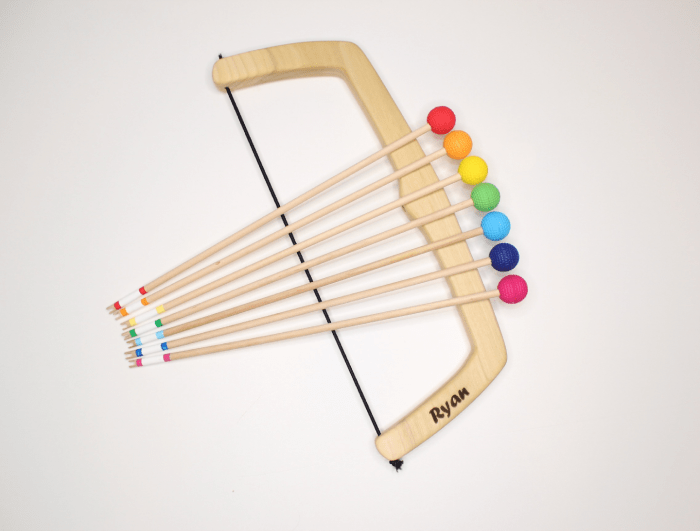
Crafting a toy bow and arrow is a rewarding experience, offering a unique blend of creativity and skill development. From selecting the right materials to understanding safety measures, this comprehensive guide ensures a smooth and enjoyable project. Experiment with different designs and materials to create a personalized toy that’s both functional and visually appealing. Happy crafting!