The Evolution of Modern European Jazz and the Artistic Progression of the Trio Equally Stupid in Escape from The Unhappy Society

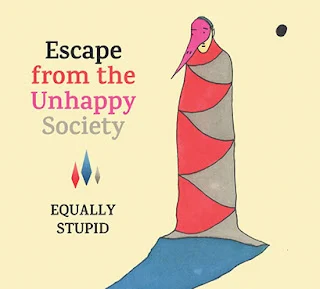
The contemporary European jazz landscape is characterized by a restless pursuit of genre-defying sounds, and few ensembles embody this spirit as effectively as the multinational trio known as Equally Stupid. Comprised of Icelandic guitarist Sigurdur Rögnvaldsson, Finnish saxophonist Pauli Lyytinen, and Swiss drummer David Meier, the group has carved out a unique niche that balances the raw energy of avant-garde rock with the sophisticated improvisational structures of modern jazz. Their second full-length studio offering, Escape from The Unhappy Society, represents a significant evolutionary step for the ensemble, moving away from the aggressive, high-decibel confrontation of their debut album while retaining the muscular interplay that first brought them to international attention within the jazz community.
The Foundation and Personnel of Equally Stupid
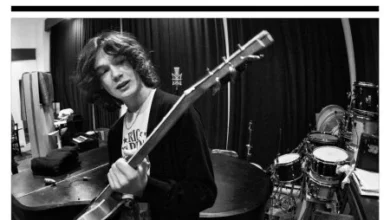
To understand the sonic shift presented in Escape from The Unhappy Society, one must first examine the diverse backgrounds of the trio’s constituents. The group serves as a microcosm of the modern European jazz scene, where geographic boundaries are secondary to shared aesthetic goals. Sigurdur Rögnvaldsson, an Icelandic guitarist known for his gritty and unconventional approach to the instrument, provides much of the group’s harmonic and rhythmic backbone. His choice of the baritone guitar is a defining characteristic of the band’s sound, offering a lower register and a darker, more menacing timbre than a standard electric guitar.
Pauli Lyytinen, a versatile Finnish saxophonist, brings a wide array of textures to the group, utilizing tenor, alto, and bass saxophones, often augmented by electronic effects. Lyytinen’s ability to pivot from warm, lyrical phrasing to abrasive, percussive sounds allows the trio to function with a much larger sonic footprint than a typical three-piece ensemble. Completing the trio is David Meier, a Swiss drummer whose style is characterized by both "muscularity" and intricate "textural" playing. Meier’s role transcends simple time-keeping; he acts as a conversational partner to the guitar and saxophone, often dictating the ebb and flow of the compositions through dynamic shifts and varied percussion techniques, including the nuanced use of brushes.
Chronology of Development: From Exploding Head to Escape
The trajectory of Equally Stupid began in earnest with the release of their debut album, Exploding Head, in 2014. That record was widely noted for its brash, "in-your-face" attitude, drawing comparisons to the "punk-jazz" movements of the late 20th century. It was an album defined by high-intensity riffs and a relentless rhythmic drive that left little room for silence or reflection. Following the release of Exploding Head, the trio spent three years touring across Europe, performing at various jazz festivals and clubs. This period of live performance was instrumental in refining their group sound, allowing the musicians to develop a deeper telepathic communication.
By 2017, when the group entered the studio to record Escape from The Unhappy Society, their objectives had shifted. While the "angularity" of their debut remained a core component of their DNA, the new material emphasized space, melody, and a more "measured" approach to composition. The three-year gap between albums allowed for a maturation process where the need to impress through sheer volume was replaced by a desire to explore the "humanness" of their music. The result is a recording that feels more "organic" and "polished" without sacrificing the "dirty rice and beans" grit that defines their aesthetic.
Technical Analysis of Escape from The Unhappy Society
The technical hallmarks of Escape from The Unhappy Society are rooted in the interaction between Rögnvaldsson’s baritone guitar and Lyytinen’s multi-instrumental saxophone approach. The baritone guitar, tuned significantly lower than a standard guitar, occupies a frequency range that overlaps with both the traditional bass and the midrange of the saxophone. This creates a dense, rich foundation that allows the trio to bypass the need for a dedicated bass player.
In tracks such as "Fools Paradise," this instrumentation is used to create a sense of atmospheric depth. The piece features "lilting sax phrasing" and "deeper rhythms" provided by Rögnvaldsson, creating a darker sonic palette. The inclusion of David Meier’s "gentle brushed percussion" in this track highlights the band’s evolution; where they once might have relied on a driving rock beat, they now utilize subtle textures to build tension.
Conversely, the track "Paranoia" serves as a bridge between their older style and their current direction. Here, the "riffing sax and driving guitar" engage in a "childlike chase," weaving through and around each other with a frantic energy. This track demonstrates the trio’s "muscularity," yet even here, the interaction is more sophisticated than in their 2014 work. The solos are more "lyrical," and the transition from the "romp and play" of the introduction to the improvisational sections is handled with greater finesse.
Supporting Data and Production Philosophy
The production of Escape from The Unhappy Society intentionally avoids the "sterile" quality that critics often associate with contemporary high-fidelity jazz recordings. In an era where digital perfection can often strip music of its character, Equally Stupid opted for a sound that is "polished, but not so much that it makes it a sterile listen." This philosophy is reflected in the album’s nine-track listing:
- Politician’s Nightmare
- Birdlife
- Legacy to the Children of the 21st Century
- Fool’s Paradise
- Cruising Back to Mother Earth
- The Garden of Edward James
- Paranoia
- Transpiration
- Escape from the Unhappy Society
The titles themselves suggest a thematic preoccupation with both social commentary and environmental or escapist motifs. The "unhappy society" of the title can be interpreted as a critique of the modern, hyper-connected, and often stressful urban environment, with the music serving as the titular "escape." This thematic depth provides a narrative framework for the instrumental explorations contained within the record.
Official Responses and Critical Reception
While the trio operates within the independent jazz circuit, the reception of Escape from The Unhappy Society among critics and jazz aficionados has centered on the group’s ability to maintain their "art-first" approach. Industry analysts have noted that the "emerging European" jazz scene is increasingly defined by these types of cross-border collaborations that prioritize "organic experiences" over commercial formulas.
Critics have praised the album for being "refreshingly good-natured" and "playful," a contrast to the often overly serious or academic tone of modern avant-garde jazz. The "prowess" of the musicians is evident, but it is frequently understated, used as a tool for collective expression rather than individual virtuosity. This "right approach" to ensemble playing has been cited as a model for younger musicians entering the European jazz conservatory system, which is sometimes criticized for producing technically perfect but emotionally distant performers.
Broader Impact and Implications for the Jazz Market
The release of Escape from The Unhappy Society has broader implications for the global jazz market, particularly regarding the viability of the "power trio" format. By eschewing the traditional piano or bass-led trio structures, Equally Stupid demonstrates that alternative instrumentation—specifically the baritone guitar—can provide a viable and harmonically rich alternative.
Furthermore, the album’s success in blending "angularity" with "lyricism" suggests a growing audience for jazz that bridges the gap between the "clean" ECM-style Nordic jazz and the "dirty" downtown New York scene. The "dirty rice and beans" quality mentioned by observers refers to a specific type of authenticity—a sound that is grounded in the physical reality of the instruments and the room, rather than one synthesized through heavy post-production.
As Equally Stupid continues to tour and develop their sound, they remain a vital part of a movement that views jazz not as a museum piece, but as a living, breathing, and "ever-evolving" art form. Escape from The Unhappy Society stands as a testament to the fact that musicians can grow in complexity and maturity without losing the raw, playful energy that defines the best of the genre. The trio’s journey from the brashness of 2014 to the measured brilliance of their later work marks them as one of the most significant ensembles in the contemporary European jazz landscape.