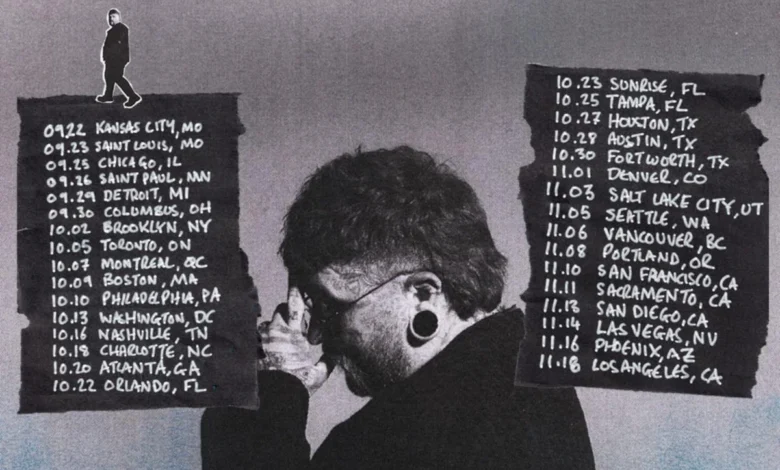
Atlanta-born sensation Teddy Swims, known for his powerful vocals and genre-blending artistry, has officially unveiled "The Ugly Tour," a monumental 32-date North American arena run slated for the fall of 2026. This extensive tour marks a significant milestone in the artist’s burgeoning career, affirming his transition from viral internet sensation to a formidable presence in the global music landscape. The highly anticipated series of concerts is set to commence on September 22nd at Kansas City’s T-Mobile Center, culminating in a grand finale on November 18th at the iconic Kia Forum in Los Angeles.
The announcement of "The Ugly Tour" follows a period of intense activity for Swims, whose real name is Jaten Dimsdale, characterized by critically acclaimed festival appearances, a new single release, and continued widespread adoration for his latest album. The sheer scale of this arena tour underscores the immense demand for his live performances, promising fans across North America an unforgettable experience within some of the continent’s most prestigious venues.
Extensive North American Reach: A Detailed Look at the Tour Schedule
The 2026 "The Ugly Tour" is meticulously planned to cover a broad geographical spectrum, ensuring that a vast segment of Teddy Swims’ North American fanbase has the opportunity to witness his captivating stage presence and vocal prowess. The tour will traverse major metropolitan areas and significant music hubs, hitting a diverse array of markets from coast to coast and extending into Canada.
Following its inaugural night in Kansas City, Missouri, at the T-Mobile Center, the tour will quickly move to St. Louis, Missouri, for a performance at the Enterprise Center on September 23rd. The Midwest leg continues with a stop at Chicago’s renowned United Center on September 25th, an arena celebrated for hosting some of the biggest names in music. A performance at the Grand Casino Arena in St. Paul, Minnesota, on September 26th will precede a series of East Coast and Canadian dates.
The journey eastward includes a visit to Detroit, Michigan, on September 29th at the Little Caesars Arena, followed by Columbus, Ohio’s Nationwide Arena on September 30th. New York City fans will converge at Brooklyn’s Barclays Center on October 2nd, a venue synonymous with major music events. The Canadian leg of the tour is highlighted by performances at Toronto’s Scotiabank Arena on October 5th and Montreal’s Bell Centre on October 7th, reflecting Swims’ growing international appeal.
The tour then loops back into the U.S. Northeast, with Boston’s TD Garden hosting a show on October 9th and Philadelphia’s Xfinity Mobile Arena on October 10th. The nation’s capital, Washington, D.C., will welcome Swims to the Capital One Arena on October 13th.
The Southern states are prominently featured in the itinerary, with performances scheduled for Nashville, Tennessee, at the Bridgestone Arena on October 16th – a city known for its rich musical heritage. Further stops include Charlotte, North Carolina, at the Spectrum Center on October 18th; Atlanta, Georgia, his home state, at the State Farm Arena on October 20th; Orlando, Florida’s Kia Center on October 22nd; Sunrise, Florida, at the Amerant Bank Arena on October 23rd; and Tampa, Florida’s Benchmark International Arena on October 25th.
The tour’s westward progression will see Swims performing in Texas at the Toyota Center in Houston on October 27th, Austin’s Moody Center on October 28th, and Fort Worth’s Dickies Arena on October 30th. Mountain states will host shows at Denver, Colorado’s Ball Arena on November 1st and Salt Lake City, Utah’s Delta Center on November 3rd.
The final leg of "The Ugly Tour" concentrates on the Pacific Northwest and the West Coast. Seattle, Washington, will host a concert at the Climate Pledge Arena on November 5th, followed by a return to Canada at Vancouver, British Columbia’s Rogers Arena on November 6th. Portland, Oregon’s Moda Center on November 8th leads into a series of California dates: San Francisco’s Chase Center on November 10th, Sacramento’s Golden 1 Center on November 11th, and San Diego’s Pechanga Arena on November 13th. The penultimate stop is Las Vegas, Nevada, at the T-Mobile Arena on November 14th, with Phoenix, Arizona’s Mortgage Matchup Center hosting a show on November 16th, before the grand finale at the Kia Forum in Los Angeles on November 18th.
This comprehensive routing not only showcases Swims’ widespread popularity but also represents a significant logistical undertaking, indicative of an artist operating at the peak of their touring capabilities.
Securing Your Spot: A Guide to Ticket Acquisition
Given the anticipated high demand for "The Ugly Tour" tickets, a multi-tiered pre-sale and public on-sale system has been implemented to manage access and reward various fan groups. Fans eager to secure their attendance are strongly advised to familiarize themselves with the timeline and procedures.
The initial opportunity for fans to gain pre-sale access is by signing up now at teddyswims.com. This registration typically grants access codes for the artist-specific pre-sale, which is often the earliest chance for dedicated followers to purchase tickets before the general public.
A specialized Chime Visa cardmember pre-sale is scheduled to commence on Tuesday, April 21st, at 10:00 a.m. local time. This exclusive window provides Chime Visa cardholders with an early purchasing opportunity, a common practice in the modern concert industry to leverage financial partnerships and offer added value to cardmembers.
Following this, the Teddy Swims artist pre-sale will begin on Wednesday, April 22nd, at 10:00 a.m. local time. Access to this pre-sale is typically granted to those who have signed up through the artist’s official website, demonstrating a direct connection and loyalty to the artist.
Local venue and Spotify pre-sales are set to kick off on Thursday, April 23rd. Local pre-sales are often managed by the venues or local promoters and may require specific codes or links, sometimes shared with local radio station listeners or venue newsletter subscribers. Spotify pre-sales are generated algorithmically, targeting users who frequently listen to Teddy Swims on the platform, offering them an exclusive chance to purchase tickets. Additional pre-sales, potentially from other partners or fan groups, will run throughout the week, offering various entry points for ticket acquisition.
The general public ticket on-sale is officially set for Friday, April 24th, at 10:00 a.m. local time. At this point, any remaining tickets will become available to the broader public through primary ticketing platforms such as Ticketmaster and directly via TeddySwims.com. It is crucial for fans to be online and prepared at the exact on-sale time, as popular shows can sell out rapidly. Prospective attendees should ensure they have accounts set up with Ticketmaster and have their payment information ready to streamline the purchasing process.
The Ascent of Teddy Swims: A Journey to Stardom
Teddy Swims’ trajectory to becoming an arena-level touring artist is a testament to his undeniable talent, authenticity, and strategic use of digital platforms. Born Jaten Dimsdale, the artist initially garnered significant attention through his YouTube channel, where he posted cover songs spanning various genres, including R&B, soul, country, and pop. His powerful, soulful voice and emotive delivery quickly resonated with a global audience, laying the groundwork for his original music career.

His early success was built on a foundation of raw talent and a genuine connection with his audience. Swims’ ability to infuse classic and contemporary hits with his unique vocal styling showcased his versatility and depth, attracting millions of views and cultivating a dedicated fanbase before the release of his debut original material.
The release of original songs solidified his artistic identity. Tracks like "Bed On Fire" and the immensely popular "Lose Control" showcased his prowess as a songwriter and performer, demonstrating an ability to craft deeply personal and universally relatable music. "Lose Control," in particular, became a breakout hit, dominating charts and introducing his sound to an even wider audience. Its success was not merely commercial; it resonated deeply with listeners, touching upon themes of vulnerability and emotional intensity that are hallmarks of his work.
His debut album, I’ve Tried Everything But Therapy (Complete Edition), released last year, was a critical and commercial success. The album delved into themes of mental health, personal struggles, and the complexities of relationships, delivered with the raw honesty and vocal power that fans had come to expect. It was lauded for its confessional lyrics and genre-fluid sound, further cementing his reputation as an artist unafraid to explore the depths of human emotion through music. The "Complete Edition" added layers to this narrative, offering a more expansive look into his artistic vision and emotional landscape.
Most recently, Swims released his new single "Mr. Know It All," which continues to showcase his evolving sound and lyrical maturity. This release serves as a bridge between his acclaimed album and future projects, keeping his audience engaged and anticipating what comes next.
Festival Prowess: From Coachella to Europe
Before embarking on "The Ugly Tour," Teddy Swims has maintained an exceptionally active schedule, cementing his reputation as a dynamic live performer through a string of high-profile festival appearances across continents. These performances not only serve to expand his audience but also demonstrate his versatility and ability to command diverse stages.
His recent showing at Coachella Weekend One was a particular highlight, where he surprised audiences with guest appearances from rock legend David Lee Roth, pop icon Joe Jonas, and singer-songwriter Vanessa Carlton. These collaborations underscored his broad appeal and his ability to bridge genres, creating memorable moments that resonate beyond the festival grounds. He is slated to return to Indio for Coachella Weekend Two and will also make an appearance at the country music-focused Stagecoach Festival later this month, showcasing his cross-genre appeal to an even greater extent.
Beyond these marquee events, Swims’ itinerary for the coming months is packed with major festival slots. In North America, he is scheduled to perform at the legendary New Orleans Jazz Festival, the scenic BottleRock in Napa, California, and the beloved Bonnaroo Music & Arts Festival in Manchester, Tennessee. These engagements provide platforms to connect with a diverse array of music lovers, from jazz enthusiasts to indie-rock fans.
His global footprint is equally impressive, with a robust schedule of European festival appearances. These include Pinkpop Festival in the Netherlands, the iconic Isle of Wight Festival in the United Kingdom, Rock Werchter in Belgium, Mad Cool Festival in Spain, and Lollapalooza Berlin in Germany. Other significant European stops include Belsonic in Northern Ireland, Malahide Castle in Dublin, Ireland, and various venues across the United Kingdom such as Powderham Castle, Blackweir Fields, Bellahouston Park, Blenheim Palace, and the TK Maxx presents Lytham Festival and Scarborough Open Air Theatre. He will also perform at Open’er Festival in Poland, JazzOpen Stuttgart in Germany, Nos Alive in Portugal, Gurtenfestival in Switzerland, Electric Castle Festival in Romania, Colours of Ostrava in Czechia, and Latitude Festival in the United Kingdom.
This extensive festival circuit demonstrates not only his global appeal but also the strategic groundwork being laid for "The Ugly Tour." Each festival appearance provides an opportunity to refine his stage show, connect with new fans, and build momentum leading into his headline arena dates.
The Broader Implications of an Arena Tour
The announcement of "The Ugly Tour" as a 32-date North American arena run carries significant implications for Teddy Swims’ career, the live music industry, and the cities he will visit.
For Teddy Swims, transitioning to arena-level touring signifies a definitive leap in his artistic stature. Arenas, with capacities often ranging from 10,000 to 20,000 seats, are reserved for artists who have achieved significant mainstream success and can reliably draw massive crowds. This move confirms his status as a major headliner, moving beyond clubs and theaters to command larger stages and more elaborate productions. It represents a maturation of his career, indicating a solidified fanbase and widespread recognition of his musical contributions. The increased scale also allows for greater creative freedom in stage design, lighting, and sound, enhancing the overall spectacle and immersive experience for attendees.
From an economic perspective, an arena tour of this magnitude generates substantial revenue not only for the artist and their team but also for the host cities. Each tour stop brings an influx of concert-goers who contribute to local economies through ticket sales, merchandise purchases, hospitality (hotels, restaurants), and transportation. This economic ripple effect is particularly welcomed by cities and the entertainment industry as they continue to rebound from the disruptions of recent years. The staffing requirements for such a tour, from venue personnel to tour crew, also create temporary employment opportunities.
The "The Ugly Tour" also reflects broader trends within the contemporary music industry. In an era where streaming dominates music consumption, live performance remains a crucial revenue stream and a primary means for artists to connect intimately with their audience. The willingness of fans to invest in high-value concert tickets underscores the enduring appeal and importance of the live music experience. Furthermore, the carefully orchestrated pre-sale system highlights the sophisticated strategies employed by artists and promoters to maximize ticket sales, reward fan loyalty, and combat secondary market speculation.
The tour’s title, "The Ugly Tour," while intriguing, invites speculation regarding its underlying meaning. It could allude to the raw, honest, and sometimes difficult emotions explored in Swims’ music, particularly within his I’ve Tried Everything But Therapy album. It might also be a playful subversion of expectations, hinting at a tour that embraces imperfections or delves into the more challenging aspects of the human experience, themes that resonate deeply with his audience. Regardless of its specific interpretation, the title itself adds an element of intrigue and personality, aligning with Swims’ authentic and often vulnerable artistic persona.
As Teddy Swims prepares to embark on this ambitious journey, "The Ugly Tour" stands as a testament to his hard-earned success, his powerful artistic vision, and the unwavering support of his global fanbase. It promises to be a landmark series of performances, further cementing his place among the most compelling and dynamic artists of his generation.
Teddy Swims 2026 Tour Dates (Chronological Summary):
Spring/Summer 2026 Festival & Select Dates:
- 04/17 – Indio, CA @ Coachella Valley Music & Arts Festival
- 04/25 – Indio, CA @ Stagecoach Music Festival
- 05/03 – New Orleans, LA @ New Orleans Jazz Festival
- 05/22 – Napa, CA @ BottleRock Festival
- 06/04 – Uncasville, CT @ Mohegan Sun Arena
- 06/05 – Canandaigua, NY @ CMAC
- 06/07 – Pittsburgh, PA @ Petersen Events Center
- 06/09 – Norfolk, VA @ Chartway Arena
- 06/10 – North Charleston, SC @ North Charleston Coliseum
- 06/12 – Easley, SC @ District Park
- 06/13 – Manchester, TN @ Bonnaroo Music & Arts Festival
- 06/19 – Landgraaf, Netherlands @ Pinkpop Festival
- 06/20 – Isle of Wight, United Kingdom @ Isle of Wight Festival
- 06/22 – Belfast, Northern Ireland @ Belsonic
- 06/23 – Dublin, Ireland @ Malahide Castle
- 06/25 – Exeter, United Kingdom @ Powderham Castle
- 06/26 – Cardiff, United Kingdom @ Blackweir Fields
- 06/28 – Glasgow, United Kingdom @ Bellahouston Park
- 06/30 – Woodstock, United Kingdom @ Blenheim Palace
- 07/01 – Lancashire, United Kingdom @ TK Maxx presents Lytham Festival
- 07/03 – Werchter, Belgium @ Rock Werchter
- 07/04 – Puck County, Poland @ Open’er Festival
- 07/07 – Stuttgart, Germany @ JazzOpen Stuttgart
- 07/09 – Madrid, Spain @ Mad Cool Festival
- 07/11 – Oeiras, Portugal @ Nos Alive
- 07/15 – Bern, Switzerland @ Gurtenfestival
- 07/16 – Bontida, Romania @ Electric Castle Festival
- 07/18 – Ostrava, Czechia @ Colours of Ostrava
- 07/19 – Berlin, Germany @ Lollapalooza Berlin
- 07/22 – Scarborough, United Kingdom @ TK Maxx presents Scarborough Open Air Theatre
- 07/23 – Scarborough, United Kingdom @ TK Maxx presents Scarborough Open Air Theatre
- 07/25 – Henham Park, United Kingdom @ Latitude Festival
Fall 2026 "The Ugly Tour" North American Arena Dates:
- 09/22 – Kansas City, MO @ T-Mobile Center
- 09/23 – St. Louis, MO @ Enterprise Center
- 09/25 – Chicago, IL @ United Center
- 09/26 – St. Paul, MN @ Grand Casino Arena
- 09/29 – Detroit, MI @ Little Caesars Arena
- 09/30 – Columbus, OH @ Nationwide Arena
- 10/02 – Brooklyn, NY @ Barclays Center
- 10/05 – Toronto, ON @ Scotiabank Arena
- 10/07 – Montreal, QC @ Bell Centre
- 10/09 – Boston, MA @ TD Garden
- 10/10 – Philadelphia, PA @ Xfinity Mobile Arena
- 10/13 – Washington, D.C. @ Capital One Arena
- 10/16 – Nashville, TN @ Bridgestone Arena
- 10/18 – Charlotte, NC @ Spectrum Center
- 10/20 – Atlanta, GA @ State Farm Arena
- 10/22 – Orlando, FL @ Kia Center
- 10/23 – Sunrise, FL @ Amerant Bank Arena
- 10/25 – Tampa, FL @ Benchmark International Arena
- 10/27 – Houston, TX @ Toyota Center
- 10/28 – Austin, TX @ Moody Center
- 10/30 – Fort Worth, TX @ Dickies Arena
- 11/01 – Denver, CO @ Ball Arena
- 11/03 – Salt Lake City, UT @ Delta Center
- 11/05 – Seattle, WA @ Climate Pledge Arena
- 11/06 – Vancouver, BC @ Rogers Arena
- 11/08 – Portland, OR @ Moda Center
- 11/10 – San Francisco, CA @ Chase Center
- 11/11 – Sacramento, CA @ Golden 1 Center
- 11/13 – San Diego, CA @ Pechanga Arena San Diego
- 11/14 – Las Vegas, NV @ T-Mobile Arena
- 11/16 – Phoenix, AZ @ Mortgage Matchup Center
- 11/18 – Los Angeles, CA @ Kia Forum