
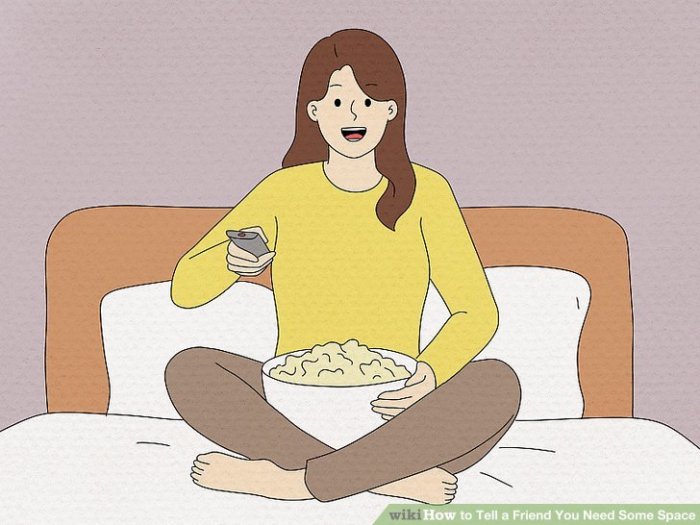
Tell a Friend You Need Some Space is a crucial skill for maintaining healthy friendships. It’s about understanding when and how to communicate the need for space in a way that’s respectful and avoids hurting feelings. This guide delves into the complexities of needing space, from understanding the reasons behind it to effective communication strategies and managing potential consequences.
Learn how to navigate these delicate situations and preserve your friendships.
This comprehensive guide explores various aspects of needing space from a friend, providing insights into the nuances of this sensitive topic. It covers everything from defining what “space” means in different relationships to practical communication strategies and managing expectations.
Understanding the Phrase
The phrase “Tell a friend you need some space” signifies a crucial communication need in interpersonal relationships. It’s a delicate act of self-preservation, often expressing a desire for temporary distance to recharge, process emotions, or re-evaluate a situation. This act of communicating a need for space is often misunderstood, and this exploration will dive into its various interpretations and motivations.The phrase “Tell a friend you need some space” implies a temporary, deliberate withdrawal from an existing relationship, not necessarily a permanent severance.
It’s a proactive way of managing emotional needs and boundaries, rather than a passive avoidance. The nuances of this phrase hinge on the specific context of the relationship and the reasons behind the need for space. This can range from a need for personal reflection to a necessary distancing from unhealthy patterns.
Definition of “Tell a Friend You Need Some Space”
This phrase signifies a request for a temporary separation in a friendship or close relationship. It’s not an ending, but a pause, a period of emotional detachment intended to foster personal growth or address specific issues without harming the relationship.
Nuances and Interpretations
The phrase’s meaning can vary depending on the relationship dynamics and the individual’s personality. Sometimes, it might indicate a need for more personal time to process intense emotions or conflicts. In other cases, it might signal a need to distance oneself from a toxic or draining dynamic. The specific context clarifies the intention behind the request.
Underlying Emotions and Motivations
Several underlying emotions and motivations drive the need for space. These can include feelings of overwhelm, stress, exhaustion, or the need for self-reflection. Sometimes, it’s a response to conflict, disagreement, or a sense of being emotionally overextended. The need for space can stem from a desire to protect one’s own well-being.
Reasons for Communicating the Need for Space
Individuals might choose to communicate this need to a friend for various reasons. These reasons can include a need for personal growth, a desire to address a conflict, a need to protect their emotional health, or a recognition of unhealthy patterns in the relationship. This proactive communication demonstrates a commitment to the relationship by addressing potential issues before they escalate.
Types of Relationships
The phrase “Tell a friend you need some space” is relevant across various types of relationships. It applies to close friendships, romantic relationships, and even family relationships, where individuals may need time to themselves to maintain their well-being and address their personal needs. This phrase acknowledges the importance of personal boundaries within all relationships.
- Friendship: In friendships, needing space might mean needing time to address personal issues, process a disagreement, or recharge from emotional exhaustion. This is not necessarily a sign of a failing friendship but rather a proactive measure to maintain a healthy connection.
- Romantic Relationships: In romantic relationships, needing space might indicate a need for personal growth, addressing unresolved issues, or re-evaluating the relationship dynamic. This is a sign of commitment to the relationship’s well-being, and often signals a desire for reconciliation.
- Family Relationships: Family relationships are often complex and nuanced. Needing space in these relationships could stem from emotional distance, disagreements over values, or the need for personal autonomy. These reasons underscore the importance of healthy boundaries within family dynamics.
Communication Strategies
Navigating the delicate dance of personal space requires thoughtful communication. Honest and respectful dialogue is crucial for maintaining healthy relationships while respecting individual needs. This section explores various strategies for expressing the need for space, emphasizing the importance of clarity and empathy in these conversations.
Alternative Communication Methods
Different communication styles can effectively convey the need for space, each with its own nuances. Choosing the right approach depends on the relationship and the specific situation. Consider the following alternatives to direct communication:
- Setting Boundaries with “I” Statements: Expressing needs using “I” statements helps focus on your feelings without placing blame. For example, instead of saying “You’re always calling me,” try “I feel overwhelmed when we talk constantly.” This approach promotes a more empathetic and understanding environment for the recipient.
- Scheduling Time-Outs: Suggesting temporary breaks from interaction can be a gentler way to address the need for space. This can be particularly helpful in situations where prolonged conversations might trigger feelings of being overwhelmed. For instance, “I’m going to need a little time to recharge. Let’s talk again on [date/time].”
- Using “Me-First” Language: Sometimes, focusing on your own needs can make it easier for others to understand. Instead of saying “You should give me space,” try “I need some time to myself right now.” This reframes the request as a personal need rather than a demand.
- Using Written Communication: In certain situations, a written message might be more appropriate than a verbal one. This allows for a more considered response and avoids potential misunderstandings. Examples include emails, text messages, or notes, allowing the receiver time to process the message before responding.
Comparing Communication Approaches
Different approaches to expressing the need for space vary significantly in their directness and potential impact. Direct communication is straightforward, while indirect methods can be more subtle but potentially less clear.
| Communication Style | Pros | Cons |
|---|---|---|
| Direct | Clear and unambiguous, avoids misinterpretations. | Can be perceived as blunt or aggressive if not delivered thoughtfully. |
| Indirect | Can be less confrontational, allows for gradual adjustment. | May not be effective in resolving immediate issues or create misunderstandings. |
| Assertive | Emphasizes both your needs and the other person’s feelings. | Requires practice and clear communication skills. |
| Passive-Aggressive | May seem subtle, but can be hurtful in the long run. | Can damage relationships and create resentment. |
Effective Communication Examples
Effective communication is about conveying your needs while maintaining respect for the other person’s feelings. Here are some examples of how to politely and effectively communicate the need for space:
- In a friendship: “I’ve been feeling really overwhelmed lately, and I need a little space to recharge. I’d still love to catch up in a few weeks.”
- In a romantic relationship: “I’ve been feeling stressed lately, and I need some time to myself to process things. Let’s schedule a time to talk about this when I’m feeling more centered.”
- At work: “I’m feeling a bit overwhelmed with my current workload. Could we discuss potential ways to delegate some tasks to allow me some breathing room?”
Phrases for Expressing Space Needs
Choosing the right phrases depends on the context and relationship. These examples provide a range of options for different situations:
- General need for space: “I need some time to myself to recharge,” “I’m feeling a bit overwhelmed right now and need some space.” “I’m going to need a bit of time to myself.”
- In a disagreement: “I need some time to think about this,” “I’m feeling too emotional to talk right now, maybe we can talk later,” “I need a moment to collect my thoughts before we continue.”
- For a break from a relationship: “I need some space to figure things out,” “I need some time to think about our future.” “I need to take some time for myself before we talk again.”
Impact on Relationships
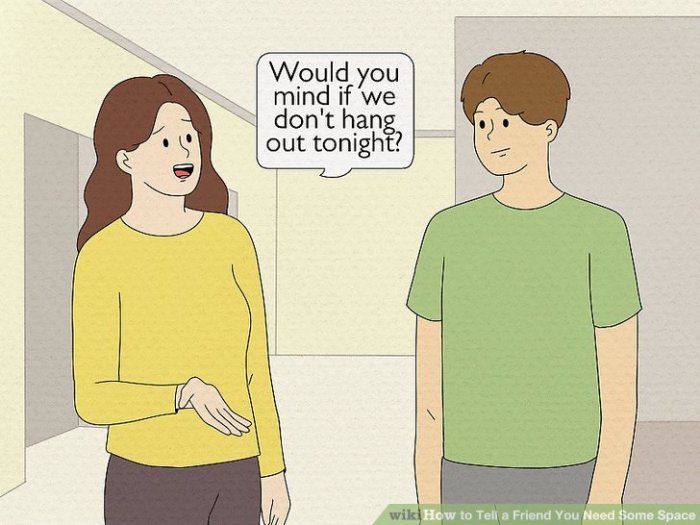
Seeking space in a friendship, while often necessary, can be a delicate process. It requires careful consideration of the impact it might have on the relationship, both in the short and long term. Honesty and clear communication are key to navigating this sensitive situation effectively. Understanding the potential benefits and drawbacks of requesting and granting space can lead to healthier and more fulfilling connections.The need for space in a friendship, like in any relationship, can be a complex issue.
It’s important to recognize that this need is valid and often a sign of a desire for personal growth or a re-evaluation of existing dynamics. However, the process of communicating this need and the subsequent impact on the friendship requires careful consideration. Open communication and empathy are crucial for navigating this delicate phase.
Sometimes, you just need to tell a friend you need some space, and that’s totally okay. It’s like when your lawn mower breaks down – you might need to troubleshoot a few things before getting it running smoothly again. Sometimes that means getting a professional opinion, or checking out resources like Repair a Lawn Mower for helpful tips.
Ultimately, taking a step back and communicating your needs is key, just like getting that lawn mower back in tip-top shape.
Potential Impact on Friendships
A need for space can affect friendships in various ways. In the short term, there might be a temporary distancing, awkward silences, or a feeling of confusion or hurt from the friend who isn’t getting the space. The friend granting space may also experience a sense of loss or disappointment. Long-term, a lack of effective communication regarding the need for space can lead to resentment, a breakdown in trust, or even the eventual end of the friendship.
Conversely, a well-managed request and acceptance of space can strengthen the relationship in the long run, fostering healthier boundaries and understanding.
Benefits of Communicating the Need for Space
Communicating the need for space, when done thoughtfully, can have several benefits. It allows the friend to understand the situation better and can help prevent misunderstandings. It fosters a sense of respect for personal boundaries, which is crucial for maintaining healthy relationships. Furthermore, clear communication demonstrates honesty and maturity, which can strengthen the friendship in the long run.
Drawbacks of Communicating the Need for Space, Tell a Friend You Need Some Space
While communicating the need for space is often beneficial, there are also potential drawbacks. The friend may feel rejected or hurt, potentially leading to conflict or resentment. It can also create a sense of distance or discomfort in the relationship. The request for space might also be misinterpreted, leading to further misunderstandings. Therefore, the manner in which the need for space is communicated is crucial.
Scenario: A Need for Space from a Friend
Imagine Sarah and Emily have been close friends for years. Emily has recently become overwhelmed with work and personal commitments, feeling that she’s unable to give Sarah the attention she deserves. Emily feels increasingly guilty about this, as she values her friendship with Sarah. She decides to communicate her need for space to Sarah, explaining that she needs to prioritize her own well-being.
Emily carefully explains that this doesn’t mean she doesn’t value their friendship, but that she needs some time for herself to recharge.
Importance of Open Communication and Empathy
Open communication, empathy, and respect are vital when dealing with a need for space in a friendship. When communicating the need for space, honesty, clarity, and sensitivity are paramount. The friend granting space needs to be empathetic and understanding, recognizing the other person’s perspective. Acknowledging and validating the other person’s feelings is essential to navigating this sensitive situation constructively.
Active listening, respectful dialogue, and a willingness to compromise are crucial for maintaining the friendship. Ultimately, a genuine desire to understand each other’s needs is critical to maintaining a healthy and lasting relationship.
Managing Expectations
Sometimes, needing space from a friend is inevitable. It’s a crucial aspect of maintaining healthy boundaries and prioritizing your well-being. However, this can be challenging, especially when you know your friend might feel hurt or disappointed. Understanding how to manage expectations is key to navigating this situation with empathy and grace.Managing a friend’s expectations requires careful consideration and communication.
This involves anticipating potential reactions and formulating thoughtful responses to maintain the friendship while respecting your own needs. Open and honest dialogue is essential to ensure that your friend understands the situation and respects your need for space.
Communicating the Need for Space
Clearly articulating your need for space is vital. Vague or indirect communication can lead to misunderstandings and further complications. Direct, honest communication fosters trust and understanding. Avoid blaming or making your friend feel responsible for your need for space. Focus on your own needs and desires without making them feel inadequate.
For example, instead of saying “You’re too much,” try “I need some time to focus on myself right now.”
Supporting Your Friend Through Their Disappointment
It’s natural for a friend to feel disappointed or hurt when you need space. It’s crucial to support them through this, without taking their feelings personally. Emphasize that your need for space is about your own well-being and not a reflection of their worth or value to you. Acknowledging their feelings, while maintaining your boundaries, is key.
Possible Friend Reactions
- Disappointment: A friend might express sadness or disappointment at the need for space. They might question if you’re upset with them.
- Confusion: Your friend might be confused about the reasons behind your need for space, leading to questions and uncertainty.
- Hurt Feelings: They might interpret your need for space as a rejection or a sign that they’re not good enough for you.
- Anger: In some cases, a friend might react with anger or frustration, feeling betrayed or misunderstood.
- Acceptance: Thankfully, some friends will understand and respect your need for space without any issues.
Responding to Different Reactions
A crucial part of managing expectations is responding appropriately to your friend’s reactions.
- Disappointment/Confusion: Acknowledge their feelings with empathy, stating that you value their friendship and want to maintain it. Explain your need for space without placing blame or making them feel responsible for your decision. For example, “I’m sorry if this makes you feel disappointed. I need some space right now to focus on myself, but that doesn’t change how much I value our friendship.”
- Hurt Feelings: Reassure them of your continued friendship. Emphasize that needing space is not a reflection on them. For example, “I value our friendship very much, and this need for space has nothing to do with you. I’m just prioritizing my own needs for a while.”
- Anger: Listen to their anger without interrupting. Validate their feelings, while firmly maintaining your boundaries. Express your desire to maintain the friendship while explaining your need for space. “I understand your anger, and I’m sorry if this hurts you. I need some time for myself, but I value our friendship and hope we can reconnect in the future.”
- Acceptance: Appreciate their understanding and respect. Thank them for their support and understanding. Let them know you’re looking forward to reconnecting when you’re ready.
Handling Disappointment or Hurt Feelings
When a friend expresses disappointment or hurt feelings, acknowledge their emotions. Let them know that you understand their perspective, and that you still value their friendship. Focus on maintaining a respectful and empathetic tone. Ensure that your actions and words reflect your commitment to preserving the friendship.
Maintaining Healthy Boundaries
Friendships are vital for our well-being, offering support, laughter, and shared experiences. However, navigating these relationships requires understanding and respecting personal boundaries. Healthy boundaries are essential for maintaining a fulfilling and respectful friendship dynamic. They allow individuals to express their needs and limits without fear of judgment or resentment.Healthy boundaries are not about being aloof or unfriendly; rather, they’re about establishing clear expectations and communication regarding what you’re comfortable with and what you’re not.
These boundaries, when respected, foster trust and allow the friendship to thrive in a mutually beneficial way. They help prevent misunderstandings and ensure both individuals feel valued and respected within the relationship.
Significance of Personal Boundaries in Friendships
Personal boundaries in friendships are crucial for maintaining a healthy and balanced relationship. They allow individuals to protect their emotional and physical well-being while also fostering trust and respect. Without clear boundaries, friendships can easily become unbalanced, leading to one person feeling taken advantage of or unheard. Boundaries ensure that both individuals feel safe and respected in the relationship.
Key Characteristics of Healthy Boundaries
Healthy boundaries are characterized by several key elements. They are clearly defined, communicated openly, and consistently enforced. Respect for the other person’s boundaries is paramount. These boundaries are not rigid, but rather adaptable and responsive to changing circumstances within the friendship.
- Clarity: Healthy boundaries are explicit and understandable. They clearly define what is acceptable and unacceptable behavior within the friendship. This clarity prevents ambiguity and potential conflicts.
- Respect: Mutual respect is fundamental. Both individuals acknowledge and honor each other’s boundaries. This includes actively listening to and valuing the other person’s needs and preferences.
- Flexibility: Boundaries are not static. They can adapt and evolve as the friendship develops and circumstances change. Open communication is key to adjusting boundaries as needed.
- Assertiveness: Expressing needs and limits directly and respectfully is crucial. This involves clearly communicating expectations without aggression or defensiveness.
Examples of Establishing and Maintaining Boundaries
Establishing and maintaining healthy boundaries requires proactive communication and consistent action. Examples include:
- Communicating needs: If you need more space in the friendship, directly communicate your needs. Use “I” statements to express your feelings and expectations without blaming the other person. For example, “I need some time to myself to recharge, and I would appreciate it if we could spend less time together for a while.”
- Setting limits: Clearly define what you’re comfortable with in terms of time commitments, emotional support, and social activities. For instance, if you’re not comfortable with frequent late-night calls, communicate this directly to your friend.
- Following through: Once a boundary is set, consistently enforce it. This demonstrates respect for yourself and your friend. If you’ve communicated a need for space, stick to your decision.
Relationship Between Boundaries and Needing Space
Needing space in a friendship is often a sign that boundaries are not clearly defined or are being violated. Creating and maintaining healthy boundaries helps address the need for space in a respectful and constructive way. The space is not a rejection of the friendship, but rather a recognition of individual needs and a desire to maintain a healthy dynamic.
Space allows both parties to recharge and return to the friendship from a stronger position.
Comparing Healthy and Unhealthy Boundaries
| Healthy Boundary | Unhealthy Boundary |
|---|---|
| Clearly defined and communicated | Vague or unspoken |
| Mutual respect and understanding | One-sided demands or control |
| Flexible and adaptable to changing circumstances | Rigid and inflexible, leading to resentment |
| Assertive communication | Passive or aggressive communication |
Long-Term Implications
Taking time apart in a friendship can be a powerful tool for personal growth and strengthening the bond in the long run. It’s a necessary step sometimes, allowing individuals to focus on their own well-being and needs. This period of space can reveal underlying issues, fostering a deeper understanding of oneself and the dynamics of the relationship.Understanding the long-term implications of needing space in a friendship involves acknowledging that it’s not always a negative event.
The need for space can be a catalyst for positive change, both individually and within the friendship. This period can be a crucial opportunity for personal growth and self-discovery, which ultimately can benefit the relationship. However, handling this time apart poorly can lead to distancing and strained connections. Careful consideration and thoughtful action are essential for maintaining a healthy and enduring friendship.
Positive Outcomes of Needing Space
A need for space can foster personal growth. When individuals take time for themselves, they can reflect on their values, goals, and needs. This self-reflection can lead to a clearer understanding of what they want in a friendship, ultimately making the relationship more fulfilling. For example, if someone realizes they need more time for hobbies or professional development, taking space allows them to pursue these interests.
This newfound independence can lead to a more balanced and enriching life, positively impacting the friendship when they return.
Sometimes, the best thing you can do is tell a friend you need some space. It’s a tough conversation, but honesty is key. This can be especially helpful when navigating creative projects, like, say, checking out the new cover and remix listen by Beck and Natalie Bergman. This new collaboration reminds me that sometimes, stepping back from a situation allows for better perspective and ultimately, a stronger connection in the long run.
Ultimately, telling a friend you need space is about setting healthy boundaries, and that’s a beautiful thing.
Negative Outcomes of Needing Space
Unfortunately, a lack of clear communication or a mismanaged need for space can lead to misunderstandings and resentment. If one friend doesn’t communicate their needs effectively or the other doesn’t respond constructively, the friendship can suffer. A failure to address underlying issues can lead to distance and a sense of isolation, potentially resulting in the friendship fading away.
For instance, if one friend needs space due to a conflict and doesn’t address the conflict, the resentment can fester and eventually damage the friendship.
Maintaining a Healthy Friendship After Space
Rebuilding a friendship after needing space requires proactive communication. Open and honest dialogue about the need for space and the reasons behind it is crucial. Once the space is over, a dedicated effort to reconnect is vital. This involves scheduling time to talk, expressing feelings, and listening actively to the other person’s perspective. Active listening is a cornerstone of maintaining a healthy relationship.
Sometimes, the best thing you can do is tell a friend you need some space. It’s not always easy, but it’s a crucial step in maintaining healthy relationships. This can be tough, but sometimes, talking things through with a resource like serengeti talk to me can really help you figure out how to navigate these situations.
Ultimately, setting boundaries is key, and letting a friend know you need space is a positive step toward self-care and stronger relationships in the long run.
This shows that you value their thoughts and feelings. It allows for both parties to understand each other’s experiences better. This process can lead to a deeper understanding and a stronger bond.
Impact on Personal Growth and Self-Awareness
The need for space can be a significant opportunity for personal growth and self-awareness. Taking time to reflect on the friendship and one’s own role in it allows for a deeper understanding of one’s needs and boundaries. This self-awareness is crucial for maintaining healthy relationships. For instance, if someone realizes they need more independence, taking space allows them to explore that desire without feeling pressured to conform to others’ expectations.
This newfound clarity can lead to healthier, more fulfilling relationships in the future.
Timeline of Friendship Evolution After Needing Space
| Phase | Description |
|---|---|
| Initial Space | One friend expresses the need for space. Communication is key to establishing a mutual understanding. |
| Independent Growth | Both friends independently work on their personal needs and goals. This period of self-reflection can lead to personal growth. |
| Reconciliation | The friends reconnect, engaging in open and honest communication to address any issues that arose. This phase involves active listening and understanding. |
| Strengthened Bond | The friendship is rebuilt, stronger and more fulfilling than before, with improved communication and understanding of boundaries. A deeper understanding of each other’s needs and preferences develops. |
Illustrative Examples: Tell A Friend You Need Some Space
Taking space from a friend can be a delicate situation, requiring careful consideration and communication. It’s not about ending a friendship, but about recognizing and addressing individual needs. Understanding how to effectively communicate this need is crucial for maintaining healthy relationships. These examples illustrate how different approaches can impact the outcome.Effective communication, combined with understanding, plays a significant role in navigating the need for personal space within a friendship.
The following examples showcase scenarios of both successful and unsuccessful communication, highlighting the importance of open dialogue and empathy.
Scenario of a Friend Needing Space
Sarah and Liam have been close friends for five years. They’ve shared everything, from their deepest fears to their wildest dreams. However, recently, Sarah has felt overwhelmed by Liam’s constant need for her time and emotional support. She feels drained and unable to maintain her own personal commitments. She needs space to recharge and reconnect with herself.
Her desire for space is not about disliking Liam, but about prioritizing her own well-being.
Effective Communication of the Need for Space
In this scenario, Sarah chooses to communicate her need for space in a thoughtful and respectful manner. She schedules a time to talk with Liam, explaining that she’s been feeling overwhelmed lately and needs some time to herself to focus on her own well-being. She acknowledges the importance of their friendship and assures Liam that she’ll still be there for him, but that she needs space to recharge.
This communication is clear, honest, and empathetic. Liam, understanding her perspective, responds with support and respect, agreeing to give her the space she needs.
Poor Handling of the Need for Space
Imagine a scenario where Emily, feeling overwhelmed by her friend, David’s constant demands, simply stops responding to his calls and messages. She avoids any further interaction. This approach, while providing her with space, is ultimately hurtful and damaging to the friendship. David feels hurt and rejected, leading to misunderstandings and resentment. This example highlights the importance of direct communication rather than avoidance.
Importance of Communication and Understanding
The examples demonstrate that effective communication is paramount in addressing the need for space. Open and honest conversations allow both parties to understand and respect each other’s needs. Avoidance, on the other hand, can lead to misunderstandings and damage the relationship. Empathy and mutual respect are crucial for navigating these situations successfully. Clear communication, acknowledging the impact on the other person, and maintaining a respectful tone, are vital in any scenario.
A Story Illustrating the Need for Space
Mark and Chloe were inseparable. They spent every weekend together, sharing every detail of their lives. However, as Mark’s career took off, he found himself increasingly overwhelmed by work deadlines and responsibilities. Chloe, eager to spend quality time with him, continued to reach out, often expecting immediate responses and attention. Mark felt increasingly strained and unable to keep up with her demands.
He tried to explain his situation, but Chloe misinterpreted his attempts to create space as a sign of diminished affection. The friendship began to fracture, marked by growing resentment and misunderstandings. Ultimately, Mark’s need for space was not addressed effectively, resulting in the gradual erosion of the friendship. This highlights the importance of clear communication and understanding individual needs.
Ultimately, the need for space isn’t a sign of disinterest, but a vital part of maintaining a healthy relationship.
Closing Notes
Ultimately, communicating your need for space is a vital aspect of healthy relationships. By understanding the reasons behind your need for space, choosing the right communication strategies, and managing expectations, you can navigate these situations with grace and maintain healthy boundaries. This guide empowers you to approach these conversations with confidence and respect, ultimately fostering stronger, more sustainable friendships.