
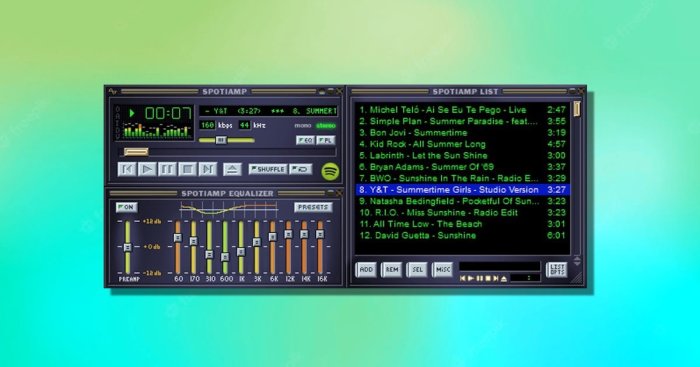
Winamp the vintage mp3 software is officially back – Winamp, the vintage MP3 software, is officially back! This nostalgic return sparks excitement and intrigue, reminding us of a time when digital music was revolutionized. It’s a fascinating look at how technology has evolved, and how a beloved program from the past might adapt to the present. This comeback promises a trip down memory lane, while also facing the challenges of a vastly different digital music landscape compared to its heyday.
Winamp’s resurgence is intriguing, especially considering the evolution of music consumption habits. We’ll delve into the reasons behind this revival, examining potential marketing strategies and the target audience. From its original functionality to its modern adaptation, we’ll explore how Winamp aims to meet the needs of a new generation of users, while retaining its appeal to nostalgic fans.
Winamp’s Revival
Winamp, the once ubiquitous and beloved MP3 player, is making a comeback. Its resurgence is a fascinating case study in the cyclical nature of technology and the enduring appeal of a well-designed product. This return isn’t just a nostalgic trip down memory lane; it’s a response to a shift in the digital music landscape and a recognition of the player’s enduring strengths.The revival of Winamp signifies a re-evaluation of its legacy and a potential adaptation to modern user expectations.
It’s a chance to see how a classic can be modernized while retaining its core appeal. Winamp’s initial success was deeply intertwined with the rise of MP3 technology and its democratization of music access.
Winamp’s Historical Significance
Winamp’s popularity skyrocketed in the late 1990s and early 2000s, coinciding with the explosive growth of the internet and the increasing availability of digital music. It offered a user-friendly interface, a wide array of customization options, and a robust plugin system, allowing users to tailor their listening experience. Its versatility and ability to play various audio formats, particularly MP3, made it a crucial tool for music lovers.
Winamp’s early success was not just about playing music; it was about creating a community around the software. Users shared skins, plugins, and artwork, fostering a sense of shared passion.
Factors Contributing to Winamp’s Decline
Several factors contributed to Winamp’s eventual decline and disappearance from the mainstream. The rise of dedicated music players, like iTunes, offered a more polished user experience and tighter integration with Apple’s ecosystem. Furthermore, the increasing prevalence of streaming services fundamentally altered the way people consumed music. The shift from downloading to streaming, coupled with the emergence of simpler and more integrated platforms, made Winamp’s complex and customizable interface less appealing to the average user.
Additionally, the proliferation of internet-based music sharing platforms and the subsequent copyright concerns led to legal issues that impacted Winamp’s development and support.
The Modern Digital Music Landscape
The current digital music landscape is vastly different from the past. Streaming services like Spotify, Apple Music, and YouTube Music have become dominant players, offering vast libraries of music on-demand. The focus has shifted from downloading and managing files to consuming music instantly. The experience is generally simpler, although often with limitations on customization and file management compared to the flexibility Winamp offered.
Winamp vs. Modern Music Players, Winamp the vintage mp3 software is officially back
Modern music players often prioritize ease of use and seamless integration with other services. While Winamp excelled in customization and extensive plugin support, contemporary players often focus on curated experiences and sophisticated algorithms for music discovery. Both approaches have their strengths. Winamp, however, allowed for significant user control, which is a key distinction from modern platforms.
Comparison Table: Winamp vs. Modern Players
| Winamp Feature | Modern Equivalent | Advantages/Disadvantages |
|---|---|---|
| Extensive plugin system | Limited customization options in streaming apps | Winamp: High customization, but complex setup. Modern: Easier, but less control. |
| Extensive file management | Limited file management in streaming apps | Winamp: Detailed file handling, Modern: Often streamlined, but less granular control. |
| High degree of user customization | Limited user customization in streaming apps | Winamp: Complete user control. Modern: Pre-defined themes and features. |
| Wide support for audio formats | Streaming apps support most popular formats | Winamp: Vast support. Modern: Focus on streaming, but usually support common formats. |
Winamp’s Return
Winamp, the once ubiquitous digital audio player, is making a comeback. This resurgence sparks a lot of interest, prompting questions about the motivations behind its revival and the strategies employed to bring it back to the forefront of digital music consumption. The potential impact on the current music landscape and the challenges associated with this ambitious venture are also worthy of consideration.The return of Winamp signals a fascinating intersection of nostalgia and innovation.
It highlights the enduring appeal of familiar interfaces and the potential for reimagining classic software for a modern audience. Successfully navigating this transition hinges on understanding the reasons for its revival and the methods employed in reintroducing the software to a new generation of users.
Potential Motivations Behind Winamp’s Return
The return of Winamp likely stems from a combination of factors. Nostalgia plays a significant role, as a large segment of the population experienced Winamp’s dominance during their formative years. This latent desire for familiarity and the potential for user engagement via a nostalgic experience are major motivations. Furthermore, the resurgence may also be driven by the desire to capitalize on the growing interest in vintage software and the potential to generate revenue through subscriptions or premium features.
The inherent marketability of a classic product like Winamp cannot be discounted.
Marketing Strategies for Winamp’s Comeback
A successful comeback requires a strategic marketing approach. Utilizing social media platforms to connect with nostalgic users and generate excitement is crucial. Collaborations with influencers who were active during Winamp’s heyday can amplify reach and credibility. Highlighting the unique features and functionalities of the revamped Winamp, alongside showcasing its compatibility with modern operating systems and file formats, will be vital.
So, Winamp, the vintage MP3 software, is officially back! It’s cool to see such a classic get a revival. Speaking of music, have you heard Grimes and Hana’s cover of Tegan and Sara’s song? It’s a fantastic take on the original, definitely worth checking out. Grimes and Hana cover Tegan and Sara listen here.
Regardless, the return of Winamp is a welcome addition to the digital music landscape, bringing back fond memories for many.
A strong emphasis on the user experience and the seamless integration with modern digital ecosystems will be critical for a positive reception. Moreover, emphasizing the core values of Winamp, such as user control and customization, would attract users who value control over their audio experience.
Anticipated User Base and Target Demographic
The anticipated user base for the Winamp revival will likely include a broad spectrum of individuals. Those who used Winamp during its prime will be a significant portion, driven by nostalgia and a desire to relive the experience. The target demographic will also include younger users who are interested in vintage software, digital music history, and exploring unique audio experiences.
The appeal will also likely extend to music enthusiasts who appreciate customization options and user-friendly interfaces.
Potential Challenges and Risks
Several challenges and risks are associated with the project. Adapting the software to modern operating systems and maintaining compatibility with contemporary file formats is a significant hurdle. The ability to maintain a positive user experience and address any technical issues efficiently is crucial. The resurgence may also face competition from other, more modern audio players, making it essential to offer distinctive features to attract and retain users.
Maintaining the user base and ensuring ongoing support for the software will be paramount.
Strengths and Weaknesses of Winamp’s Comeback
| Factor | Strengths | Weaknesses |
|---|---|---|
| Nostalgia Factor | High potential for attracting a large user base, particularly those who used Winamp in the past. | May not resonate with younger users who are unfamiliar with the software. |
| Customization Options | Could attract users seeking a high degree of control over their audio experience. | Complexity of customization may be a barrier for some users. |
| Modern Compatibility | Crucial for wider adoption and appeal to a modern audience. | Significant technical challenge to ensure seamless integration with current operating systems and file formats. |
| Marketing Strategy | Successful marketing campaigns can leverage nostalgia and build excitement for the comeback. | May struggle to compete with established and popular music players in the market. |
Functionality and Features
Winamp’s return promises a fresh take on a beloved classic. While retaining the nostalgic charm that made it a cornerstone of online music listening, the revived version will adapt to modern digital consumption habits. This includes a focus on user-friendliness, intuitive navigation, and compatibility with a wide range of current media formats. The core functionality will be reimagined to address modern listening preferences while respecting the original Winamp’s spirit.
Expected Functionalities
The new Winamp will maintain its core function of playing music files, but with enhancements. Users can expect a streamlined interface, faster loading times, and a wider range of supported file types. It will also feature improved audio quality, possibly with support for high-resolution audio formats like FLAC and ALAC. Crucially, the revamped Winamp will incorporate a user-friendly design that streamlines the experience for new and returning users.
Modern Media Format Compatibility
Winamp’s revival will encompass modern media formats. This means support for MP3, AAC, WAV, FLAC, and ALAC files, alongside compatibility with various streaming services. Integration with cloud storage platforms, like Dropbox and Google Drive, will be an important addition for accessing and playing music from different sources. This will allow seamless playback from various online services.
New Features and Improvements
Beyond enhanced compatibility, Winamp’s new iteration might include features previously unavailable. Improved visual themes and customization options will allow users to personalize their experience. A dedicated podcast section, with podcast discovery and playback, is a potential feature, reflecting the current popularity of podcasts. This could also include the ability to create playlists from podcasts and other media sources.
Comparison of Old and Potential New Features
| Old Winamp Features | Potential New Winamp Features |
|---|---|
| Supported formats: Primarily MP3 | Supported formats: MP3, AAC, WAV, FLAC, ALAC, and streaming services integration |
| Basic visual customization | Extensive visual themes and customization options, including advanced skinning |
| Limited playlist management | Advanced playlist management, podcast integration, and cross-platform syncing |
| No streaming integration | Streaming integration with cloud storage, and possibly specific streaming service APIs |
| No dedicated podcast section | Dedicated podcast section with podcast discovery and playback |
Addressing Modern Needs
The new Winamp will incorporate modern features, ensuring compatibility with current needs. For instance, an intuitive drag-and-drop interface, faster loading times, and a simplified user experience will make the application more accessible to a wider audience. Improved performance, along with a user-friendly design, is expected.
User Experience and Interface
Winamp’s return necessitates a user interface that appeals to both seasoned fans and a new generation of listeners. Nostalgia for the classic Winamp interface is undeniable, but we must also consider the evolving needs and expectations of modern users. The design must strike a balance between honoring the past and embracing the future of digital music consumption.The user interface will be carefully crafted to offer a smooth and intuitive experience.
Prioritizing ease of use is paramount, whether navigating the music library, controlling playback, or exploring customization options. We intend to provide a visually appealing and functional interface that is both familiar and modern. This will involve incorporating elements of the original Winamp design while implementing contemporary usability principles.
Nostalgic Appeal and Modern Usability
A crucial aspect of the design is the incorporation of familiar elements to evoke nostalgia. Icons, color palettes, and even subtle design cues will be drawn from the original Winamp aesthetic. However, this nostalgic touch will be seamlessly integrated with modern user interface principles. For example, the iconic Winamp equalizer might be retained, but its controls will be more intuitive and visually clear for modern users.
This will help bridge the gap between the familiar and the functional.
User Experience for Different User Groups
The intended user experience will cater to different user groups. Nostalgic users will appreciate the familiar aesthetic, while newcomers will find the interface easy to navigate and learn. New features and functionalities will be clearly labeled and explained, ensuring a smooth learning curve for first-time users.
User Experience Structure
To ensure a cohesive and easy-to-understand user experience, the structure will be divided into sections, each with a specific focus:
- Initial Setup: Quick and straightforward steps for account creation, music library integration, and preferred settings.
- Navigation: Intuitive controls for browsing the music library, including tags, playlists, and recent playback.
- Customization: Options to personalize the interface and playback experience with themes, skins, and other preferences.
- Advanced Features: Detailed explanations for advanced users on features like scripting, custom plugins, and network streaming.
Design Options
| Design Variant | Aesthetic | Functionality | Target Audience |
|---|---|---|---|
| Classic Retro | Retains original color scheme and iconography | Simple controls, minimal new features | Nostalgic users, seeking familiarity |
| Modern Refined | Contemporary color palette, streamlined layout | Intuitive controls, advanced features highlighted | New users, seeking modern experience |
| Hybrid Approach | Combines retro and modern elements | Familiar controls, intuitive new features | Both nostalgic users and newcomers |
Technical Aspects and Development
The resurrection of Winamp, a beloved classic in the digital music landscape, presents a fascinating technical challenge. Bringing the software back to life requires careful consideration of the underlying codebase, its compatibility with modern systems, and the performance expectations of users. This section delves into the specifics of this revitalization, focusing on the intricate details involved.
Reviving the Codebase
Winamp’s original codebase, while iconic, is likely significantly different from modern programming standards. The process of reviving it involves meticulous analysis, restructuring, and modernization. This entails understanding the original code’s architecture, identifying potential compatibility issues with newer operating systems, and implementing necessary updates to maintain stability and functionality. Crucially, the team must ensure that the essence of the original Winamp experience is preserved while incorporating contemporary best practices for code quality and maintainability.
Compatibility Challenges
Maintaining compatibility across a wide range of operating systems and hardware configurations is a critical aspect of the Winamp revival. Modern systems differ greatly from those of the past, with different architectures, libraries, and APIs. The Winamp team must carefully evaluate the necessary adjustments to ensure the software operates seamlessly on both older systems, preserving nostalgia for the original users, and newer systems, to attract a new generation of users.
This might involve porting to newer languages or frameworks, or creating compatibility layers to bridge the gap between different environments.
Technical Specifications and Performance Considerations
Winamp’s performance is crucial for a positive user experience. The software must be able to handle large music libraries, streaming, and various playback options efficiently. Consideration must be given to memory usage, CPU load, and overall system responsiveness, especially in the context of modern hardware capabilities. Optimizations to minimize resource consumption are key to a smooth user experience, regardless of the user’s system’s specifications.
Potential Release Technical Specifications
| Specification | Description | Details |
|---|---|---|
| Operating System Compatibility | List of supported operating systems (e.g., Windows, macOS, Linux). | Windows (versions from 10 onwards), macOS (current version), Linux (various distributions). |
| Supported Audio Formats | List of audio file formats that Winamp can play. | MP3, WAV, FLAC, OGG, AAC, and potentially more, considering the current audio format landscape. |
| Hardware Acceleration | Details on hardware acceleration for playback (e.g., using GPU). | Support for hardware acceleration to potentially improve playback performance on systems with powerful GPUs. |
| Plugin Architecture | Details on how plugins are supported (e.g., architecture, API). | Modern plugin system allowing integration of third-party plugins to expand functionality, similar to how the original Winamp handled them. |
| User Interface | Description of the user interface design. | A modern and intuitive user interface that respects the original design language, with updated visual elements for improved usability. |
| Memory Usage | Expected memory consumption for various scenarios. | Optimized memory management strategies to minimize resource consumption and improve responsiveness. |
Impact and Implications
Winamp’s return, after a period of dormancy, promises a fascinating case study in the evolution of digital music consumption. Its resurgence is not merely a nostalgic trip down memory lane; it’s a reflection of the changing landscape of music players and the enduring appeal of a well-designed user interface. This return carries significant implications for the music industry, the software development community, and user preferences.The potential ripple effects of Winamp’s comeback extend far beyond a simple software update.
It represents a re-evaluation of what constitutes a modern music player and how user experience can be enhanced. Its influence on the future of music consumption is a complex interplay of nostalgia, technical innovation, and user expectations.
Potential Impact on the Music Industry
The music industry has evolved dramatically since Winamp’s heyday. Streaming services now dominate the market, and the way people access and consume music has fundamentally shifted. However, Winamp’s comeback could inject new life into the market by offering a familiar, perhaps more personal, experience. The app could attract a new generation of users interested in a more customizable and control-oriented listening experience.
A strong user base could also influence the development of future music players and potentially introduce new revenue streams, perhaps through in-app purchases or partnerships with artists.
Effect on Future Digital Music Players
Winamp’s revival might influence the design and development of future music players in several ways. The app’s emphasis on customization and flexibility could inspire developers to incorporate similar features into their own products. Furthermore, the potential for a significant user base to gravitate towards Winamp could force competitors to innovate, focusing on features that address specific user needs.
The resurgence of Winamp could push the boundaries of user customization in the industry, ultimately creating more nuanced and versatile music experiences.
So, Winamp, the vintage MP3 software, is officially back! It’s pretty cool to see such a classic return, right? While we’re on the topic of retro software and great sounds, you absolutely have to check out what Lord Apex has to say about things, especially for those seeking insights on self-discovery and personal growth. Head over to listen to Lord Apex speak for yourself the ones and you might just find yourself inspired to dig into some old-school MP3s! It’s a perfect pairing for all the new Winamp users.
Influence on Software Design and Development
Winamp’s design philosophy, centered on user control and customization, is likely to impact the approach to software development. Its strong community-driven nature and extensive customization options are features that have resonated with users for decades. This could inspire a shift in the way developers design user interfaces, placing more emphasis on flexibility and user-driven features. Developers might revisit and incorporate aspects of Winamp’s design into new applications, potentially fostering a renewed appreciation for the art of customization.
Potential Impact on User Preferences
Winamp’s comeback could significantly influence user preferences for music players. Nostalgia for the software’s user-friendly interface and customization options might drive a resurgence in the use of dedicated music players. The shift in the market toward simplicity and streamlined user interfaces could also be challenged by Winamp’s return, as its emphasis on customization might appeal to users seeking a more personalized experience.
So, Winamp, the vintage MP3 software, is officially back! It’s pretty cool, right? Speaking of cool, did you know you can make a metal sword without a forge? Check out this awesome tutorial on Make a Metal Sword Without a Forge for some seriously impressive DIY skills. Hopefully, Winamp’s return will inspire a new generation of digital music enthusiasts, just like the metal-working skills it takes to make a sword!
Potential Impacts Table
| Potential Impacts | Affected Industries | Predicted Outcomes |
|---|---|---|
| Increased user engagement with dedicated music players | Music industry, software development | Potential for new revenue streams, increased user customization options |
| Stimulation of innovation in music player design | Software development, music industry | Development of more flexible and customizable music players |
| Revival of a focus on user customization | Software development | Greater emphasis on flexibility and control within user interfaces |
| Attracting a new generation of users | Music industry, software development | Potential for increased market share and a new wave of interest in music players |
| Reinforcement of the role of community-driven development | Software development | Potentially more user-centric and innovative software solutions |
Illustrative Content: Winamp The Vintage Mp3 Software Is Officially Back
Winamp’s return marks a significant moment in digital music history, and visualizing its revival is key to understanding its impact. The following sections detail how Winamp’s iconic interface, logo, aesthetic, and modern integrations can be illustrated to capture its essence and appeal.
Winamp Interface Illustration
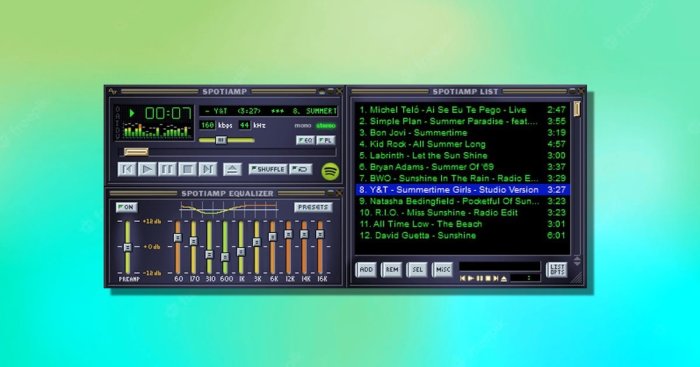
Winamp’s interface, a cornerstone of its appeal, was known for its highly customizable nature. A detailed illustration would showcase the main player window, highlighting its prominent display of album art, song titles, and artist information. The illustration should also emphasize the intuitive arrangement of controls, such as play/pause, volume, and playlist management. The user interface should demonstrate Winamp’s distinctive, slightly retro, and modern design elements in a visually appealing manner.
A transparent background or a subtle, yet effective, color palette should be employed.
Winamp Logo Illustration
The evolution of the Winamp logo is significant. A visual representation should depict the original Winamp logo’s vibrant color scheme and distinctive shape, alongside modern interpretations that retain the core aesthetic while adapting to contemporary design principles. This illustrates the logo’s enduring appeal while showing how it can be reimagined for a modern audience. The illustration should showcase the original logo and a few modern adaptations, highlighting the changes and consistency.
Winamp Aesthetic and Color Palette
Winamp’s aesthetic is a critical aspect of its visual identity. The illustration should depict a color palette that evokes nostalgia and modernity simultaneously. A range of color options, from the original, warm, and inviting shades to more contemporary and vibrant hues, should be shown. The typography used in the interface should also be highlighted. A combination of bold and legible fonts should be demonstrated to capture the attention of users while maintaining readability.
Playlist Illustration
An illustrative image showcasing a Winamp playlist should clearly display the playlist’s structure and functionality. The illustration should show a variety of songs, artists, and albums. The playlist should be presented in a visually appealing way, with appropriate spacing and organization. The image should also display the ability to easily add, remove, and reorder songs. Labels, icons, and buttons should be clearly identifiable.
Winamp Integration with Streaming Services
Illustrating Winamp’s integration with modern streaming services should focus on showcasing a seamless transition between traditional music playback and cloud-based services. The illustration should depict a window where Winamp displays the user’s streaming playlists from services like Spotify or Apple Music, allowing the user to easily navigate and play music from these platforms directly within Winamp’s interface. A clear visual representation of the integration process should be displayed.
The illustration should also demonstrate how Winamp might allow users to download music from streaming services for offline playback, if supported.
Wrap-Up
Winamp’s return marks a significant moment in digital music history. It’s a testament to the enduring appeal of classic software, and a fascinating case study in how legacy programs can adapt to modern needs. Whether it successfully navigates the complexities of the current digital music scene remains to be seen, but it certainly promises an interesting journey for both old and new users.