André Rieu and Yannick Nézet-Séguin Lead the Classical Music Charts in a Season Defined by the Bicentenary of Johann Strauss II


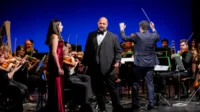
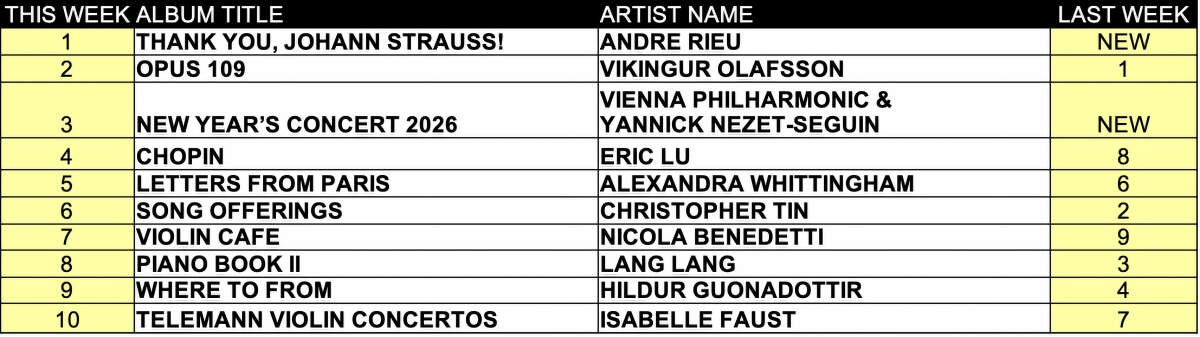
The classical music landscape for the week of January 12, 2026, reflects a powerful intersection of historical commemoration and contemporary star power, as evidenced by the latest sales and airplay data from the Classical Chartz. Topping the list is the Dutch violinist and conductor André Rieu, whose latest release, Thank You, Johann Strauss!, has secured the number one position. This achievement coincides with a global period of celebration marking the 200th anniversary of the birth of Johann Strauss II, the "Waltz King." Simultaneously, the high-profile entry of the 2026 New Year’s Concert at number three, featuring the Vienna Philharmonic under the baton of Canadian maestro Yannick Nézet-Séguin, underscores the enduring appeal of the Viennese tradition. These rankings, curated through a combination of retail sales figures and critical selection, provide a snapshot of a recording industry that remains deeply rooted in tradition while embracing modern interpretive voices like Nicola Benedetti, whose innovative Violin Café holds the number seven spot.
The André Rieu Phenomenon and the Strauss Bicentenary
André Rieu’s ascent to the top of the charts with Thank You, Johann Strauss! is not merely a commercial success but a testament to a career-long dedication to the Strauss legacy. Born in 1825, Johann Strauss II revolutionized the waltz, elevating it from a simple folk dance to a sophisticated art form that dominated the ballrooms of 19th-century Europe. Rieu, who founded the Johann Strauss Orchestra in 1987 with only twelve members, has since expanded it into a global touring juggernaut that brings the spectacle of the Viennese ball to millions of fans annually.
The new album serves as a definitive tribute, featuring 39 tracks that span the breadth of the Strauss family’s contributions to music. While the collection includes quintessential masterpieces such as the "Blue Danube" (An der schönen blauen Donau, Op. 314) and the "Radetzky March" by Strauss Sr., it also delves into more specialized repertoire. Notably, the inclusion of "Perpetuum Mobile, Op. 257" by Strauss Jr. highlights the composer’s wit and technical ingenuity. The release strategy for the album emphasizes the continued demand for physical media in the classical genre; the deluxe edition includes three CDs and a DVD, catering to a demographic that values tactile ownership and high-fidelity visual recordings of Rieu’s trademark theatrical performances.
In his reflections on the album, Rieu noted the profound personal impact of Strauss’s work, stating that 2025 and 2026 represent a momentous era for his ensemble. He observed that the "Blue Danube" continues to elicit a visceral, immediate reaction from audiences worldwide, often leading to spontaneous dancing in the aisles—a phenomenon rare in the traditionally reserved atmosphere of classical concert halls. This "joy-first" approach has often polarized critics, yet Rieu’s chart dominance suggests a massive public appetite for the accessible, melodic core of the 19th-century Viennese canon.
Yannick Nézet-Séguin’s Historic Debut at the Musikverein
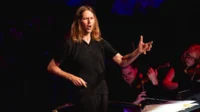
The entry of the New Year’s Concert 2026 at the number three position marks a significant milestone for Canadian music. Yannick Nézet-Séguin, the Music Director of the Metropolitan Opera and the Philadelphia Orchestra, made his debut conducting the Vienna Philharmonic for this iconic New Year’s Day event. The concert, broadcast from the Golden Hall of the Musikverein in Vienna, reached an estimated audience of over 50 million viewers across 50 countries, serving as the ultimate global platform for a classical conductor.
Nézet-Séguin’s program was a carefully curated balance of traditional Strauss favorites and historical rediscoveries. The Sony Classical release, a double CD set, features four works by Johann Strauss II, including the "Overture to Indigo and the Forty Thieves" and the "Fledermaus-Quadrille." However, the program also sought to expand the narrative of the era by including works by Carl Michael Ziehrer, Joseph Lanner, and Josephine Weinlich. A particularly notable inclusion was a work by the American composer Florence Price, signaling Nézet-Séguin’s ongoing commitment to diversifying the classical repertoire even within the rigid traditions of the Vienna Philharmonic.
The success of this recording on the charts reflects the "event" nature of the New Year’s Concert. For many listeners, the annual broadcast is a rite of passage, and the subsequent album release allows for a more intimate engagement with the nuances of the performance. Critics have noted that Nézet-Séguin brought a "transatlantic energy" to the fabled Vienna Phil, blending his characteristic lyricism with the orchestra’s legendary precision and warmth.
Nicola Benedetti and the Reimagining of the Recital
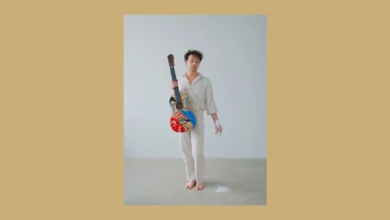
At the number seven position, Nicola Benedetti’s Violin Café offers a starkly different aesthetic from the grand orchestral tributes of Rieu and the Vienna Philharmonic. This album represents a more intimate, eclectic approach to the violin repertoire. Benedetti, a former BBC Young Musician of the Year and the current Director of the Edinburgh International Festival, has long been a champion of musical education and innovative programming.
Violin Café features an unusual ensemble consisting of Plínio Fernandes on guitar, Samuele Telari on accordion, Thomas Carroll on cello, Yume Fujise on violin, and Brighde Chaimbeul on Scottish smallpipes. The arrangements, which Benedetti described as coming to her "in the middle of the night," bridge the gap between high-art classical music and folk traditions. The program includes works by Bloch, Debussy, and Sarasate, alongside traditional Scottish melodies like the "Skye Boat Song."
The inclusion of the Scottish smallpipes on a classical chart-topping album is particularly noteworthy. It underscores a growing trend in the industry where soloists leverage their heritage to create unique, "genre-fluid" projects that appeal to a broader demographic. Benedetti’s choice to conclude the album with Debussy’s "Beau soir" highlights her ability to blend "uplifting virtuosity with seductive romance," a combination that has resonated deeply with her fanbase.
Market Trends: The Resilience of Classical Media
The current composition of the Classical Chartz reveals several key trends regarding the consumption of classical music in the mid-2020s. First, the prominence of multi-disc sets and DVD components in the top-ranking albums suggests that classical consumers remain among the most loyal supporters of physical media. While the broader music industry has shifted almost entirely to streaming, the classical market continues to thrive on high-quality physical releases that offer extensive liner notes, historical context, and visual supplements.
Second, the "anniversary effect" remains a primary driver of sales. The Strauss Bicentenary has provided a focal point for marketing and artistic programming, allowing labels to repackage standard repertoire under the guise of historical celebration. This cycle of anniversaries—be it for Strauss, Beethoven, or Brahms—ensures that the "Great Works" of the past remain commercially viable.
Finally, the charts illustrate the importance of personality-driven marketing. André Rieu, Yannick Nézet-Séguin, and Nicola Benedetti are not just musicians; they are brands with distinct public personas. Rieu represents populist joy; Nézet-Séguin represents elite, institutional excellence; and Benedetti represents artistic innovation and cultural advocacy. Their ability to move units in a crowded digital marketplace is a result of their successful engagement with audiences through television, social media, and live performances.
Chronology of Recent Classical Milestones
The current chart rankings are the culmination of several years of planning within the classical music industry. The road to the 2026 charts began in late 2024, when major labels like Sony and Universal (Decca/Deutsche Grammophon) began finalizing their recording schedules for the Strauss Bicentenary.
- October 2025: The official start of the Johann Strauss II 200th Anniversary celebrations. Cities like Vienna and Berlin launched year-long festivals dedicated to the composer.
- November 2025: André Rieu announced his "Thank You, Johann Strauss!" world tour, coinciding with the early release of lead singles from the album.
- January 1, 2026: Yannick Nézet-Séguin conducted the Vienna New Year’s Concert. The performance was immediately made available for digital download, with physical CDs following within the week.
- January 12, 2026: The current chart reporting period shows the simultaneous impact of the New Year’s broadcast and the sustained popularity of Rieu’s tribute album.
Analysis of Broader Implications
The dominance of Strauss-related music in early 2026 raises questions about the future direction of the classical industry. While the financial success of these recordings is undeniable, it also highlights a reliance on 19th-century European traditions. However, the efforts of conductors like Nézet-Séguin to include composers like Florence Price in high-profile broadcasts suggest a slow but steady evolution toward a more inclusive canon.
Furthermore, the success of Nicola Benedetti’s Violin Café suggests that there is significant room for "indie-classical" projects that do not rely on the grand orchestral model. By incorporating instruments like the accordion and smallpipes, Benedetti is challenging the definition of what constitutes a "classical" album, potentially opening the door for more diverse instrumentation in future chart entries.
As the industry moves further into 2026, the challenge for labels and artists will be to maintain the momentum generated by the Strauss Bicentenary. While the "Waltz King" has provided a reliable boost to sales, the long-term health of the classical market will depend on the ability of its stars to continue innovating and reaching new audiences through both traditional and non-traditional means. For now, the charts indicate a healthy, if conservative, market that remains deeply enamored with the melodies of the past.