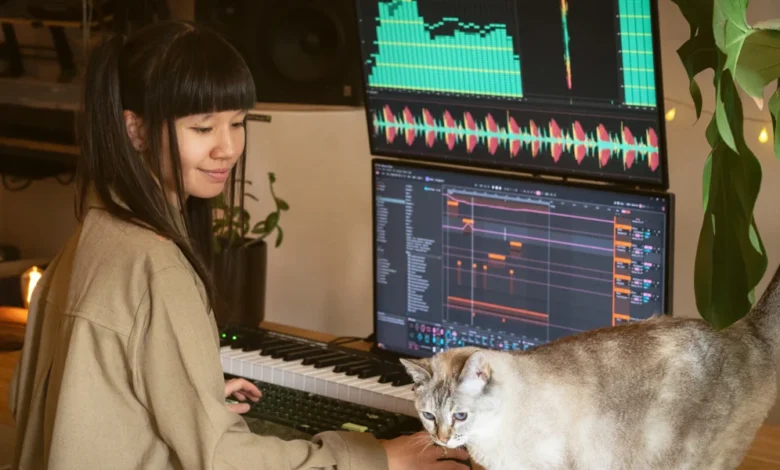
Munich, Germany – Lindsey Wang, known professionally as Polygonia, stands out as a formidable talent in the electronic music landscape, adeptly balancing technical prowess with profound artistic vision. Her recent collaboration with Ableton offers producers and enthusiasts an unprecedented look into her creative process, featuring a downloadable Live Set for her latest track, "Neon Oracle." This initiative provides a practical educational resource, enabling users to explore the intricate layers and innovative sound design that define Polygonia’s work, particularly as she leverages the advanced capabilities of Ableton Live 12.1.
A Foundation in Classical Mastery
Polygonia’s musical journey commenced far from the pulsating rhythms of electronic dance music, rooted deeply in a classical upbringing. Born into a family steeped in musical tradition – with a father who performed in the Shanghai Quartet and various German orchestras, a mother working for a major sheet music company, and a grandfather who was a clarinet professor – Wang’s early life was a conservatory of sound. She graduated from a specialized music high school, excelling in violin and piano, a testament to her inherent musicality and rigorous training.

This classical foundation instilled in her a meticulous understanding of harmony, rhythm, and structure. However, her exploration began to expand with the advent of pop music on radio and MTV, where she found herself less drawn to lyrics and more captivated by the electronic elements and production techniques. The pivotal shift occurred when friends introduced her to UK Dubstep, a genre that struck her as "super new and out of this world." This discovery marked her true entry into electronic music, opening a gateway to sonic experimentation beyond traditional instrumentation.
Evolution into Electronic Avant-Garde
Initially, traditional techno held little appeal for Wang, particularly the sounds prevalent in Munich at the time. Her curiosity led her to left-field hip-hop and experimental beat producers on SoundCloud, with Persian Empire, the label boss of Prrrrrrr Records, serving as a significant early inspiration. Persian Empire’s unconventional production and performance styles, blending instrumentalism with wild electronic textures, resonated deeply with her burgeoning creative spirit.
A transformative experience arrived at Freqs of Nature Festival, where she encountered the sounds of Cio D’or and Rrose. Their performances offered a distinct aesthetic—trippy and psychedelic, yet stripped-down, minimalistic, and refined, bridging a gap between her earlier explorations and a newfound appreciation for more sophisticated electronic sounds. Cio D’or, as a pioneering female artist, provided an additional layer of inspiration, demonstrating a powerful stage presence and a mastery that captivated Wang. This encounter cemented her path towards the nuanced and often hypnotic techno styles she now champions.
Multifaceted Artistic Endeavors: Collectives, Labels, and Trios
Polygonia’s artistic footprint extends far beyond her solo productions. She is a core member of the IO collective, a platform born from deep personal connections among high school friends. IO is not merely a music collective; it fosters cross-disciplinary experimentation, including the development of audio software, reflecting a shared vision for innovation. This collaborative environment allows artists to inspire each other and push creative boundaries across various fields.
Further cementing her commitment to the electronic music community, Wang founded QEONE, her independent label dedicated to championing emerging talent. Unlike many labels that focus on established names, QEONE leverages the lower investment of digital releases to promote smaller, aspiring artists. This commitment underscores her desire to diversify the scene and provide opportunities for fresh voices, actively seeking out and nurturing new talent rather than recycling familiar names.
Adding another dimension to her multidisciplinary approach, Polygonia is also part of Lyder, a trio that includes saxophonist Moritz Stahl and her partner, known as FTP Doctor. Lyder fuses jazz and techno through improvisation, live looping, and effects pedals, crafting immersive electroacoustic sound worlds. This project highlights her reverence for instrumentalism and sound design, creating unique sonic tapestries where traditional instruments are transformed into atmospheric soundscapes.
Munich’s Vibrant Electronic Music Scene
While Berlin often dominates the narrative of Germany’s electronic music scene, Munich boasts a thriving and supportive community that Polygonia proudly calls home. She notes the perceived unfairness of the Berlin-centric focus, highlighting Munich’s rich artistic talent and vibrant venues. Clubs like Blitz Club, known for booking eclectic artists and hosting Polygonia’s label nights, and Zirka Space, home to Radio 80000, are integral to the city’s electronic music pulse.
The Munich scene, being smaller, fosters a strong sense of community and mutual support, which Wang believes reduces the intense competitive pressure often felt in larger hubs like Berlin. This environment allows artists to develop organically and collaborate authentically, contributing to a distinctive local sound and ethos. Polygonia expresses her comfort and commitment to the city, stating she has no plans to relocate, emphasizing the strength and vibrancy of Munich’s cultural landscape.
"Neon Oracle": Genesis and Technical Deep Dive
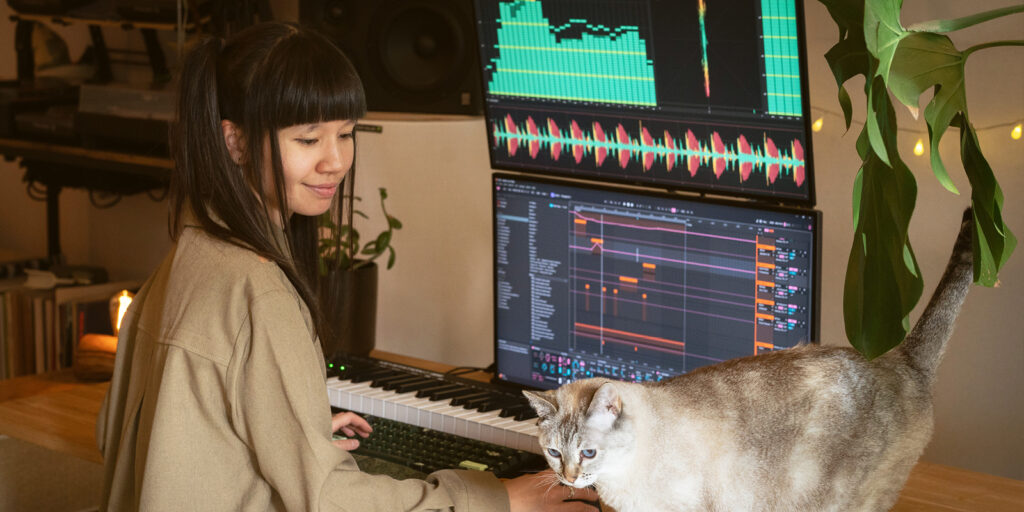
"Neon Oracle," Polygonia’s latest offering, represents a significant departure from her typical techno productions, born from a moment of profound inspiration. The track emerged after a performance in Brighton for DNO Records’ Mine event series, which focuses on dubstep. This gig was particularly meaningful as UK Dubstep was her initial gateway into electronic music. The euphoric experience of playing her unique twist on dubstep, leveraging a digital DJ setup to layer tracks akin to techno, and the incredible sound system at the venue, ignited a creative spark.
Feeling an urgent desire to capture that energy, Wang decided to revisit dubstep, a genre she hadn’t fully explored in her own productions until now. The project also served as an opportunity to experiment with the new features in Ableton Live 12.1, pushing her creative boundaries beyond familiar techno territories. The result is a track rich in detailed sound design, reflecting her background as a professional sound designer, including work on interactive synthesizers for electric vehicles. This experience instilled in her a philosophy of creating complex textures from simple, well-understood parameters, a principle she applies throughout "Neon Oracle."
In-Depth Production Breakdown: Ableton Live 12.1 in Action
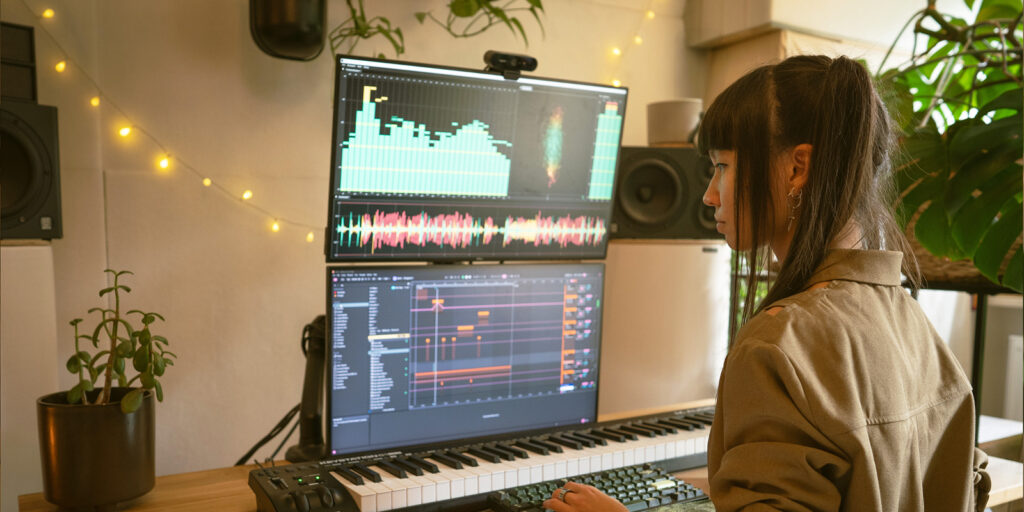
The Live Set for "Neon Oracle" offers a masterclass in modern electronic music production, showcasing Polygonia’s meticulous approach to sound design and her innovative use of Ableton Live 12.1’s new devices.
-
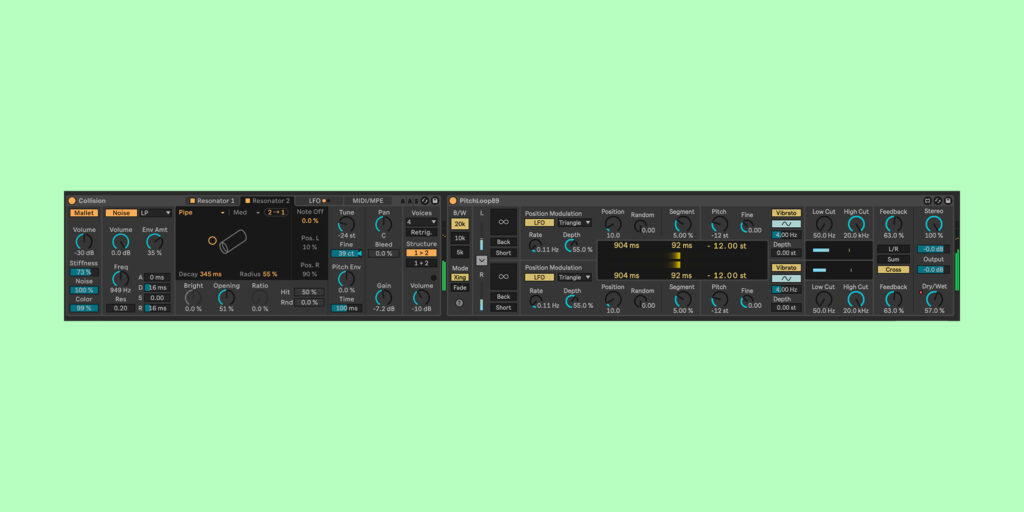
Ethereal Bell Textures (Collision & Pitchloop89): The track opens with a captivating, bell-like melody. Polygonia employed Ableton’s Collision device, favored for its ability to generate natural-sounding timbres quickly, challenging herself to move beyond her usual Operator synth. She then integrated Pitchloop89, a unique delay effect that allows for pitch manipulation. By setting the wet/dry balance at 57% and shifting the pitch down an octave, she crafted a deep, atmospheric layer while retaining the original sound’s presence. This demonstrates her preference for simple, yet potent, effect chains to maintain focus.
-
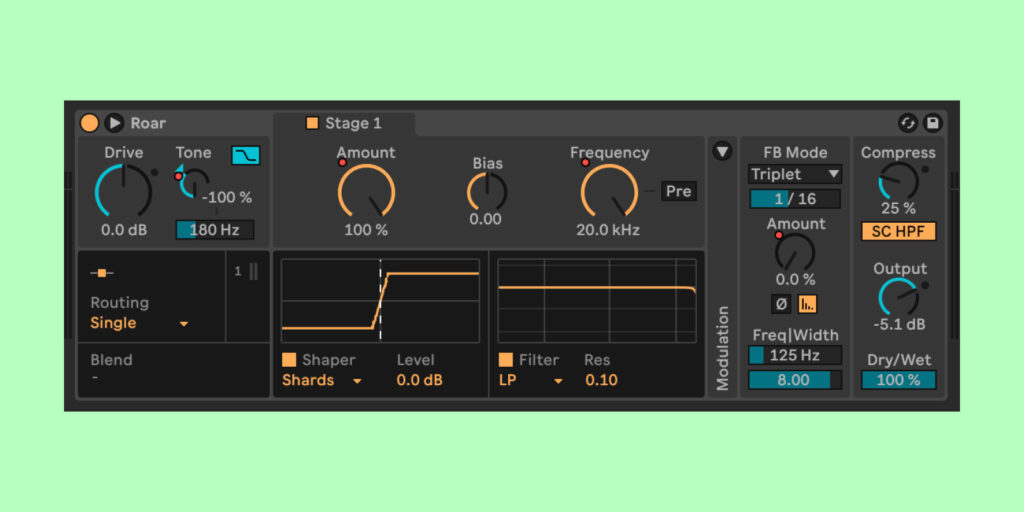
Distorted Kick with Roar: For the kick drum, Polygonia harnessed the power of Roar, a distortion effect introduced in Live 12.1. She found Roar to be a significant upgrade from Ableton’s older Amp device, offering more detailed control over distortion. A key element is the creative automation of Roar’s Feedback feature, which is unusual for a distortion effect. This automation generates a wave-like movement, adding remarkable tension and dynamism to the kick sound, a testament to her playful experimentation.
-
The Art of Automation: Automation is a cornerstone of Polygonia’s production philosophy. Having started her journey by manually drawing automation in Ableton’s session mode for live sets, she mastered the art of replicating a "live feel" through recorded automation. She prioritizes parameters with significant impact, such as envelopes in Operator, and maps numerous Macros to envelopes for her live performances, ensuring dynamic and evolving soundscapes. Her method brings a human, less mechanical quality to her tracks.
-
Operator: The Versatile Workhorse: Polygonia’s affinity for Operator is well-documented. She considers it a basic yet incredibly versatile synth, perfectly aligning with her philosophy of generating complex sounds from simple techniques. She learned to master its envelopes, oscillators, LFOs, and pitch envelopes to create a wide spectrum of sounds—from kick drums and hi-hats to intricate synth textures—without a discernible "Operator signature." This versatility is why she prefers it over hardware synths, which often have a distinct, inescapable sound.
-
Complex Sounds from Simple Techniques: This core philosophy guides Polygonia’s entire production process. It means keeping device chains concise and maximizing the potential of each unit. Instead of stacking numerous effects and only using one knob per unit, she delves deep into each parameter. Even with fundamental elements like sine tones, clever modulation can yield complex textures. Her approach emphasizes building a strong foundation and understanding the full capabilities of existing tools before adding more, ensuring depth and sophistication through efficient design.
-
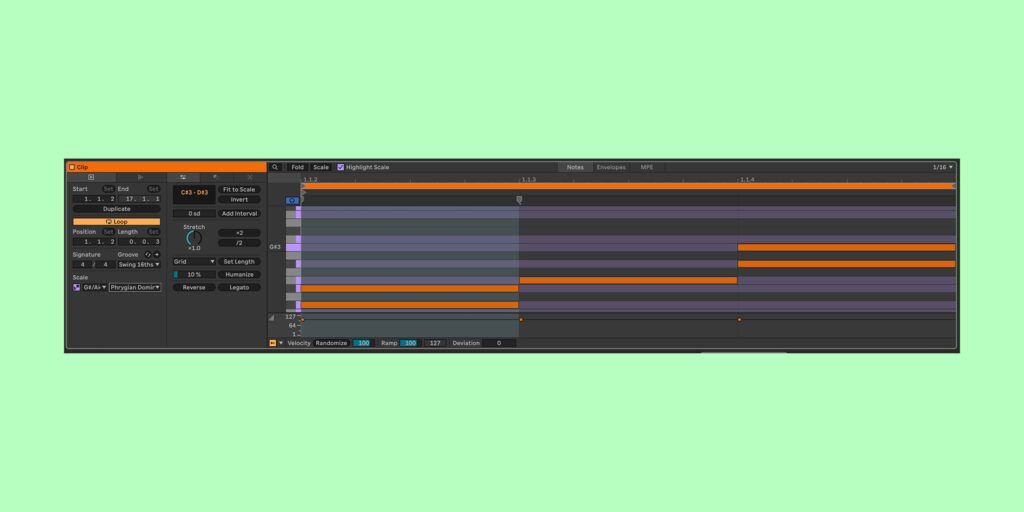
Arpeggio and the Phrygian Dominant Scale (Meld): The "Arp" track in "Neon Oracle" creates significant tension. Polygonia manually programmed the MIDI pattern, adding harmonic tension through a major second interval between two of the three notes in the scale. For the synth sound, she used Meld, experimenting with noisy waveforms and automating envelopes to create variations. The sound evolves, shifting an octave lower and blending in a second oscillator with automation, transforming the track’s narrative. Meld’s low latency also makes it ideal for live applications. Her choice of the Phrygian Dominant scale is particularly noteworthy. While she often identifies complex scales by ear, Ableton Live 12’s advanced scale selection feature allowed her to precisely apply this scale, known for its mysterious and intriguing quality, which she gravitates towards in her music. She describes it as "on another level of complexity" compared to the more intuitive Phrygian scale, adding a unique color to the track.
-
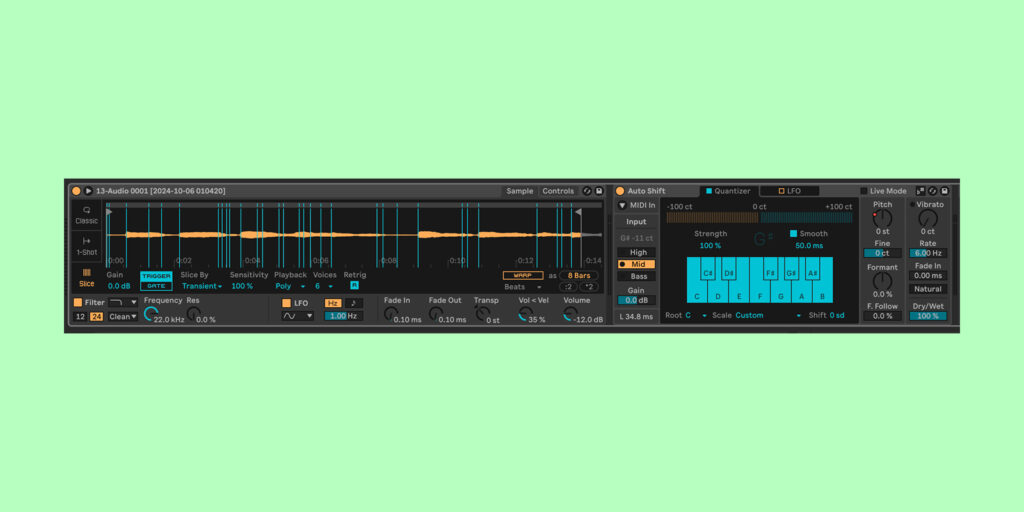
Auto Shift for Vocal Tuning: On the "Vocal Chops" track, Polygonia utilized Live 12.1’s Auto Shift device. While she tuned the vocals by ear, she later noted the device’s ability to sync to the project’s scale. Her method involved drawing a MIDI pattern of the target scale, playing it continuously with a grand piano sound, and then tweaking the vocal recording with Auto Shift to match, highlighting the device’s utility in harmonizing samples.
-
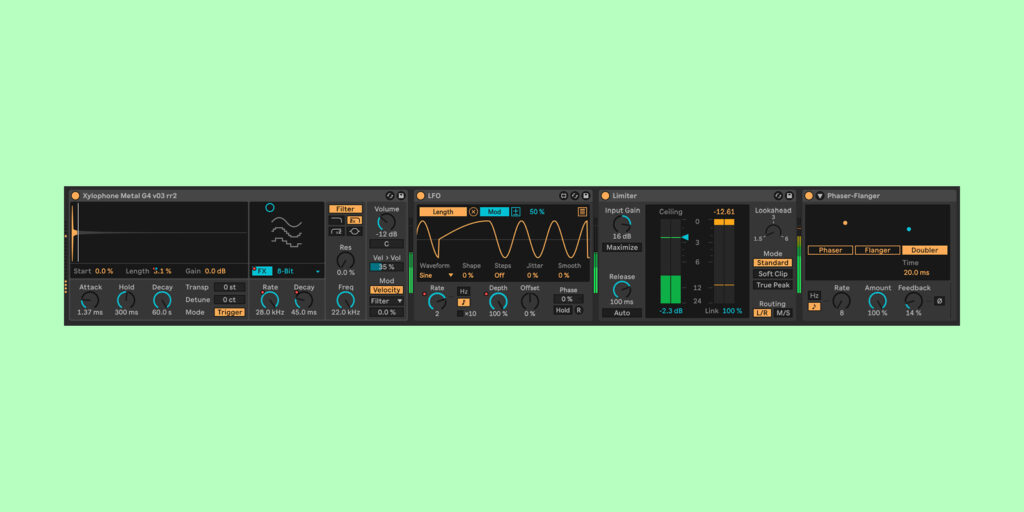
Xylophone and Drum Sampler Innovation: Polygonia ingeniously sampled a xylophone and transformed it into a melodic element using Live 12.1’s Drum Sampler. Employing a MIDI generator (possibly a Euclidean rhythm generator), she created a melody and modulated the sample length within Drum Sampler—a feature previously unavailable. This modulation, driven by a fast sine LFO, introduces subtle randomness in note duration, imparting a "human touch" akin to controlling a violin’s pizzicato envelope.
-
Snare Variation with Shifter: The Snare track benefits from Shifter, where Polygonia automated its parameters. The automation primarily adjusts the pitch at the end of the chorus to fade the snare out and subtly tweaks it during the first break. This strategic variation prevents the snare from sounding static, enhancing the engagement of the entire section.
-
Growling Bass from Wavetable (Dual Roar): The track features a powerful growling bass sound crafted with Wavetable. Polygonia leveraged Wavetable’s inherent wave shapes and automated the wave position for both oscillators. She further adjusted the filter with high resonance to accentuate specific frequencies and automated parameters like Warp and Fold. For added intensity, she applied two instances of Roar, both set to Multiband mode. This dual application, treating low, mid, and high ranges differently, significantly enhances the bass’s complexity and growl.
-
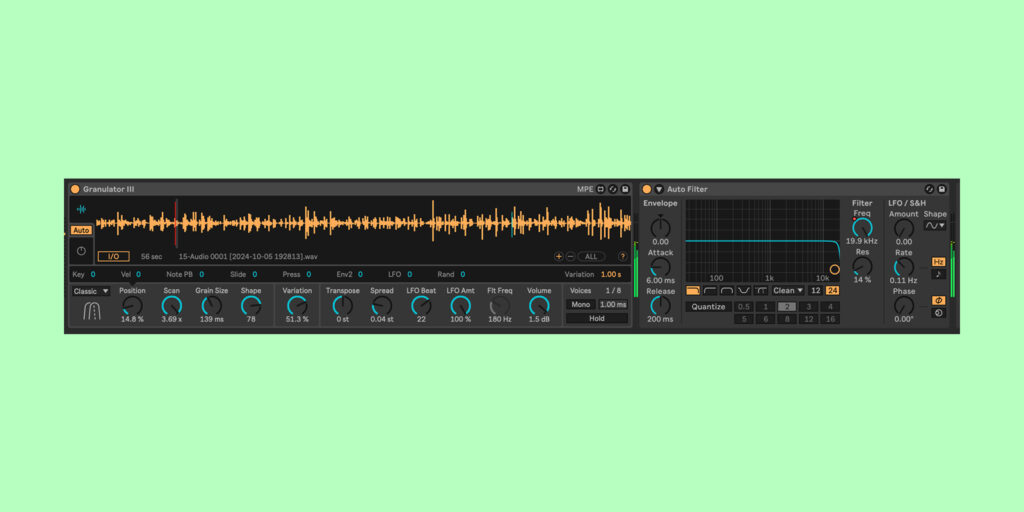
Organic Bell Textures with Granulator III: Polygonia engaged in resampling experiments to create the organic bell textures on track 24. She took the initial bell texture (from Collision/Pitchloop89) and processed it through Granulator III. By adjusting Grain Size, position, and the envelope within Granulator III, she created a unique, reverberant layer, demonstrating the effectiveness of simple yet powerful resampling techniques.
-
Punchy Toms and the Chinese Flute: The drum fills, particularly the toms, are meticulously programmed by hand, reflecting her clear vision for patterns. She drew inspiration from Trap music’s beat programming style, utilizing 808 toms for a "punchy, chest-hitting feel" on large sound systems. Careful placement, avoiding overlap with the kick, ensures an enhanced groove. The track’s "cherry on top" is a small, traditional Chinese flute. Initially produced without it, Polygonia felt the track needed a human element. Recording this childhood instrument, known for its incredible sound and fascinating overtones, added a unique and deeply personal touch to "Neon Oracle."
Looking Ahead: A Diverse 2025
Polygonia’s trajectory continues upward, with 2025 poised to be a landmark year. She is set to release her second album, which she describes as "quite eclectic," incorporating her voice alongside acoustic and electronic instruments. This album promises to further showcase her diverse musical palette and cross-genre fluidity. Additionally, she is slated to perform a live set at Outlook Festival, notably stating it "won’t be a techno set," signaling a broader exploration of her artistic range on a prominent international stage.
Polygonia’s journey, marked by a blend of classical discipline, electronic innovation, and a profound commitment to community, positions her as a significant voice in contemporary music. Her generosity in sharing the Ableton Live Set for "Neon Oracle" not only provides a valuable educational tool but also reinforces her dedication to fostering growth and experimentation within the global music production community.
**Download the Live Set to Polygonia’s track “Neon Oracle” here***
*Requires a Live 12.1 Suite license or the free trial.
Please note: This Live Set and included samples are for educational use only and cannot be used for commercial purposes.
Related posts: