Truly Fine Citizen: Moby Grape’s Overlooked 1969 Gem Shines Through Bob Johnston’s Production and Peter Lewis’s Songwriting

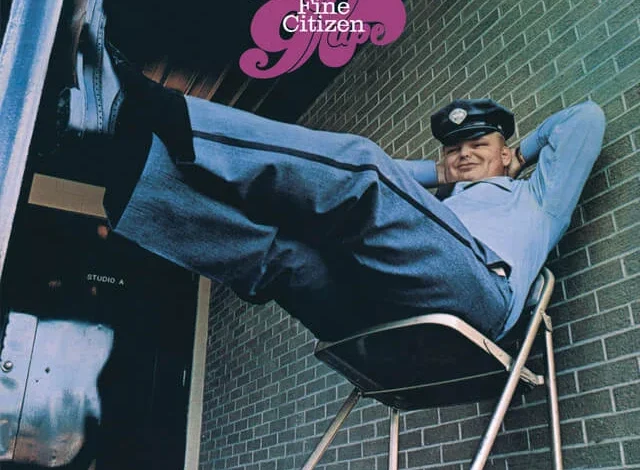
With a mere three days spent in a Nashville studio and the discerning touch of legendary producer Bob Johnston, the rugged yet sunny placidity of Moby Grape shone through on the band’s largely ignored 1969 relic, Truly Fine Citizen. This album, often relegated to the footnotes of psychedelic rock history, represents a fascinating, albeit truncated, chapter in the band’s tumultuous journey. Reduced to a trio following the departures of foundational members Bob Mosley and Skip Spence, the songwriting mantle was largely assumed by Peter Lewis, whose savvy and often fragmentary guitar work became the album’s sonic bedrock. Notably, the track "Looper" offered a direct link to their seminal 1967 debut, hinting at the enduring creative threads within the evolving lineup. To keen ears, the understated brilliance of these compositions evokes a similar contractual obligation effort, drawing parallels to the contemplative leanings found in Buffalo Springfield’s Last Time Around. However, Truly Fine Citizen possesses a distinct character, a testament to the unique chemistry that, even in its diminished form, allowed Moby Grape’s signature sound to persist.
The Genesis of Truly Fine Citizen
The recording of Truly Fine Citizen in 1969 was a pivotal moment for Moby Grape, occurring under circumstances far removed from the psychedelic explosion that characterized their initial emergence. By this point, the band, which had debuted with such a powerful statement in 1967, was grappling with internal strife and shifting industry landscapes. The departure of bassist Bob Mosley, a key vocalist and songwriter, and the continued struggles of Skip Spence, whose mental health had been a significant concern since the recording of their debut, left the remaining members—Peter Lewis, Jerry Miller, and Don Stevenson—facing an uncertain future.
Despite these challenges, the group was contractually obligated to deliver further material. This necessity, coupled with a desire to salvage and present new creative output, led to a concentrated recording session. The choice of Nashville and Bob Johnston as producer was particularly significant. Johnston had previously helmed albums for Bob Dylan, Johnny Cash, and Leonard Cohen, known for his ability to capture raw, authentic performances and imbue them with a natural, unvarnished quality. This approach proved to be a crucial element in shaping the sound of Truly Fine Citizen, allowing the remaining members’ individual talents to take center stage without the overproduction that sometimes characterized the era. The album was recorded with remarkable speed, a testament to both the pressure of contractual obligations and the band’s desire to move forward.
Peter Lewis’s Songwriting Dominance
With the absence of Bob Mosley’s distinctive vocal harmonies and songwriting contributions, Peter Lewis emerged as the primary creative force behind Truly Fine Citizen. Lewis, who had already established himself as a skilled guitarist and songwriter with songs like "Indifference" on the debut, stepped up to deliver the bulk of the material. His songs on this album are characterized by a blend of introspection, a keen observational eye, and a slightly off-kilter melodic sensibility that remained a hallmark of Moby Grape’s sound.
Tracks such as "It’s About Time" and "What’s To Become Of Me" showcase Lewis’s ability to craft accessible yet nuanced pop-rock structures. His guitar playing, often understated but always effective, provided a solid foundation for these compositions. The inclusion of "Looper," a song that had been developed during the Moby Grape (1967) sessions, offered a sense of continuity and demonstrated the lingering power of ideas that had not made it onto the debut album. This decision to revisit and include older material, while also presenting new songs, speaks to the pragmatic realities of their situation – making the most of their existing creative output while fulfilling new obligations.
The Bob Johnston Factor
Bob Johnston’s role as producer cannot be overstated. His signature production style, which favored a live, in-the-moment feel, was ideally suited to capturing the essence of Moby Grape in their reduced configuration. Unlike some producers who might have attempted to polish or homogenize the sound, Johnston allowed the raw edges and inherent character of the musicians to shine through. This resulted in an album that felt immediate and authentic, eschewing the more elaborate studio trickery that was prevalent in some psychedelic records of the late 1960s.
Johnston’s presence in Nashville, a city renowned for its musical heritage and seasoned session players, provided a stable environment for the band to record efficiently. The fact that the album was largely completed within a three-day window suggests a highly focused and productive session, likely facilitated by Johnston’s experienced hand in guiding the musicians. His reputation for capturing genuine emotion and raw talent meant that even with the band’s internal shifts, the core Moby Grape sound, characterized by its melodic invention and slightly unconventional harmonies, could still be preserved and presented effectively.
Musicality and Influences
Truly Fine Citizen stands as a testament to the enduring musicality of Moby Grape, even in its altered state. The album navigates a soundscape that, while rooted in the psychedelic era, also hints at a growing maturity and a willingness to explore more straightforward rock and pop sensibilities. The interplay between Lewis’s guitar work, Jerry Miller’s contributions, and Don Stevenson’s drumming, though less overtly complex than on their debut, still possessed a dynamic quality.
The album’s sonic palette can be understood within the broader context of late 1960s rock. While bands like The Beatles were pushing the boundaries of studio experimentation, and harder rock acts were emerging, Moby Grape, even in this incarnation, retained a unique blend of folk-rock melodies, bluesy undertones, and a distinct West Coast sensibility. The comparison to Buffalo Springfield’s Last Time Around is apt, as both albums were released by bands undergoing significant lineup changes and faced with contractual obligations. Both records exhibit a certain introspective quality and a reliance on the songwriting of remaining core members, showcasing a more mature and perhaps more grounded approach than their earlier, more overtly psychedelic works. However, Truly Fine Citizen retains a certain sunny, almost defiant optimism that sets it apart, a characteristic that had always been a subtle but potent element of Moby Grape’s appeal.
Critical Reception and Legacy
Upon its release, Truly Fine Citizen did not achieve the commercial success or widespread critical acclaim of Moby Grape’s debut. This was likely due to a confluence of factors: the band’s reduced lineup, the changing musical landscape, and perhaps a lack of robust promotional support. In an era saturated with new music, albums that were perceived as less than the band’s initial, groundbreaking effort often struggled to gain traction.
However, over time, Truly Fine Citizen has been re-evaluated by critics and fans alike, particularly those with a deep appreciation for the intricacies of 1960s psychedelic and folk-rock. Its understated charm, the strength of Peter Lewis’s songwriting, and the authentic production facilitated by Bob Johnston have led to its recognition as a valuable, if overlooked, entry in the Moby Grape discography. It represents a period of resilience and creative perseverance for the band, a testament to their ability to produce compelling music even in the face of significant adversity. The album’s legacy lies not in its chart performance, but in its enduring appeal to those who seek out the deeper cuts and the more nuanced expressions of a seminal band.
Chronology of Moby Grape and Truly Fine Citizen
- 1967: Moby Grape releases their self-titled debut album, Moby Grape, to critical acclaim. The album is lauded for its eclectic blend of styles and its sophisticated songwriting.
- Late 1967 – Early 1968: Internal tensions and Skip Spence’s mental health issues begin to impact the band. Spence is eventually hospitalized.
- 1968: Bob Mosley departs from the band. This leaves Moby Grape with a significantly altered lineup.
- 1969: The remaining members, Peter Lewis, Jerry Miller, and Don Stevenson, record Truly Fine Citizen in Nashville with producer Bob Johnston. The album is largely comprised of Peter Lewis’s compositions, with a few older tracks revisited.
- 1969: Truly Fine Citizen is released. While it receives some attention, it does not replicate the success of the debut album.
- Post-1969: Moby Grape continues to experience lineup changes and periods of activity and inactivity throughout the following decades.
- Later Years: Truly Fine Citizen begins to be recognized by music historians and dedicated fans as an important, albeit underappreciated, work in the band’s catalog. Reissues and critical re-evaluation contribute to its growing appreciation.
Supporting Data and Context
The late 1960s was a period of intense musical evolution and shifting industry paradigms. For bands like Moby Grape, who emerged from the vibrant San Francisco psychedelic scene, maintaining momentum after a strong debut proved challenging. The music industry at the time was characterized by a rapid turnover of artists and a constant demand for new material. Contractual obligations, therefore, were a significant factor for many bands, often dictating the need to produce albums even when internal dynamics were unstable.
The role of producers like Bob Johnston was crucial in this environment. His ability to extract authentic performances and capture the essence of a band’s sound with minimal fuss was a valuable asset. His work with artists like Bob Dylan on albums such as Blonde on Blonde demonstrated his talent for creating a natural, unforced sonic environment. This approach was particularly beneficial for Moby Grape, whose debut album, while lauded for its sonic adventurousness, also benefited from a certain rawness. Truly Fine Citizen, recorded in just three days, exemplifies this efficiency and focus, a stark contrast to the more elaborate and time-consuming recording processes that some bands employed.
The comparison to Buffalo Springfield’s Last Time Around is not merely anecdotal. Both albums were released in 1968 and 1969 respectively, and both represented bands grappling with significant internal changes. Buffalo Springfield, having lost key members like Bruce Palmer and later Neil Young and Stephen Stills for periods, also relied heavily on the remaining members, particularly Richie Furay and Jim Messina, to fulfill their contractual obligations. The resulting albums often carried a more subdued, introspective tone, reflecting the challenges of their situations. Truly Fine Citizen shares this characteristic of being a product of necessity, but it also retains a distinct Moby Grape energy, a testament to the band’s inherent musicality.
Broader Impact and Implications
The story of Truly Fine Citizen offers valuable insights into the realities of the music industry for bands navigating success and internal challenges. It highlights the pressures of contractual obligations and the impact of lineup changes on creative output. For Moby Grape, this album represents a period of resilience, a demonstration of their ability to produce compelling music even when operating with a reduced core.
The album’s re-evaluation by contemporary critics and fans underscores the enduring appeal of well-crafted songwriting and authentic musical expression. In an age where many overlooked albums from the 1960s and 70s are being rediscovered and celebrated, Truly Fine Citizen stands as a prime example of a record that, while not a commercial behemoth, holds significant artistic merit. Its legacy is one of quiet perseverance and the enduring power of a band’s core musical identity, even when faced with considerable odds. The album’s continued presence in discussions of Moby Grape’s discography ensures that this often-forgotten chapter of their history receives the recognition it deserves.
Related posts: