Adrian Younge and Ghostface Killah’s "12 Reasons To Die" Celebrates 13 Years as a Genre-Defining Cinematic Masterpiece.

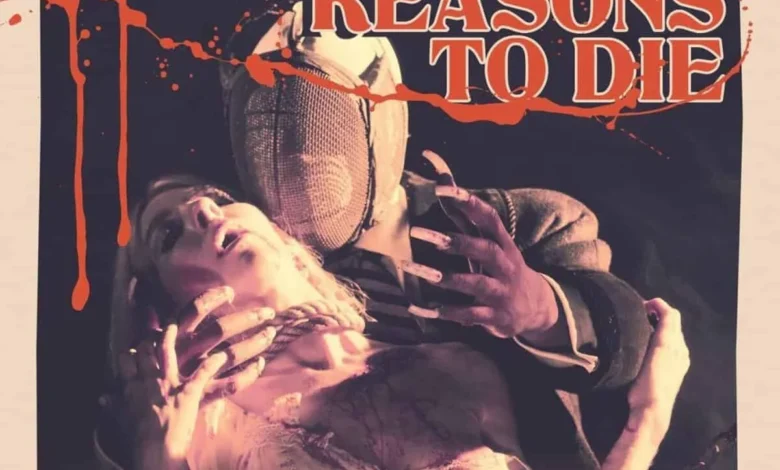
Thirteen years ago today, on April 16, 2013, the music world received a seminal project that would redefine the boundaries of hip-hop storytelling and production: 12 Reasons To Die, a groundbreaking collaboration between the visionary producer Adrian Younge and the iconic Wu-Tang Clan lyricist Ghostface Killah. Released through Soul Temple Records, this concept album transcended traditional musical formats, presenting itself as a full-scale audio film that masterfully fused raw street narratives with sophisticated, live instrumentation. Its release marked a significant moment, not merely as another entry in Ghostface’s revered discography, but as a bold artistic statement that felt both deeply nostalgic and remarkably forward-thinking.
The Genesis of a Cinematic Collaboration
The conceptualization of 12 Reasons To Die emerged from a shared artistic vision to create something more immersive and narrative-driven than a typical album. Adrian Younge, already lauded for his work on the Black Dynamite soundtrack and his own Venice Dawn projects, had cultivated a distinctive sound characterized by its analog purity, drawing heavily from vintage soul, psychedelic rock, and classic Italian horror and crime film scores. His studio, equipped with an array of vintage instruments and recording equipment, was a deliberate homage to the sonic aesthetics of the late 1960s and 1970s. This dedication to authentic, live instrumentation set him apart in an era often dominated by digital production.
Ghostface Killah, born Dennis Coles, had long established himself as one of hip-hop’s most vivid and imaginative lyricists. His career, stretching back to the early 1990s with the Wu-Tang Clan, was built on a foundation of intricate street narratives, colorful metaphors, and a unique, often stream-of-consciousness delivery. Albums like Supreme Clientele and Fishscale solidified his reputation for crafting rich, character-driven tales. The idea of an "audio film" was a natural fit for Ghostface, whose lyrical prowess had always painted cinematic pictures in the listener’s mind. The collaboration with Younge offered him an entirely new palette, one that could elevate his storytelling to unprecedented levels.
Crafting the Audio Film: Production and Narrative
Younge’s production on 12 Reasons To Die was the cornerstone of its cinematic ambition. Unlike most contemporary hip-hop albums that rely heavily on samples and digital beats, Younge composed and performed the entire album with live instruments. This meticulous analog approach imbued the record with a warmth, depth, and organic feel that evoked the gritty soundtracks of 1970s exploitation films and spaghetti westerns. The orchestral arrangements, the heavy drum breaks, the soulful basslines, and the haunting vocal harmonies coalesced to form a sonic landscape that perfectly complemented the album’s dark, revenge-driven storyline. Each track was meticulously crafted to contribute to the overarching narrative, functioning less as individual songs and more as scenes within a larger dramatic arc.
The narrative centers on the character Tony Starks (Ghostface Killah’s alter ego), a drug dealer operating in the gritty, mafia-infested underworld of 1960s Staten Island. The story begins with Starks falling in love with the girlfriend of crime boss Dr. Lathan, leading to his brutal murder and dismemberment. His body parts are then melted down and pressed into 12 vinyl records. When these records are played, Tony Starks is resurrected as the Ghostface Killah, a supernatural avenger seeking retribution against those who wronged him. This elaborate, almost operatic plot provided Ghostface with an unparalleled canvas for his storytelling. His delivery throughout the album was sharp, animated, and brimming with the detailed imagery for which he is renowned. Tracks such as "The Rise of Ghostface Killah," which sets the stage for his vengeful return, "Murder Spree," detailing the brutal cycle of violence, and "Blood on the Cobblestones," painting a vivid picture of the album’s grim backdrop, all served to propel the central narrative while simultaneously standing strong as individual, compelling musical pieces.
A Universe Unfolds: The 12 Reasons To Die Chronology
The development of 12 Reasons To Die was a multi-faceted endeavor that extended beyond the music itself, truly embodying the concept of an "audio film."
Conception and Recording (Late 2011 – Early 2013): The collaboration began with Younge presenting the overarching concept to Ghostface. Younge had already composed much of the instrumental framework, envisioning a score for a film that didn’t yet exist. Ghostface, captivated by the dark, cinematic soundscapes, embraced the narrative challenge. The recording process was reportedly intensive, with Younge pushing Ghostface to immerse himself fully in the character and story, ensuring the lyrics matched the dramatic weight of the instrumentation.
Release (April 16, 2013): 12 Reasons To Die was officially released to critical acclaim. It was not just an album; it was presented as the soundtrack to a non-existent grindhouse film.

The Comic Book Tie-in (2013): A crucial element in the 12 Reasons To Die universe was the accompanying comic book series. Created by Black Mask Studios, with the story by Adrian Younge, Ghostface Killah, and Matthew Rosenberg, and art by Joelle Jones and others, the comic expanded upon the album’s narrative. This cross-media storytelling deepened the immersive experience, allowing fans to visualize the grim world Ghostface was rapping about. The comic book was released in six issues, providing detailed visuals and plot points that enhanced the audio experience, demonstrating a commitment to world-building rarely seen in music projects.
Live Performances and Tour (2013-2014): Both Younge and Ghostface engaged in performances to promote the album, often featuring Younge’s live band, bringing the cinematic soundscapes to life on stage. These performances underscored the album’s unique identity as a project best experienced holistically.
The Sequel: 12 Reasons To Die II (2015): The success and unique nature of the first album naturally led to a sequel. Released in July 2015, 12 Reasons To Die II continued the narrative, with Ghostface Killah returning as Tony Starks, now pitted against a new crime syndicate in the same universe. While maintaining Younge’s signature analog production, the sequel explored different facets of the character and storyline, further cementing the 12 Reasons To Die saga as a unique and ambitious artistic endeavor. This continuity reinforced the idea that the project was not a one-off experiment but a fully realized narrative universe.
Critical Acclaim and Industry Reception
Upon its release, 12 Reasons To Die garnered significant critical acclaim, praised for its ambition, originality, and flawless execution. Review aggregator Metacritic assigned the album an average score of 80 out of 100, indicating "generally favorable reviews" based on 27 critics.
- Pitchfork lauded the album with an 8.0/10, stating, "Younge’s dusty, psychedelic backdrops are tailor-made for Ghostface, who sounds rejuvenated and inspired by the concept." The review highlighted Younge’s production as "a master class in atmosphere, building a world that feels both vintage and utterly unique."
- AllMusic gave it 4 out of 5 stars, noting, "The album works as a compelling narrative, but also as a showcase for two artists at the top of their game." They emphasized how "Ghostface’s vivid lyricism is perfectly matched by Younge’s dark, cinematic instrumentation."
- The A.V. Club praised its "commitment to cohesion," describing it as "a unified artistic statement that demands to be heard from beginning to end."
- Rolling Stone recognized the album’s unique blend, commenting on how it "feels like a lost blaxploitation soundtrack from the early ’70s, complete with crackling production and dramatic flair."
The album’s success demonstrated that in an era where music consumption was becoming increasingly fragmented and playlist-driven, a meticulously crafted concept album could still capture the imagination of both critics and audiences. It stood out as a testament to the power of artistic vision over fleeting trends.
Wu-Tang Clan’s Endorsement and Collaborative Spirit
Adding layers of familiarity and reinforcing the project’s authenticity, 12 Reasons To Die featured key appearances from members of the legendary Wu-Tang Clan family. U-God, Inspectah Deck, and Masta Killa lent their distinct voices and lyrical styles to the project, enriching the narrative tapestry without detracting from the central story of Tony Starks. Their presence served as a powerful endorsement from Ghostface’s long-standing collaborators, signaling the album’s significance within the broader Wu-Tang legacy. These guest verses were not merely tacked on but integrated into the story, playing roles within the mafia-inspired drama. This collaborative spirit, deeply ingrained in the Wu-Tang ethos, further solidified the album’s appeal and reinforced the idea of a cohesive, shared artistic universe.
The Enduring Legacy: Impact and Influence
Thirteen years after its initial release, 12 Reasons To Die continues to resonate as a landmark achievement in modern hip-hop. Its impact can be analyzed across several dimensions:
- Reinvigorating the Concept Album: The project proved that concept albums, when executed with a high level of artistic integrity and clarity of vision, could still thrive and command attention in contemporary music. It challenged the prevailing trend of single-driven album releases, advocating for the album as a holistic artistic statement.
- Elevating Adrian Younge’s Status: The album significantly boosted Adrian Younge’s profile as a producer, establishing him as a master of analog sound and cinematic composition. It solidified his reputation for creating immersive, genre-bending soundscapes that are both authentic and innovative. His subsequent work with artists like Bilal, Kendrick Lamar, and Jay-Z often referenced the sonic template perfected on 12 Reasons To Die.
- Reinforcing Ghostface Killah’s Creative Versatility: For Ghostface Killah, the album further cemented his reputation as one of hip-hop’s most creative and adaptable voices. It showcased his willingness to evolve and push his storytelling boundaries while retaining the essence of what made him a legend. It demonstrated his ability to inhabit complex characters and deliver compelling narratives, even within a highly structured concept.
- Inspiring Cross-Media Storytelling: The seamless integration of the music with the comic book series set a precedent for cross-media narrative expansion in hip-hop. It highlighted the potential for albums to exist as part of a larger, multi-platform artistic universe, influencing how artists approach world-building in their projects.
- A Timeless Sonic Experience: The album’s analog production ensures its timeless quality. Unlike digitally produced albums that can quickly sound dated, Younge’s commitment to vintage recording techniques gives 12 Reasons To Die a classic, enduring sound that continues to appeal to new generations of listeners. It sounds as fresh and impactful today as it did a decade ago, a testament to the enduring power of organic instrumentation.
The project stands as a testament to what can be achieved when elite storytelling meets intentional, meticulous production and a clear artistic vision. It challenged conventions, embraced a unique aesthetic, and ultimately delivered a piece of art that demanded deep engagement from its audience. The collaboration between Adrian Younge and Ghostface Killah was not just a musical partnership; it was a creative synergy that resulted in a project that transcended genres and defied expectations.
Salute to Adrian Younge and Ghostface Killah for delivering a timeless piece that continues to resonate well beyond its release date, solidifying its place as a cornerstone in the evolution of hip-hop and cinematic music. Its legacy is a reminder that true artistry lies in bold vision and unwavering commitment to craft.