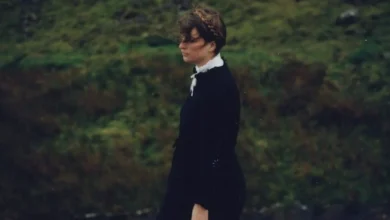
Susanna and Juhani Silvola Release Live Performance of Love Will Tear Us Apart to Commemorate Fifteen Years of SusannaSonata

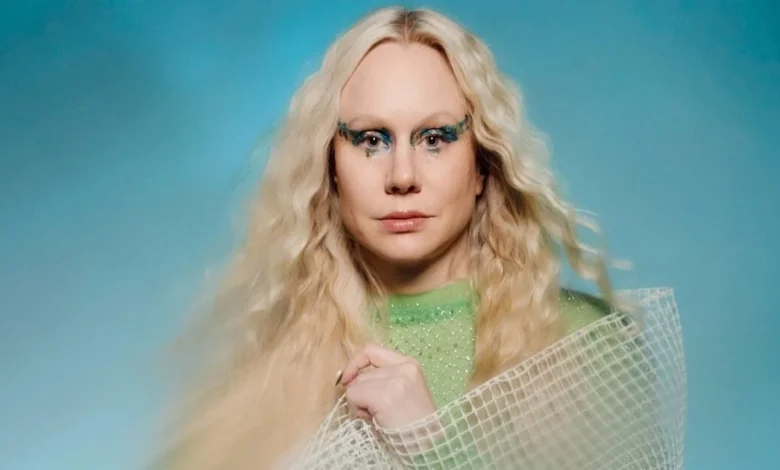
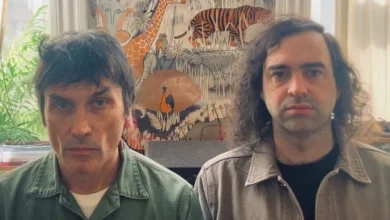
The Norwegian music scene has long been celebrated for its ability to blend avant-garde sensibilities with deep emotional resonance, and few artists embody this duality as effectively as Susanna Wallumrød. In a significant move to mark the 15th anniversary of her independent label, SusannaSonata, Susanna and her long-term collaborator, guitarist Juhani Silvola, have premiered a new live video of their rendition of "Love Will Tear Us Apart." The song, originally a post-punk anthem by Joy Division, has become a cornerstone of Susanna’s repertoire, first gaining international acclaim when she recorded it for the Rune Grammofon label in 2006. This latest version, captured in a live setting, offers a stripped-back, intimate exploration of the track, featuring only Susanna’s ethereal vocals and Silvola’s nuanced guitar work.
The release of this video serves as both a retrospective look at a career-defining cover and a forward-looking statement on the duo’s current musical trajectory. Having performed as a duo since 2020, Susanna and Silvola have refined a chemistry that allows for a high degree of improvisation and emotional transparency. This version of "Love Will Tear Us Apart" strips away the driving basslines and synthesizer layers of the Joy Division original, as well as the atmospheric production of the 2006 Melody Mountain version, leaving behind a skeletal, haunting arrangement that highlights the song’s inherent tragedy.
The Evolution of a Contemporary Classic
Susanna’s relationship with "Love Will Tear Us Apart" spans two decades. The track was a highlight of the 2006 album Melody Mountain, released under the moniker Susanna and the Magical Orchestra—a project with keyboardist Morten Qvenild. At the time, the cover was praised for its radical reinterpretation of Ian Curtis’s lyrics, transforming a fast-paced anthem of marital dissolution into a slow-burning, melancholic torch song. It helped establish Susanna as an artist with a unique ability to inhabit and transform the work of others, a skill she has applied to artists ranging from AC/DC to Henry Purcell.
In a statement reflecting on the new live release, Susanna noted the enduring power of the composition. "‘Love Will Tear Us Apart’ is one of the most heartbreaking songs I know, and it has been an absolute pleasure to sing it over the years," she explained. "It is 20 years since we released this cover with Susanna and the Magical Orchestra on the album Melody Mountain. People are still asking for it at concerts, but I haven’t always had it in my set. It’s a true pleasure to get to play it with Juhani Silvola on guitar these days."
The transition from the electronic-leaning arrangements of the Magical Orchestra to the acoustic and semi-acoustic textures provided by Silvola marks a new chapter for the song. Silvola, a versatile guitarist and producer, brings a different rhythmic and harmonic grounding to the performance. His background in both Norwegian traditional music and indie-folk provides a versatile backdrop for Susanna’s voice, which remains the central, gravity-defying element of the performance.
Juhani Silvola: A Multi-Faceted Collaborative Force
Juhani Silvola has become a frequent fixture in the Norwegian and international folk-fusion scenes. While his work with Susanna has garnered significant attention, he is equally well-known for his collaboration with Scottish fiddler Sarah-Jane Summers. Together, they have produced a series of critically acclaimed chamber-folk albums that explore the intersections of Finnish and Scottish traditional music. Their discography includes The Smoky Smirr o Rain (2021), Sølvstrøk (2023), and the most recent How to Raise the Wind (2025).
Silvola’s ability to act as a "grounding presence" is a recurring theme in critical assessments of his work. Whether he is laying down intricate textures beneath a fiddle or providing a minimalist framework for a vocalist, his style is characterized by restraint and a keen ear for atmosphere. This sense of space is vital in his work with Susanna, where the silence between notes is often as important as the notes themselves. His involvement in the Siskin Quartet—a collaboration with Bridget Marsden and Leif Ottosson—further demonstrates his range, moving between traditional structures and modern, improvisational flight paths.
A Milestone Year for SusannaSonata
The release of the live video is part of a larger celebration surrounding the 15th anniversary of SusannaSonata in 2026. Since its inception, the label has served as a vehicle for Susanna’s most experimental and personal projects, allowing her to maintain creative control over a catalog that now includes nineteen albums. The label’s 2026 slate is particularly ambitious, featuring three distinct projects that showcase the breadth of the Norwegian contemporary scene.
Among these releases is Shrew, a collaborative effort between the experimental vocal duo Propan and "tape queen" Stina Stjern. This project emphasizes the label’s commitment to avant-garde vocal exploration. Additionally, the label is releasing Venus er i håret, an electronica-infused album from the explorative saxophonist Espen Reinertsen. Perhaps most poignantly for long-time fans, the 2026 lineup includes Lokalt Piano, the second solo album from Morten Qvenild, Susanna’s former partner in the Magical Orchestra. The inclusion of Qvenild’s work in the anniversary celebrations highlights the enduring artistic community that has formed around Susanna’s career.
Susanna’s Recent Artistic Trajectory and the Baudelaire Projects
Susanna Wallumrød’s recent years have been marked by a relentless pursuit of new thematic material. In 2024, she released Meditations on Love, an album that explored the complexities of human connection through a lens of both vulnerability and strength. This was followed by a project drawn from the writings of the medieval mystic Hildegard of Bingen, further demonstrating her interest in historical and spiritual texts.
However, it is her work with the poetry of Charles Baudelaire that has recently defined her live performances. Her project Baudelaire & Piano took the 19th-century French poet’s "Les Fleurs du Mal" and set it to minimalist, haunting piano arrangements. This project has since evolved into Baudelaire & Orchestra, a more expansive collaboration that brings a cinematic scale to the poetry. Later in 2026, she is scheduled to perform these works at the Hamsundays Festival in Hamarøy and the Ultimafestival in Oslo, the latter featuring the Norwegian Broadcasting Orchestra (KORK).
Analysis of Implications: The Enduring Appeal of Reinterpretation
The decision to revisit "Love Will Tear Us Apart" in 2026 is a calculated artistic move that bridges the gap between Susanna’s past and her current evolution. In the broader context of the music industry, "cover songs" often serve as commercial bridges, but for Susanna, they are transformative acts. By stripping the song down to its most basic elements, she and Silvola challenge the listener to engage with the lyrics of Ian Curtis as pure poetry, divorced from the cultural baggage of the original 1980 recording.
This minimalist approach aligns with a broader trend in the Norwegian "Nordic Noir" musical aesthetic, where the emphasis is placed on clarity, atmosphere, and emotional honesty. The success of SusannaSonata over the last fifteen years also speaks to the viability of independent, artist-run labels in an era dominated by streaming giants. By focusing on niche, high-quality releases and maintaining a consistent touring presence, Susanna has built a sustainable ecosystem for her art.
Upcoming Tour Dates and Live Engagements
The 2026 tour schedule for Susanna and her various projects reflects the diversity of her current output. From intimate duo settings with Juhani Silvola to grand orchestral performances, the following dates have been confirmed:
- August 5th: Susanna presents "Baudelaire & Piano" at the Hamsundays Festival, Hamarøy, Norway.
- September 8th: Susanna Wallumrød & Juhani Silvola perform at Lillebull Scene, Bergen, Norway.
- September 9th: Susanna Wallumrød & Juhani Silvola perform at MIR, Oslo, Norway.
- September 17th: Susanna Wallumrød & KORK (Norwegian Broadcasting Orchestra) present "Baudelaire & Orchestra" at Ultimafestivalen, Oslo, Norway.
- October 4th: Susanna Wallumrød & Juhani Silvola perform at Larvik Vinylklubb, Larvik, Norway.
- November 25th: Susanna Wallumrød & Harald Lassen perform at Josefine Viseklubb, Oslo, Norway.
As SusannaSonata enters its sixteenth year, the label remains a vital part of Norway’s cultural export, proving that singular voices, when given the space to grow, can resonate far beyond their borders. The new live video of "Love Will Tear Us Apart" is not just a tribute to a classic song, but a testament to the enduring partnership between Susanna and Juhani Silvola, and their shared commitment to the art of the song.