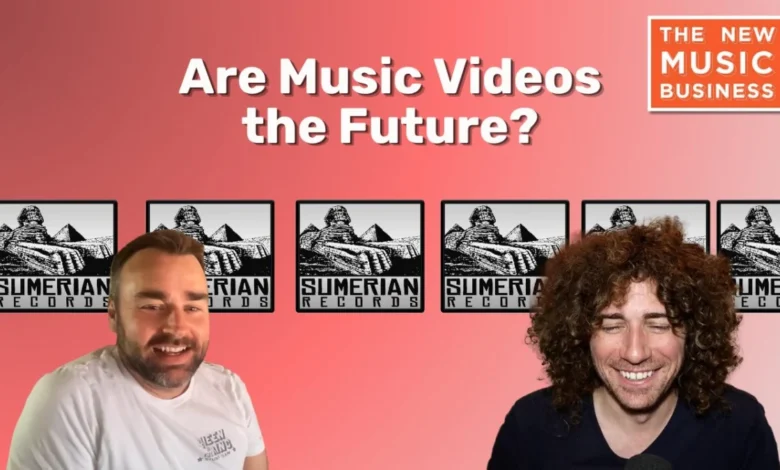
In a recent insightful discussion on the New Music Business podcast, Ari Herstand sat down with Ash Avildsen, the dynamic founder of Sumerian Records, to dissect the profound transformations sweeping across the music industry. Avildsen, whose independent label has become a formidable force in modern rock and metal over two decades, offered a candid perspective on his journey from a touring musician to an entertainment mogul, emphasizing artist development, the precarious economics of music videos, and his ambitious vision for Sumerian’s expansion beyond traditional music into a comprehensive entertainment brand. The conversation illuminated the challenges and opportunities for artists and labels in an increasingly fragmented yet interconnected digital world, culminating in Avildsen’s firm belief that the industry must regain control of its destiny from external "tech overlords."
Sumerian Records: A Two-Decade Journey from MySpace to Arenas
Ash Avildsen’s path to establishing Sumerian Records in 2006 was forged in the crucible of grassroots music. His career began as a touring musician, evolving into roles as a promoter and booking agent for other bands. This hands-on experience provided him with a holistic understanding of the music ecosystem, from the artist’s perspective on the road to the intricate logistics of live events. He honed his skills booking shows in the club circuit, navigating the nuances of tour routings, and identifying burgeoning talent.
The advent of MySpace proved to be a pivotal moment. Avildsen described it as the "first online peer-to-peer discovery that was like lightning in a bottle." During this era, bands could attract hundreds of fans nationwide without a record deal or formal distribution, primarily through MySpace’s customizable pages featuring "theme songs" and "top eight" friend lists that fostered organic discovery. This burgeoning online community revealed a disconnect: many labels failed to grasp the potential of this new wave of heavy music or offered unfavorable "draconian" deals. Seizing this opportunity, Avildsen founded Sumerian Records with an "artists for artists" ethos, initially offering 50/50 handshake deals based on net profit splits. His unique advantage was his booking acumen, enabling him to secure tours for his roster, a critical "secret weapon" in an era when securing a good booking agent was often harder than landing a record deal.
The decision to focus entirely on the label side came after years of simultaneously managing a booking agency with a roster of over 30-40 artists. Avildsen recognized that he couldn’t excel at both, especially as he began exploring film ventures. He transitioned out of booking, prioritizing the creative fulfillment of artist development over the linear, transactional nature of agency work, which often involved "business deal sheets" and "going back and forth on money." This strategic pivot allowed Sumerian to become more agile and responsive, a trait Avildsen attributes to its founder-owned structure, enabling quick decisions and rapid execution of ideas.
The Evolving Landscape of Artist Discovery and Development
The methods by which artists "break" have undergone significant changes since Sumerian’s inception. Avildsen observes that today, artists can break faster due to the omnipresence of social media and its virality. He draws a direct parallel between MySpace’s theme songs and TikTok’s use of music in short-form videos, noting that both platforms facilitate rapid online discovery and cultural embedding. However, this speed also brings increased noise, requiring artists and labels to cut through a much denser digital environment.
A core distinction Avildsen makes is between "breaking a song" and "breaking an artist." While breaking a song can be highly profitable through streaming, his focus at Sumerian remains on the more enduring goal of breaking an artist, fostering a long-term career and brand. The heavy music scene, encompassing hardcore, metal, and emo, has traditionally been characterized by a strong sense of community and a "scene" mentality. Avildsen compares it to the horror film genre, where fans will actively support content within their niche regardless of mainstream appeal, simply because it’s part of "their world." This inherent loyalty provides a significant advantage for ticket sales in these genres.
In the early days, the label brand itself carried significant weight; a Victory Records logo on a flyer, for instance, signaled quality and cultural relevance. Avildsen strives to cultivate a similar trust for Sumerian, ensuring that their name guarantees "an honest shot" for artists to gain momentum. He believes that for labels to remain powerful beyond mere funding and distribution, they must offer genuine A&R, creative input, and a platform that resonates with fans. His mantra: "ideas and execution" – identifying strong concepts and meticulously bringing them to fruition, often through a synergistic team of "idea people" and "execution people."
Artist development at Sumerian often involves nurturing bands from playing small clubs to headlining larger venues. Avildsen highlights the difficulty of reaching the first 500 tickets, considering it a harder hurdle than scaling from 1,000 to 2,000 or even 2,000 to 3,000. Sumerian actively supports this by facilitating opening slots for emerging artists on tours with more established labelmates.
The controversial practice of "tour buy-ons," where a band pays for a support slot, also came under discussion. While Sumerian has engaged in "marketing spend" to secure opening positions for its bands, Avildsen expresses a nuanced view. He doesn’t deem it inherently unethical, especially if a headlining artist faces dire financial or medical crises. However, he finds it "foolish" and "short-sighted" if done merely for quick profit without genuine need. He emphasizes that opening acts reflect the headliner’s curation, impacting fan perception. A key part of his success as an agent was his ability to package diverse tours that "drew more people than anyone was expecting," demonstrating his deep understanding of fan preferences and emerging talent.
The Unsolved Conundrum of Music Video Economics
Perhaps the most passionate segment of the discussion revolved around the "never-ending curse" of music video economics. Avildsen firmly believes music videos are a vital art form and a cornerstone of artist branding, yet they represent "the biggest problem in the entire music business." The core issue is stark: music videos are expensive to produce, often costing "six figures or multiple six figures," but yield minimal revenue. YouTube, the primary platform for video consumption, pays significantly less per stream than audio-centric platforms like Spotify or Apple Music, despite the higher production costs. Even as Spotify now incorporates video, it doesn’t offer a differentiated payment structure. This leaves artists and labels "holding the bag," subsidizing an essential promotional tool with no direct financial return.
Avildsen recounted a recent instance where a Grammy-winning artist struggled to get a video approved by a major label due to budget constraints, ultimately requiring third-party investment. He attributes this widespread apathy to the lack of a "first window solution" for music videos, akin to the film industry’s sophisticated content windowing strategies. Movies transition from theatrical release to transactional video-on-demand (TVOD), then to pay-one subscription services (SVOD like Netflix), and finally to ad-supported free platforms (AVOD like Tubi). This tiered release maximizes revenue at each stage. The music industry, by contrast, largely transitioned from MTV (which provided exposure but paid nothing for videos, infamously circumventing this rule for Michael Jackson’s "Thriller" by funding it as a "making-of" documentary) directly to YouTube, a platform largely built on fan uploads before formal licensing.
Avildsen is actively addressing this with a new platform called "bands.com" (with an app named "bands"). His vision is to create a space where fans can collectively experience and support music video launches, whether through ad-supported viewing, a small transactional fee, or a subscription model. He argues that fans, increasingly fatigued by "tech overlords" and understanding the financial struggles of artists, would be willing to pay if they knew the money directly supported the creators and led to more quality content. He points to the success of platforms like OnlyFans, which cracked the exclusive transactional content code, as proof that audiences will pay for exclusive access and direct support.
Historically, major labels "fumbled" the digital transition, caught flat-footed by YouTube’s rise and initially responding with rights enforcement rather than innovation. Avildsen contends that the industry’s biggest mistake with piracy was attempting to solve it with "security instead of convenience." The success of Spotify, offering a convenient, legal alternative, ultimately triumphed over piracy where DRM and legal threats failed. This principle, he believes, should guide the future of music video monetization.
Sumerian’s Expansion: Building a Multifaceted Entertainment Brand
Looking ahead, Avildsen envisions Sumerian Records evolving into a broader entertainment brand, drawing inspiration from the film industry’s A24. He notes a shift in cultural significance: while record labels like Def Jam and Sub Pop held immense brand power in his youth, today, independent film studios like A24 and Neon command greater cultural cachet. A24, in particular, is lauded for its discerning taste, brilliant marketing, and ability to foster strong brand loyalty, even venturing into music.
Sumerian’s reverse trajectory—from music into film, television, comic books, and graphic novels—aims to emulate this success. The company already distributes film projects, as demonstrated by its handling of Turnstile’s visual album, which received a theatrical release. Avildsen stresses the importance of internal synergy across departments, a lesson learned from major conglomerates where communication breakdowns (like Sony Pictures licensing K-pop content to Netflix without consulting Sony Music) lead to missed opportunities. At Sumerian, everyone works in the same office to prevent such silos.
At its heart, Avildsen emphasizes that Sumerian is about "songs and stories." His goal is to grow Sumerian into a brand where its name on a project signals quality and ensures the art gets "an honest day in court" with audiences. This commitment to brand integrity means frequently declining financially lucrative opportunities that don’t align with Sumerian’s artistic values, a practice he contrasts with the increasing commercialization seen in other entertainment sectors, such as professional wrestling (WWE) after corporate acquisition.
Broader Industry Challenges and the Future Outlook
Avildsen’s critique extends to the broader music industry, particularly the concentrated power of "tech overlords" in streaming and ticketing. He expresses frustration over the control exerted by non-creative conglomerates that "suck the blood" from artists and labels. The recent revelations about Live Nation/Ticketmaster, where executives allegedly mocked ticket buyers and displayed a dismissive attitude towards ethical practices, epitomize this dystopian trend for Avildsen. He laments the apparent helplessness of artists against such monopolies, urging the industry to fight back against excessive service fees and a system that prioritizes corporate profit over artist and fan welfare.
Despite these significant challenges, Avildsen holds an underlying optimism. He believes that "the art and the artists will win out" and that the "indelible connection" between fans and music will endure. The live space, scenes, cultures, and communities that have historically sustained music will continue to withstand distractions and fragmentation. "Music finds a way," he asserts, echoing a sentiment of resilience inherent in the creative spirit.
When asked to define "making it in the new music business," Avildsen offered a simple yet profound answer: "Making it is being able to make a living doing what you enjoy doing in music. If you get to, you can live off of it in any way, that’s making it, man." This definition underscores a philosophy centered on sustainability and passion, a guiding principle for Sumerian Records as it navigates the complex, ever-evolving landscape of modern entertainment.