Diverse Electronic Releases Mark a Dynamic Week in Music: From Afro-Dub Fusion to Industrial Techno

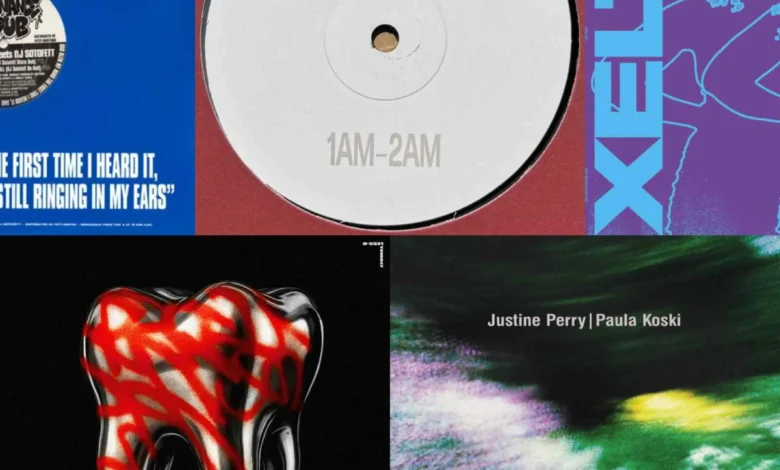
The latest wave of electronic music releases showcases a vibrant tapestry of genres, pushing boundaries and celebrating both heritage and innovation. This week’s notable drops include a compelling cross-cultural collaboration, an experimental exploration of breakbeat, a powerful techno offering from a renowned label, a nocturnal journey through house and techno, and a potent debut in the industrial electronic sphere. Together, these releases reflect the dynamic and ever-evolving landscape of contemporary electronic music, appealing to a broad spectrum of listeners from seasoned club-goers to avant-garde enthusiasts. The featured artists and labels are not merely releasing tracks; they are contributing to ongoing dialogues within their respective scenes, shaping future sounds while honoring their roots.
Ekowmania Meets DJ Sotofett: A Resonance of Dub and Global Rhythms
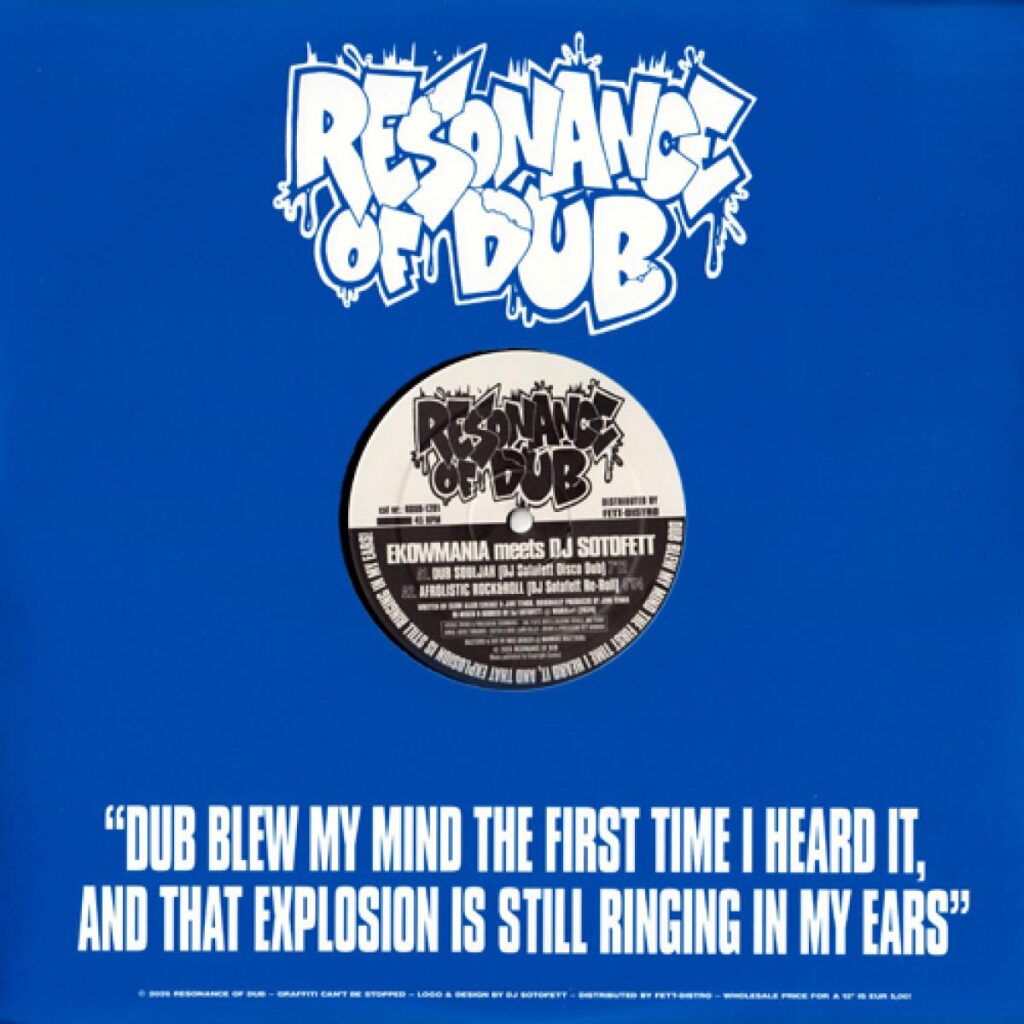
One of the week’s most intriguing releases comes from the unexpected yet harmonious collaboration between Ghanaian highlife pioneer Ekow Alabi Savage and Norwegian electronic music maestro DJ Sotofett. Titled Dub Souljah, this maxi-single on Resonance of Dub is a testament to the power of cross-cultural musical dialogue and the enduring influence of traditional sounds in contemporary electronic production. Ekow Alabi Savage, at 69 years old, is a venerable figure in Highlife music, a genre that emerged in Ghana in the late 19th and early 20th centuries, blending traditional Akan melodies and rhythms with Western instruments and influences like jazz and calypso. His recent endeavors, including a Jimi Tenor-produced crossover EP with his Berlin-based band Ekowmania & The Rhythmers, have seen him meticulously fuse his traditional sound with Afrobeat, Reggae, Funk, Jazz, Salsa, and Soukous, demonstrating a tireless spirit of musical exploration.

DJ Sotofett, known for his eclectic and often raw approach to club music, approaches Savage’s reggae-infused "Dub Souljah" with a respectful yet transformative touch. Rather than deconstructing the original, Sotofett largely keeps Savage’s vocal and instrumental core intact, enriching the groove with classic dub techniques. This results in an utterly immersive and almost disembodied listening experience, masterfully blending intensity with spaciousness. The track achieves a unique equilibrium, where the foundational warmth of Savage’s reggae meets Sotofett’s signature textural manipulation, creating a sonic journey that feels both ancient and futuristic. The accompanying tracks further highlight this fusion: "Kuusikasi Funk" delves into the raw, primal energy reminiscent of early James Brown, showcasing the timeless appeal of archaic funk grooves. Meanwhile, "Afrolistic Rock’n’Roll" evokes the untamed stylistic primordial soup from which pioneers like Sister Rosetta Tharpe and Little Richard forged rock’n’roll, emphasizing the deep African roots of popular Western music forms. This collaboration not only introduces Savage’s profound artistry to new audiences but also reaffirms the global interconnectedness of musical traditions, demonstrating how dub, a genre born from Jamaican innovation, can serve as a universal language for sonic transformation. The release underscores a growing trend in electronic music to look beyond conventional genre boundaries, seeking inspiration in diverse cultural heritages to forge genuinely novel sounds.
Less-O’s VXV: Navigating the Experimental Breakbeat Frontier
French producer Less-O marks his third EP, VXV, on the TEMÆT label, continuing his impressive trajectory as a significant boundary-crosser in contemporary electronic music. Less-O has consistently garnered attention for his innovative blend of intricate sound design, experimental club aesthetics, and diverse breakbeat permutations. VXV further solidifies his reputation, presenting four tracks that showcase the remarkable versatility and transformative potential of the breakbeat genre. This EP is a masterclass in sonic manipulation, where traditional rhythmic structures are reimagined through a lens of avant-garde composition.
The EP opens with "Hit Orchestra," a track where breaks initially lumber forward with a stoic, almost monolithic presence. These foundational rhythms are punctuated by striking brass stabs that add a dramatic, almost cinematic quality, building tension and anticipation. It’s a deliberate, measured start that hints at the complexities to unfold. "Tanadi Tanada" then shifts gears, offering a decidedly more playful and fragmented sonic landscape. The track begins with an auditory illusion, as if an object is acoustically disintegrating into countless fragments, a motif that persists throughout. This continuous deconstruction is accompanied by ethereal, mantra-like vocal repetitions of the title, creating a hypnotic and disorienting effect that draws the listener deeper into Less-O’s intricate sound world. The energy palpably escalates with "Tooth 33." Here, high-frequency synthesizers intertwine with driving percussion, imparting a rougher, almost rave-like intensity. However, just as a consistent groove seems to solidify, Less-O subverts his own dramatic build-up, abruptly pulling the track off its expected course, a signature move that keeps listeners on edge and highlights his mastery of dynamic shifts. The EP culminates with "Power Outage," a collaboration with French electronic artist Brodinski. This closing track marries echoing breaks with a minimalist, two-tone melody that evokes the chilling atmosphere of a sinister splatter film. The track’s starkness and unsettling beauty provide a powerful conclusion, leaving a lasting impression of Less-O’s capacity for both intricate detail and impactful abstraction. VXV is not merely a collection of tracks but a coherent sonic journey, affirming Less-O’s position as a crucial voice in the evolving dialogue between sound design and club functionality, and underscoring the enduring vitality of breakbeat as a vehicle for innovation.
Justine Perry & Paula Koski: Paired Works on Ostgut Ton
The release of Paired Works by Justine Perry and Paula Koski on Ostgut Ton immediately commands attention, not least due to the label’s legendary status and its deep association with Berlin’s iconic Berghain club. For many, an Ostgut Ton release is synonymous with a certain quality and stylistic integrity within the techno spectrum—a reliable "house wine" that consistently delivers. This particular offering is a powerful collaboration, featuring four sides of meticulously crafted techno from two artists with distinct yet complementary approaches. Justine Perry is known for her hypnotic, often introspective productions on labels like Dynamic Reflection, where she navigates deep, textured soundscapes that can induce a trance-like state. Paula Koski, on the other hand, excels at constructing vast, reverberating echo chambers, spaces where one’s sense of self can dissolve into the expansive sonic architecture. Both artists bring virtues highly prized in the context of extended club experiences, particularly for those willing to immerse themselves for hours in the rumbling intensity of a venue like Berghain.
The EP delivers precisely what discerning techno enthusiasts expect: unadulterated, potent techno. There are no ambient fillers or soft interludes; instead, the focus remains squarely on propulsive rhythms and intricate sound design designed for the dancefloor. The tracks range from glacier-smooth, impeccably polished grooves to the aggressive, high-octane drive reminiscent of an AMG tearing down the autobahn. This duality ensures that Paired Works caters to different facets of the techno experience while maintaining a consistent level of intensity. Among the standout tracks, "Fracture" is highlighted as a powerful anthem for those seeking an anabolic surge on the dancefloor, suggesting a track designed for peak-time energy and physical release. Conversely, "Held in Place" is recommended for a more nuanced, perhaps even luxurious, listening experience, best enjoyed "licked at the ice bar." This playful description points to its sophisticated textures and perhaps a slightly cooler, more cerebral intensity that can be savored amidst the club’s sensory overload. The collaboration between Perry and Koski on Ostgut Ton is more than just a release; it’s a statement about the enduring power of classic techno aesthetics, refined and reinterpreted by contemporary artists who understand the profound ritualistic function of this music in spaces like Berghain. It reinforces Ostgut Ton’s legacy as a bastion of quality techno while showcasing the individual talents and synergistic chemistry of its contributing artists, providing a vital addition to the label’s esteemed catalog.
Morning People’s Self-Titled Debut: A Nocturnal Journey from Montreal
From Montreal emerges Morning People, a duo whose self-titled debut on the Temple label offers a compelling sonic narrative spanning the early hours of the morning. For this "lark" ensemble, the morning routine evidently extends from 1 AM to 4 AM, those golden hours optimally suited for having one’s sonic hard drive formatted by expansive rollers oscillating between house and techno. This EP is a meticulously crafted journey, each track named after the specific hour it embodies, creating a sense of unfolding time and evolving mood.

The EP commences with "2AM," a track that layers delicate beeps over a restless funk groove. From this seemingly innocuous beginning, a quasi-new track emerges in the final third, blossoming with grander intentions and a powerful momentum that skillfully welds the dancefloor together. It’s a masterclass in patient build-up and transformative release, indicative of the duo’s keen understanding of club dynamics. As the journey progresses to "3AM," ethereal pads shimmer and swirl over a trancy, ADHD-infused groove. This track creates a captivating tension, embodying the conflicting desires of the late-night clubber—one side yearning to leave, the other irresistibly compelled to stay. It captures the psychological push and pull of extended nocturnal immersion, where the mind wavers between exhaustion and exhilaration. The EP culminates with "4AM," beginning with an ambient intro imbued with choral echoes. This atmospheric opening gradually expands over a steady, hermetic groove, drawing in both the "forest-and-meadow" faction—those seeking expansive, naturalistic soundscapes—and the "sound design snobs" who appreciate intricate sonic textures. This closing track masterfully unites disparate listening preferences, demonstrating Morning People’s ability to craft music that is both deeply emotive and technically sophisticated. The progression from 1 AM, hinted at as a more sedate, dub and house-inflected beginning reminiscent of Terry Lee Brown Jr.’s Chocolate Chords, through the increasing intensity and complexity of "2AM," "3AM," and "4AM," illustrates a thoughtful arc. Morning People’s debut is not just a collection of tracks but a carefully curated experience, a soundtrack to the liminal hours where the night transitions into dawn, offering a fresh perspective on the enduring power of house and techno to evoke deep emotional and physical responses.
XELTA’s B.D.S.M.: A Modern Industrial EBM Statement
The debut EP B.D.S.M. from XELTA, the new project comprising Bruno Coviello and Sharlese Metcalf, is a commanding entry into the realms of Industrial, EBM, and Darkwave. Released on Körperspannung, the EP immediately establishes a distinctive sound characterized by machine beats, distorted vocals, futuristic textures, and an undeniable 1980s aesthetic. This release is not merely a nostalgic nod but a potent reinterpretation of these classic genres for a contemporary audience, showcasing a compelling blend of retro influences and forward-thinking production.
The title track, "B.D.S.M.," sets an aggressive tone from the outset. Electronically processed vocals, driving drums, and sharp, characteristic claps forge a groove that is instantly compelling and danceable. The influence of EBM giants like Front 242 and Nitzer Ebb is clearly audible, yet XELTA manages to infuse these foundational elements with a fresh vitality, avoiding any sense of being dated. The track feels both familiar and strikingly modern, a testament to the duo’s ability to evolve a classic sound. "Exquisite S3RVIC3" follows, escalating the intensity with the introduction of breakbeat elements and an initially chaotic sound design. However, as the track unfolds, it steadily gains structure and pressure, demonstrating XELTA’s skill in harnessing sonic disorder into purposeful rhythm. The Radio Void Remix of this track leans more heavily into futuristic synthesizers and robotic soundscapes, offering an alternate vision that highlights the project’s versatility. "MYY KONTROLL" maintains the high tension with hard kicks, industrial percussive elements, and further distorted vocals, creating an unyielding sense of urgency and power. The EP concludes with the Anticipation-Remix, which shifts into a darker, more mysterious, and dramatically atmospheric register than its predecessors. This closing track is imbued with a sense of enigmatic depth, providing a haunting yet compelling end to the journey.

B.D.S.M. thrives on its consistent tension and meticulous sequencing. The interplay of laser-like synths, propulsive EBM grooves, and distinctive vocals creates an exciting fusion of nostalgia and future vision. This uncompromising debut EP successfully translates retro influences into the present, offering a compelling narrative that is both a homage to the past and a clear statement of intent for the future of industrial electronic music. XELTA’s B.D.S.M. firmly establishes the duo as a significant new force, capable of crafting immersive and powerful electronic soundscapes that resonate with both historical depth and contemporary relevance, making it a pivotal release in the industrial electronic scene this week.