Epiphone Announces Limited Edition Joe Bonamassa Skinnerburst 1959 Les Paul Standard


The market for high-end, vintage-inspired electric guitars has reached a fever pitch this week, headlined by a significant expansion of artist-signature offerings that bridge the gap between historical reverence and modern playability. Following the high-profile launch of the Gibson USA production model for Billy Gibbons’ iconic “Pearly Gates” Les Paul, Epiphone has officially unveiled its own tribute to blues-rock virtuoso Joe Bonamassa: the limited-edition Skinnerburst 1959 Les Paul Standard. Priced at $849/£949, this release marks a strategic effort by the Epiphone brand to bring the aesthetic and sonic profile of one of the world’s most coveted vintage instruments to a wider audience of working musicians and collectors.
The instrument is a detailed recreation of the original “Principal Skinner,” a 1959 Gibson Les Paul Standard that occupies a storied place in modern guitar lore. Renowned for its exceptional tonal characteristics and aesthetic appeal, the original instrument has been a cornerstone of Bonamassa’s touring and recording rig for over a decade.
Historical Context and Provenance of the Principal Skinner
The original “Skinnerburst” is widely regarded by vintage guitar enthusiasts as a benchmark example of the 1959 Les Paul. Its reputation is not merely a product of celebrity association; it is rooted in its objective historical significance. In 2006, the guitar made international headlines when it appeared at auction, ultimately securing the title of the most valuable guitar not previously owned by a professional touring artist to be sold in such a venue at that time.

Joe Bonamassa, a dedicated archivist and collector of vintage gear, acquired the instrument in 2011. Rather than relegating the guitar to a climate-controlled vault, Bonamassa integrated it into his professional workflow, utilizing it extensively in the studio and on global concert stages. This decision underscored his philosophy that fine instruments, regardless of their age or historical pedigree, are tools meant to be utilized to their full potential. The “Skinnerburst” name itself has become shorthand among guitar aficionados for the specific combination of the guitar’s distinct flame maple top and its aggressive, articulate voice.
Technical Specifications and Construction
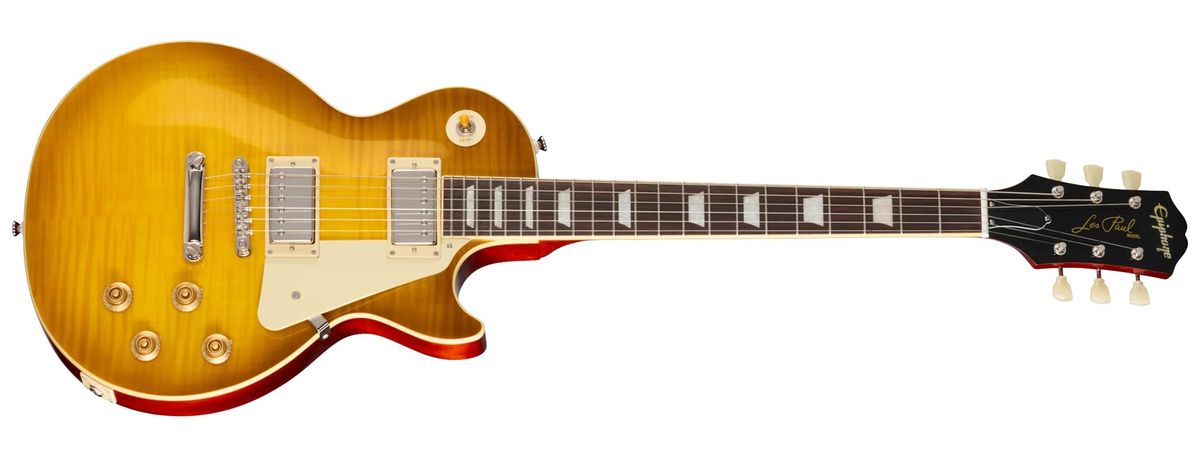
The Epiphone iteration of the Skinnerburst has been designed to mirror the physical and sonic attributes of its predecessor as closely as possible within a production-line manufacturing environment. The guitar features a flame maple veneer finish in a distinctive “Dirty Lemon” burst, complemented by a cherry red finish on the back and sides, accentuating the depth of the mahogany body.
Unlike the premium-tier “Inspired by Gibson Custom” (IGC) series, which frequently incorporates Gibson USA-made pickups, the Skinnerburst is equipped with Epiphone’s proprietary ProBucker 3 and ProBucker Custom humbuckers. These pickups are paired with high-quality CTS potentiometers and Mallory capacitors, a configuration designed to offer a vintage-correct response that manages the high-output demands of modern amplifiers while retaining the nuanced, mid-range growl synonymous with the late-1950s PAF (Patent Applied For) pickup design.
The neck profile is described as a “Custom ’59 Rounded C,” designed to emulate the substantial feel of the original vintage neck carves that many players associate with the golden era of Gibson manufacturing. It is constructed with a glued-in neck joint, featuring a rosewood fingerboard with a 12-inch radius and trapezoid block inlays. Hardware includes the LockTone Tune-O-Matic bridge and a matching LockTone Stop Bar tailpiece, which are intended to offer increased sustain and tuning stability compared to vintage-spec hardware.

Chronology of the Epiphone-Bonamassa Partnership
The release of the Skinnerburst represents the latest chapter in a long-standing partnership between Joe Bonamassa and Epiphone. Since their initial collaborations began over a decade ago, the partnership has proven to be a reliable driver of sales and brand prestige for the manufacturer. Bonamassa has been instrumental in refining the specifications of his signature models, often insisting on features that were previously reserved for significantly more expensive Gibson Custom Shop instruments.
According to data provided by the artist and the manufacturer, the various Epiphone models bearing the Bonamassa name have collectively moved over 20,000 units. This figure is significant in the musical instrument industry, signaling that the “signature model” remains a potent vehicle for both product differentiation and volume sales. Historically, the collaboration has focused on bringing rare or unattainable vintage specs to the accessible, mid-tier price point—a strategy that has yielded consistent success for the brand.
Market Positioning and Consumer Implications
The arrival of the Skinnerburst sits in a complex segment of the market. With an MSRP of under $900, it positions itself firmly against the IGC 1959 Les Paul Standard Reissue, which retails at approximately $1,299. The price disparity is largely explained by the choice of components; the IGC models utilize Gibson Alnico III Custombuckers, which are manufactured in the United States, whereas the Skinnerburst utilizes the ProBucker line.
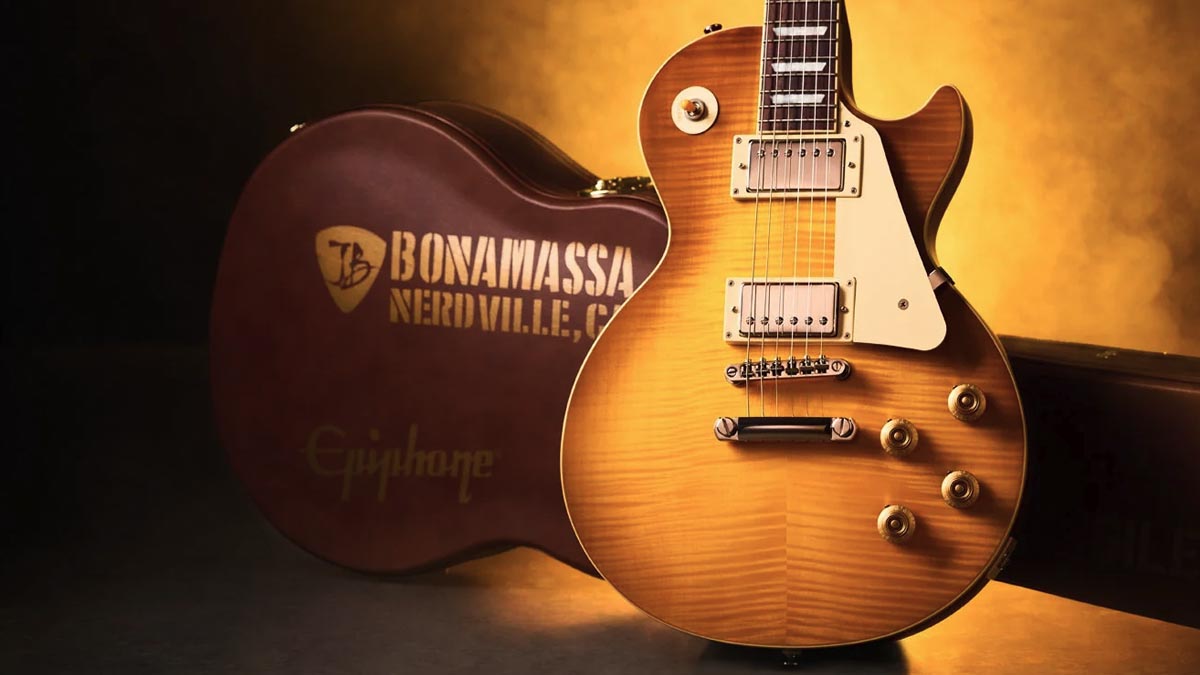
However, the Skinnerburst offers unique value-add items that appeal to the collector demographic. The instrument is bundled with a custom brown hard-shell case featuring a pink fur interior and a stencil of Bonamassa’s “Nerdville” logo. It also includes a Certificate of Authenticity, reinforcing its status as a limited-edition collectible.
For the prospective buyer, the choice between the Skinnerburst and the higher-tier IGC models involves a trade-off between the prestige of Gibson-branded hardware and the specific, curated aesthetic of a historic instrument. Market analysts note that these types of releases generally serve two purposes: they provide a functional, gig-ready guitar for working professionals on a budget, and they provide a “gateway” to the collector market for younger players who may eventually graduate to high-end Gibson instruments.
Broader Industry Impact
The timing of this release, alongside the Billy Gibbons Pearly Gates model, suggests a broader industry trend of prioritizing “heritage-focused” product development. In an increasingly digital musical landscape, the tactile and historical allure of the 1959 Les Paul continues to hold significant sway over consumer preferences. By licensing these historic profiles to a wider audience, Gibson and Epiphone are essentially leveraging their intellectual property to dominate the mid-tier market segment.
The impact of such releases is measurable. Increased demand for limited-run signature models often results in rapid sell-outs, putting pressure on retail partners to secure inventory. It also generates considerable social media engagement, acting as a marketing force that keeps the brand at the forefront of the guitar community’s consciousness. As Bonamassa continues to iterate on his signature line, the industry will be watching to see if this model of high-volume, historically-informed signature guitars remains sustainable or if the market for such niche products eventually reaches a saturation point.
Conclusion
The Epiphone Skinnerburst 1959 Les Paul Standard serves as a testament to the enduring influence of Joe Bonamassa within the guitar industry. By synthesizing high-quality construction with the specific DNA of a world-famous vintage instrument, the company has created a product that serves both the aesthetic needs of the collector and the functional requirements of the gigging musician. Whether it will achieve the same long-term status as the vintage instruments that inspired it remains to be seen, but as of this week, it stands as a central figure in the current landscape of electric guitar manufacturing. The instrument is currently available through authorized Epiphone dealers, with expectations for high demand among the established base of Bonamassa enthusiasts and collectors of vintage-style hardware.
Related posts: