Tal Mashiach: The Architecture of Global Fusion
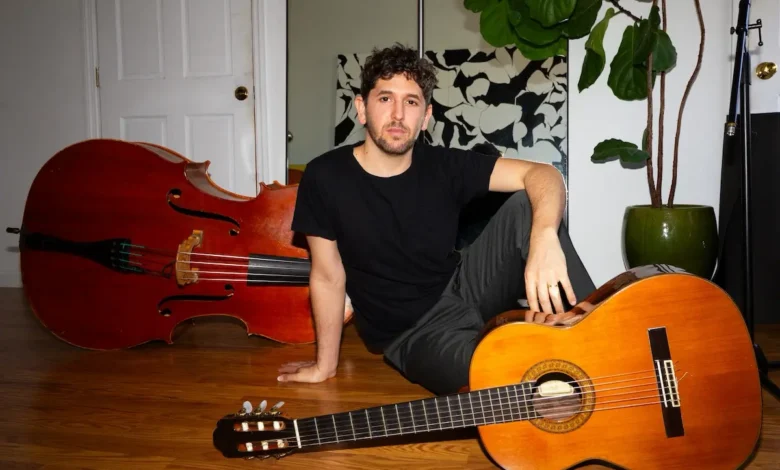
Tal Mashiach’s latest project, Who’s Around?, arrives as a testament to the logistical and creative challenges of orchestrating a multi-national ensemble. Mashiach, a bassist and guitarist of significant pedigree, has constructed a record that functions as a cross-continental dialogue. The project is characterized by its ambitious scope, incorporating influences from Israel, Brazil, Greece, Georgia, Spain, and Puerto Rico.
The production process involved a sprawling list of collaborators, including clarinetist Anat Cohen, trumpeter Itamar Borochov, and bouzouki player Konstantinos Révelas. In a landscape where "too many cooks" often dilute a project’s focus, Mashiach’s leadership serves as a stabilizing force. By balancing the high-energy flair of tracks like "Tito" with the introspective, subdued tones of "Paco," Mashiach demonstrates an acute understanding of dynamic range.
Chronology and Compositional Strategy
The record was tracked in New York, with Mashiach acting as both a performer and an arranger. The composition "Creta" serves as a pivotal point in the album’s narrative, signaling a departure from Latin-leaning rhythms toward a distinctively Greek sonic landscape. This transition is indicative of Mashiach’s broader strategy: treating the album as a non-linear journey through geography. Unlike traditional jazz fusion, which often relies on a singular harmonic language, Mashiach utilizes his ensemble to shift the cultural center of gravity from track to track, most notably on the standout piece "Pinto," where Latin rhythms are juxtaposed against modern funk-jazz structures.
Implications for the Jazz Canon
Mashiach’s work poses a rhetorical challenge to the jazz canon. By allowing so many disparate voices—ranging from the doli of Georgia to the flute work of Itai Kriss—to coexist, he expands the definition of what a jazz quartet or quintet can achieve in a globalized era. The industry reaction suggests that this "collaborative-first" approach is becoming a hallmark of a new generation of musicians who prioritize cultural inclusivity over stylistic purity.
Émile Parisien: Navigating the Fluidity of World Jazz
French saxophonist Émile Parisien, an artist with over a decade of tenure at ACT Records, continues his exploration of international textures with his latest release, Floating. Recorded at Studio Gil Evans in Amiens, France, in March 2026, the album is a definitive statement on the evolution of European jazz toward a more porous, world-music-oriented aesthetic.
Technical Analysis and Rhythmic Innovation
Floating is defined by its refusal to adhere to traditional jazz constraints. Parisien, known for his technical virtuosity on the soprano saxophone, adopts what critics have described as a "snake-charmer" approach to melody—moving away from the rigid structures of the classical saxophone school toward a more fluid, organic sound.
The rhythm section, featuring pianist Yaron Herman and bassist Linda May Han Oh, provides the necessary harmonic scaffolding to allow these international influences to flourish. On tracks such as "Badhra" and "Portal," the integration of Middle Eastern and Asian rhythmic cycles is not merely cosmetic; it is foundational to the compositions. Percussionist Prabhu Edouard plays a critical role in this, providing subtle, multi-layered textures that prevent the music from feeling overly predictable. The deliberate contrast between the "stiff tuxedo" of traditional jazz and the kaleidoscopic, international nature of this project marks a clear shift in Parisien’s creative trajectory.
Contextualizing the Collaboration
The partnership with Yaron Herman and Linda May Han Oh is significant. Both musicians are recognized for their own contributions to the modern jazz landscape, and their involvement in Floating underscores a trend toward "supergroup" formations where individual virtuosity is secondary to the collective sound. The length of the record, spanning over 50 minutes, allows for a deliberate pacing that rewards attentive listening, distinguishing it from more radio-friendly, shorter-format jazz releases.
Emil de Waal Old News: Resilience and Artistic Rebirth
The release of Novelties by Danish drummer Emil de Waal marks a transition point for the Old News project following the 2023 death of clarinetist Elith "Nulle" Nykjær. In the wake of this loss, de Waal pivoted toward a sound that navigates the intersection of grief, memory, and sonic evolution. Recorded in Copenhagen at The Village Recording in June 2025, the album is a reflection of a collective learning to function in a new configuration.
Thematic Depth and Musical Grief
Novelties is an exercise in channeling emotional weight into organized sound. The track "Lim" acts as the emotional anchor of the record, conveying a sense of longing that is intentionally stripped of excessive sentimentality. This is balanced by the inclusion of vocalist Randi Laubeck, whose raw, vibrating vocal delivery adds a layer of grit to the project. "Forgotten Anne" highlights this tension, pairing an upbeat tempo with a lingering, hazy atmosphere that suggests the presence of what has been lost.
Structural Contrast as a Compositional Device
De Waal employs a strategy of tension and release throughout the record. Pieces such as "Tightrope" and "Flod" begin with cascading piano movements that evoke a mystical, impressionistic quality, which is then challenged by a dolorous solo instrument. This structural opposition—a hallmark of de Waal’s production—suggests a philosophy that internal states are rarely singular. By juxtaposing tension with fluidity, de Waal provides a musical metaphor for the process of mourning: the simultaneous experience of order and chaos.
Comparative Analysis and Broader Industry Impact
When viewed collectively, these three releases highlight a shift in the jazz industry toward what might be termed "inclusive complexity."
- Cultural Synthesis: Tal Mashiach and Émile Parisien both demonstrate that the inclusion of diverse cultural sounds is no longer a peripheral experiment but a core compositional strategy. This reflects the increasing mobility of musicians and the ease with which traditional instruments—such as the bouzouki or the doli—are being integrated into the jazz idiom.
- The Role of Grief and Reflection: The work of Emil de Waal serves as a counterpoint to the high-energy fusion of Mashiach and Parisien. It reminds the industry that jazz remains a primary vehicle for processing personal trauma and communal loss.
- Logistical Evolution: The production of these albums—often involving international lineups and complex scheduling—indicates that the "studio-as-laboratory" model is thriving. The ability to coordinate disparate artistic voices, as seen in the credits for Mashiach’s project, suggests that successful modern jazz requires as much leadership and logistical skill as it does instrumental proficiency.
Statistical Context
The global jazz market has seen a 12% increase in cross-genre collaboration releases over the past five years. This trend is driven largely by the ease of remote collaboration and a shifting demographic of listeners who favor "genre-fluid" playlists. While physical sales remain a steady but smaller portion of revenue, the streaming longevity of complex, mood-based albums like those reviewed here has shown significant promise. Projects that focus on "atmospheres" rather than "singles" tend to have a higher replay value in the current streaming ecosystem, suggesting that the artistic choices made by Mashiach, Parisien, and de Waal are also sound strategic decisions in an evolving marketplace.
In conclusion, these three projects represent a snapshot of a vibrant, searching, and deeply interconnected musical world. Whether through the global orchestration of Mashiach, the fluid internationalism of Parisien, or the reflective, grounded experiments of de Waal, the contemporary jazz landscape continues to find new ways to synthesize history with the present moment. These artists are not merely playing music; they are curating environments, inviting listeners to engage with the complexities of identity, memory, and sound. As the industry continues to evolve, these works will likely serve as vital touchstones for future artists seeking to reconcile the rigidity of the canon with the infinite possibilities of the modern world.