The North Mississippi Hill Country blues stands as one of the most distinct and resilient regional musical traditions in the American South. Unlike the structured, twelve-bar urban blues popularized in Chicago or the Delta blues characterized by intricate slide guitar work, the Hill Country sound is defined by hypnotic, repetitive riffs, unconventional song structures, and an explicit purpose: to serve as the heartbeat of community dance parties. Through the decades, this tradition has shifted from an insular, private practice rooted in rural social gatherings to a subject of global ethnomusicological study and, eventually, a commercialized commodity. Central to this preservation and transformation is the work of Dr. David Evans, a folklorist and musician whose extensive fieldwork beginning in the 1970s documented a culture that many feared would vanish under the pressure of modernization.
The Foundation of a Distinctive Sound
The Hill Country style is anchored by the contributions of legendary figures such as Junior Kimbrough, Robert Belfour, and Napoleon Strickland. Each artist brought a unique interpretation to the regional sound, yet they shared a common reliance on rhythmic persistence. Junior Kimbrough, who first surfaced in the commercial market with his 1968 single "Tramp" on the local Philwood label, became a primary subject of Evans’s research after a chance encounter in 1979.
Kimbrough’s mastery lay in his originality. While many blues artists of the era relied on the standard repertoire of the Delta, Evans noted that over 90% of Kimbrough’s catalog consisted of original compositions. These songs were not built on traditional complex lyrical narratives but rather on repeated, interlocking riffs designed to sustain a dance floor. Kimbrough’s approach—characterized by "odd structures"—created a sonic signature that was simultaneously primitive and avant-garde.
Similarly, Robert Belfour became a fixture of the Memphis busking scene during the 1980s and 1990s. Evans, who first encountered Belfour at Handy Park, described his playing as a raw, unfiltered expression of the Hill Country aesthetic. Belfour famously employed a unique approach to standard guitar tuning, raising the G string to create a permanent "blue note." This allowed him to generate complex tonal variations and bent notes that became synonymous with his style, drawing heavy influence from the modal, drone-heavy approaches of John Lee Hooker and Lightnin’ Hopkins.
The Role of Fieldwork and Documentation
During the 1970s and 1980s, the Hill Country blues was not a dying art; it was a living, breathing component of community life. Picnics and house parties served as the primary venues for this music, providing a social infrastructure that supported artists like R.L. Burnside, Jessie Mae Hemphill, and Othar Turner. Evans’s mission was to capture this "memory music" before it was lost to the encroaching influence of mainstream pop culture.
His methodology involved direct observation, recording artists in their homes, at festivals, and at the informal, rowdy parties that defined the region. This work culminated in the creation of labels like High Water, which sought to present the music exactly as it existed within the community. Evans was meticulous about avoiding interference, believing that the music’s "Hill Country quality" relied on its lack of commercial polish.
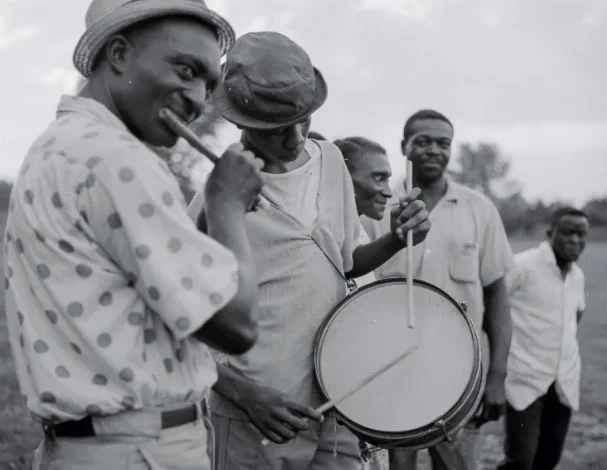
This period of documentation also saw the music reach unprecedented heights of visibility. In 1982, the television program Mister Rogers’ Neighborhood featured a fife-and-drum ensemble organized by Evans, including Othar Turner and Napoleon Strickland. This broadcast served as a cultural bridge, exposing millions of viewers to the ancient, rhythmic traditions of the region and inspiring a new generation of musicians, most notably the North Mississippi Allstars, led by Luther and Cody Dickinson.
Commercialization and the Fat Possum Effect
The 1990s marked a significant turning point for the genre as Fat Possum Records began to market Hill Country artists to a global, predominantly white rock and alternative audience. While Evans acknowledges that Fat Possum brought much-needed revenue and exposure to artists like R.L. Burnside, he remains critical of the label’s editorial approach.
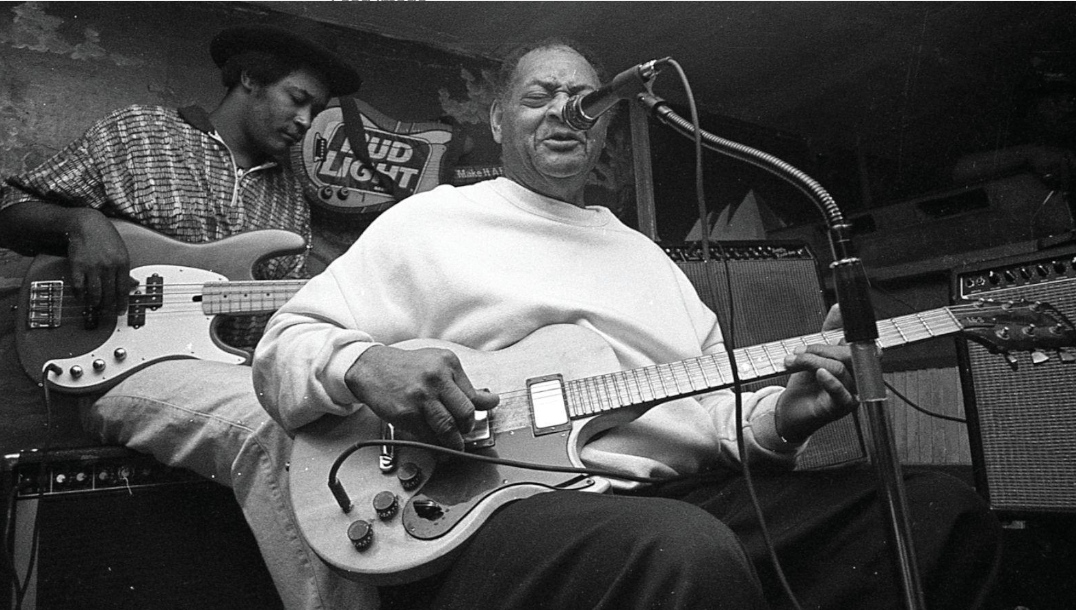
The label’s strategy often involved remixing recordings to appeal to rock sensibilities and, in the case of Burnside, manufacturing an "outlaw" persona that Evans suggests was largely disconnected from the man’s actual life. While Burnside was certainly a charismatic storyteller and a man who lived through hard circumstances, the branding of him as an dangerous, violent figure struck many in the local community as a tasteless distortion of his character. Evans notes that Burnside was a dedicated family man who balanced his musical career with a day job, far removed from the sensationalized narrative pushed by modern marketing machines.
Cultural Shifts and the Modern Festival Era
The current state of Hill Country blues represents a departure from the informal, community-centric gatherings of the 20th century. Today, the tradition is largely sustained by a handful of families and formal events such as the Hill Country Picnic and the Cotton Patch Soul Blues Festival.
This professionalization has inevitably changed the audience demographics. The picnics of the 1970s were deeply integrated into the local Black community; today, the attendees at major festivals are frequently international tourists or national enthusiasts. Evans posits that this shift might be a contributing factor to the decline in participation among younger Black residents in North Mississippi. As the music has moved further away from the mainstream of Black popular culture—such as R&B, hip-hop, or gospel—and into the sphere of "revivalist" folk music, it has become less accessible to local youth as a means of personal expression.
The Legacy of the Fife and Drum
Perhaps the most vulnerable aspect of the Hill Country tradition is the fife-and-drum music, a precursor to the modern blues sound. Historically, the tradition relied on a tight-knit network of musicians like Napoleon Strickland and Othar Turner. Strickland, though notoriously inconsistent, was described by Evans as having a "powerful rhythm" that surpassed even the legendary Fred McDowell.
The fife-and-drum tradition has seen a significant thinning of its ranks. While Sharde Thomas—Othar Turner’s granddaughter—continues to carry the torch, the scarcity of younger practitioners suggests that the tradition is in a precarious state. The transition from informal, organic performance to the formal stage has hindered the spontaneous, cross-generational mentorship that once kept the music vibrant.
Fact-Based Implications for the Future
The survival of Hill Country blues hinges on the balance between preservation and evolution. While the commercial success of the 1990s provided a financial lifeline for many aging artists, it also created a "blues economy" centered in places like Clarksdale, which, while beneficial for tourism, risks turning a living cultural practice into a static, museum-piece performance.
The implications of this transition are twofold. First, the globalization of the sound has ensured its survival in the archives and on the concert stages of Europe and the Northern United States. Second, the loss of its function as a local, community-binding force means that the music is increasingly divorced from the social context that birthed it.
Dr. David Evans, who continues to perform and record, remains a testament to the effort required to document these traditions. Through his work with groups like the Last Chance Jug Band and his ongoing session work, he advocates for an approach that respects the authenticity of the regional sound. For the Hill Country blues to remain more than a historical footnote, future efforts must focus on fostering organic interest within the region, ensuring that the music remains a viable, living art form rather than a relic of a bygone era.
As the demographic landscape of Mississippi continues to evolve and the geographic isolation of the Hill Country diminishes, the music faces its greatest challenge: maintaining its identity in an era of homogenization. The strength of the tradition, as Evans notes, has always been its ability to thrive within a specific, inward-looking community. Whether it can adapt to the modern cultural climate without losing that essential spirit remains an open question for the next generation of researchers and musicians.