An International Journey in Modern Jazz: Saxophonist Jan Kus Debuts with Acclaimed Album Faith

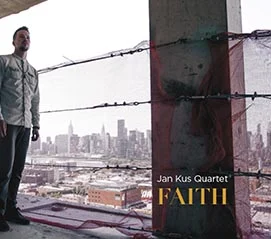
The contemporary jazz landscape has long served as a melting pot for diverse cultural influences, technical innovation, and cross-border collaboration. Few debut recordings in recent years capture this global ethos as distinctly as Faith, the 2016 full-length album from Slovenian-born saxophonist, composer, and bandleader Jan Kus. Released following a deliberate decade of conservatory training, international touring, and academic achievement across Europe and the United States, Faith established Kus not merely as a promising instrumentalist, but as a fully realized creative voice within the modern jazz idiom. Featuring an ensemble of globally minded musicians—including mentor and alto saxophonist Antonio Hart, pianist Sean Fitzpatrick, double bassist Dan Martinez, drummer Joel Mateo, and vocalist Mélanie JB Charles—the record bridges European classical sensibilities with the raw harmonic and rhythmic vitality of the American jazz tradition.
Chronological Evolution: From Slovenian Prodigy to New York Master’s Graduate
Jan Kus’s trajectory toward international recognition began during his youth in Slovenia, where his early aptitude on the saxophone drew the attention of the country’s cultural authorities. Supported by a prestigious scholarship from the Slovenian Ministry of Culture, Kus relocated to the Netherlands to study at the Royal Conservatory of The Hague. This formative academic period exposed him to a broader European network of emerging jazz artists. Between conservatory sessions and independent projects, Kus toured extensively, performing in Belgium, Cyprus, Greece, Hungary, Italy, Slovenia, Slovakia, and the Netherlands. These early cross-cultural exchanges planted the seeds for a musical identity that would continually resist geographic and stylistic boundaries.
By 2012, Kus sought to deepen his engagement with the epicenter of modern jazz, crossing the Atlantic to New York City. He enrolled in the Aaron Copland School of Music at Queens College, pursuing a Master’s degree under the tutelage of renowned saxophonist and educator Antonio Hart. Kus’s academic dedication and technical prowess quickly earned him institutional recognition; he was awarded the Jimmy Heath Award, an accolade traditionally reserved for exceptional wind players demonstrating extraordinary promise and dedication to the craft. Immersed in the competitive and vibrant New York jazz scene, Kus began conceptualizing the material that would eventually constitute his debut leadership project.
Production and Ensemble Dynamics of Faith
Self-produced and independently released in 2016, Faith represents the culmination of Kus’s transatlantic experiences. Eschewing the conventional safety of covering standard repertoires exclusively, Kus curated an ambitious program of original compositions designed to highlight both his own multifaceted playing and the distinct voices of his collaborators. The core quartet comprises Kus on tenor and soprano saxophones, Sean Fitzpatrick on acoustic piano and Fender Rhodes, Dan Martinez on double bass, and Joel Mateo on drums.
To expand the record’s sonic palette, Kus integrated a select roster of guest artists. Alongside Antonio Hart, the album features electric guitarist Rafal Sarnecki, percussionist Carlos Maldonado, electronic artist Žiga Murko, and vocalist Mélanie JB Charles. Charles, an increasingly ubiquitous presence on millennial jazz recordings, brings a languid, highly individualized vocal delivery that functions less as a traditional lyric vehicle and more as an integrated instrumental voice within the arrangements.
Analytical Breakdown of Key Tracks
The structural integrity of Faith relies heavily on the dynamic interplay between Kus and his guest soloists. On the composition "Emptiness," the stylistic contrast between Antonio Hart’s focused, piercing alto saxophone and Kus’s brash, full-bodied tenor saxophone creates an immediate tension. Rather than competing for sonic space, the two saxophonists harmonize complex melodic lines before unraveling them into extended improvisations marked by expressive fervor and technical precision.
The album also pays homage to jazz history through contemporary re-contextualization, notably on a dynamic quartet rendition of Thelonious Monk’s bebop classic, "Rhythm-A-Ning." Featuring trumpeter Alex Sipiagin alongside Kus, the track reinterprets Monk’s angular melody through a complex rhythmic lens. Fitzpatrick’s piano work and Mateo’s driving percussion establish a fluctuating tension, while Martinez’s bass anchors an underlying Latin-infused groove that transforms the traditional bebop framework into a modern transatlantic statement.
Vocal integration stands out as one of Faith’s defining characteristics. On the track "Strength," Charles utilizes her voice as an organic instrument, trading phrases and counter-melodies with Kus’s saxophone in a symbiotic display of phrasing. Conversely, the album offers two distinct interpretations of the ballad "I’m Just a Little Person." The vocal version highlights the breathy intimacy of Charles’s delivery matched against the controlled, sustained resonance of Kus’s tenor. In an alternate trio version, Kus switches to soprano saxophone, initiating an open, airy dialogue with the rhythm section that evokes a contemplative sense of longing, demonstrating versatility and harmonic maturity across differing reed instruments.
Among the album’s varied textures, the composition "Neófito" emerges as a cornerstone of Kus’s modern aesthetic. Driven by intricate harmonic ideas and a heavy Latin rhythmic undercurrent, the muscular tune encapsulates the international ethos of the project. It showcases Kus’s breath control, rapid technical dexterity, and an ability to synthesize diverse global rhythms without compromising the intellectual rigor of modern jazz.
Comprehensive Track Listing and Ensemble Personnel
The complete track listing for Faith reflects the conceptual depth and narrative arc envisioned by the bandleader:
- Disconnect
- Emptiness
- One for the Band
- Aqui
- One for the Band—Jan’s Story
- I’m Just a Little Person
- One for the Band—Sean’s Story
- Rhythm A Ning
- Strength
- One for the Band—Dan’s Story
- Neófito
- Faith
- I’m Just a Little Person (Trio Version)
The ensemble personnel contributing to the album’s expansive soundscape includes:
- Jan Kus: Tenor saxophone, soprano saxophone
- Sean Fitzpatrick: Piano, Fender Rhodes
- Dan Martinez: Double bass
- Joel Mateo: Drums
- Mélanie JB Charles: Vocals
- Antonio Hart: Alto saxophone
- Alex Sipiagin: Trumpet
- Carlos Maldonado: Percussion
- Rafal Sarnecki: Electric guitar
- Žiga Murko: Electronics
Broader Implications and Industry Reception
The release of Faith marked a significant milestone for independent contemporary jazz production in the mid-2010s. By leveraging international scholarship programs, cross-continental educational institutions, and a collaborative network spanning European and American markets, artists like Kus illustrate the increasingly borderless nature of modern jazz development.
Industry analysts and critics noting the album’s release emphasized the technical maturity displayed by Kus at this early stage of his leadership career. Possessing a round, resonant tone, exceptional breath control, and a sophisticated approach to rhythm, Kus avoids the common pitfalls of youthful over-playing, favoring instead a measured balance between technical display and emotional resonance. As contemporary jazz continues to absorb global folk traditions, electronic elements, and cross-genre instrumentation, debut projects like Faith provide a template for how emerging artists can honor historical idioms while forging a distinct, globally conscious artistic identity. The longevity of such recordings suggests that the future of the genre rests safely in the hands of a generation trained to view music as an international dialogue rather than a regionally isolated discipline.
Related posts: