The High-Stakes World of Classical Music Competitions and the Betting Culture Surrounding Virtuosos

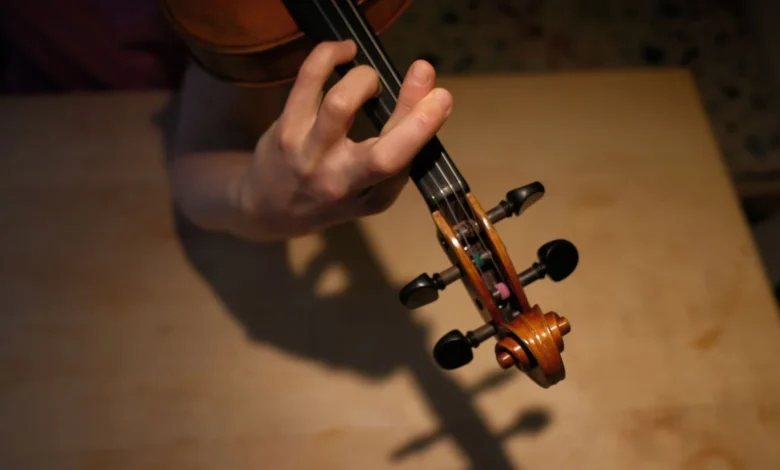
The 17th Henry Wieniawski Violin Competition in Poznań, Poland, stands as one of the most prestigious and demanding trials for young string players in the world. Founded in 1935, the competition has historically served as a gateway to international stardom for violinists, attracting top-tier talent from across the globe. During the recent semi-final rounds, the performance of Chinese violinist Meng Zou offered a compelling case study into the intense pressures and the evolving, often controversial, ecosystem of classical music spectatorship, which has increasingly begun to mirror the high-stakes environment of professional sports betting.
The Performance at the 17th Wieniawski Competition
On a recent Tuesday evening, the atmosphere inside the venue was charged with the tension characteristic of elite music competitions. Meng Zou took the stage to perform the second movement of Jean Sibelius’s Violin Concerto. His interpretation was marked by a visceral, overdriven tone—an approach that prioritized raw emotional intensity over the crystalline, precise articulation often favored by competition juries.
While the second movement displayed a commendable, burning intensity, the performance as a whole left room for critical debate. Technical inconsistencies in the outer movements suggested a lack of the cohesive, structural narrative that distinguished the front-runners of this year’s cohort. Unlike the legendary performances that often define the Wieniawski legacy—where a soloist seems to fully inhabit the concerto with a sense of inevitability—Zou’s rendition felt fragmented. Observers noted that while he possessed the technical facility to reach the semi-finals, his inability to sustain the concerto’s complex architecture at the highest level of scrutiny made his advancement to the final round appear unlikely to many in attendance.
The Historical Prestige of the Wieniawski Competition
To understand the weight of a performance like Zou’s, one must consider the historical gravity of the Henry Wieniawski Violin Competition. Held in Poland, it is one of the oldest and most respected violin competitions in existence. It is named after the Polish virtuoso and composer Henryk Wieniawski, whose own contributions to the violin repertoire—most notably his concertos and the Légende—remain staples of the concert stage.

Winning the Wieniawski is often a career-defining moment. Past laureates have gone on to lead major orchestras, secure elite recording contracts, and perform in the world’s most prestigious concert halls. Because of this, the competition acts as a pressure cooker, where a single missed shift or a lapse in intonation can end a performer’s aspirations for gold. The selection process is grueling, involving multiple rounds of solo repertoire, chamber music, and concertos accompanied by the Poznań Philharmonic Orchestra.
The Emergence of Betting Markets in Classical Music
The observation of Zou’s performance within the context of competition "betting" highlights a recent shift in the classical music landscape. While classical music was once considered a bastion of refined aesthetic judgment, the rise of digital platforms and global streaming has turned these competitions into spectator sports.
In recent years, niche betting markets and "prediction polls" have emerged on social media and specialized forums, where followers of the competition place symbolic or real-world stakes on which violinist will win. This phenomenon has drawn both interest and ire from the musical establishment. Proponents argue that it increases engagement among younger audiences and highlights the athleticism inherent in elite violin playing. Critics, however, maintain that it risks commodifying art, reducing a lifetime of musical development to a series of odds and market fluctuations.
The presence of this betting culture changes the way audiences view performers. Instead of merely listening for artistic depth or interpretative nuance, there is a growing tendency to "scout" for technical flaws that could impact a contestant’s standing. This creates a feedback loop of anxiety that performers must navigate, adding a layer of psychological strain to an already taxing event.
Fact-Based Analysis: Technical Requirements vs. Artistic Interpretation
The Sibelius Violin Concerto is a benchmark for technical and interpretative prowess. It requires a soloist to balance Nordic reserve with extreme technical pyrotechnics. In assessing Zou’s performance, experts point to the specific requirements of the competition’s rubric:

- Articulation: Clarity in the runs and double-stops of the outer movements.
- Tone Quality: The ability to sustain a long, singing line over the thick orchestral textures of the Sibelius score.
- Pacing: The logical unfolding of the musical argument over the course of the three-movement work.
Zou’s "overdriven" tone, while emotionally stirring, often masks the clarity required in the score’s more intricate passages. In a competition setting, where the jury is looking for both brilliance and consistency, a performer must prove they can manage the "big picture" of the work. When a performance relies heavily on an aggressive tone to compensate for unevenness in articulation, it often signals a lack of preparation or a misunderstanding of the work’s formal balance.
Official Responses and the Jury’s Role
While the jury of the Wieniawski competition remains notoriously tight-lipped during the proceedings, their selection criteria are well-documented. They prioritize contestants who demonstrate an ability to "speak" through the instrument—a blend of technical mastery and individual musical personality.
Behind the scenes, administrators of the competition have noted that the level of scrutiny from the public has never been higher. With the introduction of live-streamed commentary and real-time social media analysis, the "court of public opinion" often arrives at a consensus long before the official results are announced. For participants, this means playing not just for a handful of judges, but for a global audience that is increasingly empowered to voice their dissent or approval.
Broader Implications for the Future of Classical Performance
The case of Meng Zou and the 17th Wieniawski Competition is emblematic of a broader transition within the classical arts. As the industry faces the challenge of remaining relevant to a digital-native generation, the structure of elite competitions is evolving.
- Professionalization of Performance: The pressure to be "perfect" has led to a standard of technical excellence that was unimaginable fifty years ago. However, this has also led to a homogenization of style, where performers often sound similar to one another.
- The Role of Technology: The proliferation of high-definition streaming has allowed for unprecedented access to the competition, but it has also subjected performers to an invasive level of scrutiny that can affect their long-term development.
- The "Sports-ification" of Music: Whether through betting or the intense ranking systems of competitions, the industry is increasingly adopting the language of sports. This brings visibility but also introduces a mercenary culture that may be at odds with the reflective nature of classical music.
As the Wieniawski competition concludes, the lessons learned from the semi-final rounds will likely inform future judging panels. The industry must grapple with how to balance the need for high-stakes competition with the necessity of protecting the artistic integrity of the performers. The performance of a single concerto, while seemingly a fleeting moment in a long career, remains a critical intersection where the history of the art form meets the modern, fast-paced world of global entertainment. For Meng Zou and his peers, the competition is more than just a musical challenge; it is a test of resilience in an era where every note is documented, analyzed, and, increasingly, subject to the cold calculations of the outside world.
Related posts: