The Narrative Core and Character Dynamics
At the heart of World On Fire is Jules, portrayed by Elizabeth Friesen, a social worker navigating the precipice of professional and emotional collapse. Jules is tasked with managing a caseload that represents the diverse faces of Toronto’s marginalized population. The play’s strength lies in its characterizations, presenting a raw and unfiltered look at the individuals who exist on the fringes of the urban landscape.
The ensemble of clients includes Annie (Marline Yan), a young woman who has been navigating the streets since the age of 13; Casey (Anne van Leeuwen), a woman struggling with profound trauma and a history of homelessness; David (David Huband), the irritable son of Holocaust survivors dealing with suicidal ideation; and Marius (Chris Peterson), a man paralyzed by pervasive, crippling fears. Over the course of the performance, the backstories and internal struggles of these characters are meticulously unspooled, revealing a tapestry of systemic failure and personal tragedy.
Anne van Leeuwen’s portrayal of Casey is particularly noteworthy for its volatility. Casey is depicted as a woman whose life derailed after the collapse of her marriage, leading to a descent into homelessness and the loss of her children. Van Leeuwen captures the character’s jittery energy and brittle vulnerability, oscillating between belligerent demands for social justice and moments of tearful repentance. Her performance highlights the "brokenness" that results from prolonged exposure to systemic instability.
In contrast, Chris Peterson’s Marius provides a different perspective on the struggle for survival. Unlike the other clients, Marius possesses the material resources to live a more stable life, yet he is stymied by a psychological paralysis that renders him unable to function. This creates a point of friction with Jules, whose growing impatience reflects the real-world frustrations of social workers dealing with the complexities of mental health and self-sabotage.

Socio-Economic Context and Supporting Data
The themes explored in World On Fire are deeply rooted in the contemporary socio-economic climate of Toronto and other major North American metropolitan areas. The play’s focus on the "intractable" nature of homelessness and mental health crises aligns with current statistical trends in urban social services.
According to data from the City of Toronto’s Street Needs Assessment, the number of individuals experiencing chronic homelessness has seen a steady increase over the last decade, with a significant portion of the population reporting mental health challenges and childhood trauma as contributing factors. Furthermore, the "burnout" experienced by Jules in the play is a well-documented phenomenon in the social work sector. Studies on "Secondary Traumatic Stress" (STS) indicate that professionals working with high-needs populations often experience symptoms similar to Post-Traumatic Stress Disorder (PTSD), leading to high turnover rates and a depletion of the compassion required for the role.
The character of Jules serves as a surrogate for the audience, grappling with the question: "What do you do with people who keep making bad choices?" This central conflict underscores the limitations of individual empathy in the face of institutionalized poverty. The play suggests that while personal care is essential, it is often insufficient against the backdrop of a society that continues to leave larger segments of the population behind.
Critical Analysis of Dramaturgy and Performance
While the production is praised for its emotional depth and strong acting, it is not without its dramaturgical challenges. One area of critique involves the character of David, played by David Huband. As written, David’s characterization as a suicidal child of Holocaust survivors has been questioned regarding its psychological accuracy. Research into intergenerational trauma among Holocaust survivors often points to a "survivalist" mindset that, while fraught with anxiety and guilt, does not statistically correlate with high rates of suicide compared to other trauma-affected groups.
Furthermore, critics have pointed to a chronological inconsistency in the script. Jules refers to David inheriting property from his parents as a recent event; however, given the historical timeline of World War II, the parents of a contemporary adult character would have likely passed away decades prior, or David himself would be significantly older than the character appears to be.
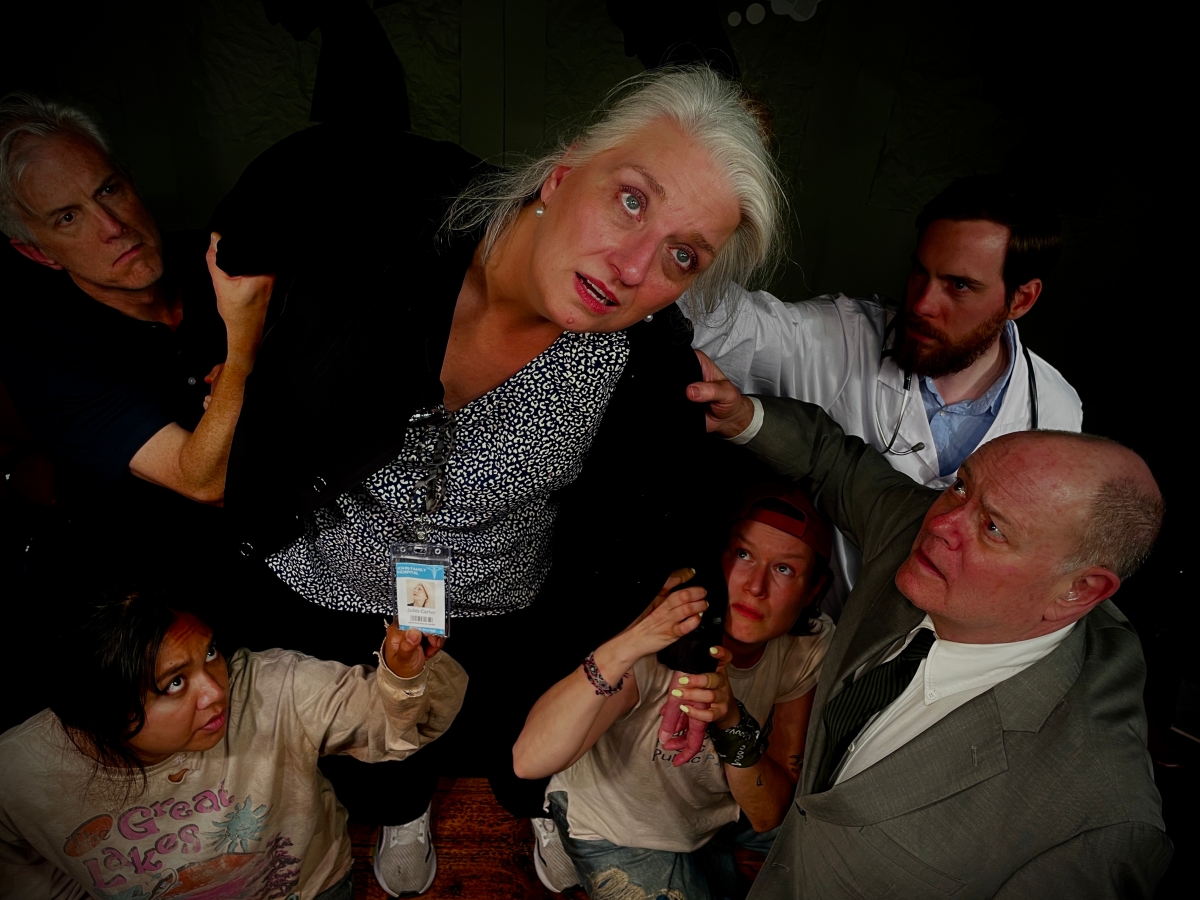
The role of Dr. Emilio, played by Alex Clay, serves as a narrative foil to Jules. As a doctor who questions whether Jules is truly helping or merely speaking over her clients, Emilio represents the clinical and often cold reality of the medical-institutional complex. While his observations provide a necessary intellectual counterpoint, the performance occasionally veers into the farcical, creating a tonal shift that contrasts with the raw realism of the client scenes.
Technical Execution and Stage Design
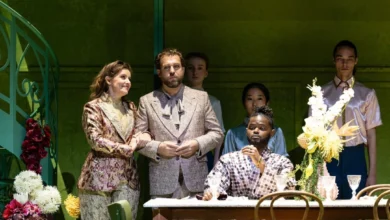
The production’s technical elements are designed to complement its stark, uncompromising tone. The set, designed by Madeleine Rosenberg, Daniel Rosenberg, and Nicholas Friesen, utilizes a minimalist approach. Two chairs and two benches are repurposed to represent various settings, including hospital meeting rooms and Jules’s office. This simplicity allows the focus to remain entirely on the actors and the dialogue.
The backdrop features graphic designs that symbolize the mental and environmental stresses of the characters. These visual elements, combined with scene transitions punctuated by snippets of "old school" alternative rock, help to establish a mood of urban restlessness and mounting tension. The use of music serves as a bridge between the play’s various emotional beats, grounding the production in a specific cultural and temporal aesthetic.
Chronology of the Production and Collective Formation
The World On Fire Theatre Collective was specifically established to produce the works of George F. Walker, ensuring that his unique voice continues to have a dedicated platform in the Canadian theatre landscape. The formation of the collective represents a significant moment in Toronto’s independent theatre scene, signaling a commitment to character-driven, socially relevant drama.
The timeline for the current production began with previews in late May 2026, followed by the official opening on May 28. The limited run, concluding on June 7, reflects the boutique nature of The Assembly Theatre, a venue known for hosting intimate and provocative works. The collective’s decision to name itself after this specific play suggests a long-term mission to tackle "high-heat" social issues through the lens of Walker’s writing.

Broader Implications and Societal Reflections
World On Fire does not offer easy solutions or a hopeful resolution. Instead, it forces the audience to confront the "un-sympathetic victim." By showing the clients bickering amongst themselves and making choices that further alienate them from society, Walker avoids the trap of sentimentalizing poverty. He presents a reality where being a victim of circumstance does not automatically make a person "likable" or easy to help.
The play’s structure, which includes Jules and Annie speaking directly to the audience, serves to break the fourth wall and implicate the viewer. While Jules uses the audience as a sounding board for her frustrations, Annie’s interactions are more confrontational. She berates the audience as a stand-in for a public that has become "numb" to the sight of the homeless on their streets. This choice highlights the gap between individual responsibility and societal failure, though the play notably avoids a deep dive into the institutional roots of these issues, focusing instead on the interpersonal fallout.
Final Assessment of the Work
George F. Walker’s latest work is a testament to his enduring ability to capture the voice of the "forgotten" citizen. Despite minor inconsistencies in timing and certain character arcs, the play succeeds in delivering a visceral experience that mirrors the exhaustion and complexity of the modern social service system.
The production underscores the reality that empathy has its limits and that the "world on fire" is not just a metaphor for global crisis, but a literal description of the lives of those trapped in the cycles of trauma and poverty. For the World On Fire Theatre Collective, this debut is a bold statement of intent, promising a future of theatre that refuses to look away from the most difficult aspects of the human condition.
The Assembly Theatre continues to be a vital hub for such explorations, providing the necessary intimacy for a play that relies so heavily on the raw emotional output of its ensemble. As the production concludes its run, it leaves behind a series of uncomfortable questions about the nature of help, the cost of caring, and the enduring invisibility of society’s cast-offs.