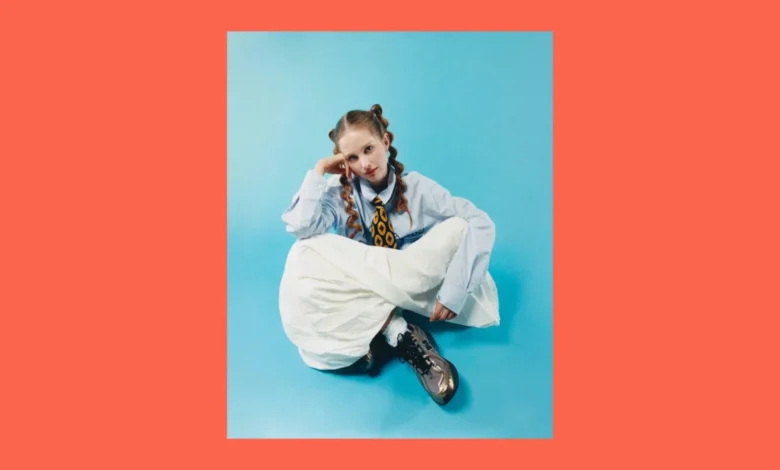
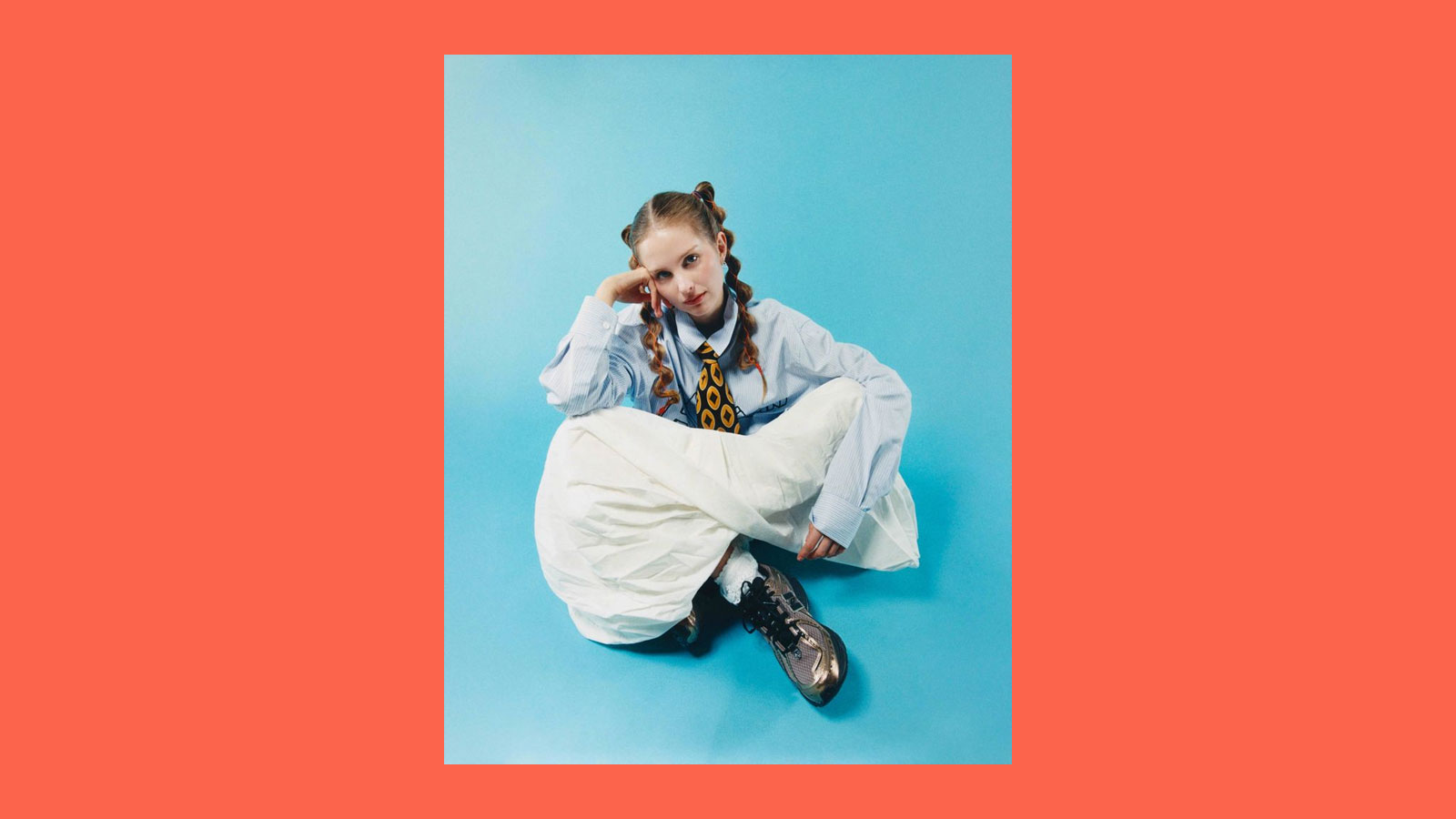
The intersection of classical training and contemporary aesthetics has found a distinct protagonist in Maddie Ashman, a cellist and multi-instrumentalist whose presence in London’s cultural hubs signals a broader shift in the classical music landscape. Observed in the bustling corridors of King’s Cross, Ashman presents a visual narrative that contrasts sharply with the corporate environment of the surrounding tech giants. Clad in a brown tracksuit top and utilizing traditional wired headphones—a choice that suggests a preference for analog reliability over wireless convenience—she embodies a bridge between the rigorous discipline of her conservatory roots and the fluid, genre-bending world of the modern independent artist. Her signature split ponytails and casual attire align more closely with the avant-garde spirit of Central Saint Martins than the nearby Google headquarters, marking her as a figure who is comfortably "out of joint" with the traditional expectations of the classical elite.
This stylistic departure is not merely cosmetic; it reflects a fundamental change in how young virtuosos are navigating the professional music industry in the mid-2020s. Ashman’s schedule, characterized by back-to-back meetings and a constant engagement with her digital platform, highlights the multifaceted nature of the modern musician’s career. The traditional trajectory of a cellist—moving from a prestigious academy to an orchestral chair—has been replaced by a more entrepreneurial model that requires the management of personal branding, digital content creation, and cross-genre collaboration.
The Artistic Chronology of Maddie Ashman
The rise of Maddie Ashman can be traced through a decade of evolving musical experimentation. Her journey began with a formal foundation in classical cello, characterized by the technical precision required for the standard repertoire of Bach and Elgar. However, by the early 2020s, Ashman began to distinguish herself through the use of looping pedals and vocal layering, a technique that allowed her to transform a single instrument into a complex, polyphonic ensemble.
Between 2021 and 2023, Ashman’s digital footprint expanded significantly. Utilizing platforms such as Instagram and TikTok, she shared "behind-the-scenes" glimpses into her practice sessions, blending the high-art aura of the cello with the relatability of a singer-songwriter. This period was crucial for establishing her "indie-chamber" sound, which avoids the sterility of some classical-crossover projects in favor of a more raw, folk-influenced aesthetic.
By 2024, Ashman had transitioned from a digital phenomenon to a staple of the London live music circuit. Her performances at venues such as the Southbank Centre and more intimate spaces in East London demonstrated an ability to command diverse audiences. The chronology of her career reflects a strategic move away from the "classical silo," opting instead for a path that integrates visual art, fashion, and technology. The "King’s Cross meeting" described in recent accounts is a testament to this growth, representing a level of industry engagement that encompasses recording contracts, festival bookings, and potential film scoring opportunities.
Data and the Rise of the Genre-Less Virtuoso
The success of artists like Ashman is supported by shifting consumption patterns within the global music market. According to 2025 industry reports, the "classical-adjacent" or "neo-classical" streaming categories have seen a 22% year-on-year increase in listenership among the 18–34 demographic. This data suggests that younger audiences are increasingly drawn to acoustic instrumentation when it is presented outside the formal structures of the concert hall.
Furthermore, the "DIY Virtuoso" movement—of which Ashman is a leading figure—has disrupted the traditional revenue models of the classical world. Where previous generations relied on government grants and orchestral salaries, contemporary artists are leveraging social media to build direct-to-consumer relationships. Data from independent artist platforms indicates that musicians who integrate visual storytelling with their technical skill see a 40% higher engagement rate than those who stick to traditional performance formats. Ashman’s aesthetic choices, from her wired headphones to her specific hair styling, function as visual motifs that make her instantly recognizable in a crowded digital marketplace.
The King’s Cross Context: A Cultural Microcosm
The choice of King’s Cross as a meeting point for Ashman and her industry collaborators is significant. Over the last decade, the area has been transformed from a transit hub into a nexus of education, technology, and art. The proximity of the Royal College of Music and the Royal Academy of Music to the creative heart of Central Saint Martins allows for a cross-pollination of ideas that defines Ashman’s work.
In this environment, the "corporate suit" represents the traditional gatekeepers of commerce, while Ashman represents the new creative economy. Her "amiable and chatty" demeanor during interviews masks the rigorous discipline required to maintain such a trajectory. The mention of her checking her phone during brief pauses in conversation is not a sign of distraction, but rather a reflection of the "always-on" nature of the 21st-century artist. In the modern era, a musician is their own manager, publicist, and content editor, requiring a level of administrative stamina that was rarely demanded of performers in the past.
Industry Reactions and Peer Perspectives
Colleagues and critics have noted that Ashman’s influence extends beyond her own discography. Producers within the London scene have praised her ability to treat the cello as a textural tool rather than just a melodic one. "Maddie understands the architecture of a song," noted one collaborator during a 2025 studio session. "She isn’t just playing the cello; she’s building an atmosphere that feels both ancient and contemporary."
Reaction from the classical establishment has been more nuanced. While some traditionalists view the "lifestyle-focused" approach to classical music with skepticism, many institutions have begun to embrace it as a necessary evolution for the survival of the art form. The fact that Ashman can bridge the gap between a high-level meeting and a casual lunch at King’s Cross suggests a level of social and professional mobility that is vital for the modern musician. Her ability to remain "stylistically out of joint" is, ironically, what makes her so perfectly suited for the current cultural moment.
Broader Implications for Classical Music and Education
The trajectory of Maddie Ashman’s career provides a blueprint for the future of music education. As conservatories grapple with declining enrollment and the perceived obsolescence of traditional career paths, the "Ashman Model" emphasizes the importance of versatility. It suggests that the future of the cello—and classical instruments at large—lies in their integration with modern technology and popular culture.
There is also a significant gender and identity component to this shift. Ashman’s rejection of the "diva" archetype in favor of a more relatable, "art-student" persona democratizes the instrument. It moves the cello away from the exclusive parlors of the elite and into the streets, cafes, and digital feeds of the general public. This democratization is essential for ensuring that string instruments remain relevant in an era dominated by electronic production.
Analysis of Future Trajectories
Looking forward, Maddie Ashman is positioned to become a central figure in the "New London Sound," a movement characterized by its refusal to adhere to rigid genre boundaries. The implications of her work suggest that we are entering a period where "classical" is no longer a genre, but a set of tools and techniques that can be applied to any musical context.
Her upcoming projects, rumored to include collaborations with electronic producers and visual artists, will likely further blur the lines between high art and popular culture. The "wired headphones" and "brown tracksuit" may become symbols of a new era of musicianship—one that values authenticity, technical mastery, and a keen understanding of the digital zeitgeist.
In conclusion, Maddie Ashman’s presence in King’s Cross is more than a fleeting moment in a busy schedule; it is a snapshot of a musician at the height of a cultural transition. By maintaining her unique aesthetic and technical integrity, she is not only carving out a space for herself but also redefining what it means to be a virtuoso in the 21st century. As she moves from her meeting to her next creative endeavor, Ashman carries with her the future of an instrument that is being radically reimagined for a new generation of listeners. The "stylistic disconnect" observed by onlookers is, in reality, the sound of the classical world finally catching up with the present.