Album Review: Pavel Kolesnikov Reimagines Chopin Nocturnes in a Visionary and Unconventional New Harmonia Mundi Release

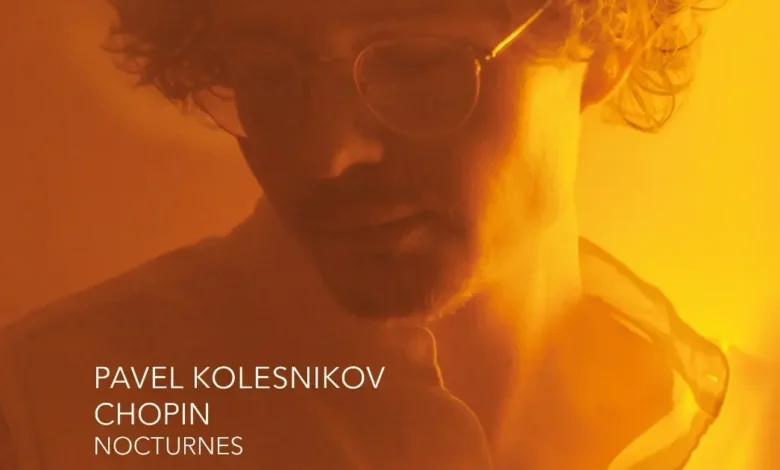
Pianist Pavel Kolesnikov has added a striking new chapter to the recorded history of Frédéric Chopin’s timeless piano literature with his comprehensive recording of the Nocturnes, released on the Harmonia Mundi label (Catalogue No. HMM 902791.92). Known for his intellectually rigorous and deeply idiosyncratic programming, the Russian-born pianist approaches Chopin’s foundational night-pieces not as a collection of isolated miniatures, but as a vast, interconnected landscape governed by a singular overarching narrative. Accompanying the double-disc album is a booklet featuring Kolesnikov’s own poetic and philosophical reflections on each piece, setting a tone of intense introspection that is matched only by his radical choices at the keyboard.
Chronology and Structural Conception
Chopin composed his Nocturnes over the span of three decades, establishing a genre defined by soaring cantabile melodies over undulating left-hand accompaniments, largely inspired by the expressive vocal style of early nineteenth-century Italian opera. Traditionally, performers have approached these twenty-odd pieces individually or within their published opus groupings, emphasizing their lyrical beauty and surface polish. Kolesnikov, however, disrupts this linear expectation entirely.
From the outset, his macro-structural design signals a departure from convention. Chopin famously left behind two distinct versions of the haunting C-sharp minor Nocturne, Op. posth.—a piece often treated as an introductory student staple or a standalone curiosity. Kolesnikov records both versions, strategically placing the first at the opening of Disc One and the second near the climax of Disc Two, effectively framing his entire artistic journey. Furthermore, throughout the tracklist, he blurs the boundaries between companion pieces within the same opus, binding them into cohesive binary pairs rather than letting them stand as separate entities.

Sonic Palette and Technical Approach
At the center of Kolesnikov’s instrumental approach is his choice of a Yamaha CFX concert grand piano. Renowned for its immense clarity, dynamic range, and powerful projection, the instrument is frequently utilized for high-octane Romantic concertos. Yet, under Kolesnikov’s hands, the CFX is coaxed into a realm of astonishing intimacy, evoking the hushed atmosphere of a nineteenth-century Parisian salon wrapped in a dreamlike, impressionistic haze.
This stylistic signature is immediately evident in the early opus numbers. While conventional interpretations place heavy emphasis on a uniform belanto warmth, Kolesnikov selectively applies vocal lines only where he deems them essential. The result is a volatile yet meticulously controlled spectrum of sonorities that swing effortlessly from near-weightless fragility to bold, striking drama. In the Nocturne in B-flat minor, Op. 9, No. 1, this mercurial voicing generates immense nuance and dynamic tension. Conversely, the Nocturne in B major, Op. 9, No. 3, is delivered with a light, spontaneous, and improvisatory panache, stripping away heavy-handed sentimentality in favor of fleet-footed playfulness.
Narrative Interpretation and Programmatic Explorations
Kolesnikov’s interpretive daring extends deep into the programmatic subtext of individual works. A prime example is the Nocturne in G minor, Op. 15, No. 3—one of the rare instances where Chopin linked a nocturne directly to a literary concept, specifically William Shakespeare’s Hamlet. While most interpreters lean into the bleak, existential dread associated with the Danish prince, Kolesnikov re-envisions the work through the lens of Ophelia. His melodic lines sketch a portrait of her demure and placid nature, while agile, glistening passagework hints at her underlying volatility and tragic descent.
The thematic contrasts continue into Opus 37. In Op. 37, No. 1 in G minor, the minor-key sections are rendered with a thick, resistant gravity, as though the pianist were physically wading against a relentless subterranean current. When the music shifts into its major-key resolution, that pressure dissipates, allowing the textures to breathe. In its sister piece, Op. 37, No. 2 in G major, the dynamic is inverted: a bright, birdsong-like melody is abruptly pierced by a profound, low-register sostenuto passage rich with unexpected, shadowy harmonic colorings.
Pedaling Liberties and Textual Modifications
Perhaps the most polarizing aspect of Kolesnikov’s performance lies in his unconventional pedaling and editorial liberties. Purists may pause at his handling of the sustain pedal, which is frequently employed to submerge entire phrases in a heavy, atmospheric blur not indicated in Chopin’s original manuscripts. Pieces such as the twin Op. 27 nocturnes and the Nocturne in B major, Op. 32, No. 1, are bathed in a deliberate sonic fog.
Yet, within this wash of sound, moments of crystalline beauty persist. The beloved D-flat major Nocturne, Op. 27, No. 2, maintains a radiant, floating grace even during its most harmonically charged climaxes. Though lacking the bright, operatic vocal shine found in legendary historical accounts—such as Maurizio Pollini’s 2005 traversal—Kolesnikov’s reading compensates with an exquisite tenderness and vulnerability. Furthermore, the pianist does not restrict his departures to the pedal; in select passages, he takes textual liberties by augmenting single notes into octaves or reinforcing the bassline to bolster the harmonic architecture.
Re-evaluating Monumental Challenges

The interpretive stakes are raised significantly on the second disc with the towering C minor Nocturne, Op. 48, No. 1—widely regarded as the pinnacle of the genre both technically and emotionally. Traditionally performed as a vehicle of profound, earth-shaking tragedy, in the vein of Ivan Moravec’s benchmark recordings, Kolesnikov reframes the work as atmospheric and fragile. Moments of terrifying anguish are rendered fleeting and restrained, making their sudden eruptions all the more devastating.
The transition into the central section of Op. 48, No. 1 showcases his most dramatic sonic illusion: through an extended, deliberate application of the pedal, he slowly blends the preceding chords until the radiant C major sonority dissolves upward out of the fog. The companion piece, Op. 48, No. 2, maintains this gossamer consistency, casting an enigmatic shadow over its major-key resolutions.
Implications and Market Reception
Pavel Kolesnikov’s Chopin: Nocturnes challenges listeners to discard preconceived notions of a core classical repertoire. By wedding intellectual rigor with uncompromising technical idiosyncrasy, he presents an alternative vision of Chopin that bridges the gap between nineteenth-century romanticism and twentieth-century impressionism.
Critical reception within the classical music community has noted that Kolesnikov’s bold reinterpretations demand an open-minded listening experience. For audiences willing to embrace a narrative-driven, deeply subjective aesthetic, the album yields an emotional depth rarely encountered in standard surveys of the genre. Traditionalists seeking the pristine clarity and structural orthodoxy of historical references by Maria João Pires, Nelson Freire, Ivan Moravec, or Arthur Rubinstein may find themselves reaching for familiar safe havens. Nevertheless, Kolesnikov’s Harmonia Mundi release firmly establishes itself as a thought-provoking, vital addition to the contemporary piano discography, available now for streaming on Apple Music Classical and purchase via Presto Music.