Artist Manager on Music Marketing, Artist Branding and Gen AI – Ari’s Take

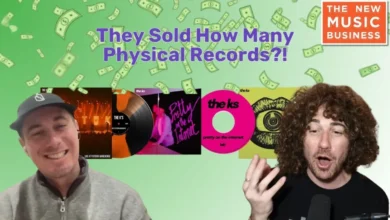
Navigating the contemporary music industry requires far more than raw musical talent; it demands a sophisticated understanding of digital marketing, partnership-driven management, and adaptive label strategies. On a recent episode of The New Music Business podcast, host Ari Herstand sat down with Charlie Stent, the visionary founder and CEO of Stent Music Group, to dissect the mechanics of building a sustainable, global career in today’s hyper-saturated musical landscape. With more than a decade of frontline experience in artist management, Stent has cultivated a multifaceted global enterprise encompassing artist management and comprehensive label services. His impressive roster features acclaimed independent pop sensation NERIAH—whose catalog has amassed over 100 million streams alongside international touring success—multi-platinum producer and songwriter Jason Parris, and four-time Grammy-winning mastering engineer John Greenham. Through his work spanning both burgeoning acts and seasoned industry veterans, Stent has formulated a distinctive framework for modern artist development, long-term career growth, and the structural business acumen required to achieve enduring success.
The Evolution of Artist Management and the Entrepreneurial Partnership
To understand Stent’s approach to the music business, one must examine the shifting paradigm of artist-manager relationships. Historically, the artist-manager dynamic often mirrored a traditional employer-employee structure, or worse, a paternalistic hierarchy where decisions were dictated from the top down. However, the democratization of music production and distribution has fundamentally altered this dynamic. Stent emphasizes that modern artists and their managers must operate as authentic business partners. In this collaborative ecosystem, the artist is not merely the product, but the chief executive of their own enterprise, while the manager acts as a strategic co-pilot, legal navigator, and operational director.
This partnership model is critical in an era where independent artists retain ownership of their master recordings and publishing rights. By treating artists as stakeholders in their own commercial ventures, managers foster a higher level of accountability and engagement. Stent’s decade-long career has been defined by championing this collaborative ethos, ensuring that creators understand the financial, legal, and operational implications of every career move they make. This foundational philosophy allows artists under the Stent Music Group umbrella to scale their operations globally while maintaining creative autonomy and financial equity.
Chronology and Career Trajectory: From Grassroots to Global Roster
The trajectory of Stent Music Group did not happen overnight; it is the culmination of more than ten years of grassroots experience, strategic pivots, and industry evolution. The timeline of modern music management has shifted dramatically over the past decade, moving away from major-label gatekeeping toward independent empowerment.
During the early 2010s, the music industry was still reeling from the digital piracy crisis, forcing managers to adopt traditional, risk-averse strategies focused heavily on securing major-label deals. As streaming platforms like Spotify and Apple Music gained market dominance in the mid-2010s, the paradigm shifted. Independent distribution networks began to mature, offering creators viable alternatives to traditional label structures.
Recognizing this seismic shift, Stent positioned his enterprise at the intersection of traditional management and independent label services. This evolution allowed him to nurture acts like NERIAH from their nascent stages to international prominence. By bypassing the bureaucratic red tape of legacy record labels, Stent Music Group implemented agile release strategies, direct-to-fan marketing, and targeted playlist promotion. The milestone of surpassing 100 million streams for an independent pop artist like NERIAH serves as a powerful case study in the viability of modern, independent artist development strategies. Furthermore, incorporating elite technical talent such as four-time Grammy-winning mastering engineer John Greenham and multi-platinum creator Jason Parris demonstrates the agency’s capacity to handle top-tier sonic architecture alongside pop commercial viability.
Branding, Community Building, and the Myth of Manufactured Virality
In the podcast discussion, Stent and Herstand dedicated significant analytical attention to the nuances of artist branding and audience acquisition. In an environment where tens of thousands of tracks are uploaded to digital service providers daily, standing out requires a distinct, unmistakable identity. Branding is no longer restricted to visual aesthetics or album artwork; it encompasses an artist’s entire digital footprint, narrative arc, and ideological positioning.
Building a dedicated fan community remains the bedrock of career longevity. Stent points out that algorithmic spikes and viral social media moments, while exciting, are fleeting if they are not converted into deeply engaged, loyal supporters. Crucially, Stent addresses a common misconception among emerging creators: the belief that a viral moment can be systematically manufactured. According to industry data and practical experience, virality is rarely the result of a sterile, calculated formula. Instead, it is typically the byproduct of authentic audience resonance, consistent output, and strategic timing colliding with cultural curiosity. Artists who chase viral trends without a foundational identity often find themselves experiencing high churn rates among their listeners, characterized by impressive single-day streams that fail to translate into ticket sales or merchandise revenue.
To combat this, modern marketing campaigns must move beyond superficial metrics. Stent details the intricate architecture of contemporary release strategies, which leverage pre-saves, targeted playlist pitching, and iterative testing phases. Interestingly, the conversation also touches upon advanced, unconventional marketing tactics, including the strategic deployment of burner and sleeper accounts on social media platforms. These methods allow nimble marketing teams to test content narratives, gauge organic audience reactions without risking the primary artist profile, and refine audience segmentation before deploying a wide-scale promotional campaign.
The Generative AI Frontier: Equalizer or Existential Threat?
No contemporary discussion on the music business is complete without analyzing the profound implications of generative artificial intelligence (AI). As AI-generated vocal models, automated mixing tools, and algorithmic composition software flood the market, independent musicians and executives alike are forced to reckon with both the opportunities and the existential threats they present.
During the episode, Stent evaluates AI not merely as a destructive technological disruption, but potentially as the great equalizer for independent artists operating on constrained budgets. For independent creators who lack the financial resources to hire large studio bands, elite mix engineers, or massive string sections, generative AI tools can bridge the production gap. High-end mastering, automated stems separation, and intelligent arrangement assistance allow bedroom producers to achieve a commercial sonic standard that was previously exclusive to major-label budgets.
However, this democratization comes hand in hand with severe regulatory, ethical, and market saturation challenges. The proliferation of AI-generated soundalikes has triggered urgent debates regarding copyright infringement, royalty distribution, and the devaluation of human labor in the creative arts. Major record labels and independent distributors are currently locked in legal and legislative battles to establish clear guardrails protecting artists’ likenesses and intellectual property. Stent’s analysis underscores the necessity for independent creators to lean heavily into what AI cannot replicate: authentic human storytelling, vulnerable live performances, and the tangible, emotional bond forged within a dedicated fan community.
Distribution, Label Services, and the Power of In-House Teams
As the music industry continues to decentralize, the traditional functions of a record label have been unbundled and repackaged into scalable label services. Independent artists no longer need to surrender their copyright ownership to secure global distribution, radio promotion, and sync licensing opportunities. Stent Music Group exemplifies this modern corporate architecture by offering comprehensive in-house label services that rival legacy institutions.
Building an effective in-house team requires a delicate balance of marketing expertise, data analytics capabilities, digital distribution acumen, and creative direction. By centralizing these services under one management umbrella, Stent ensures that every component of an artist’s campaign—from initial digital marketing tests to global distribution logistics—operates with unified strategic vision. This holistic approach minimizes communication friction between disparate third-party agencies and empowers artists to scale their enterprises efficiently.
Broader Industry Implications and Future Outlook
The insights shared by Charlie Stent on The New Music Business podcast offer a clear diagnostic of where the music industry stands and where it is heading. The transition from gatekept label dominance to decentralized, entrepreneurial artist management represents a permanent structural transformation.
For aspiring musicians, producers, and managers, the takeaway is unambiguous: passive creation is obsolete. Success in the modern music economy requires treating art as a business, embracing radical transparency in partnerships, prioritizing deep community engagement over algorithmic vanity metrics, and remaining adaptable in the face of technological disruptions like generative AI. As indie powerhouses like Stent Music Group continue to refine the blueprint for independent label services and global artist development, the roadmap for building a sustainable, long-term music career becomes increasingly defined by entrepreneurial agility and authentic human connection.