Courtney Werner Bridges Ecology and Avant-Garde Sound Art with Debut Solo Album Tritium Forests

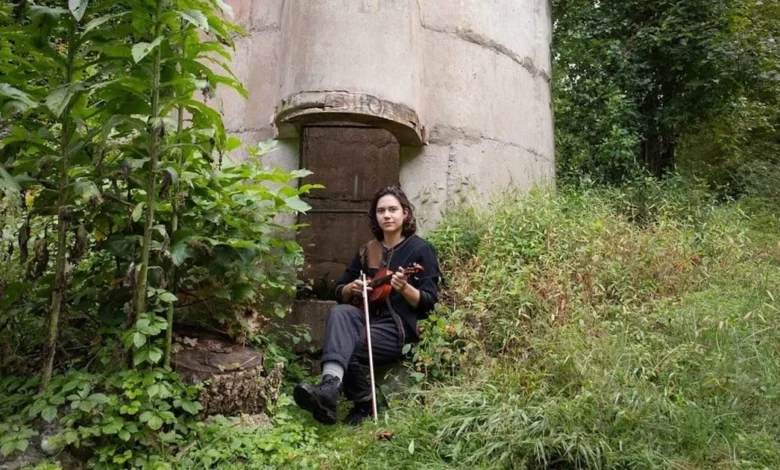
Sound artist, classically trained violinist, and field ecologist Courtney Werner—widely recognized for her collaborative work in projects such as the Magic Tuber Stringband, Dowsers, and Weirs—has officially announced her forthcoming debut solo album, Tritium Forests. Set for commercial release on February 26 via the esteemed independent record label Thrill Jockey, the album represents a profound synthesis of rigorous scientific research and experimental musical improvisation. Built upon audio captured within the restrictive boundaries of a nuclear reservation, the project serves as both an aesthetic exploration of remote natural soundscapes and a critical commentary on industrial contamination, ecological resilience, and the fragile intersection of human technology and the natural world.
The Genesis of Tritium Forests: Science Meets Sound
The conceptual foundation of Tritium Forests traces back to Werner’s professional background as an ecologist operating within the Savannah River Site, a sprawling nuclear production facility established by the United States military in rural South Carolina in 1952. During her second summer conducting field research at the facility, Werner initiated a targeted study to document and analyze the acoustic properties of the surrounding forests, which have been heavily impacted by decades of industrial and radioactive waste generation.
The forests spanning the nuclear reservation are officially designated as environmental buffer zones. Within the framework of industrial management, these ecosystems function as ecological "sinks," meaning their soil, hydrology, and biological communities absorb and retain hazardous byproducts, including radioactive isotopes and heavy metals released by historical defense manufacturing operations. To monitor this unique environment, Werner deployed automated acoustic monitors, strapping recording devices to trees in remote grid cells across the contaminated territory. From April through August, these devices recorded the acoustic environment for two hours every morning, capturing the intricate daily rhythms of avian populations, amphibians, and insects inhabiting the shadow of heavy industry.
Methodology and Production: From Ecological Data to Musical Composition
While Werner’s recent creative output includes the Magic Tuber Stringband’s latest studio album, Heavy Water—a release similarly informed by her work at the Savannah River Site—Tritium Forests adopts a distinct compositional methodology. Whereas Heavy Water integrated traditional fiddle performance with environmental field recordings to establish a localized atmosphere, Werner’s debut solo effort relies entirely on spontaneous improvisation, sophisticated frequency balancing, and layered overdubbing.
Following the extensive field data collection period, Werner reviewed the massive catalog of morning recordings, identifying key windows of biological activity and vocalizations. She subsequently collaborated with Nathan Taylor of Softer Recordings to process the raw audio files. Taylor worked to balance complex frequencies and bring individual sonic elements into sharp focus, ensuring the natural wildlife voices remained distinct.
These processed environmental recordings served as the foundational canvas for a series of live improvisations executed by Werner and Taylor over two intensive evenings in July 2025 in Carrboro, North Carolina. Throughout the sessions, Werner utilized her violin—an instrument whose relationship she revitalized through North Carolina’s old-time and experimental music communities—to engage directly with the recorded fauna. Utilizing extended techniques, drone architecture, repetition, and micro-improvisation, Werner avoided traditional melodic structures in favor of a conversational dialogue with the non-human vocalists captured by her monitors.
Chronology of the Project and Release Roadmap
The timeline spanning the conception, capture, and commercial rollout of Tritium Forests highlights a deliberate, multi-year artistic and scientific process:
- 1952: The United States government establishes the Savannah River Site in South Carolina, initiating decades of nuclear material production and subsequent environmental contamination across the local watershed.
- Field Research Phase: During her tenure as an ecologist at the facility, Werner installs remote acoustic monitoring stations across contaminated forest grids to study localized soundscapes.
- April – August (Field Recording Era): Automated equipment records morning biological activity, compiling hours of audio featuring local wildlife within the nuclear exclusion zone.
- July 2025: Werner and Nathan Taylor convene in Carrboro, North Carolina, over two evenings to merge the curated field recordings with improvised violin performances.
- October 2025 – January 2026: Production, mixing, and mastering processes are finalized ahead of the album’s formal announcement.
- February 26: Official commercial release of Tritium Forests via Thrill Jockey across digital download, compact disc, and vinyl formats, accompanied by pre-orders hosted through Bandcamp.
Aesthetic Analysis: The Intersection of Field Notes and Avant-Garde Composition
The tracks comprising Tritium Forests eschew conventional titles in favor of nomenclature that evokes scientific logging, while the underlying audio transports the listener into an ethereal, almost spiritual sonic domain. The lead single, sierra one whiskey eight, alongside the album’s four remaining compositions, features nocturnal and pre-dawn field recordings captured in total darkness. The acoustic frame is dominated by the calls of coyotes, barred owls, and whip-poor-wills.
Rather than treating these animal vocalizations as mere background texture, Werner positions the wildlife as primary compositional partners. The coyotes function alongside her sparse, sustained violin tones, forming a dense web of sound that evolves as ambient dawn light increases. In production notes accompanying the release, Werner reflects on this collaborative dynamic, noting her intent to act as an equal voice within the ecosystem rather than an outside observer. By responding directly to avian and mammalian calls, she bridges the gap between scientific observation and subjective artistic expression.
Furthermore, the integration of old-time musical techniques with avant-garde drone and improvisation reflects a broader movement within contemporary experimental music. Artists increasingly utilize field recordings not merely for documentary purposes, but as structural frameworks that interrogate human impact on fragile habitats. Werner has frequently referenced her improvised pieces as "field notes," effectively translating empirical scientific methodology into an alternative artistic reality.
Broader Impact and Critical Implications
The release of Tritium Forests arrives at a time of heightened global interest in ecological art, climate anxiety, and the documentation of rapidly shifting natural habitats. By centering her work on the Savannah River Site—a landscape burdened by the legacy of Cold War-era nuclear manufacturing—Werner raises critical questions regarding the resilience of nature in the face of anthropogenic toxicity.
Cultural critics and musicologists have noted that albums bridging field science and sound art possess a unique capacity to communicate complex ecological truths. While traditional environmental reporting relies on statistical data and policy analysis, acoustic ecology engages the human nervous system directly, fostering a visceral empathy for non-human life forms inhabiting compromised landscapes. The Savannah River Site’s buffer zones, though engineered to absorb industrial hazards, continue to harbor a startling abundance of biological life. Tritium Forests captures this paradox, presenting an auditory portrait of survival against overwhelming odds.
In summarizing the conceptual core of her debut release, Werner describes the album as a "requiem for the radioactive swamps and riparian forests of the Savannah River Site, in all their persistent, glittering beauty." Through this body of work, she successfully transforms industrial scars into a medium for transcendent, meditative art.
Pre-orders for Tritium Forests, available across physical vinyl, compact disc, and digital download configurations, are currently open via Bandcamp, with the full album release scheduled for February 26 through Thrill Jockey.
Related posts: