Pokey LaFarge Bridges Decades of American Roots Music with the Release of His Latest Album Rent Money

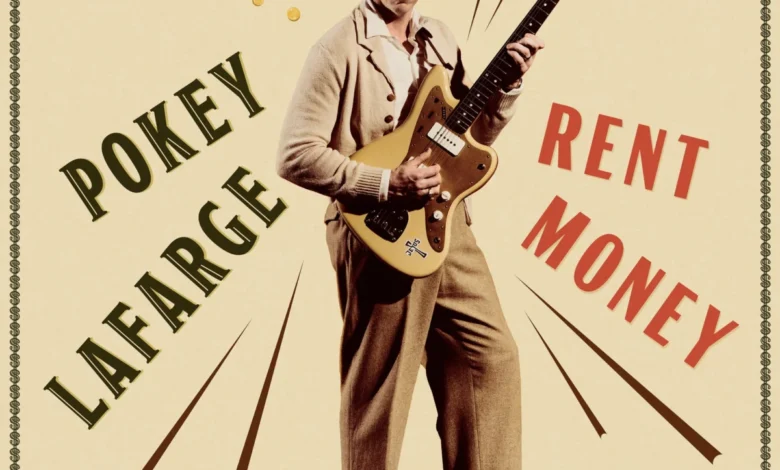
For over twenty years, American singer-songwriter Pokey LaFarge has meticulously constructed a distinct artistic identity at the intersection of traditional roots music and contemporary popular forms. Operating across roughly a dozen studio releases, the Illinois-born musician has championed a sonic tapestry that weaves together vintage boogie, rockabilly, gospel, country blues, and early jazz. While his theatrical presentation and adherence to mid-century aesthetics have occasionally invited critiques of pastiche, LaFarge’s commitment to an uncompromisingly analog ethos has ultimately secured his place as a singular voice in modern American music.
In an era increasingly dominated by algorithmic curation, hyper-compressed digital production, and mass-manufactured pop trends, LaFarge’s organic craftsmanship stands out as a deliberate counterweight. His latest full-length studio album, Rent Money, arrives as a timely offering in a landscape where human artifice often struggles against corporate homogenization. Comprising eleven carefully sequenced tracks, the new record expands upon his established stylistic vocabulary while demonstrating a growing maturation in his compositional and arranging techniques. Through tightly wound, balanced arrangements, LaFarge elevates his kitchen-sink Americana approach, successfully navigating diverse genres without sacrificing the cohesive thread that has defined his catalog since his early days touring the Midwest as a self-styled troubadour.
Evolution of a Roots Music Outsider
To fully understand the significance of Rent Money, one must examine the trajectory of LaFarge’s career, which began in the mid-2000s. Born Andrew Heissler in Bloomington, Illinois, the artist adopted the moniker Pokey LaFarge as he immersed himself in the itinerant lifestyle of a modern hobo poet. Armed with a tenor guitar, a crisp fedora, and a sharp suit, he channeled the ghosts of Depression-era buskers, Delta bluesmen, and Western swing pioneers.
During the formative years of his career, LaFarge operated strictly on the margins of the music industry. He self-released early records like Mar A Lago Blues (2006) and Beat, Move & Shake (2008) while traveling extensively by freight train and automobile, busking on street corners and playing in intimate club venues across the United States. This relentless grassroots touring strategy cultivated a dedicated, albeit niche, following that appreciated his rejection of modern digital recording techniques.
A significant turning point occurred when LaFarge caught the attention of Jack White’s Third Man Records. In 2013, the label released his self-titled album, introducing his vintage sound to a much wider international audience. This partnership led to high-profile television appearances, extensive European tours, and critical acclaim from mainstream outlets that recognized the sincerity beneath his vaudevillian exterior. Subsequent releases—including Something in the Water (2015), Manic Revelations (2017), and In the Blossom of Their Shade (2021)—showcased a gradual broadening of his sonic palette. He began incorporating elements of 1960s soul, tropicalia, and cinematic pop arrangements, proving that his artistic vision was not trapped in a museum-piece time warp, but rather functioning as a living, evolving tradition.
Inside Rent Money: Compositional Complexity and Genre-Blending
Rent Money represents the culmination of this two-decade evolutionary process. Across the album’s eleven tracks, LaFarge and his ensemble deliver performances that are simultaneously pragmatic and boundless, balancing structural discipline with spontaneous, feverish energy.
The album’s stylistic breadth is immediately apparent in standout tracks like "Told You No," which infuses his Americana foundation with shadowy, hypnotic samba rhythms reminiscent of mid-century bossa nova recordings. Elsewhere, the record embraces the syncopated bounce of funk and soul. The swaggering anthem "Stick Together" showcases a tight horn section and a driving rhythm track that urges collective resilience, functioning as both a danceable floor-filler and a thematic anchor for the album. Meanwhile, the tip-toeing title track utilizes sparse instrumentation and a nimble bassline to create an atmosphere of quiet suspense, highlighting LaFarge’s understated vocal delivery and lyrical dexterity.
Musicologists and critics have frequently noted that LaFarge’s arrangements rely heavily on the dynamic interplay of acoustic instruments—such as the upright bass, clarinet, washboard, and archtop guitar—interfacing seamlessly with electric textures. On Rent Money, this synthesis feels more refined than ever. The production avoids the sterile clarity of modern pop, instead favoring a warm, room-ambient mix that captures the natural resonance of the instruments. This meticulous attention to sonic texture reinforces the album’s thematic preoccupation with economic survival, daily labor, and the enduring human spirit in uncertain times.
Industry Context and the State of Americana Music
The release of Rent Money occurs within a rapidly shifting commercial landscape for roots and Americana music. Over the past decade, genres once relegated to specialty charts have experienced a notable resurgence in mainstream popularity, driven largely by critically acclaimed artists such as Chris Stapleton, Tyler Childers, Sturgill Simpson, and Brandi Carlile. However, while many contemporary Americana acts lean heavily toward outlaw country, Appalachian folk, or heartland rock, LaFarge occupies a distinct sub-genre that looks further back into the vaudeville and pre-war jazz eras.
Industry analysts point out that while this retro-centric approach can present marketing challenges in a radio environment dominated by hip-hop, electronic dance music, and sleek pop, it also builds a fiercely loyal consumer base. Physical media sales—particularly vinyl records and compact discs—remain a vital revenue stream for artists in the roots sector. Listeners who invest in physical formats are frequently drawn to the tangible storytelling, detailed liner notes, and thematic consistency that records like Rent Money provide.
Furthermore, the album arrives at a moment of intense debate regarding the role of artificial intelligence in the creative arts. As generative AI tools increasingly flood streaming platforms with synthetic compositions designed to maximize algorithmic engagement, human-made music grounded in regional traditions and lived experience has taken on renewed cultural importance. LaFarge’s insistence on acoustic instrumentation, organic ensemble interaction, and idiosyncratic personal expression serves as a direct rebuke to the homogenization of modern sound design.
Critical Reception and Early Reactions
Initial critical response to Rent Money has been overwhelmingly positive, with reviewers praising the record’s sonic adventurousness and emotional resonance. Early reviews from specialized music publications have highlighted the album’s sequencing, noting that the transition from upbeat, rhythm-heavy tracks to more introspective, moody compositions maintains listener engagement from start to finish.
Industry insiders and fellow musicians have also weighed in on LaFarge’s ongoing artistic contributions. While formal corporate awards in the mainstream pop sphere often overlook artists operating in niche traditional genres, LaFarge has steadily built a reputation as a peer-respected craftsman. Commentators within the roots music community have emphasized that Rent Money cements his status not merely as a revivalist costume-wearer, but as a genuine songwriter capable of translating historical musical idioms into relevant contemporary statements.
In promotional interviews surrounding the album’s rollout, LaFarge has spoken candidly about the grueling economic realities faced by independent touring musicians in the post-pandemic era. The title track, "Rent Money," is interpreted by critics as a poignant reflection of these struggles—addressing the constant pressure of financial precarity while maintaining the resilient, stiff-upper-lip humor that has long characterized his public persona. This thematic grounding prevents the album’s vintage aesthetic from feeling detached from contemporary reality, ensuring that the listener connects with the genuine emotional stakes behind the performance.
Broader Implications and Future Outlook
The launch of Rent Money initiates a busy touring cycle for LaFarge and his backing band, with performances scheduled across North America and Europe throughout the coming months. Live performance has always been the primary engine of LaFarge’s career, serving as the proving ground where his eccentric stage presence and musical dexterity are most fully realized. Industry observers will be watching closely to see how the complex, multi-genre arrangements of the new album translate to the live stage, where improvisation and audience interaction play a critical role.
Looking forward, the success of Rent Money may serve as a bellwether for how niche roots artists can navigate an increasingly digital music industry without compromising their artistic integrity. By doubling down on his signature blend of vaudevillian charm, blues grit, and rhythmic sophistication, LaFarge has demonstrated that longevity in the modern music business does not require chasing fleeting trends. Instead, as Rent Money proves, an artist can carve out a lasting, meaningful career by remaining fiercely dedicated to their own singular vision—offering a timeless gift to a present-day audience hungry for authenticity.
Related posts: