UK Home Secretary Shabana Mahmood Faces Intense Political Pressure to Bar Rapper Macklemore Over Alleged Ties to Pro-Palestine Group

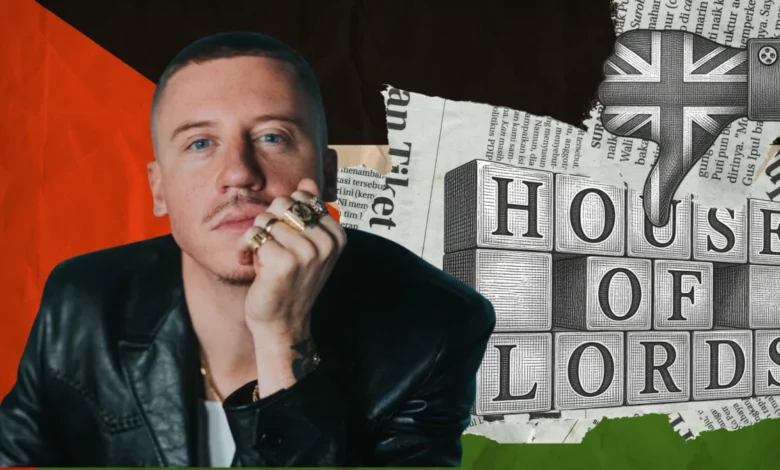
British Home Secretary Shabana Mahmood is facing mounting political pressure from senior parliamentarians to block American rapper Macklemore from entering the United Kingdom ahead of his scheduled performance at London’s Wembley Arena. A coalition of 50 members of the House of Lords has formally urged the government to intervene, citing profound concerns regarding the rapper’s financial ties to a controversial pro-Palestine advocacy organization sharing in the tour’s proceeds.
The escalating controversy surrounds the "Free Palestine" tour, which is slated to hit London later this week. According to a letter addressed to the Foreign Secretary and reported by the Telegraph, the cross-party group of peers argues that a foreign national should not be permitted to enter the UK to raise funds from British audiences for an organization whose record they allege includes the glorification of terrorism and the intimidation of elected officials.
At the center of the controversy is the Palestinian Youth Movement (PYM), one of the designated beneficiaries of the tour’s profits. The group describes itself on its official platforms as a grassroots, independent organization that mobilizes Palestinian and Arab youth in the struggle for national liberation. However, critics, including the signatories of the Lords’ letter, have highlighted past statements and publications associated with the PYM that have drawn severe condemnation.
Origins of the Controversy and Allegations Against the PYM
The opposition from members of the House of Lords stems largely from rhetoric attributed to the PYM and its affiliates in the wake of the October 7, 2023, attacks led by Hamas against Israel. Specifically, critics point to past commentary characterizing the attacks as "justified," alongside statements describing the taking of hostages as "legitimate" and "effective."
Furthermore, the PYM has drawn sharp criticism for circulating a strategic guide titled the "siege on Labour" toolkit. This document outlined methods for pro-Palestine activists to lobby members of the UK Labour Party, actively encouraging demonstrations outside party local offices and the individual constituency surgeries of MPs.
In their correspondence, the peers contend that these tactics transcend the boundaries of ordinary, protected political protest. The letter emphasizes that constituency offices represent vulnerable points where Members of Parliament and their administrative staff carry out public duties. Organizing crowds to lay siege to these physical workspaces, the peers argue, constitutes an explicit attempt to coerce lawmakers through intimidation and fear.
The initiative to block the rapper’s entry is being led by prominent figures within Parliament, including John Woodcock. However, Woodcock’s involvement has itself attracted scrutiny; he has recently been the subject of an official complaint to the House of Lords Commissioner for Standards, filed jointly by the Good Law Project and Compassion in Politics, regarding his reported ties to defense manufacturer Leonardo, which maintains extensive supply chain links with the Israeli military. Other high-profile signatories backing the letter include Eric Pickles, chair of the Conservative Friends of Israel in the Lords, as well as Arlene Foster, Graham Brady, and Peter Goldsmith.
The Fallout from Ed Sheeran’s US Tour
Macklemore’s current European mini-tour—comprising stops in Dublin, Paris, and London—arises directly from his high-profile dismissal from Ed Sheeran’s extensive United States stadium tour. The Grammy-winning rapper was cut from the support lineup following vocal on-stage remarks criticizing Israeli military actions and expressing solidarity with the Palestinian population.
The decision to remove Macklemore was reportedly expedited under pressure from venue stakeholders, most notably the Gillette Stadium in Foxborough, Massachusetts. The venue, owned by billionaire philanthropist and prominent pro-Israel supporter Robert Kraft, objected to the artist’s political rhetoric during live performances.
The removal triggered immediate internal turmoil within the tour’s infrastructure. In solidarity with Macklemore, multiple supporting acts withdrew from the bill, leaving Sheeran’s camp scrambling to manage the fallout. Despite the disruption, Sheeran proceeded with the tour, though ironically, his scheduled performances at Kraft’s Gillette Stadium were ultimately canceled due to severe weather conditions rather than the political controversy.
Following his dismissal, Macklemore took the stage at Colorado’s Red Rocks Amphitheatre to address the incident directly. Speaking to the audience, he framed his advocacy in humanitarian terms, stating that bearing witness to suffering requires a moral, rather than purely partisan, response. He broadened his commentary to encompass international crises, calling attention to ongoing conflicts and humanitarian emergencies in Sudan, the Congo, Lebanon, and Haiti, alongside expressing solidarity with immigrant communities affected by U.S. Immigration and Customs Enforcement (ICE) policies.
Local Community Concerns and Live Nation’s Response
The announcement of the London Wembley Arena date has similarly galvanized Jewish community organizations in the United Kingdom, who have raised urgent questions regarding public safety and community welfare.
The Jewish Leadership Council (JLC) issued a formal statement acknowledging Macklemore’s right to advocate for Palestinian rights while stressing that the imagery and rhetoric deployed during his recent performances demand strict scrutiny from event promoters. In correspondence directed to Live Nation, the commercial promoter marketing the Wembley concert, the JLC demanded transparency regarding how the company assessed the security risks associated with the event. Specifically, the council asked what proactive measures Live Nation intended to implement to ensure that Jewish staff members and audience attendees would feel secure and welcomed within the venue.
Legal Precedent and Government Intervention Mechanisms
The UK Home Office possesses the statutory authority to prevent Macklemore from entering the country by revoking or refusing his electronic travel authorization (ETA), a mandatory prerequisite for entry for many foreign nationals. This mechanism mirrors a precedent set earlier in the year when the government barred rapper Kanye West from entering the country following the announcement of his planned performances at London’s Wireless Festival.
However, legal and political analysts note that invoking this power against Macklemore presents a distinct set of challenges. Equating Macklemore’s vocal criticisms of Israeli foreign policy with the explicit antisemitic statements previously promulgated by West risks generating significant public controversy and accusations of stifling legitimate political speech.
Cognizant of this legal and optical nuance, the peers petitioning Home Secretary Mahmood have deliberately tailored their argument. Their appeal rests not on the content of Macklemore’s personal speech or his artistic output, but strictly on the identity of the tour’s financial beneficiary. The letter explicitly asserts that denying entry would not infringe upon anyone’s right to support legitimate humanitarian causes in the region, nor would it restrict public access to the artist’s recorded music. Instead, intervention would simply constitute a decision to withhold the privilege of commercial fundraising on British soil for an organization linked to extremist apologia.
Broader Implications for Live Entertainment and Geopolitical Discourse
As the debate intensifies ahead of the scheduled Wembley Arena performance, the situation underscores the deepening friction between international pop culture, corporate venue management, and geopolitical advocacy.
Live music promoters, multinational touring acts, and government regulators are increasingly finding themselves navigating a complex landscape where artistic expression on global conflicts carries immediate commercial and diplomatic consequences. Whether the Home Office will take formal administrative action to bar the artist remains to be seen, but the controversy has already established a contentious precedent for how foreign performers engaging in Middle Eastern geopolitics are received within the United Kingdom.