Neil Young Files Copyright Infringement Lawsuit Against Donald Trump Over Unauthorized Use of Rockin in the Free World

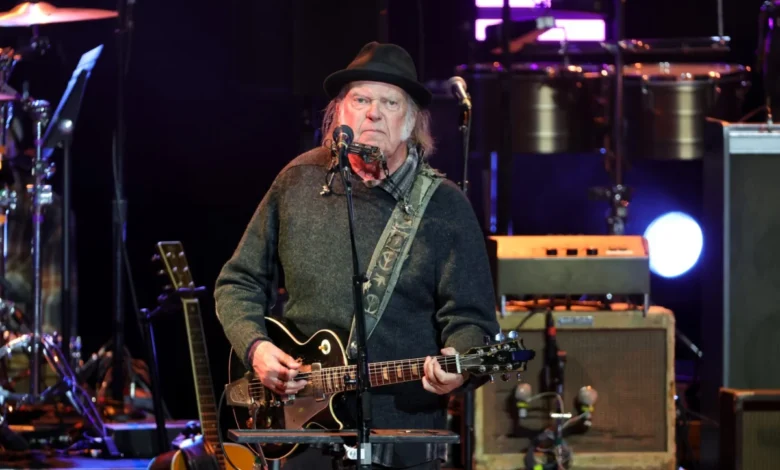
Legendary folk-rock musician Neil Young has initiated a significant legal challenge against Donald J. Trump and his political organization, the Trump 47 Committee Inc., alleging flagrant copyright infringement. The lawsuit, filed on Monday, October 26, centers on the unauthorized use of Young’s 1989 hit song, "Rockin’ in the Free World," during a campaign event in Youngstown, Ohio, on October 12. This latest litigation marks a major escalation in the ongoing friction between the Canadian-born musician and the former president, as Young seeks $10 million in damages, citing both the economic value of his intellectual property and the reputational harm caused by the association.
A History of Legal Friction
The conflict between Neil Young and the Trump campaign is far from a new development. The musician has been one of the most vocal critics of the former president’s use of his catalog since the early days of the 2016 presidential campaign. In 2020, Young filed a similar lawsuit, arguing that the campaign had no legal standing to utilize his music to energize crowds at rallies.
That 2020 case was ultimately settled, with the Trump campaign reportedly agreeing to cease the use of "Rockin’ in the Free World" without obtaining a specific, written license from Young. The current legal complaint asserts that the October 12 incident in Youngstown represents a direct breach of those previous understandings. By allegedly ignoring the terms of their prior settlement, the plaintiffs argue that the Trump 47 Committee Inc. has demonstrated a willful disregard for copyright law and the musician’s clearly stated personal and professional opposition to the former president’s platform.
The Symbolic Clash of Ideologies
Central to the legal complaint is the ideological disconnect between the song’s lyrical themes and the political messaging of the Trump campaign. Young’s legal team emphasized this dichotomy in their filing, noting that the song is fundamentally incompatible with the values promoted by the defendant.
"Rockin’ in the Free World" was composed as a scathing critique of the George H.W. Bush administration, touching on issues of poverty, drug addiction, and the perceived hollowness of the American Dream. The lyrics—which reference a mother abandoning her child and the desperation of those left behind by a capitalist society—stand in stark contrast to the populist rhetoric often employed at Trump’s rallies.

The lawsuit states: "The lyrics paint vivid street-level portraits—a mother discarding her baby, addicts lost in despair, garbage piling in the shadows of prosperity—while the repeated chorus delivers a savage irony, celebrating freedom that clearly isn’t shared by all. In short, the song is the opposite of everything that Donald J. Trump stands for." By continuing to utilize the track, Young contends that the campaign is not only violating his property rights but is also intentionally misrepresenting his political identity to the public, thereby damaging his personal brand and artistic legacy.
Economic and Reputational Damages
The demand for $10 million in damages reflects the high stakes of celebrity intellectual property rights. Under U.S. copyright law, unauthorized public performance of a protected musical work by a political campaign can lead to significant financial penalties, particularly when the court finds the infringement to be willful.
Beyond the statutory damages, the lawsuit highlights the concept of "brand association." For an artist like Neil Young, whose career has been defined by social activism and independence, the implication that he endorses a specific political candidate can have long-term consequences. Fans often look to their favorite artists as moral barometers; when that image is co-opted, the artist faces a potential alienation of their core audience. The legal team argues that the unauthorized use of his music forces him into a public affiliation that he has expressly forbidden, causing tangible harm to his professional standing.
Broader Landscape: Musicians vs. Campaigns
Neil Young is by no means an outlier in the current political climate. The last decade has seen an unprecedented wave of legal actions and public condemnations from high-profile artists directed at political campaigns. This phenomenon is rooted in the "Public Performance License," a system that allows venues to play music but does not necessarily grant political campaigns the right to use that music to promote a specific candidate.
In 2024, the landscape of these disputes became even more crowded. The estate of the legendary Isaac Hayes successfully settled a lawsuit against the Trump campaign regarding the use of "Hold On, I’m Coming," a song co-written by Hayes. Similarly, the rock duo The White Stripes, led by Jack White, launched a legal challenge regarding the use of their iconic track "Seven Nation Army" at a Trump rally. While the White Stripes case was eventually dropped, the frequency of these suits suggests that artists are increasingly willing to leverage the court system to police their intellectual property.
The issue extends beyond the concert stage and into the digital sphere. The current administration has faced criticism not only for its use of music at live events but also for its incorporation of copyrighted material in social media campaigns on platforms like TikTok and Instagram. Pop stars including Sabrina Carpenter, Olivia Rodrigo, and Ariana Grande have faced situations where their music was used in promotional videos related to government policy, specifically regarding immigration and deportation efforts. These digital-first disputes indicate that the battle over musical rights is evolving alongside the ways in which voters consume political content.

Legal Implications and Future Precedent
The outcome of the Neil Young case could serve as a vital precedent for future copyright litigation in the political arena. If the court rules in favor of Young, it could solidify the standard that political campaigns must obtain explicit, proactive permission from artists before using their work, regardless of whether a public performance license is held by the host venue.
Legal experts suggest that the "willful infringement" claim—based on the 2020 settlement—could be the most damaging aspect of the lawsuit for the Trump 47 Committee Inc. If it can be proven that the campaign was aware of the prior prohibition and chose to ignore it, the court may be inclined to award higher punitive damages.
As of the latest reports, the White House and representatives for the Trump campaign have remained largely silent on the specific legal filings, consistent with their general posture toward ongoing litigation. However, the optics of the situation remain challenging. As political campaigns increasingly rely on high-energy, recognizable anthems to rally supporters, they are finding themselves in a complex web of licensing requirements and ethical quandaries.
The Role of Intellectual Property in Modern Politics
This case raises essential questions about the intersection of creative expression and political speech. While political candidates argue that they are simply utilizing music to create an atmosphere, artists maintain that the song is an extension of their personal expression. In the case of "Rockin’ in the Free World," the irony of a protest song being used by the subject of that protest is not lost on observers.
For the music industry, these legal battles are about control. Artists invest decades into building a brand that aligns with their personal values, and the unauthorized use of their work in a political context represents a loss of that control. As the 2026 midterm elections approach, and as the political climate remains deeply polarized, the tension between major musical acts and political campaigns is unlikely to subside.
If this case proceeds to trial, the court will be forced to weigh the First Amendment protections often claimed by political organizations against the robust intellectual property protections afforded to creators. It is a high-stakes test of where the line is drawn between the freedom of a campaign to select a soundtrack and the rights of an artist to protect their work from being used in ways they find morally or politically objectionable. For Neil Young, the goal remains singular: to ensure that his voice, and his music, are never again used to promote a message he has spent his life fighting against.