White House Tips Nicki Minaj As Next Press Secretary After Rapper Doubles Down Support For Donald Trump

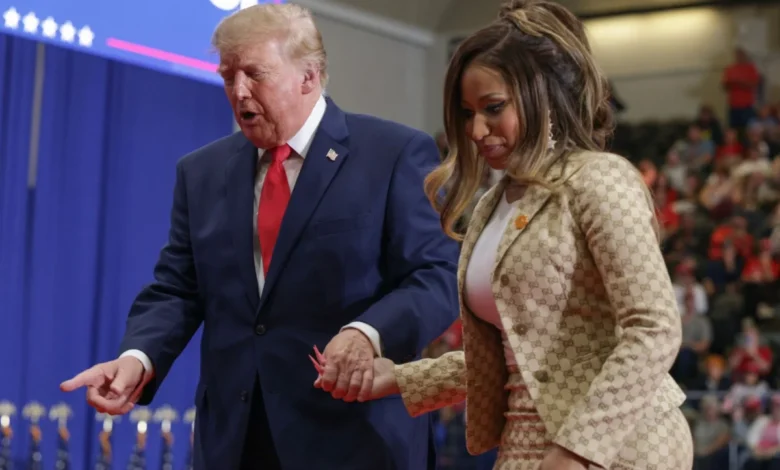
The intersection of modern American pop culture and high-stakes conservative politics produced another surreal headline over the weekend, as White House officials floated Grammy-nominated superstar Nicki Minaj as a hypothetical candidate for the role of White House Press Secretary. The tongue-in-cheek endorsement came directly from White House Communications Director Steven Cheung, who shared footage of himself and the hip-hop artist aboard Air Force One amid a flurry of political appearances by the musician in support of President Donald Trump.
This latest development arrives at a tumultuous time for the administration’s communications wing. Earlier this month, conservative commentator Katie Zacharia was appointed to the high-profile position of White House Press Secretary, only to step down after serving a mere five days due to intense public scrutiny and media pressure. While Cheung’s suggestion of Minaj was widely interpreted as a playful social media quip rather than a formal administrative appointment, it underscores the increasingly unconventional pathways through which political alliances are forged, broadcasted, and leveraged in contemporary Washington.
A Timeline of Political Realignment: From Surprise Appearances to Air Force One
Minaj’s relationship with the current administration has evolved rapidly over the past year, transitioning from subtle social media commentary to an active, front-and-center role on the campaign trail.
The trajectory of this political pivot began in earnest in December of the previous year, when Minaj made a heavily publicized, surprise appearance at a Turning Point USA event. During the gathering, she engaged in an on-stage conversation with Erika Kirk, the widow of slain political commentator Charlie Kirk. At the event, Minaj lavished praise upon Donald Trump, describing him as handsome and dashing, while simultaneously taking aim at prominent Democrats, including California Governor Gavin Newsom.
The appearance sparked immediate, widespread backlash across digital platforms. Critics condemned the rapper’s alignment with conservative figures, prompting Minaj to temporarily deactivate her official Instagram account. The blowback extended beyond the digital sphere; grassroots opposition materialized swiftly, with public petitions calling for her deportation from the United States—where she has resided since immigrating from Trinidad and Tobago at the age of five—surpassing 120,000 signatures.
Undeterred by the controversy, Minaj leaned further into her conservative alignment. Last month, she appeared on Fox News’ The Ingraham Angle to directly address her critics and articulate her unyielding support for the president. During the broadcast, she famously declared her "love" for Trump, stating that she felt honored to work with his administration and praising his perceived authenticity, grounded demeanor, and business background.
The alliance culminated over the weekend when Minaj joined President Trump at a high-energy campaign rally in Port Huron, Michigan. During the event, the president delivered a direct shout-out to the rapper, acknowledging her attendance and making unscripted remarks regarding her physical appearance. Invited to the stage, Minaj seized the microphone to deliver an impassioned speech, asserting that Trump had fundamentally "changed the energy of the country" and provided citizens with a renewed sense of future prosperity. She also touched upon key cultural talking points, telling the Michigan crowd that children should not be "bombarded with sex changes," before firmly labeling herself as Trump’s "Number One fan."
Economic Arguments and Cultural Flashpoints
During their conversation aboard Air Force One, captured on video by Steven Cheung and subsequently posted to X (formerly Twitter), Minaj articulated the core rationale behind her political support. Defending Trump’s economic policies and executive capabilities, the multi-platinum recording artist pointed to his background as a billionaire businessman. According to Minaj, an individual who has successfully navigated the corporate world to amass vast personal wealth inherently "surely knows what to do" when steering the American economy.
This economic endorsement is paired with active participation in social and cultural debates. Minaj has consistently aligned her platform with conservative talking points regarding gender, identity, and governance. Her frequent criticisms of Democratic leaders—particularly her ongoing war of words with California Governor Gavin Newsom—have positioned her as a vocal opponent of progressive policies. In previous social media exchanges, Minaj claimed that no political figure has been a stronger advocate for marginalized communities than Trump, a statement that drew sharp rebuttals from progressive groups and political opponents alike.
The Strategy Behind Celebrity Endorsements
The embrace of high-profile entertainment figures by political campaigns is a well-established strategy designed to capture media attention, energize demographic bases, and inject cultural relevance into traditional political discourse. However, the integration of artists with massive, globally diverse fanbases—such as Minaj—into polarizing partisan politics carries distinct implications.
For the Trump administration, association with cultural icons like Minaj serves multiple strategic purposes. It provides a direct channel to younger, multicultural demographics that might otherwise remain disengaged from traditional conservative messaging. Furthermore, it reframes political narratives by shifting media cycles away from standard policy debates and toward high-engagement cultural spectacles.
Conversely, for artists navigating this terrain, political alignment frequently triggers immediate economic and social repercussions. Minaj’s transition into conservative political activism has alienated segments of her core fan base, leading to organized boycotts, digital harassment, and intense public scrutiny. Despite these commercial risks, the rapper has repeatedly emphasized that she refuses to make excuses for her political beliefs, choosing instead to lean directly into the ensuing controversies.
Broader Implications for Political Communications
While Steven Cheung’s suggestion that Minaj could serve as White House Press Secretary was a manifest joke, it highlights the blurring lines between entertainment and institutional governance. In an era where political communication is increasingly mediated through viral video clips, social media exchanges, and direct-to-consumer digital platforms, the traditional criteria for political commentary and state administration are undergoing a profound transformation.
The rapid turnover of the press secretary role earlier this month—exemplified by Katie Zacharia’s five-day tenure—demonstrates the volatile nature of modern media relations within the executive branch. As administrations grapple with the demands of a 24-hour digital news cycle, the utilization of external influencers, cultural figures, and unconventional voices to amplify political messaging has become a standard operational tactic.
Whether Nicki Minaj’s foray into conservative politics marks a permanent career pivot or a temporary cultural alliance, her integration into the Trump administration’s outer orbit signifies a broader shift in how political capital is accumulated and deployed in the twenty-first century. As the political landscape continues to evolve ahead of upcoming electoral cycles, the intersection of hip-hop culture, executive politics, and digital-age media spectacles will undoubtedly remain a focal point of public fascination and intense debate.