Album Review: Semyon Bychkov and the Czech Philharmonic Tackle Shostakovich Symphonies Nos. 5 and 7 on Pentatone

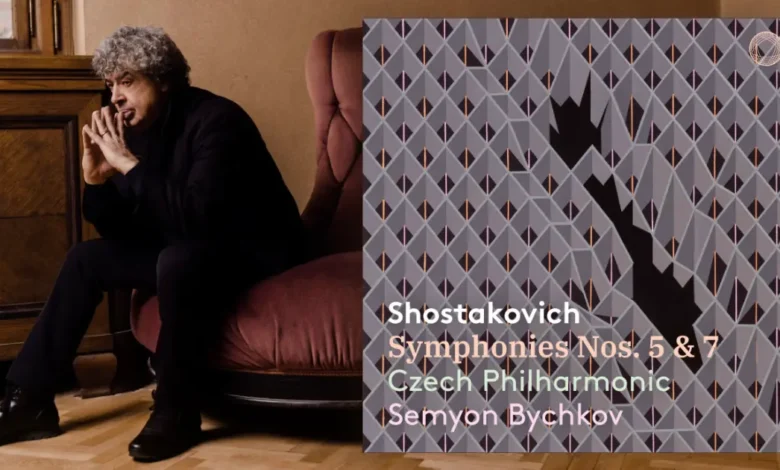
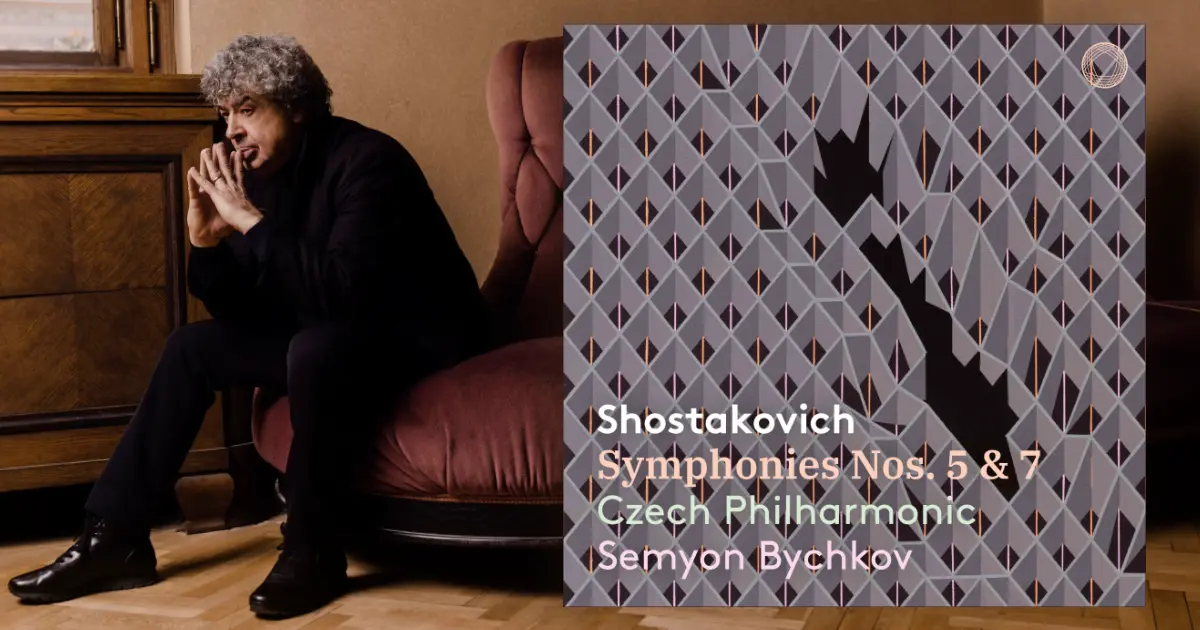
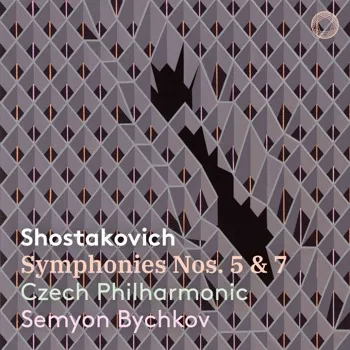
Conductor Semyon Bychkov and the Czech Philharmonic have returned to the recording catalog with a new release from Pentatone featuring Dmitri Shostakovich’s Fifth and Seventh Symphonies. Recorded within the historic acoustics of the Dvořák Hall at the Rudolfinum in Prague, the album pairs two of the Soviet composer’s most monumental and historically charged orchestral works. For Bychkov, this release represents a revisiting of familiar repertoire, as he previously recorded the Fifth Symphony with the Berlin Philharmonic for Philips in 1986 and the Seventh Symphony with the WDR Cologne Symphony Orchestra for Avie in 2003. However, this modern pairing yields contrasting results, capturing an ensemble renowned for its rich string timbre and a conductor whose interpretive approach has mellowed significantly over the decades.
The Genesis and Historical Context of the Works
To understand the weight of Shostakovich’s Fifth and Seventh Symphonies is to understand the perilous political landscape of the Soviet Union in the mid-20th century. Shostakovich composed the Symphony No. 5 in D minor, Op. 47, in 1937, during the height of Joseph Stalin’s Great Purge. Just months earlier, the composer had been subjected to severe state condemnation in the official newspaper Pravda for his opera Lady Macbeth of the Mtsensk District. Facing possible arrest or worse, Shostakovich subtitled the Fifth Symphony "A Soviet artist’s creative reply to just criticism." While officially received as a triumph of socialist realism that reconciled the composer with the regime, generations of musicologists and performers have interpreted the work’s underlying tone—particularly its triumphant yet hollow Coda—as a coded expression of profound sorrow, fear, and forced conformity under totalitarian rule.
The Symphony No. 7 in C major, Op. 60, known as the "Leningrad," carries an equally potent historical narrative. Shostakovich began composing the work in Leningrad as the city endured the brutal, multi-year Nazi siege that began in 1941. Smuggled out of the Soviet Union on microfilm and famously performed across the globe as a symbol of anti-fascist resistance, the Seventh Symphony is a massive, sprawling canvas. Its first-movement "Invasion" theme—a relentless, marching ostinato that builds to terrifying proportions—stands as one of the most explicit depictions of mechanized warfare in classical music. Both symphonies demand not only massive orchestral forces but also a delicate balance between structural integrity and harrowing emotional intensity.
A Tale of Two Interpretations: Symphony No. 5
Bychkov’s new interpretation of the Fifth Symphony reveals a distinct evolution from his 1986 benchmark recording with the Berlin Philharmonic. Clocking in roughly a minute slower overall, the opening movement of the Prague performance displays a lower emotional temperature than its predecessor. While the Berlin reading crackled with a darker color palette, sharper bite, and a formidable sense of foreboding, the Czech Philharmonic recording leans heavily into engineering acoustics that smooth out Shostakovich’s characteristically angular, sharp-edged writing.
The Rudolfinum’s warm, resonant acoustic environment provides impressive clarity and a remarkably wide dynamic range. However, this burnished sheen occasionally works against the composer’s intentions. The second movement, designed as a biting dance of mockery dripping with ironic sarcasm, feels overly polite, ponderous, and too slow in Bychkov’s hands. Listeners seeking the genuine snide darkness and biting wit of the movement often turn to benchmark recordings by conductors such as Neeme Järvi on Chandos, Rudolf Barshai on Brilliant Classics, or Alain Altinoglu on Alpha.
Conversely, the third-movement Largo stands out as an unqualified triumph. Demonstrating the same profound emotional investment that characterized Bychkov and the Czech Philharmonic’s recent, acclaimed Mahler cycle, this movement showcases the breathtaking beauty of the Czech strings. Even at the softest dynamic thresholds, the playing completely captivates the listener, while the first-chair woodwinds execute their solos with an imploring, forlorn quality that vastly surpasses the Berlin recording.
The final movement, however, mirrors the ambiguities of the first. Despite immaculate orchestral execution and well-judged tempos, a palpable emotional detachment lingers. The concluding Coda—which can achieve a devastating, defiant power when rendered with hollow, forced grandiosities—feels unresolved. Bychkov presents an ambiguous reading that lacks the definitive authority brought by interpreters like Manfred Honeck, Kurt Sanderling, and Vasily Petrenko. In a crowded recorded field of legendary Shostakovich Fifth interpretations, this latest offering ultimately falls short of the genre’s highest standards.
A More Distinguished Reading: Symphony No. 7, "Leningrad"
If the Fifth Symphony invites mixed reviews, the performance of the Seventh Symphony is a more distinguished achievement. Bychkov previously captured an impressive reading of the first movement in Cologne, but that earlier account occasionally suffered from awkward gear shifts and moments where musical tension flagged. In Prague, those transitions are seamlessly integrated, and the legendary slow crescendo of the "Invasion" theme is masterfully managed, maintaining a consistent, relentless drive and emotional thrust from start to finish.
The Moderato benefits similarly from the Czech Philharmonic’s distinct tonal character, displaying greater individuality than the WDR Cologne performance. In the Adagio, Bychkov takes a markedly slower tempo—nearly two minutes longer than his previous recording—yet he sustains energy and architectural tension with remarkable skill. While the faster central passage lacks the frantic, edge-of-the-abyss wildness found in Leonard Bernstein’s legendary Chicago Symphony Orchestra recording for Deutsche Grammophon, the Czech interpretation compensates with a deeply moving emotional honesty.
In the final movement, Bychkov carefully shapes the musical architecture to avoid the trap of unbridled bombast. The resulting peroration feels genuinely noble and empowering, aligning closely with what historical analyses suggest was Shostakovich’s intended vision for the work’s triumphant resolution.
Production Quality and Market Implications
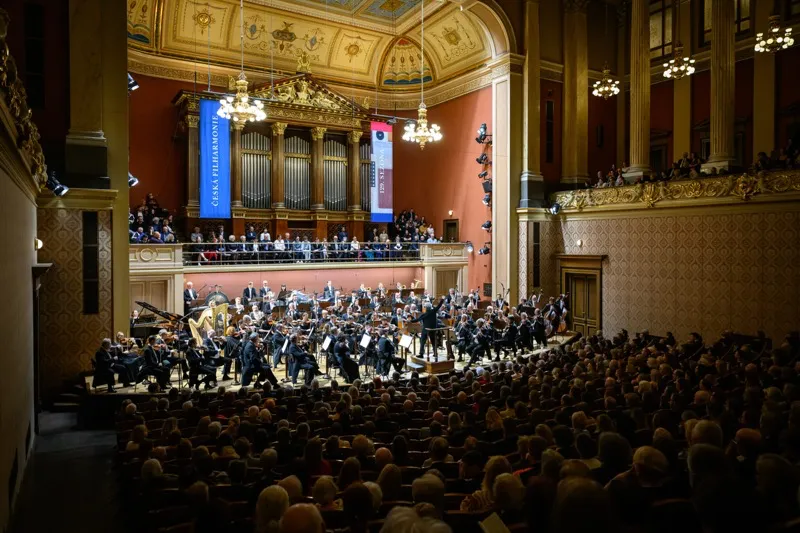
Pentatone has complemented the release with exceptional production values, including comprehensive liner notes and pristine surround-sound engineering that captures the natural acoustics of the Rudolfinum. For collectors and streaming subscribers alike, this release presents a curatorial dilemma: a middle-of-the-road, beautifully played Fifth Symphony is paired with a genuinely compelling, high-caliber Seventh Symphony.
While physical media collectors must weigh the merits of the album as a unified physical package, digital consumers enjoy the flexibility to curate their own libraries by streaming or downloading the standout Seventh Symphony independently. Ultimately, while this album may not displace historical benchmarks in the discography of the Fifth, it solidifies the formidable partnership between Semyon Bychkov and the Czech Philharmonic, proving that their ongoing collaboration continues to yield moments of profound orchestral distinction.
Related posts: