A Star-Studded Tribute to George Benson Elevates the Mission of the Jazz Foundation of America

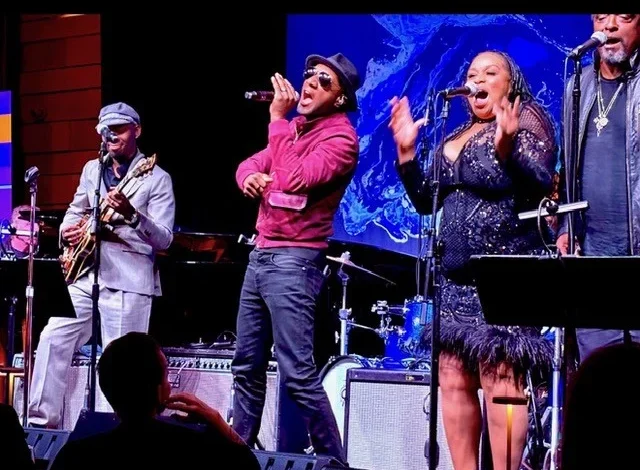
On the evening of November 1, the intimate confines of Vibrato Grill Jazz in Los Angeles transformed into a nexus of musical history and humanitarian advocacy. The event served as a high-profile tribute to the multifaceted career of George Benson, the legendary guitarist and vocalist whose influence spans jazz, pop, R&B, and soul. Organized as a benefit for the Jazz Foundation of America (JFA), the evening succeeded in balancing the celebration of a singular artistic legacy with the urgent, ongoing necessity of providing a social safety net for aging and vulnerable musicians.
The Mission of the Jazz Foundation of America
The Jazz Foundation of America has long operated as a critical pillar within the professional music community. Founded in 1989, the organization was established to provide financial, medical, and housing assistance to jazz and blues musicians in crisis. The significance of the JFA’s work was underscored by Executive Director Joe Petrucelli and President Dr. Daveed Frazier, who opened the proceedings by detailing the organization’s logistical and financial scope.
In recent years, the JFA has faced an increasing demand for its services. With the rising cost of living in major cultural hubs and the inherent lack of traditional employment benefits for many freelance musicians, the foundation’s "Musicians’ Emergency Fund" has become a lifeline. During the event, a video montage served as a poignant reminder of the organization’s stature, featuring testimonials from industry titans such as Herbie Hancock, Chaka Khan, Patti Smith, Bettye LaVette, Keith Richards, and the late Quincy Jones. Dr. Frazier reminded the audience that jazz is not merely a genre of music, but a foundational cultural force, asserting that protecting the practitioners of this art form is a matter of collective responsibility.
Honoring Leadership in the Arts
The evening also saw the presentation of the Quincy Jones Love & Peace Humanitarian Award to Eden Alpert, the co-owner and manager of Vibrato Grill Jazz. Presented by Martina Jones, the award recognizes individuals who demonstrate an unwavering commitment to the welfare of the artistic community. Alpert, the daughter of music icon Herb Alpert, has been instrumental in turning Vibrato into a premier destination for jazz performance.
In her acceptance, Alpert emphasized that the industry’s reliance on artists to provide the "soundtrack to our most meaningful experiences" creates an unspoken contract. She argued that the community must reciprocate by ensuring that these same artists have access to stable housing and essential medical care. The subsequent auction, which featured a Benson-signed Ibanez guitar and an original painting by bassist Hussain Jiffry, demonstrated the practical side of this advocacy, raising significant funds for the foundation’s emergency operations.
A Musical Chronology: Celebrating the Benson Catalog
The musical program was curated to reflect the wide-ranging versatility of George Benson’s career, which began in the mid-1960s as a jazz guitarist and evolved into a multi-platinum pop-soul phenomenon.
Carmen Lundy opened the concert, establishing a tone of sophisticated intimacy. Her performance of "This is Love," a song composed by Benson with lyrics by Lundy and Julie Raynor, highlighted the harmonic complexity of his songwriting. Lundy’s set, which included "Love and Freedom" and a daring, rhythmically elastic take on "Moody’s Mood for Love," showcased the vocal improvisation that has become a hallmark of the modern jazz vocal tradition.
Following Lundy, the "Titans of Jazz"—a supergroup comprising Patrice Rushen (piano), Azar Lawrence (tenor saxophone), Henry "Skipper" Franklin (bass), and Roy McCurdy (drums)—provided a masterclass in ensemble interaction. Their rendition of Nat Adderley’s "Work Song" served as a bridge between the hard-bop origins of the 1960s and the funky, groove-oriented sound that Benson would later help pioneer.
The Tommy LiPuma Award and Reflections on a Career
The highlight of the evening was the presentation of the Tommy LiPuma Award for Recording Excellence to George Benson. The award is named after the legendary producer who was responsible for some of the most successful records in the history of the Warner Bros. jazz and R&B catalogs.
In a reflective speech delivered after the award presentation by songwriter Mike Stoller, Benson recounted the pivotal moments of his transition from a strictly instrumental jazz guitarist to a global pop star. He credited LiPuma with recognizing his potential as a vocalist during a residency in a San Francisco club. Benson recalled the industry skepticism surrounding his 1976 album, Breezin’, particularly the decision to include a vocal track—"This Masquerade"—on an instrumental record. The song’s subsequent commercial dominance remains one of the most significant pivots in recording history, proving that jazz-based musicians could command the pop charts without sacrificing their technical integrity.
Contemporary Interpretations and The Finale
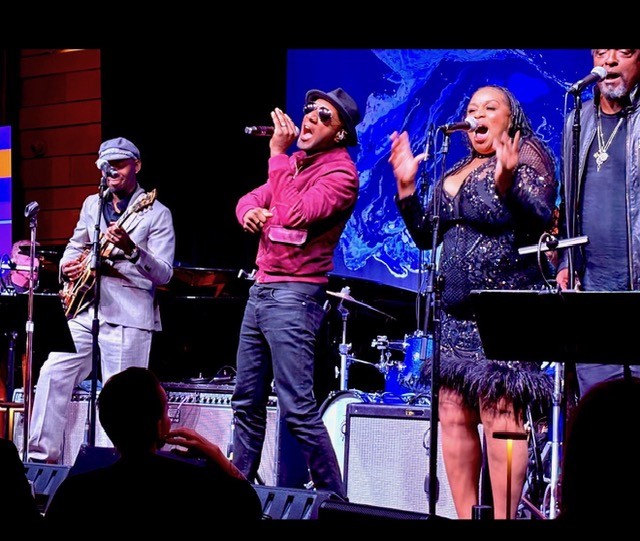
The latter half of the concert featured performances that emphasized Benson’s influence on contemporary R&B and soul. Guitarist Adam Falcon and Isaiah Sharkey brought a modern edge to the repertoire. Sharkey’s performance of "Breezin’" and his vocal-forward rendition of "This Masquerade" provided a bridge between the original arrangements and a more modern, neo-soul sensibility.
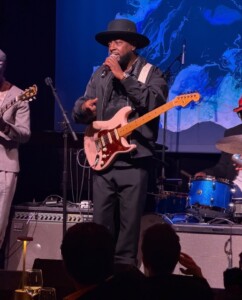
Aloe Blacc’s entrance injected a burst of high-octane energy, as he navigated the rhythmic demands of "Turn Your Love Around" and "Give Me the Night." These performances highlighted the lasting impact of Benson’s late-70s and 80s output on the evolution of urban pop. Wyclef Jean provided a stylistic contrast with a Latin-inflected performance of "Lady Havana," which demonstrated the global reach of the Benson catalog.
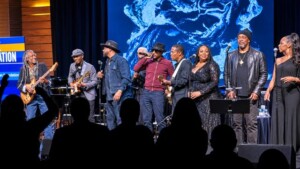
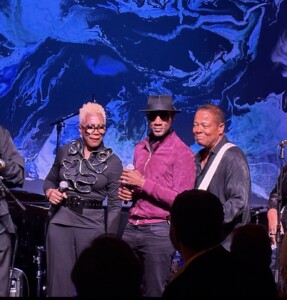
The concert concluded with an all-star ensemble performance of "On Broadway," a song that served as the perfect metaphor for the evening’s themes of success, perseverance, and the enduring nature of classic songwriting.
Implications and Broader Impact
The success of the Vibrato benefit highlights a growing trend within the entertainment industry: the institutionalization of philanthropic support for legacy artists. As the generation that defined the golden age of jazz and R&B enters their senior years, organizations like the JFA are becoming increasingly vital.
The event was not merely a retrospective; it was a functioning model of how cultural heritage can be preserved through direct, community-based support. By pairing the prestige of a figure like George Benson with the tangible needs of the Jazz Foundation of America, the organizers provided a blueprint for future fundraisers.
The data provided by the JFA indicates that while global music streaming generates billions in revenue, individual musicians—particularly those whose careers preceded the digital era—often lack the long-term residuals necessary to navigate medical or financial crises. The funds raised at this event are earmarked specifically for the "Musicians’ Emergency Fund," which provides grants for rent, food, and urgent healthcare, ensuring that the legacy of the music is not lost due to the economic instability of its creators.
As the evening closed, the sentiment among attendees was clear: the celebration of George Benson’s artistry was incomplete without the commitment to the welfare of his peers. The event successfully demonstrated that the jazz community, while diverse in its stylistic approaches, remains unified in its dedication to the human beings behind the music.