Macdara Yeates Reimagines Dublin’s Musical History on His Sophomore Album Mudlark Ballads

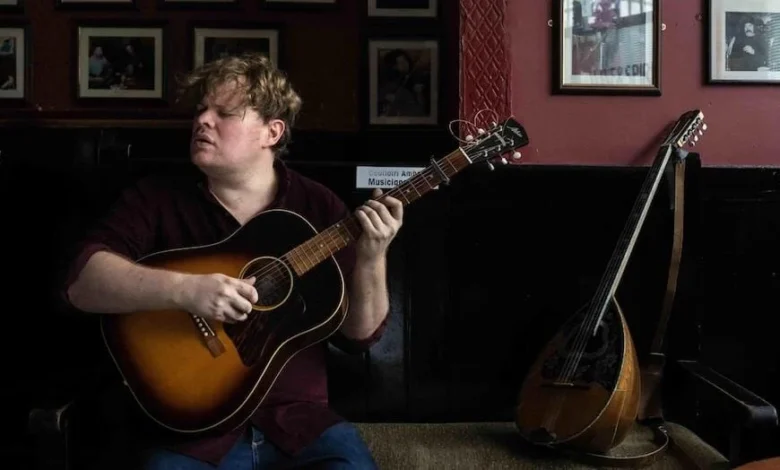
Dublin’s contemporary folk music scene has experienced a remarkable renaissance over the past decade, characterised not by a uniform adherence to bygone eras, but by an ambitious spirit of experimentation and sonic diversity. While boundary-pushing ensembles such as Landless, OXN, and Lankum have fearlessly incorporated avant-garde drones and discordant soundscapes into traditional frameworks, a parallel movement seeks to honour the roots of Irish songcraft with equal reverence. At the vanguard of this traditionalist yet innovative subset stands vocalist and researcher Macdara Yeates. A foundational figure in the modern Dublin folk revival, Yeates helped ignite the current scene in 2012 as one of the co-founders of The Night Before Larry Got Stretched—the legendary weekly singing session held at The Cobblestone pub in Smithfield that served as the crucible for many of Ireland’s most acclaimed contemporary folk acts.
Following his 2024 debut album, Traditional Singing from Dublin, Yeates returns with his sophomore full-length release, Mudlark Ballads, scheduled for release on September 4, 2026, via SilkOnIt Records. Co-produced by Daniel Fox, renowned for his work with post-punk outfit Gilla Band, the new record bridges the gap between historical archival preservation and contemporary sonic architecture. Through twelve meticulously crafted tracks, Yeates unearths obscure, unrecorded relics of Dublin’s urban past, breathing new life into forgotten street songs and infusing them with contemporary pathos, razor-sharp wit, and stark dramatic tension.
The Evolution of a Traditionalist: From Archives to Audio
Despite the title of his debut record, Yeates has consistently positioned himself as an interpretive historian rather than a rigid purist. While his rich, resonant baritone pays homage to the canonical vocal styling of classic Irish folk music, his approach to arrangement defies orthodox expectations. On Mudlark Ballads, this curatorial methodology is executed with heightened confidence and a more expansive palette of textures. The arrangements remain intentionally sparse, yet they employ unusual instrumentation and dynamic shifts to underscore the psychological and narrative depths of the lyrics.
A prime illustration of this technique is found in his treatment of Matt Hyland, one of the more widely recognized narratives in the traditional canon. As the song’s moral complexity deepens, Yeates guides the listener through an evolving sonic landscape. The track opens with a minimal, repeating guitar motif that evokes the steady, heavy toll of a death knell. As the narrative tension mounts, subtle and increasingly ornate guitar embellishments emerge, complemented by a swelling background drone. This ambient tension abruptly evaporates at the onset of the song’s cathartic and hopeful final verse, showcasing Yeates’ mastery of pacing and dramatic release.
Unearthing Dublin’s Forgotten Street Lore
Mudlark Ballads derives much of its unique character from its excavation of previously unrecorded or commercially neglected material. Among the album’s most striking inclusions is De Kilmainham Minit, marking the first time the old Dublin street song has received a commercial recording. The track chronicles a historical execution using vivid, evocative vernacular, augmented by visceral percussive lashes and an unexpectedly sinister kazoo solo that injects a macabre theatricality into the arrangement.
Similarly, De May Bush captures a violently celebratory facet of urban folklore, challenging the notion that May Day observances are exclusively the domain of rural English traditions. Propelled by the relentless, metallic strumming of acoustic guitars, the track possesses an inexorable momentum, capturing the volatile energy of a chaotic night out where the outcome hangs precariously in the balance. This sense of inevitable progression is echoed in Hiring Time, which adopts a more measured tempo anchored by a heavy, driving percussive thump.
Collaborative Production and Urban Soundscapes
The collaboration between Macdara Yeates and producer Daniel Fox has yielded a distinct acoustic identity that feels firmly tethered to the concrete and social spaces of the Irish capital. Fox, celebrated for his mastery of tension and space in industrial and post-punk contexts, applies a similarly disciplined aesthetic to traditional folk. The opening track, The Lucan Dairy, is delivered entirely unaccompanied, imbuing the performance with an open-air, plein-air quality that captures the natural acoustics of the city streets.
Throughout the album, tracks function akin to minimalist urban landscape paintings. Stands a Lady creates the distinct impression of having been recorded in the midst of a bustling, indifferent metropolis, where citizens rush through their daily routines entirely unaware that they are involuntarily providing the ambient backdrop for an expertly executed musical vignette. This lo-fi realism roots the historical narratives firmly in the present day, creating a seamless dialogue between past and present Dublin.
Storytelling, Satire, and Political Resonance
Yeates demonstrates a profound appreciation for the mechanics of folklore and oral history across the album’s thematic arcs. On Alexander, the narrator spins grandiose, exaggerated tall tales of historical exploits in a calculated bid to win a lover’s heart. Yeates delivers the performance with a knowing wink, acknowledging the absurd power of hyperbole while maintaining a core of genuine emotional tenderness.
In sharp contrast, the a cappella track Mrs Smyly channels a biting, politically charged strain of historical satire. The song targets the phenomenon of souperism—the controversial practice of distributing soup in exchange for religious conversion during the Great Famine—exposing the dark socio-economic pressures of 19th-century Ireland with scathing wit.
The album concludes with ‘Tis Whiskey I Adore, a stately and reflective melody sustained by long, resonant harmonium notes. Anchored by Yeates’ forceful yet unassuming baritone, the track exemplifies the performer’s greatest asset: an innate intuition that allows the song’s inherent emotional weight to dictate its trajectory without heavy-handed manipulation. In the hands of Yeates, these discarded musical artifacts are elevated from urban debris to cultural treasures.
Album Launch Tour and Live Performance Schedule
To celebrate the release of Mudlark Ballads, Macdara Yeates and his touring ensemble have announced an extensive headline tour across Ireland and the United Kingdom, commencing in September 2026. The live dates will bring the intricate arrangements and historical narratives of the new album to prominent folk festivals and intimate club venues alike.
Tour Itinerary:
- September 18–20: Durham Folk Festival, Durham, UK
- October 9: The Róisín Dubh, Galway, Ireland
- October 11: DeBarra’s Folk Club, Clonakilty, Ireland
- October 14: Oh Yeah! Music Centre, Belfast, Northern Ireland
- October 18: Coughlan’s, Cork, Ireland
- October 22: Sandino’s, Derry, Northern Ireland
- November 1: The Sugar Club, Dublin, Ireland
- November 4: Cecil Sharp House, London, UK
- November 7: Glossop Labour Club, Glossop, UK
- November 8: Red Deer Folk Club at Zapato, Marsden, UK
- December 1: Kitchen Garden Café, Birmingham, UK
- December 2: Samuel Worth Chapel, Sheffield, UK
- December 10: Irish Cultural Centre Hammersmith, London, UK
Broader Cultural Implications and Critical Reception
The arrival of Mudlark Ballads arrives at a pivotal juncture for the European folk revival. As contemporary audiences increasingly seek authenticity rooted in localized history, artists like Yeates provide a vital bridge between archival research and accessible modern performance. By integrating the rigorous production sensibilities of figures like Daniel Fox with the raw authenticity of traditional unaccompanied singing, Yeates challenges purist gatekeeping while expanding the demographic appeal of heritage music.
Musicologists and cultural commentators note that projects of this nature play an essential role in safeguarding intangible cultural heritage. By rescuing dormant street songs from obscurity and contextualising them within contemporary sonic frameworks, Yeates ensures that Dublin’s complex socio-musical history remains a living, evolving tradition rather than a static museum piece. With Mudlark Ballads, Yeates cements his reputation not merely as a custodian of the past, but as one of the most vital and inventive interpreters of traditional song working today.
Related posts: