Brìghde Chaimbeul: A Definitive Journey Through Celtic Experimentalism and the Evolution of Scottish Smallpipes

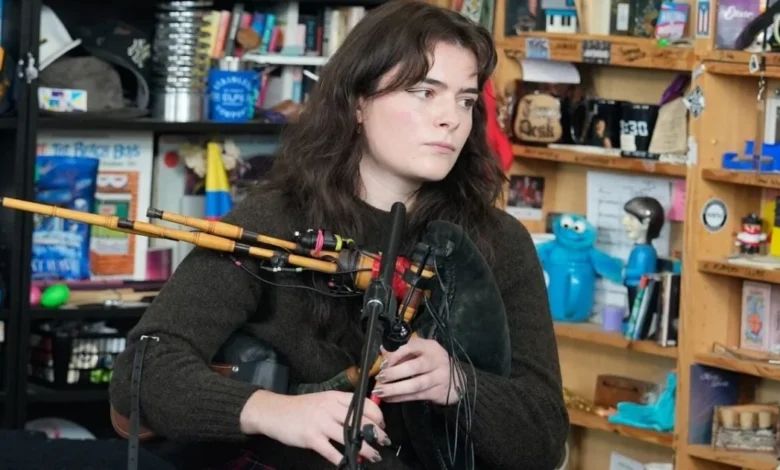
The contemporary landscape of modern folk and avant-garde music rarely witnesses an artist who bridges ancient regional heritage with radical sonic exploration quite as seamlessly as Brìghde Chaimbeul. Hailing from the Isle of Skye, a region globally renowned for its rich piping legacy, Chaimbeul has evolved from a prodigious young talent into an internationally celebrated pioneer of Celtic experimentalism. Her trajectory—marked by prestigious early accolades, boundary-pushing collaborative albums, high-profile international tours, and a recent, widely acclaimed NPR Tiny Desk Concert—underscores a profound shift in how traditional instruments are perceived, composed, and performed in the twenty-first century.
Chronology of a Meteoric Rise: From Skye to the Global Stage
Chaimbeul’s musical journey began in earnest at age four, when she was first inspired by the legendary piper and pioneer of canntaireachd—a phonetic singing tradition utilized for teaching pipe tunes—Rona Lightfoot. Captivated by the cadence and history of the idiom, Chaimbeul formally began studying the instrument at age seven, absorbing the rigorous standards of Highland piping. However, her artistic vision refused to remain bound by strict geographical or stylistic definitions.
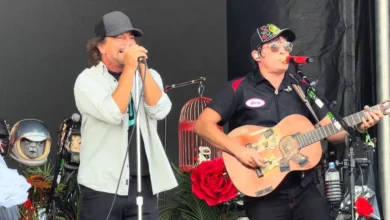
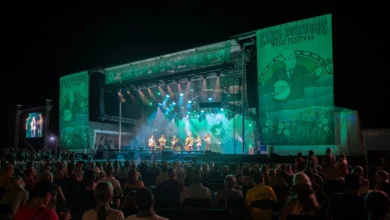
The turning point in her early career arrived in 2016 when she secured the prestigious BBC Radio 2 Young Folk Award. This national recognition propelled her onto major festival stages, including a memorable performance at Fairport’s Cropredy Convention alongside her sister Màiri on the harp and guitarist Michael Ferrie. Even at that nascent stage, critics and audiences noted that her musical palette extended far beyond traditional Scottish parameters. Soon after, her appearances at events like Sidmouth Folkweek and early broadcast features solidified her status as an emerging force in the acoustic world.
Decoding the Sound: The Mechanics of Scottish Smallpipes
To understand the magnitude of Chaimbeul’s artistic footprint, one must examine the unique mechanics of her chosen instrument: the Scottish smallpipes. Unlike the high-pressure Great Highland Bagpipe, which dominates outdoor pageantry, the bellows-blown smallpipes allow the player to generate two simultaneous, continuous drones while articulating a complex, highly nuanced melody over the top.
This acoustic framework provides Chaimbeul with a distinct textural advantage. It enables her to blend the modal drones characteristic of ancient Gaelic folk music with the spacious, undulating textures of contemporary minimalist and avant-garde composition. Her mastery of this delicate equilibrium has consistently confounded genre boundaries, attracting the attention of traditionalists and experimentalists alike.
Critically Acclaimed Releases and Radical Collaborations
The formal unveiling of her aesthetic arrived in late 2018 with the announcement of her debut solo album, The Reeling, released via Rough Trade’s specialized folk imprint, River Lea, and launched at Celtic Connections 2019. Produced with contributions from luminaries such as Aidan O’Rourke of Lau, Radie Peat of Lankum, and South Uist tradition-bearer Rona MacDonald Lightfoot, the record was a critical triumph. Reviewers noted a surprising and exotic influence: a series of Bulgarian tunes inspired by Chaimbeul’s March 2017 research trip to the Balkan nation, where she encountered the mesmerizing kaba gaida piping tradition. The impact of The Reeling was so profound that River Lea co-founder Tim Chipping remarked that the label’s initial slate of releases by Ye Vagabonds, Lisa O’Neill, and Chaimbeul had set a standard so extraordinarily high that the imprint had effectively peaked right out of the gate.
Never one to rest on traditional laurels, Chaimbeul quickly expanded her collaborative footprint. In 2022, she joined forces with Ross Ainslie and Steven Byrnes to release LAS. Hailed by critics as a masterclass in unifying acoustic innovation with ancestral reverence, LAS served as a transitional stepping stone toward her most ambitious avant-garde projects.
The year 2023 marked a major structural shift in her career with the release of Carry Them with Us, her debut on the tak:til / Glitterbeat imprint. For this project, Chaimbeul enlisted Canadian avant-garde saxophonist Colin Stetson. The album represented another milestone: the first recorded instances of Chaimbeul’s own vocals. Her detached yet emotionally resonant voice hovered over haunting compositions like Bonn Beinn Eadarra (The Haunting), creating an uncanny, dreamlike landscape that merged folk storytelling with modernist composition.
Continuing this trajectory of fearless cross-genre exploration, Chaimbeul released Sunwise in 2025. While leaning slightly closer to a solo exploratory effort, the album maintained collaborative touchstones, notably featuring a live recording with three uilleann pipers—John McSherry, Francis McIlduff, and Jamie Murphy—on the track Sguabag/The Sweeper. Reviewers noted that by this stage in her career, Chaimbeul had transitioned from a local competition winner into a globally recognized figure within the broader experimental music community, gracing genre-defying festivals such as Le Guess Who? and Supersonic, while contributing to contemporary pop and art-rock projects, including work on Caroline Polachek’s acclaimed studio albums.
Deep Listening and Cinematic Expanses: The Partnership with Colin Stetson
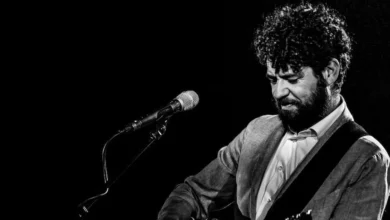
Building upon their undeniable chemistry on Carry Them with Us, Chaimbeul and Colin Stetson reconvened for the collaborative full-length project All the Light in the World, released via Invada Records. According to label statements, the record is "built from deep listening, improvisation, and an instinct for emotional intensity," seamlessly fusing Stetson’s circular-breathing saxophone innovations with Chaimbeul’s razor-sharp command of the Scottish smallpipes. The resulting soundscapes drift effortlessly between drone-based ritualism, minimalist composition, and vast cinematic expanses, cementing both artists as titans of contemporary sonic exploration.
Reaching a Global Audience: The NPR Tiny Desk Concert Phenomenon
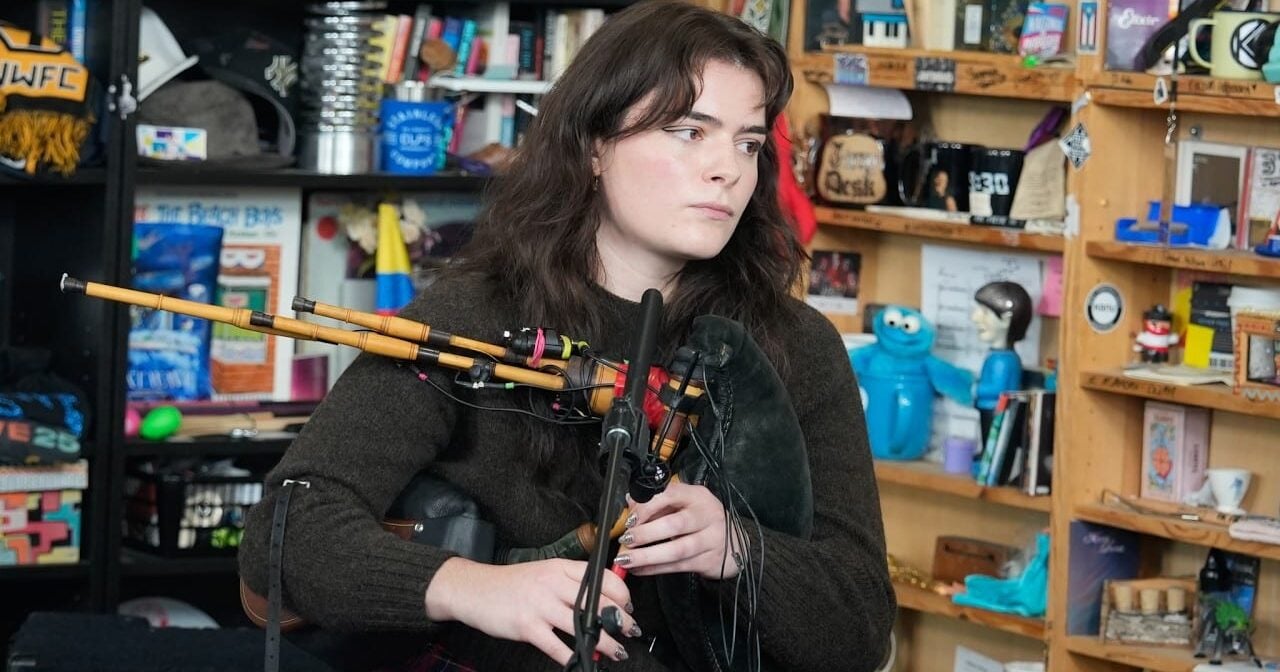
The culmination of nearly a decade of relentless touring, critical acclaim, and boundary-pushing artistry was realized when Chaimbeul was invited to record her debut Tiny Desk Concert for NPR. The session, which rapidly amassed over 340,000 views within weeks of release, serves as a visual and auditory testament to her global reach.
Joined by multi-instrumentalist and producer Shahzad Ismaily on synthesizers, Chaimbeul performed a carefully curated setlist drawing from her acclaimed records Sunwise and Carry Them with Us. Ismaily’s understated synth textures provided a warm, modern undercurrent that enhanced the hypnotic, drone-heavy architecture of her smallpipe arrangements, offering a live audience—and millions of digital viewers—an intimate glimpse into the future of acoustic-electronic crossover performance.
Broader Industry Implications and Future Outlook
The meteoric rise of Brìghde Chaimbeul offers vital insights into the shifting paradigms of modern roots music. In an era where genre silos are increasingly obsolete, her work demonstrates that absolute fidelity to traditional technique does not preclude radical, forward-thinking innovation. By treating ancestral repertoire and avant-garde composition with equal reverence, Chaimbeul has not only revitalized the public perception of the Scottish smallpipes but has also carved out a unique space where local Gaelic heritage comfortably converses with global experimentalism. As she continues to command international stages, collaborate with diverse contemporary icons, and push the acoustic boundaries of her instrument, Chaimbeul stands firmly at the vanguard of a new, borderless musical epoch.