Sairie Weaves a Haunting Tapestry of British Folk on Long-Awaited Debut Album Beneath the Spreading Tree

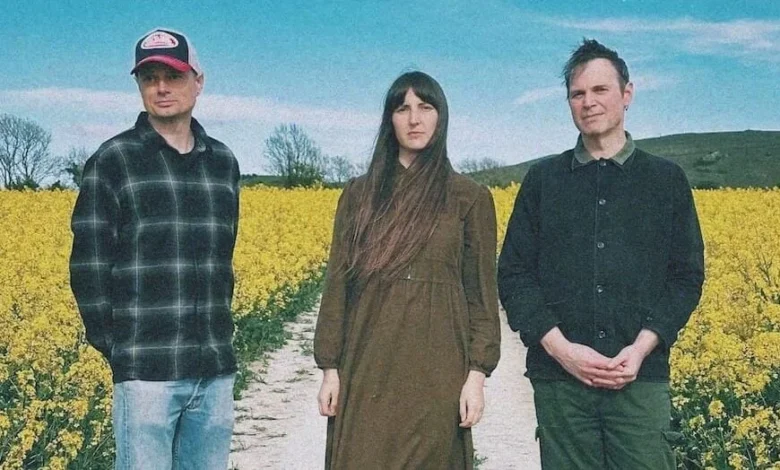
The contemporary landscape of British folk music has long held a fascination for the liminal space between the pastoral and the uncanny. Into this rich tradition steps Brighton-based trio Sairie, whose debut full-length album, Beneath the Spreading Tree, arrives via Hollow Hill Records following a deliberate, seven-year gestation period. Since their inception in 2019, the group has cultivated a dedicated following through a series of critically lauded EPs, singles, and atmospheric covers. With the release of this nine-track LP, Sairie has transitioned from a promising underground curio into a fully realized force within the modern psych-folk revival, offering a masterclass in mood, arrangement, and acoustic craftsmanship.
Main Facts and Album Overview
Released on September 12, 2026, Beneath the Spreading Tree consolidates years of stylistic refinement. The album features core members Emma Morton on lead vocals and autoharp, Jon Griffin on guitars and shared vocals, and Andy Thomas on bass, alongside contributions from guest artists including violinist Maria Marzaioli and cellist Alice Eldridge. The record spans a diverse sonic terrain, balancing traditional British folk idioms with subtle Appalachian undertones, baroque sensibilities, and hazy 1960s psychedelic textures.
The physical and digital release—spanning compact disc, vinyl LP, and digital download formats through independent outlets such as Bandcamp, Norman Records, and Resident—has been met with immediate enthusiasm from early supporters who have anticipated a cohesive long-form statement from the trio since their initial emergence in late 2019.
A Seven-Year Evolution: Chronology and Background
The trajectory of Sairie began in 2019 with the release of their debut track, a traditional rendition of the Scottish ballad The Gairdner. At the time, early reviewers noted comparisons to a lo-fi Pentangle infused with a distinct layer of hauntological unease—a genre-tag reflecting a cultural obsession with ghostly historical remnants and forgotten media landscapes.
Over the subsequent seven years, the Brighton trio methodically built their reputation without rushing into the pressure of a full-length release. Their chronology is marked by carefully chosen seasonal and thematic releases. Among these were the eerie winter folk single The Cherry Tree and a celebrated English-language adaptation of Françoise Hardy’s 1962 classic Tous les garçons et les filles. The Hardy cover, in particular, drew critical parallels to the fragile, intimate home recordings of Vashti Bunyan from the mid-1960s.
This patient approach allowed the band to hone an aesthetic uniquely suited to the darker months of the calendar. Rather than chasing commercial radio trends, Sairie carved out a niche for music designed for November mists and January frosts. The culmination of this developmental phase is evident on Beneath the Spreading Tree, which features a newly recorded, crisper version of that very first 2019 single, The Gairdner, bridging the gap between their origins and their current artistic maturity.
Musical Architecture and Arrangement Techniques
Beneath the Spreading Tree establishes its thematic and sonic blueprint immediately with its brief, appropriately titled opening track, Song For Winter. Here, the band introduces a signature vocal technique that defines much of the record: lead vocals performed in unison by Emma Morton and Jon Griffin.
This stylistic choice—where two voices blend to create a singular, spectral texture—infuses the arrangements with a haunting depth. As music critics and cultural commentators have observed, the dual-vocal approach makes the songs feel shadowed by their own history, creating an intimate yet unsettling atmosphere.
Beyond this vocal interplay, the band utilizes a diverse palette of instrumentation and dynamic shifts across the tracklist:
- Harder Than It Seemed pairs Morton’s delicate delivery with Griffin’s searching, baroque-leaning guitar work, while Andy Thomas’s wiry, propulsive basslines steer the composition into psychedelic territory.
- Three Knots presents an autumnal narrative where Griffin and Morton trade verses before the arrangement breaks open mid-way into expansive, exploratory instrumental passages.
- The Breeze on the Meadow serves as a lysergic, droning centerpiece, bolstered by Maria Marzaioli’s violin and Alice Eldridge’s cello, drawing stylistic comparisons to pioneering American psych-folk acts like Espers alongside British forebears such as Pentangle and Trees.
- The Green Light juxtaposes Morton’s cut-glass vocal clarity against an arrangement that deftly navigates noirish alt-folk, 1960s psychedelia, and anthemic indie-pop sensibilities.
Geographical Roots and Transatlantic Influences
While Sairie’s sonic geography is firmly anchored in British psychogeography—the study of how the physical environment influences the emotions and behaviors of individuals—the album also incorporates subtle transatlantic elements. Morton’s deployment of the autoharp introduces a faint Appalachian texture to several arrangements, grounding the tracks in a transnational folk tradition.
The lyrical content frequently explores landscapes that feel simultaneously mundane and otherworldly. On tracks like You Can’t Go Back, led by Griffin, the album flirts with a contemporary indie-folk slant centered on themes of love and yearning. Yet, the underlying mood remains opaque and gothic, particularly when Morton’s verse enters to elevate the dramatic tension. Similarly, How Many contrasts a sweetly melancholic melody with the ominous, sustained hum of a harmonium drone.
The centerpiece and title track, a sprawling nine-minute narrative, represents the album’s most ambitious structural undertaking. Unfolding slowly against high-wire swathes of strings, the song exemplifies the band’s capacity to construct long-form compositions that evoke both physical shelter against the cold and psychological unease within seemingly benign natural environments.
Broader Impact and Critical Implications
The release of Beneath the Spreading Tree arrives at a time of renewed commercial and critical interest in experimental folk, hauntology, and regional British music traditions. As listeners increasingly seek out immersive, contemplative art forms that engage with landscape and history, Sairie’s debut offers a timely contribution to the genre.
The album demonstrates that independent artists can sustain long-term creative development outside major label machinery through strategic, quality-driven releases and direct-to-consumer distribution models via Bandcamp and independent record stores. By refusing to compromise their atmospheric, slow-burning aesthetic for immediate commercial gratification, Sairie has delivered a work of stark beauty that rewards close, repeated listening.
Industry analysts and folk music historians note that debut albums of this caliber often serve as a watershed moment for underground scenes, elevating regional acts onto national and international stages. With a critically acclaimed foundation now established on vinyl, CD, and digital formats via Hollow Hill Records, Sairie is well-positioned to expand its audience while remaining entirely faithful to the haunting, nocturnal vision that defined their earliest recordings in 2019.
Related posts: