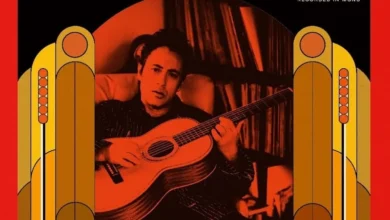
Reflecting on the Extraordinary Career and Lasting Legacy of Country Music Hall of Famer John Anderson


The passing of Country Music Hall of Famer John Anderson on October 21, 2026, at the age of 71, marked the loss of one of the most distinctive and enduring voices in the history of traditional American music. Inducted into the Country Music Hall of Fame in 2024—an honor he lived to witness and celebrate—Anderson leaves behind a complex, two-act musical legacy that bridged the gap between early 1980s honky-tonk revivalism and 1990s neo-traditionalism. Hailed by peers and critics alike for his peerless vocal phrasing and uncanny instinct for exceptional songwriting, Anderson stands alongside contemporaries like Gary Stewart as an artist whose influence far exceeded conventional commercial metrics.
Main Facts and the Passing of a Legend
John Anderson’s death concluded a storied life in country music that spanned over five decades. Born in Apopka, Florida, Anderson moved to Nashville in the 1970s, where he famously worked construction jobs—including laboring on the Grand Ole Opry House itself—while pursuing his dream of recording traditional country music. His unmistakable voice, often described as rich caramel passing through a volume pedal, defied the polished pop-country crossover trends of successive eras.
While his induction into the Country Music Hall of Fame in 2024 cemented his institutional status, historians and core enthusiasts have long argued that Anderson remains chronically underrated. His ability to inhabit a lyric transformed songs written by others into definitive recordings, establishing a blueprint for vocal authenticity that modern traditionalists continue to emulate.
A Chronology of a Two-Act Career
Anderson’s professional trajectory is a rare anomaly in the Nashville music industry: a multi-era career characterized by an initial commercial peak, a steep commercial decline, and an improbable, critically acclaimed resurgence.
The early 1980s established Anderson as a formidable force on the Billboard Hot Country Songs charts. Following early singles, his career gathered serious momentum in 1981 with a gritty, definitive cover of Billy Joe Shaver’s "I’m Just an Old Chunk of Coal," which cracked the Top 5 and signaled his arrival as a major artist. This breakthrough was rapidly followed by a string of massive chart successes, culminating in career-defining anthems such as "Wild and Blue," "Black Sheep," and his ubiquitous 1983 signature hit, "Swingin’."
However, the shifting tides of the music industry proved punishing. By the mid-to-late 1980s, commercial radio began favoring the slicker, younger demographic of the "Class of ’89"—superstars like Garth Brooks and Alan Jackson. Between 1988 and 1991, Anderson suffered a prolonged drought, enduring four consecutive singles that failed to crack the Top 60. Industry insiders widely assumed his commercial viability had expired.
In a twist of art imitating life, this period mirrored the narrative of one of Anderson’s own early recordings, "Would You Catch a Falling Star." Written by fellow Hall of Famer Bobby Braddock and peaking at No. 6 in 1982, the song chronicled the tragic descent of a once-beloved country star reduced to driving a van and performing on hardwood floors.

Despite persistent speculation over the years regarding the real-life inspiration behind the lyrics—with some fans mistakenly pointing toward George Jones—Braddock maintained in later interviews that the character was modeled after a lesser-known sideman who once toured with a major star. Regardless of the ambiguity, the song foreshadowed the fragility of fame within the genre and resonated deeply with listeners watching veterans fade from the spotlight.
The Resurgence and Seminole Wind
Just as conventional wisdom suggested Anderson’s commercial chapter was closed, he orchestrated one of the most remarkable comebacks in country music history. Partnering with producers and songwriters who understood his traditional sensibilities, Anderson recorded the album Seminole Wind, released in 1992.
The album’s centerpiece was "Straight Tequila Night," penned by Debbie Hupp and Kent Robbins. After an eight-year drought without a No. 1 single and a six-year absence from the Top 10, the track propelled Anderson back to the top of the charts, re-establishing his presence in mainstream country culture.
Interestingly, the success of Seminole Wind was driven by a deliberate shift in Anderson’s artistic approach. Unlike his earlier albums, which heavily featured his own compositions, the 1992 release included only two self-penned tracks. At the time, Anderson noted that while he had written plenty of material for the project, the collaborative search for outside songs yielded stronger fits for his evolving artistic vision.
The album also generated enduring pop-culture mysteries for country enthusiasts, most notably regarding the cryptic reference to song "K13" playing on a jukebox—a supposed catalyst for breaking the reserve of a lonely bar patron. Over the decades, fans have theorized endlessly about the identity of the mysterious track, suggesting works by contemporaries like Keith Whitley or traditional icons like Patsy Cline. Yet, much like the identity of Braddock’s falling star, the absence of a definitive answer added to the enduring folklore surrounding Anderson’s catalog.
Broader Impact and Industry Implications
John Anderson’s career offers a compelling case study in the longevity of authentic artistry versus fleeting commercial trends. While major radio formats frequently discard legacy artists as listener demographics shift, Anderson’s trajectory demonstrates that foundational traditionalism retains permanent value.
His ability to navigate the corporate pressures of Nashville in the 1980s, survive the commercial wilderness of the early 1990s, and mount a critically triumphant comeback served as a roadmap for subsequent generations of independent and Americana artists. By refusing to compromise his vocal delivery or pander to transient pop trends, Anderson preserved the integrity of honky-tonk music for future audiences.
As the country music community mourns his passing, tributes from fellow artists and historians continually emphasize that while many performers can interpret a great country song, few possessed the inimitable authority of John Anderson. His recordings remain standard-bearers for the genre, ensuring that his voice will continue to echo through the honky-tonks and living rooms of traditional music lovers for generations to come.