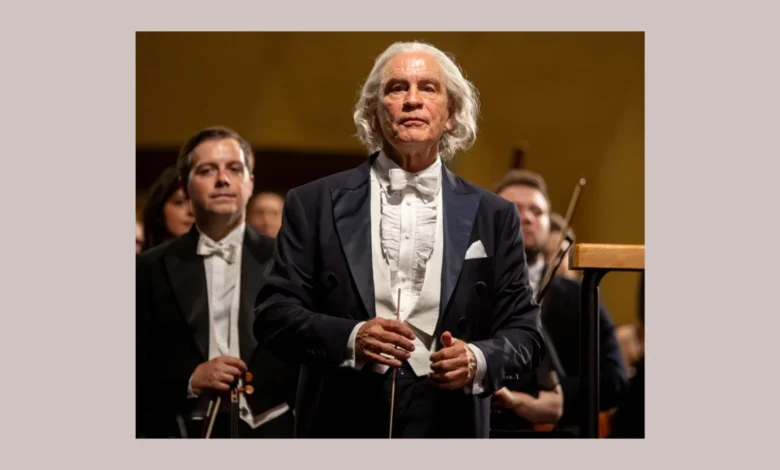
The recently premiered biographical film The Yellow Tie attempts to capture the mercurial essence of one of the 20th century’s most polarizing figures, the Romanian conductor Sergiu Celibidache. Directed by his son, Serge Ioan Celebidachi, the film features John Malkovich in the title role, portraying the maestro during his twilight years as he grapples with the commercialization of the art form he spent his life protecting. The London premiere of the film has reignited discussions surrounding Celibidache’s uncompromising aesthetic philosophy and his famously contentious relationship with the recording industry.
The Protagonist and the Conflict
At the heart of the narrative is the ideological struggle between artistic integrity and the logistical demands of the modern music business. In the opening scenes, the film presents an elderly Celibidache at his French estate, engaging in a heated confrontation with a delegation of Japanese record executives. The dispute centers on a contractual clause mandating the commercial release of his performances—a practice the conductor famously abhorred.
Celibidache’s vitriolic outburst—"People like you are killing classical music!"—is not merely a screenwriter’s invention but a reflection of the conductor’s lifelong stance. For decades, he argued that the ephemeral nature of a live concert experience could never be replicated in a studio or on a gramophone record. He contended that the phenomenon of "sound" required the physical space of a concert hall to reach its intended fruition. By refusing to authorize recordings, he paradoxically turned his live performances into the stuff of legend, often circulated via bootleg tapes, which only fueled his mythic reputation among purists.
A Chronology of a Controversial Career
To understand the weight of the film’s central conflict, one must look at the trajectory of Celibidache’s career, which spanned several of Europe’s most prestigious orchestras.

- 1945–1952: Following the end of World War II, a young Celibidache was appointed principal conductor of the Berlin Philharmonic. He led the orchestra during the difficult period of reconstruction, earning a reputation for rigorous, if idiosyncratic, rehearsals.
- 1954: Tensions reached a boiling point when the orchestra elected Herbert von Karajan as its permanent music director following the death of Wilhelm Furtwängler, bypassing Celibidache. This rejection left a permanent scar on his career, leading to his self-imposed exile from the German capital for nearly four decades.
- 1979: Celibidache began his tenure as the music director of the Munich Philharmonic. This period marked the height of his influence, where he could finally impose his "phenomenological" approach to music—emphasizing extreme tempos and a unique obsession with the acoustic properties of the orchestra.
- 1996: Celibidache passed away, leaving behind a complex legacy that included a significant body of work that remained unrecorded by official standards, forcing the industry to eventually reckon with his massive, uncatalogued archives.
The Phenomenological Approach
The film’s focus on his personality often eclipses the technical reasons for his stubbornness. Celibidache’s conducting style was rooted in what he called "phenomenology of music." He believed that the listener’s ability to process sound was limited, and therefore, the speed of a piece had to be calibrated to the specific acoustics of the room. This often resulted in tempi that were significantly slower than those of his contemporaries, such as Karajan or Solti.
Critics of his era were divided. Some hailed his performances as transcendent, sensory-rich experiences that demanded total surrender from the audience. Others found his intellectualization of the music to be an ego-driven barrier between the composer’s intent and the listener. The film captures this dichotomy by showing the frustration of those who worked for him, including his partner, Ioana, played by Miranda Richardson, who serves as a grounding force against his volatile temperament.
Industry Implications and the Digital Era
The film’s central tension—the clash between the artist and the record label—is particularly relevant in the era of streaming services. In 2026, where classical music is often reduced to "focus playlists" and algorithmic recommendations, Celibidache’s disdain for recorded media seems almost prophetic.
Data from the International Federation of the Phonographic Industry (IFPI) indicates that while classical music consumption has shifted to digital platforms, the "authentic" live experience remains the most profitable sector for major orchestras. The conflict depicted in The Yellow Tie mirrors the ongoing debate within the industry: does the accessibility provided by digital recording democratize art, or does it strip it of its "aura," as the philosopher Walter Benjamin once argued?
Critical Reception and Production Context
The production of The Yellow Tie has been a long-gestating project for Serge Ioan Celebidachi. Bringing his father’s story to the screen required navigating a minefield of anecdotes, many of which involve the conductor’s legendary outbursts, his perfectionism, and his disdain for the "industry."
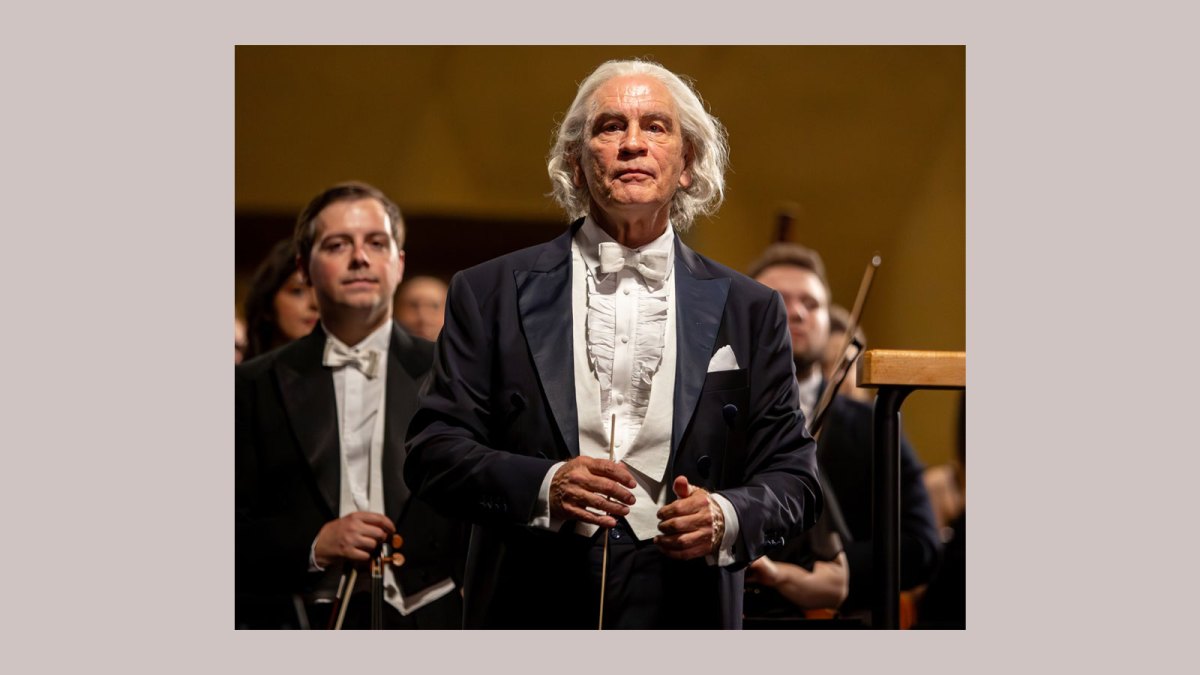
John Malkovich’s performance is being noted for its restraint, avoiding the temptation to turn the conductor into a mere caricature of the "mad genius." Instead, the film provides a look at the isolation that often accompanies extreme artistic conviction. By focusing on the later years, the narrative invites the audience to consider the price of legacy. Was Celibidache’s refusal to engage with the commercial world a noble defense of high art, or was it a form of professional hubris that limited his reach to a small, devoted inner circle?
Broader Cultural Impact
The release of this biopic serves as a catalyst for a re-evaluation of the 20th-century conducting pantheon. As new generations of musicians emerge, the "Celibidache model"—defined by intense, long-form rehearsals and a rejection of the "star system"—is seeing a modest resurgence in specialized circles.
Furthermore, the film highlights the role of the partner or spouse in the lives of such singular, often difficult, creative individuals. Miranda Richardson’s portrayal of Ioana provides the necessary humanizing element that allows the viewer to see the man behind the baton. The domestic scenes at the French estate, while perhaps fictionalized for narrative pacing, highlight the toll that the conductor’s demands took on his immediate circle.
Conclusion: A Legacy of Sound
The Yellow Tie does not offer easy answers. It presents a man who was as much a prisoner of his own principles as he was a master of his craft. As the film concludes, it leaves the audience to reflect on the nature of recorded sound and the fragility of the live performance. For those who view the classical music industry as an increasingly homogenized entity, Celibidache remains a symbol of defiance. Whether one agrees with his methods or finds his rigid adherence to his theories frustrating, his impact on the musical landscape of the 20th century is undeniable. The film succeeds in ensuring that the debate over his legacy—and the broader question of what we owe to the preservation of live art—will continue for years to come.