Chicago City Opera Announces Highly Anticipated Chicago Premiere of Heinrich Marschner’s Romantic Gothic Masterpiece Der Vampyr

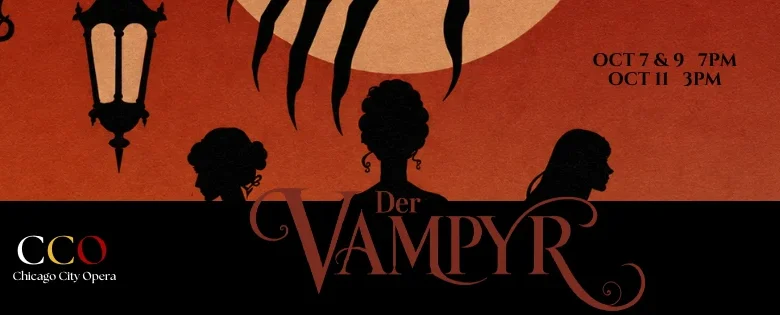
The Chicago City Opera has officially announced a major cultural milestone for the region’s autumn performing arts calendar with the forthcoming local premiere of Heinrich Marschner’s seminal 1828 Romantic opera, Der Vampyr. Featuring a German libretto by Wilhelm August Wohlbrück—which itself was adapted from a play by Heinrich August Friedrich Oetiker, based loosely on John Polidori’s famous 1819 short tale featuring Lord Ruthven—the production promises to bring a rare and historically significant operatic work to diverse audiences across the metropolitan area this October.
As part of the company’s ongoing mission to broaden the geographic and aesthetic horizons of local opera enthusiasts, the production will break away from traditional single-venue runs by utilizing three distinct performance spaces. The staging kicks off on October 7 at the historic Colvin House, moves to the contemporary and industrial-chic Fulton St. Collective on October 9, and concludes its run on October 11 at the storied Skokie Theater. This multi-venue approach reflects an innovative trend among modern regional opera companies seeking to meet audiences directly within their communities while maximizing acoustic and visual intimacy.
At the artistic helm of this ambitious production is Alexandra Enyart, the artistic director of the Chicago City Opera, who will assume conducting duties. She is joined by stage director SarahAnn Sutter, whose creative vision aims to bridge the atmospheric, supernatural elements of 19th-century German Romanticism with contemporary theatrical sensibilities. The musical canvas, traditionally scaled for a full orchestra, will be delivered through a specialized, reduction arrangement brilliantly executed by pianist Jordan Crice, ensuring that the rich harmonic and dramatic complexities of Marschner’s score remain intact within more intimate chamber-style performance spaces.
The Artistic Roster and Production Details
The creative weight of Der Vampyr rests upon a meticulously assembled cast of accomplished vocalists capable of navigating the demanding tessitura and dramatic intensity characteristic of early German Romantic opera. Baritone Jeremiah Strickler takes on the titular and formidable role of Lord Ruthven, the charismatic yet chilling aristocratic vampire whose cursed existence depends upon claiming sacrificial victims within a strict timeframe. Tenor Jordan Loyd portrays Edgar Aubry, the conflicted hero entangled in the moral and emotional fallout of Ruthven’s dark bargains.
Soprano Jessie Lyons steps into the role of Malwina, the primary romantic heroine whose fate hangs in the balance as the supernatural forces close in around her. The cast is further rounded out by baritone Keaton Payne as Humphrey von Davenaut, soprano Ariel Emma as Janthe, mezzo-soprano Molly Clementz as Emmy Perth, tenor Bat Collazo as George Dibdin, and baritone Kevin Wheatle as John Berkley. Each artist brings a wealth of regional and national performance experience to a score that demands both virtuosic vocal control and deep psychological characterization.
Historical Chronology and the Evolution of the Vampire Trope
To fully appreciate the significance of Chicago City Opera’s upcoming production, it is necessary to examine the historical and cultural chronology surrounding Heinrich Marschner and the creation of Der Vampyr. Long before Bram Stoker published Dracula in 1897 or modern pop-culture franchises saturated global media, the figure of the vampire underwent a profound literary and theatrical evolution during the Romantic era.
The archetype of the aristocratic, seductive vampire entered the cultural consciousness largely through Lord Byron and his young physician, John Polidori. During the famously stormy summer of 1816 at the Villa Diodati near Lake Geneva—where Mary Shelley also conceived Frankenstein—Byron drafted a fragment of a vampire tale. Polidori subsequently expanded this fragment into The Vampyre: A Tale, published in 1819, which introduced the character of Lord Ruthven. This template shattered previous folklore depictions of mindless, decomposing corpses, transforming the vampire into a pale, captivating, and socially lethal aristocrat who could easily infiltrate high society.
By the mid-1820s, German-speaking Europe experienced an intense fascination with gothic literature, folklore, and the supernatural. This cultural appetite found its ultimate musical expression in Carl Maria von Weber’s 1821 masterpiece Der Freischütz, an opera that established the vocabulary of German Romanticism by blending rustic folk elements with demonic pacts and eerie forest soundscapes.
Capitalizing on this momentum, Heinrich Marschner sought to push the boundaries of operatic horror further. Working closely with librettist Wilhelm August Wohlbrück, Marschner composed Der Vampyr in 1827 and early 1828. The opera premiered in Leipzig on March 29, 1828, to overwhelming public and critical acclaim. In the decades immediately following its debut, it became one of the most frequently performed operas across German-speaking theaters, rivaling the popularity of works by Weber and even early efforts by Richard Wagner.
However, as musical tastes shifted toward the grand historical pageantry of Meyerbeer, the melodic lushness of Verdi, and the monumental music dramas of Wagner, Marschner’s works gradually slipped from standard international repertoires. Today, Der Vampyr is recognized by musicologists as an essential historical and artistic bridge, yet professional productions in the United States remain exceptionally rare, making the Chicago City Opera’s upcoming engagement a notable event for national classical music observers.
Contextualizing Marschner within the German Romantic Continuum
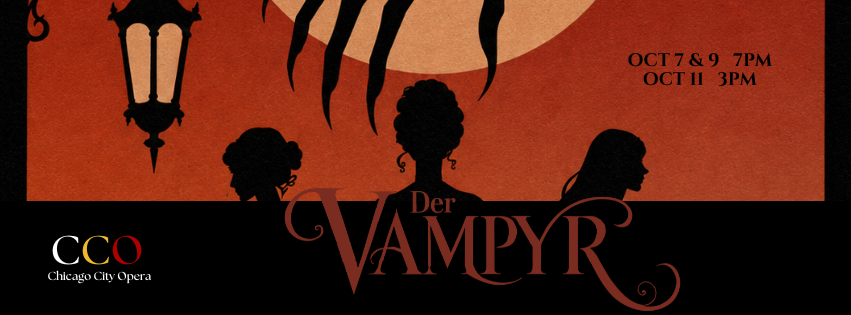
The artistic weight of Der Vampyr extends far beyond its historical novelty; it represents a crucial developmental phase in the lineage of German Romantic opera. Commenting on the cultural climate that birthed the work, Alexandra Enyart elaborated on its unique historical positioning in an official press release issued by the company.
"First rising to popularity in the 18th century, gothic literature was having a resurgence in the 1820s," Enyart noted. "Marschner’s Der Vampyr, though rarely performed in the U.S. today, was highly successful when it opened in 1828. Coming off the heels of German supernatural opera Der Freischütz by Carl Maria von Weber, and foreshadowing another, Richard Wagner’s The Flying Dutchman, Der Vampyr is full of stunning German Romantic music."
Musicologists often point to Marschner as the true stylistic successor to Weber. While Weber established the atmospheric framework of German Romanticism, Marschner expanded the chromatic language, deepened the psychological darkness of the characters, and introduced richer orchestrations that directly influenced the young Richard Wagner. Indeed, Wagner’s early theatrical and musical instincts—evident in works such as Die Feen, Das Liebesverbot, and particularly The Flying Dutchman—bear the undeniable stylistic fingerprints of Marschner’s pacing, melodic architecture, and fascination with redemption through sacrifice.
By presenting this masterwork, Chicago City Opera is not merely offering entertainment; it is providing local audiences with a living musicological lesson. The score requires singers to navigate sweeping, lyrical German lines that demand both dramatic heft and agile coloratura, while the harmonic language flirts with diminished tonalities and supernatural leitmotifs that prefigure the structural innovations of the later 19th century.
Strategic Planning and Venue Selection
The decision by Chicago City Opera to stage Der Vampyr across three distinct venues—Colvin House, Fulton St. Collective, and the Skokie Theater—highlights a broader, forward-thinking strategy within the contemporary classical music landscape. Traditional opera companies have historically relied on massive, single-auditorium runs to recoup production costs. However, shifting audience demographics, rising overhead expenses, and a growing desire for immersive, up-close artistic experiences have encouraged companies to decentralize their operations.
Colvin House, located in the Edgewater neighborhood, offers a stunning Prairie School architectural backdrop that naturally complements the atmospheric tension of 19th-century gothic storytelling. The venue’s historic charm allows audience members to experience the vocal nuances of Jeremiah Strickler and Jessie Lyons without the acoustic barriers typical of a 3,000-seat opera house.
Similarly, the Fulton St. Collective provides a vibrant, modern arts space in the West Town neighborhood, known for fostering multidisciplinary collaborations and engaging younger, culturally curious demographics. The final stop at the Skokie Theater extends the production’s reach directly into the northern suburbs, ensuring that accessibility barriers are minimized for patrons residing outside city limits.
This touring model not only mitigates the financial risks associated with mounting a rare and unconventional opera, but it also democratizes access to high-art performances. By bringing professional opera directly into diverse neighborhood settings, Chicago City Opera is actively cultivating new audiences while respecting the artistic integrity of complex historical repertoire.
Broader Implications and Cultural Impact
The upcoming production of Der Vampyr arrives at a time of significant transition for regional opera companies across the United States. Following the financial disruptions and programmatic retrenchments experienced by the performing arts sector over recent years, regional companies have had to demonstrate remarkable agility, innovative programming, and deep community engagement to survive and thrive.
By eschewing standard, risk-averse repertoire—such as perennial favorites like La bohème, Carmen, or La traviata—in favor of a neglected 19th-century German masterpiece, Chicago City Opera is carving out a distinct and vital niche. This bold programming choice signals to the broader cultural community that Chicago remains a thriving hub for musicological discovery and daring theatrical interpretation.
Furthermore, the production underscores the enduring global fascination with vampire mythology. Long before modern cinema and television franchises commodified the undead, Heinrich Marschner and Wilhelm August Wohlbrück captured the archetype’s psychological duality: the tension between human emotion and monstrous destiny, civilization and the untamed wilderness, mortality and eternal damnation. By reintroducing these themes through the pristine lens of early Romantic vocal music, the creative team invites modern audiences to reexamine the roots of a cultural obsession that continues to permeate contemporary storytelling.
As rehearsals intensify and preparations move forward across the three designated performance sites, anticipation continues to build among local critics, music historians, and opera aficionados alike. With Alexandra Enyart’s rigorous musical direction, SarahAnn Sutter’s insightful staging, and a dedicated cast of vocalists breathing new life into Marschner’s haunting score, the Chicago premiere of Der Vampyr stands poised to be one of the most intellectually engaging and musically rewarding theatrical events of the autumn season. Tickets and schedule details are currently available through the official Chicago City Opera channels, offering patrons a rare opportunity to witness a legendary chapter of operatic history brought vividly back to life.