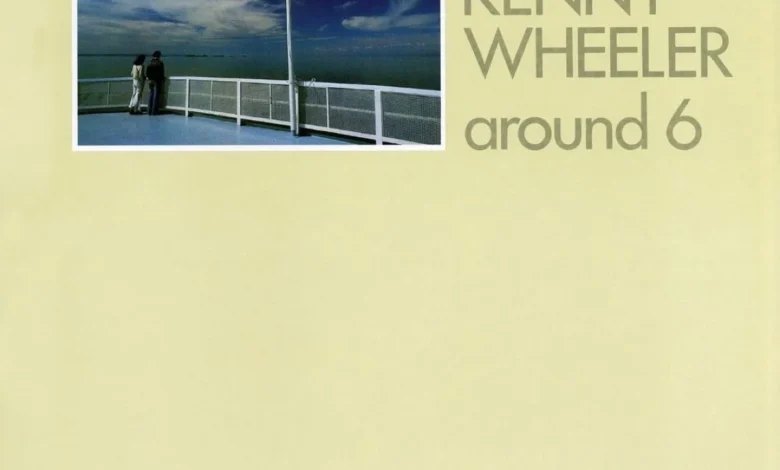
By the end of the 1970s, the reputation of Manfred Eicher’s ECM Records label had become firmly cemented in the public consciousness, albeit through a lens of reductive simplification. Critics of the era frequently categorized the label’s output under the dismissive moniker of "pastel prettiness," suggesting a preoccupation with atmospheric, minimalist soundscapes at the expense of genuine vigor or technical complexity. However, the 1979 recording sessions of Kenny Wheeler’s "Around 6"—now subject to renewed scrutiny through recent reissues—serve as a definitive rebuttal to such sweeping generalizations. This album stands as a testament to the label’s ability to capture high-octane, intellectually demanding jazz that defies the aesthetic boundaries often imposed upon it by contemporary reviewers of the late twentieth century.
The Genesis of the Session
Recorded in August 1979 in Ludwigsburg, Germany, "Around 6" captured a unique confluence of international talent. Kenny Wheeler, the Canadian-born trumpeter and flugelhornist who had become a pillar of the European jazz scene, led an ensemble that included some of the most formidable voices in avant-garde and post-bop music. The lineup featured Evan Parker on soprano and tenor saxophone, Eje Thelin on trombone, Tom van der Geld on vibraphone, J.F. Jenny-Clark on double bass, and Edward Vesala on drums.
The recording took place during a period of intense artistic transition for ECM. By 1979, the label had already established its signature "sound"—a crisp, reverb-heavy production style that prioritized clarity and spatial depth. However, the compositions on "Around 6," which include tracks such as "Mai We Go Round," "Solo One," "May Ride," "Follow Down," "Riverrun," and "Lost Woltz," demonstrate that this production ethos was not merely a vessel for quiet introspection but a sophisticated framework capable of supporting muscular, rhythmically complex explorations.
Chronology of the Recording
The production of "Around 6" occurred at a pivotal moment in Wheeler’s discography. Having already garnered significant acclaim for his 1975 album "Gnu High," Wheeler was looking to expand his structural approach to composition. The August 1979 sessions were marked by a high degree of collaborative synergy.
- August 1979: The ensemble convenes in Ludwigsburg for the primary recording sessions.
- Late 1979/Early 1980: Post-production and final mastering under Manfred Eicher’s direction.
- 1980 Release: The album (ECM 1156) is issued to the international market, coinciding with a broader debate regarding the "Europeanization" of jazz.
- Post-2000s: Subsequent digital reissues and remastering efforts bring the recording to a new generation of listeners, allowing for a more nuanced critique of its place in the ECM canon.
Analysis of Musical Architecture
The album is characterized by its wide-ranging dynamics, which frequently clash with the "pastel" stereotype of the period. For instance, the track "Mai" showcases a rock-influenced pulse that demonstrates Wheeler’s willingness to integrate contemporary rhythmic currents into a post-bop framework. Conversely, the piece "Solo One" offers an exercise in the command of space, highlighting Wheeler’s trumpet work as a study in restraint and melodic control.
The interaction between the instrumentalists is equally noteworthy. Evan Parker, known for his relentless exploration of multiphonics, provides a searing contrast to the more lyrical passages of the album. His torrential output on the track "Down" serves as a counterweight to the thickening, textured arrangements of "Ride." Meanwhile, the contribution of Tom van der Geld on vibraphone adds a distinct, shimmering quality to "Riverrun," providing a rolling, atmospheric foundation that allows the rhythm section of Jenny-Clark and Vesala to experiment with shifting meters.
Critical Reception and Historical Context
The initial reception of "Around 6" was polarized by the prevailing critical environment. While supporters praised the intelligence and passion of the compositions, detractors—influenced by the aforementioned "pastel" critique—often struggled to reconcile the record’s aggressive improvisation with the label’s reputation.
Edward Vesala’s performance on the record has been a subject of particular analysis. While his technical prowess is undeniable, some contemporary observers noted moments where his playing seemed to oscillate between genres, occasionally creating a sense of fragmentation. This perceived "genre-blurring" was, in hindsight, an early indicator of the stylistic fluidity that would define the fusion and avant-garde movements of the 1980s. The fact that the album sounds as vital today as it did four decades ago suggests that what was perceived as "between genres" in 1979 was actually an early iteration of post-modern jazz composition.
Broader Impact and Industry Implications
The enduring significance of "Around 6" lies in its rejection of the binary between "pretty" jazz and "difficult" avant-garde music. It acts as a bridge between the high-concept compositions of the 1970s and the more integrated, fusion-influenced jazz of the following decade.
For ECM Records, the album reinforced the label’s commitment to artistic autonomy. Manfred Eicher’s production philosophy, which treated the recording studio as an instrument in itself, allowed Wheeler to explore the sonic potential of his ensemble without the pressure to conform to commercial radio standards. This decision-making process had a profound ripple effect, influencing how independent labels approached jazz production for the remainder of the century.
Conclusion: A Legacy of Complexity
When viewed through the lens of history, "Around 6" stands as a monumental work that exposes the limitations of the labels assigned to it by its contemporaries. It is a record of immense range, moving seamlessly from the sparse, majestic silence of Wheeler’s solo work to the high-energy, multifaceted improvisations of the full ensemble.
The reissue of this material provides an essential opportunity to revisit a session that was arguably ahead of its time. By discarding the inaccurate descriptors of the late seventies, listeners can now engage with the music on its own terms: as a rewarding, technically proficient, and deeply expressive exploration of the possibilities inherent in the jazz medium. The session remains a definitive piece of evidence that the music emerging from ECM during this period was defined not by a single aesthetic, but by a rigorous, uncompromising dedication to the art of the performance. Through "Around 6," Kenny Wheeler not only challenged his critics but also solidified his place as one of the most versatile and intellectually curious composers of his generation.