Stella Lefty parts ways with Disruptor Management amidst record-breaking chart success

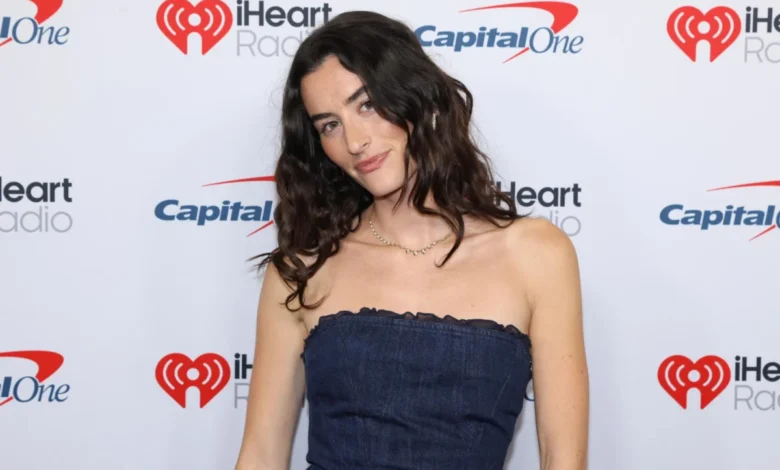
Stella Lefty, the breakout country music sensation whose hit single "Boston" has dominated the Billboard Country Airplay chart for two consecutive weeks, has officially parted ways with Disruptor Management. The decision marks a significant turning point in the career of one of 2026’s most discussed artists, severing ties with the firm that nurtured her rise from a nascent Chicago singer-songwriter to a mainstream powerhouse.
The separation, confirmed by industry sources, comes at a time of unprecedented professional highs for Lefty. Her debut album, "Long Way Home," has performed strongly on the Billboard 200, reaching the No. 11 position and solidifying her status as a commercially viable crossover act. Despite this upward trajectory, the departure signals a realignment in her professional team, which has recently seen further shifts, including a transition in her public relations representation from Align to the Nashville-based firm Sweet Talk PR.
A Rapid Ascent and Industry Milestones
Lefty’s rise to prominence has been defined by rapid, high-impact milestones that few debut artists achieve. The success of "Boston" is historic; it marks the first time a solo-billed woman has seen a debut single spend multiple weeks at the top of the Country Airplay chart since Gretchen Wilson’s "Redneck Woman" achieved a five-week run in 2004. Furthermore, the track’s peak at No. 2 on the Billboard Hot 100 demonstrates an ability to bridge the gap between niche country audiences and the broader pop market.
The partnership with Disruptor, led by CEO Adam Alpert and director of A&R Zach Horowitz, was instrumental in this growth. Horowitz, who discovered Lefty while he was still in college, previously noted that the management strategy focused on "super-serving" early adopters. By leveraging fan pop-ups in major cultural hubs like New York and Los Angeles and utilizing targeted support runs, the team successfully transitioned her from an online discovery to a community-driven phenomenon. According to Horowitz, the goal was always to foster a sense of belonging among the listener base, effectively turning passive streamers into a dedicated, localized fanbase.
The Dynamics of Modern Stardom and Digital Backlash
The professional transition arrives amidst a volatile period for Lefty, who has faced intense scrutiny regarding her background and musical authenticity. As the daughter of billionaire Groupon founder Eric Lefkofsky, Lefty has been frequently categorized by critics as a "nepo baby," a label that has colored much of the online discourse surrounding her work.

Beyond the socio-economic critique, Lefty has faced significant headwinds regarding the perceived "country authenticity" of her sound, particularly given her upbringing in Chicago. This debate has intensified as critics have pointed to similarities between her tracks and those of established acts. Notably, "Boston" features an interpolation of Noah Kahan’s "Stick Season," for which Kahan is credited as a songwriter. Similarly, her track "Summer You Were Mine" has drawn comparisons to The Chicks’ 1998 hit "There’s Your Trouble," with songwriters Tia Sillers and Mark Selby receiving credit on the track.
While detractors remain vocal on social media platforms, the industry establishment has shown a different, more supportive stance. This institutional backing has been critical in validating her place within the genre.
Institutional Support and Industry Validation
Despite the polarizing nature of her public perception, Lefty has garnered high-profile endorsements from some of the most respected figures in country music. In September, a video posted to TikTok—in which Lefty sang an unreleased composition referencing country luminaries—drew a direct, public response from the legendary Randy Travis.
"Thank you for the nod, Stella! I’ve always thought you could stand toe to toe with the very best in Nashville," Travis commented on the platform. Such an endorsement from a figure of Travis’s stature provides a level of legitimacy that acts as a buffer against the "outsider" narrative often pushed by online critics.
Furthermore, Kelsea Ballerini, an established Grand Ole Opry member, has publicly defended Lefty. Following a backlash that erupted after Lefty performed at the Opry and shared a photo with young patients from St. Jude Children’s Research Hospital, Ballerini took to social media to emphasize the inclusivity of the genre. "From different backgrounds and hometowns and generations, we can find ways to say and sing things that resonate with people," Ballerini noted, advocating for a broader definition of what constitutes modern country music.
Strategic Implications for the Artist
The move to leave Disruptor Management, while potentially disruptive in the short term, is a common occurrence for artists reaching a specific scale of success. As an act moves from the development phase to the global touring phase—Lefty is currently preparing for a sold-out tour scheduled to begin in November—management needs often evolve. The shift in public relations firms also suggests a desire to tighten her narrative and lean into the Nashville ecosystem, likely as a response to the "authenticity" critiques.

For Disruptor, the departure represents the loss of one of its most high-profile 2026 successes. The firm, which operates a joint label venture through Sony, continues to oversee an extensive roster. Neither Disruptor, Lefty, her legal representatives, nor her label, Atlantic Outpost, have provided specific commentary regarding the split, citing typical industry privacy protocols regarding talent-management relationships.
The Path Forward
The coming months will be a litmus test for Lefty’s brand resilience. With a sold-out tour on the horizon and a debut album that continues to chart, the infrastructure surrounding her career is being tested. Her ability to navigate the transition in management without stalling her commercial momentum will be critical.
The controversy surrounding her "nepo baby" label and the criticism of her songwriting style may persist, but the data suggests that these factors have not yet hampered her commercial performance. If anything, the "community-first" approach championed by her former management team seems to have created a loyal, if occasionally defensive, core audience that remains largely insulated from the broader cultural debate.
As the country music industry continues to wrestle with the definition of "traditional" versus "modern" in the age of streaming, Lefty remains a central figure in that evolution. Her future success will depend not only on her musical output but also on how effectively her new team can translate her current chart dominance into long-term career stability. For now, the industry watches to see which management firm will take the reins of one of the fastest-rising stars in modern country music, and whether the change will lead to a pivot in her public persona or a continuation of the strategy that brought her to the top of the charts.