Aigul Akhmetshina and Antonio Pappano Unveil Mujer Fatal: A Multifaceted Exploration of Womanhood and Genre-Defying Artistry

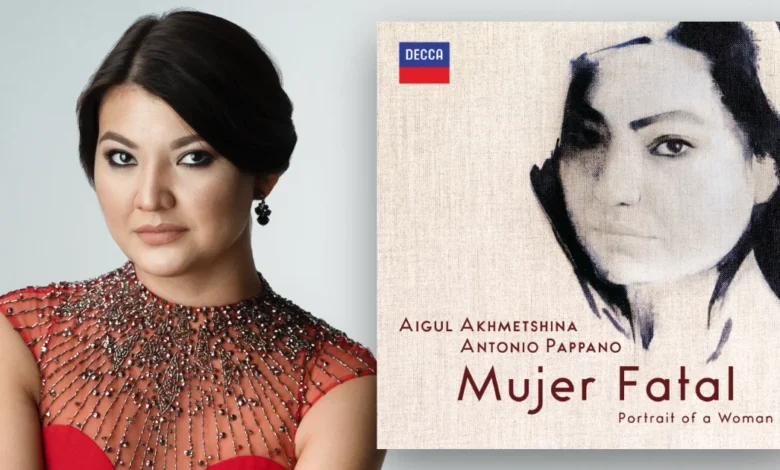
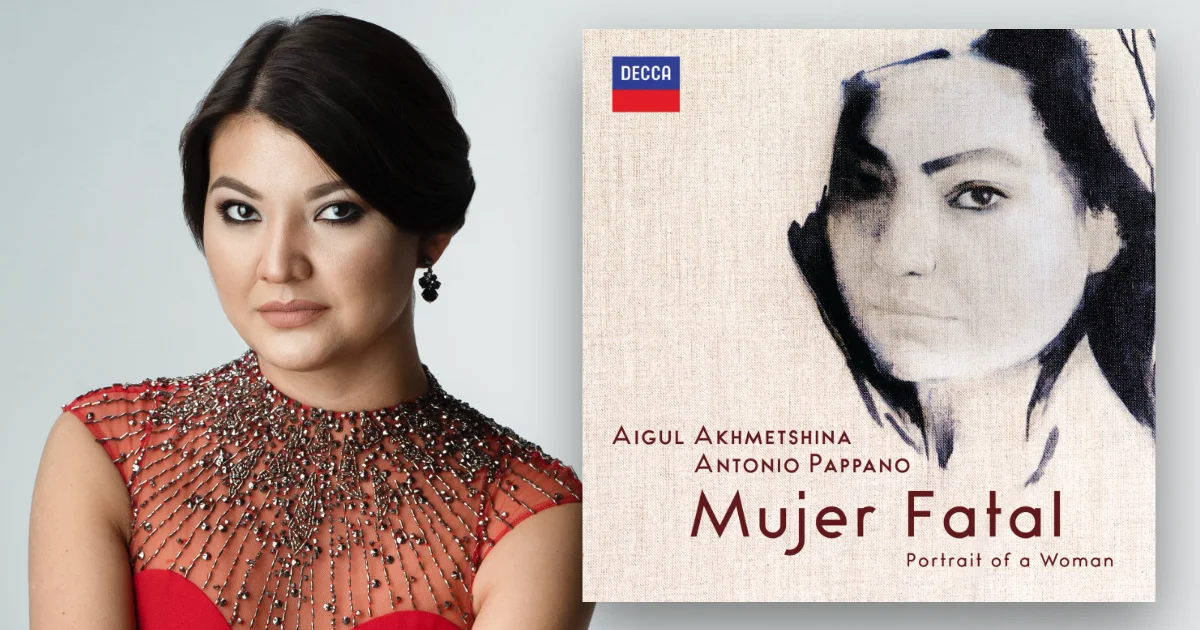
Rising operatic star Aigul Akhmetshina, renowned worldwide for her powerful portrayals of dramatic heroines on the world’s most prestigious stages, has expanded her artistic footprint with the release of a new collaborative album. Titled Mujer Fatal and recorded alongside world-renowned conductor and pianist Antonio Pappano, the project represents a profound, multifaceted commentary on the nature of womanhood, moving far beyond the boundaries of traditional operatic repertoire. Released on Decca under catalogue number 4872240, the album showcases the pair’s artistic versatility through a meticulously curated program that spans classical art song, Spanish boleros, French impressionism, and American standards.
Main Facts and Album Overview
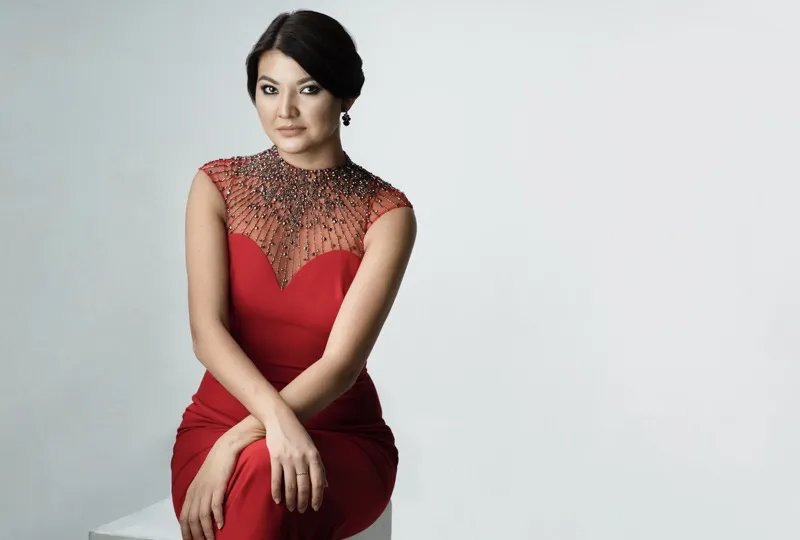
Mujer Fatal brings together two formidable musical forces. Akhmetshina, a mezzo-soprano celebrated for inhabiting complex dramatic archetypes—from the fiery, uncompromising femmes fatales like Bizet’s Carmen and Saint-Saëns’s Dalila to more vulnerable and innocent figures like Rossini’s Angelina in La Cenerentola and Tchaikovsky’s Olga in Eugene Onegin—brings her signature intensity to this song recital. Partnering with her at the piano is Antonio Pappano, whose extensive experience as a collaborative pianist and legendary conductor provides an exceptionally sensitive and structurally sophisticated foundation for the vocal lines.
The album officially opens with its title track, a newly minted composition written specifically for Akhmetshina by Elena Roussanova. Marking its world premiere recording on this album, the track immediately establishes the thematic core of the project. Rather than relying on caricatures, Akhmetshina and Pappano delve into the psychological duality of the femme fatale. The performance captures an unyielding fearlessness while masterfully weaving moments of profound vulnerability into the song’s middle section, setting a high artistic bar for the remainder of the tracklist.
Chronology of Repertoire and Stylistic Evolution
The program’s sequencing takes the listener on an expansive stylistic journey, reflecting a deliberate chronological and geographical curation. Following the contemporary opener, the duo transitions into twentieth-century Spanish repertoire with two selections from Xavier Montsalvatge’s Canciones negras. Here, Akhmetshina demonstrates remarkable technical precision. Avoiding overtly flashy ornamentation, she relies on pristine pitch clarity and impeccable diction in the opening track, while her breath control in the fourth track yields luxurious, sustained legato lines that effectively juxtapose yearning against dreaming.
Shifting into the Latin American and Spanish crossover repertoire, the album features an arrangement of Consuelo Velázquez’s classic bolero Besame Mucho, arranged by Jonathan Palmer Lakeland. As the most widely recognized non-classical offering on the tracklist, the bolero provides Akhmetshina with a central spotlight. Her phrasing remains lithe and organic throughout, effortlessly maintaining a sultry, intimate atmosphere even as the piano introduces structured rhythmic foundations.
The French repertoire forms another cornerstone of the recording, highlighted by Maurice Ravel’s Pièce en forme de Habanera. This track stands out as a high-water mark for expressive and technical range. Ravel’s deceptively intricate writing—where formidable technical hurdles are masked by seeming simplicity—is handled with immaculate control. The melismatic passages are tightly reined in yet retain an air of absolute spontaneity, punctuated by moments of emotional intensity where the duo pushes past standard expressive boundaries.
Expanding the stylistic palette further, the album visits the minimalist-adjacent world of Erik Satie with Je te veux. Far from the stark minimalism often associated with his best-known piano compositions, this track reveals a rhapsodic, deeply emotive side of the French composer. Akhmetshina navigates the high-drama landscape with sweeping vocal lines that underscore the song’s persuasive charm.
Supporting Data and Cross-Genre Interpretations
Moving eastward into the late-romantic Russian canon, the album features Pyotr Ilyich Tchaikovsky’s None but the Lonely Heart. In this selection, Antonio Pappano steps into a more prominent collaborative role, engaging in a delicate musical dialogue with the mezzo-soprano. The resulting performance demonstrates a well-informed partnership where vocal and instrumental lines intertwine fluidly without artistic friction.
This Russian exploration continues with Nikolai Rimsky-Korsakov’s The Nightingale and the Rose. Opening with a mysterious piano interlude, the song transitions into an unaccompanied vocal solo by Akhmetshina that immediately builds high dramatic tension. The piece demands an extraordinary vocal range, which Akhmetshina navigates with absolute comfort, effortlessly transitioning from piercing high notes to the quiet, enigmatic warmth of her lower register.
The American songbook selections provide a compelling final contrast, with standout interpretations of works by George Gershwin and Leonard Bernstein. In Gershwin’s The Man I Love, Pappano’s jazzy yet pensive suavity finds a natural counterpart in Akhmetshina’s rich, sumptuous vocal timbre. Though occasionally delivered with a weighty intensity, the performance remains deeply faithful to the emotional weight of the text. Conversely, Bernstein’s Somewhere presents Akhmetshina at her most tender, offering a comforting and reflective reading that rounds out the diverse program.
Distribution Issues and Digital Formats
Despite the universal acclaim greeting the musical performances on Mujer Fatal, the digital release has encountered criticism from consumers and critics alike regarding packaging and presentation. A notable drawback of the digital version of the album is the absence of a digital booklet. For a conceptual program of this nature, featuring repertoire spanning multiple languages and cultural traditions, song texts and translations are considered paramount for a complete listening experience. Industry observers note that while the physical compact disc successfully includes these essential liner notes, the omission in digital distribution formats represents a missed opportunity for streaming audiences seeking deeper context.
Broader Impact and Artistic Implications
The release of Mujer Fatal arrives at a significant juncture in Akhmetshina’s career, solidifying her status not only as a commanding operatic force but also as a versatile recitalist capable of bridging disparate musical traditions. By pairing with an elder statesman of classical music like Pappano, Akhmetshina signals a maturation of her artistic vision, choosing to interrogate historical archetypes of womanhood through an eclectic lens rather than relying solely on standard operatic chronology.
From a critical and commercial standpoint, the album bolsters Decca’s catalog with a distinctive vocal entry that defies easy categorization. The willingness to move fluidly between contemporary commissions, French impressionism, Russian art song, and Broadway standards demonstrates an evolving paradigm in classical music programming, where artists increasingly seek to connect historical operatic themes with broader global musical vernaculars. As Mujer Fatal reaches global audiences through physical sales and digital platforms, its long-term impact will likely be measured by how effectively it redefines the boundaries of what a modern mezzo-soprano recital can achieve.