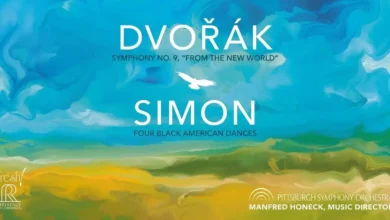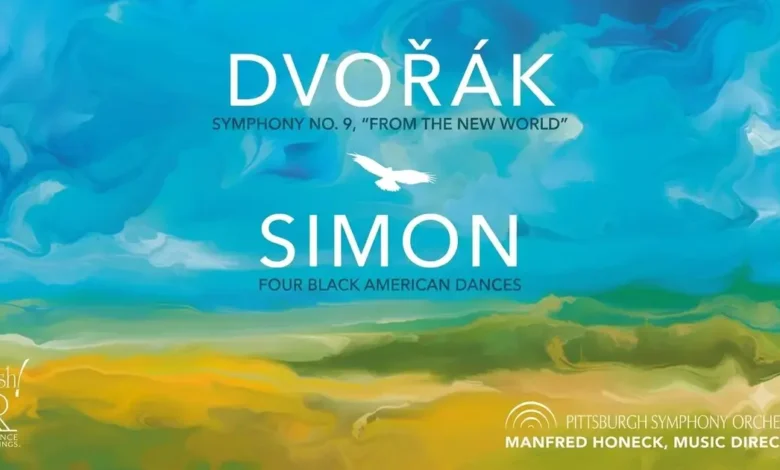
The Pittsburgh Symphony Orchestra and Music Director Manfred Honeck have released their latest recording under the Reference Recordings label, featuring Antonín Dvořák’s Symphony No. 9 in E Minor, Op. 95, "From the New World," paired with Carlos Simon’s "Four Black American Dances." This release marks a continuation of the highly acclaimed partnership between the ensemble and the label, known for high-fidelity "Fresh!" series recordings that capture the acoustics of Heinz Hall with meticulous detail. The album, recorded in Super Audio CD (SACD) format, enters a competitive field of "New World" interpretations, seeking to distinguish itself through technical precision and Honeck’s characteristic interpretive interventions.
Orchestral Precision and Technical Engineering
The collaboration between Manfred Honeck and the Pittsburgh Symphony Orchestra (PSO) has, over the last decade, become synonymous with a specific brand of orchestral virtuosity. This new recording of Dvořák’s Ninth Symphony is characterized by a high degree of ensemble unanimity and chamber-music-like sensitivity. Observers have noted that the PSO now rivals the historically celebrated "Cleveland sound" established under conductors such as George Szell and Christoph von Dohnányi. While the Szell (Sony Classical) and Dohnányi (Decca) recordings remain benchmarks for their disciplined execution, the new Pittsburgh release utilizes modern engineering to provide a broader dynamic range and greater transparency.
The engineering team at Reference Recordings, frequently utilizing the technical expertise of Soundmirror, has focused on capturing the warmth and spatial depth of the orchestral sections. This transparency allows for the inner voices of Dvořák’s orchestration—particularly the woodwind and inner string parts—to be heard with a clarity often lost in older analog or early digital captures. The use of the SACD format further enhances the immersive qualities of the performance, providing a sonic landscape that reflects the specific acoustic signature of the PSO’s home venue.
Honeck’s Interpretive Framework and Chronology of Composition
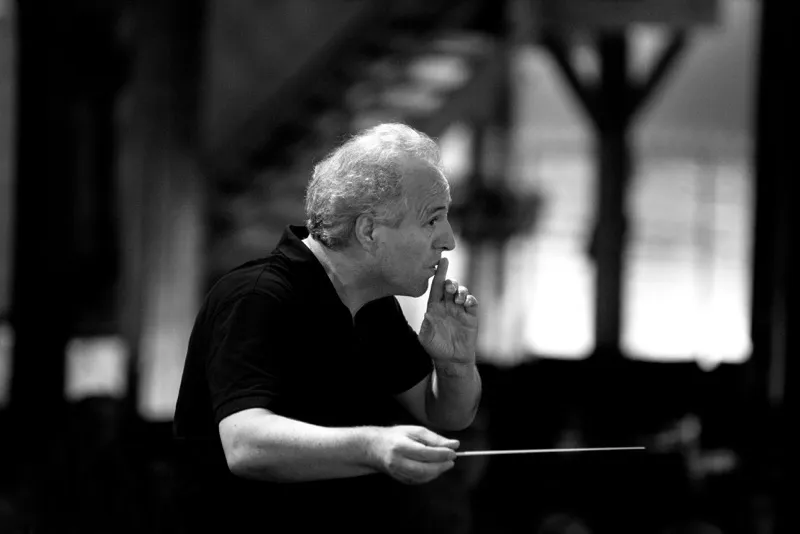
Manfred Honeck is recognized in the classical music industry for his detailed, often provocative, research-based interpretations. In the "New World" Symphony, he introduces several "unmarked" nuances—dynamic shifts and articulations not explicitly written in the score but justified by the conductor through historical context.
One of the most notable interventions occurs in the first movement, where Honeck applies an unmarked crescendo to the second theme, specifically in the brass section. Furthermore, Honeck makes a significant alteration to the timpani part, arguing in his program notes that the instruments available in Dvořák’s era were incapable of executing certain rhythmic complexities that the composer likely intended. By utilizing modern timpani, Honeck aims to realize a more dramatic and percussive foundation for the symphonic structure.
The "New World" Symphony itself carries a deep historical weight. Composed in 1893 during Dvořák’s tenure as director of the National Conservatory of Music of America in New York, the work was premiered by the New York Philharmonic at Carnegie Hall on December 16, 1893. Dvořák’s stated goal was to create a truly American style of symphonic music, drawing inspiration from African American spirituals and Native American melodies. Honeck’s reading of the famous Largo (the second movement) leans heavily into the movement’s literary roots, specifically Henry Wadsworth Longfellow’s epic poem, The Song of Hiawatha.
Comparative Analysis of the Largo and Scherzo
The second movement, featuring the iconic English horn solo performed here by Ian Woodworth, is treated by Honeck as a miniature tone poem rather than a simple folk-inspired song. The opening and closing wind chorales are rendered with an organ-like sonority, emphasizing the spiritual gravity of the music. However, this approach contrasts with the interpretations of conductors like Semyon Bychkov with the Czech Philharmonic or Sir Charles Mackerras with the Prague Symphony. Those conductors tend to favor a faster tempo and a more direct, "plain" delivery that emphasizes the folk-like simplicity of the melody.
In the Scherzo and the final movement, the PSO is given more latitude for traditional orchestral artistry. The Trio of the Scherzo is played with a "folksy warmth," highlighting the Bohemian roots that Dvořák maintained even while writing in America. The final movement serves as a showcase for the Pittsburgh brass and percussion, delivering the dramatic intensity required for the symphony’s conclusion.
While the technical accomplishment is undeniable, some critics have drawn comparisons to the mid-20th-century recordings of Herbert von Karajan and the Berlin Philharmonic. The argument suggests that a performance can become so polished and meticulously shaped that it risks losing the "vulnerability" or "spontaneity" found in more recent recordings, such as those by Andris Nelsons with the Bavarian Radio Symphony Orchestra or Nathalie Stutzmann with the Atlanta Symphony Orchestra.
Carlos Simon’s Four Black American Dances
As a contemporary foil to Dvořák’s 19th-century vision of American music, the album includes Carlos Simon’s "Four Black American Dances." Commissioned by the Boston Symphony Orchestra and Andris Nelsons, Simon’s work explores the evolution of Black social dance in the United States. Simon, currently the composer-in-residence at the John F. Kennedy Center for the Performing Arts, is a prominent voice in modern American composition, known for blending classical structures with jazz, gospel, and neo-romantic elements.
The suite consists of four distinct movements:
- Ring Shout: An ecstatic opening that pays homage to the religious dance traditions of enslaved people in the Southeastern United States. This movement allows the Pittsburgh players to engage with a more syncopated, jazz-influenced idiom.
- Waltz: A movement that Honeck interprets with a nod to European romanticism, drawing parallels to the sensuous orchestral writing of Richard Strauss’s Der Rosenkavalier.
- Tap Dance: A rhythmic exploration of the percussive nature of dance.
- Holy Dance: The final movement mimics the frenetic energy of a church congregation, building to a "riotous" coda. The work concludes unexpectedly with a simple plagal cadence (an "Amen" chord), grounding the orchestral excitement in a traditional liturgical gesture.
The inclusion of Simon’s work provides a modern perspective on the "New World" theme, showing how contemporary composers continue to integrate diverse American cultural traditions into the symphonic canon, much as Dvořák did over 130 years ago.
Supporting Data and Production Details
The Pittsburgh Symphony Orchestra’s discography with Reference Recordings has been a significant driver of the label’s recent success. Previous releases, such as their recordings of Tchaikovsky’s Symphony No. 6 and Shostakovich’s Symphony No. 5, have garnered multiple Grammy Award nominations and wins for Best Orchestral Performance and Best Engineered Album, Classical.
Album Specifications:
- Dvořák: Symphony No. 9 “From the New World”; Simon: Four Black American Dances
- Artists: Pittsburgh Symphony Orchestra; Manfred Honeck, conductor
- Label: Reference Recordings
- Catalogue Number: FR-769SACD
- Recording Venue: Heinz Hall for the Performing Arts, Pittsburgh, PA
- Format: Hybrid SACD (Compatible with standard CD players)
The production follows the high standards of the "Fresh!" series, which utilizes high-resolution recording technology to preserve the natural timbre of the instruments. The PSO, founded in 1895, has a long history of prestigious music directors, including Fritz Reiner, William Steinberg, André Previn, and Lorin Maazel. Under Honeck’s leadership since 2008, the orchestra has solidified its reputation for precision and a "Central European" sound profile that suits the works of Dvořák particularly well.
Broader Impact and Implications
This release arrives at a time when major American orchestras are increasingly pairing standard repertoire with works by living composers of color. By placing Carlos Simon alongside Dvořák, the PSO and Reference Recordings are participating in a broader industry shift toward a more inclusive representation of "American music."
The Dvořák Ninth remains one of the most recorded works in the classical catalog. Consequently, new entries must offer either a definitive sonic experience or a unique interpretive stance to remain relevant. Honeck’s willingness to "slam on the brakes" for tempo changes or alter the percussion parts ensures that this recording will be a subject of discussion among musicologists and audiophiles alike.
For the Pittsburgh Symphony, the album serves as a testament to their continued technical excellence and their ability to maintain a world-class recording profile despite the financial and logistical challenges facing modern orchestral ensembles. The partnership with Reference Recordings continues to be one of the most fruitful in the industry, bridging the gap between historical tradition and modern technological advancement.
As the classical music market continues to transition toward streaming—facilitated by platforms like Apple Music Classical—high-fidelity physical releases like this SACD cater to a dedicated niche of listeners who prioritize the highest possible audio quality. The success of this album will likely be measured not only by its sales but by its ability to maintain the PSO’s status as a premier global ensemble in the digital age.