The Nine Inch Nails Live Archive Revolutionizes Music Preservation Through On-Demand Streaming

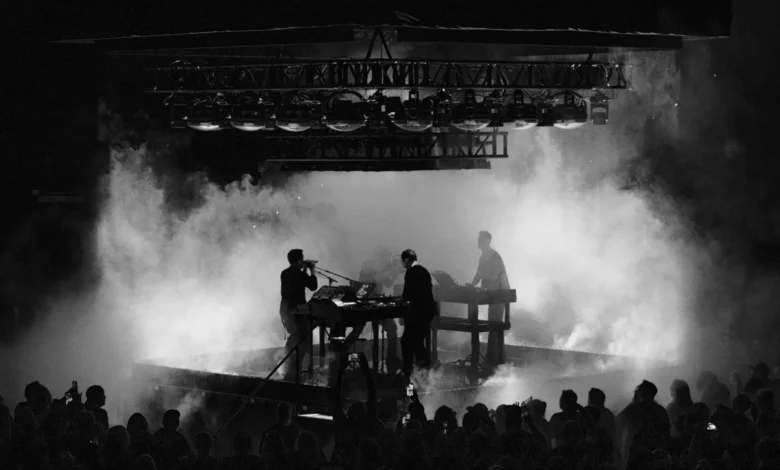
For nearly two decades, the dedicated community behind the Nine Inch Nails (NIN) Live Archive—also known as Reflecting In The Chrome (RITC)—has functioned as a digital fortress for industrial music history. What began as a grassroots effort to centralize scattered fan recordings has evolved into one of the most comprehensive independent music databases in existence. This week, the project reached a significant milestone by introducing on-demand streaming capabilities, marking a transformative moment for how listeners interact with live music history. The platform now hosts nearly 2,000 recordings documenting over 1,200 concerts, covering an expansive timeline from 1988 to the present day.
The Evolution of the NIN Live Archive
The project was established in 2008, coinciding with the conclusion of the Nine Inch Nails "Lights in the Sky" tour. At that time, the landscape of live concert documentation was highly fragmented. While individual fans and hobbyists had been capturing audio and video of Trent Reznor’s performances for years, there was no singular, authoritative repository. RITC was conceived to solve this fragmentation, creating a centralized hub where these disparate files could be cataloged, verified, and shared freely with the global fan base.
Over the last 16 years, the archive has grown from a simple list of links into a sophisticated database. Its organizational structure allows users to navigate by specific artists—ranging from Trent Reznor’s primary projects to collaborations like those with Atticus Ross, and side projects such as Pigface. Users can also traverse the site through chronological eras or specific tour cycles, a feature that provides deep insight into the shifting sonic identity of Nine Inch Nails across different decades.
A New Era of Accessibility: On-Demand Streaming
The most significant update in the archive’s history is the rollout of an integrated streaming player. This functionality currently covers recordings from 2009 through 2026, with the team actively working to digitize and integrate the library spanning 1988 to 2008. By moving beyond simple file downloads, the archive is positioning itself as a legitimate alternative to mainstream streaming platforms, which are often criticized for their reliance on algorithmic content and their lack of historical depth regarding live performance.
This update effectively bypasses the "generative slop" often found on major streaming services, offering listeners an authentic, unvarnished look at the band’s evolution. By providing high-fidelity, on-demand access to live shows, the archive provides a level of immersion that studio recordings cannot replicate. The inclusion of "pro-shot" footage, such as the recently added video from the 2025 Los Angeles premiere of Tron: Ares, underscores the platform’s commitment to maintaining a living record of the band’s contemporary footprint.
Historical Context and Technical Documentation
The value of the NIN Live Archive lies in its rigorous dedication to the history of recording technology. The site’s changelog acts as a living history of audio capture, regularly documenting the addition of "uncirculated DAT (Digital Audio Tape) recordings." These entries serve as a reminder of the physical labor involved in music preservation. In an era where digital cloud storage is instantaneous, the inclusion of DAT masters serves as a bridge to the late 20th-century origins of concert taping, providing historical context to younger fans who may be unfamiliar with the analog mediums that defined the early days of the tape-trading subculture.
The archive’s methodology is rigorous: each entry is accompanied by detailed metadata, including the source of the recording, the gear used, and the lineage of the transfer. This transparency allows for a level of verification that is rare in unofficial collections. By documenting these details, the archive functions not just as a music library, but as a technical repository for audio engineers and music historians interested in the evolution of live sound reproduction.
Supporting the "NIN Drive" Initiative
Parallel to its web-based operations, the organization maintains the "NIN Drive" project. This initiative involves the distribution of an external hard drive containing the entire collection of live recordings to any individual who requests one. By making the complete archive available offline, the project addresses the long-term concerns regarding digital permanence. In the event of web hosting failures or domain expiration, the "NIN Drive" ensures that the collective memory of the band’s live performance history remains intact and distributed across a decentralized network of personal backups.
Broader Impact and Industry Implications
The success of the Nine Inch Nails Live Archive serves as a template for how artist documentation can thrive outside of traditional corporate frameworks. While major labels often keep archives locked behind proprietary paywalls or ignore them entirely, the RITC project demonstrates that fans are willing to invest thousands of hours into curation when given the tools to do so.
The implications for the music industry are significant. The archive highlights a growing desire among audiences for "archival-grade" content. Where Spotify and Apple Music prioritize the "latest and greatest," the RITC model prioritizes the "complete and authentic." This shift suggests that there is a sustainable market—or at least a sustainable community—for deep-dive, curated historical archives that offer context, linear history, and high-quality source material.
Furthermore, the archive stands as a successful experiment in the "Old Internet" philosophy: a space defined by community contribution, open access, and a lack of commercial motive. By operating as a non-profit, fan-driven entity with no formal affiliation to labels or the artists themselves, the project avoids the restrictive copyright hurdles that often hinder official band archives. This independence allows for the inclusion of rare, "bootleg" quality recordings that might otherwise be scrubbed from public platforms due to corporate legal policies.
Future Outlook and Sustainability
As the team continues to bridge the gap for the 1988–2008 period, the archive will eventually reach a state of total, end-to-end coverage. The technical challenge of digitizing thousands of hours of legacy media is substantial, yet the consistent pace of updates suggests that the project is well-positioned to complete this transition.
For researchers, journalists, and long-time enthusiasts, the NIN Live Archive represents a vital cultural asset. It proves that music history does not have to be relegated to corporate vaults; it can be curated, verified, and distributed by the very people who feel the most passion for the subject matter. The platform’s navigation, which acts as a model for information architecture, ensures that this massive volume of data remains accessible to both the casual listener and the dedicated archivist.
In a digital climate where music availability is often subject to the whims of licensing agreements and platform removals, the Nine Inch Nails Live Archive provides a permanent, reliable, and deeply democratic alternative. It is a testament to the power of community-driven archiving and a stark reminder that the most valuable music histories are often those that the fans take into their own hands to protect. As the site continues to grow, it remains a pillar of digital culture, showcasing how the legacy of one of industrial music’s most influential acts can be preserved with the same precision and intensity that defined the music itself.