Australia Considers AI Copyright Reforms That Threaten Creative Industries Sparking Nationwide Backlash

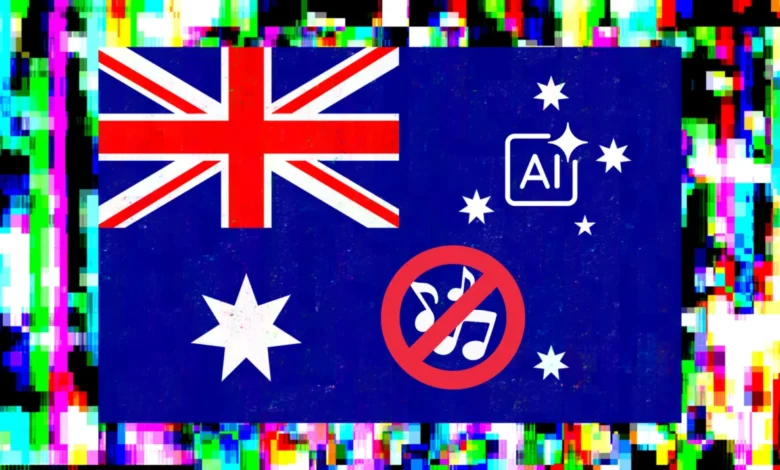
The intersection of artificial intelligence, intellectual property, and government policy has ignited a fierce debate across Australia, where leaked proposals suggest the federal government is weighing AI-friendly copyright reforms designed to appease big tech companies. While these potential legislative shifts would introduce a statutory licensing framework making it significantly easier for artificial intelligence developers to scrape and utilize existing written and visual media for machine learning, emerging reports indicate that music may be carved out of the system entirely.
This unexpected exemption for the music industry has exposed deep fissures in Australia’s regulatory approach and triggered an unprecedented, unified front among the nation’s creative and media sectors. Critics, independent politicians, and industry leaders argue that the rumored carve-out is a calculated "divide-and-conquer" strategy aimed at weakening a robust coalition of artists, publishers, and journalists who are standing shoulder-to-shoulder against what they characterize as institutionalized data theft.
The Genesis of the Controversy: Shifting Political Stances
To understand the gravity of the current legislative battle, one must examine the rapid evolution of the Australian government’s public rhetoric regarding generative artificial intelligence. Just one year ago, Attorney-General Michelle Rowland offered strong reassurance to the nation’s creative community, explicitly stating that the government would resist introducing sweeping copyright exceptions that would grant AI developers unfettered access to protected content.
This sentiment was reinforced at the highest level in July when Prime Minister Anthony Albanese declared unequivocally that no corporation should be permitted to utilize Australian literature, music, visual art, or journalism to train generative artificial intelligence models without securing explicit artist control. For a brief period, these assurances were celebrated by creators as a resolute defense of indigenous and domestic intellectual property against aggressive foreign tech conglomerates.
However, intense lobbying pressure from major United States-based technology firms in recent months has seemingly tested the government’s resolve. Representatives from leading AI powerhouses have dangled lucrative economic incentives before Canberra, promising that favorable regulatory adjustments could transform Australia into a pivotal secondary hub for global artificial intelligence operations. Consequently, federal ministers began exploring compromise mechanisms that walk a very narrow and politically precarious line.
The Mechanics of the Proposed Statutory Licensing System
Rather than enacting a complete copyright exception, current government deliberations heavily favor a specialized statutory licensing framework. Under this proposed model, AI companies would be required to purchase a specialized permit or make regular financial contributions into a centralized collective licensing fund. In exchange, these developers would gain legal authorization to harvest vast quantities of internet data—including copyrighted written articles and visual media—for training foundational AI algorithms.
The proposed system would theoretically incorporate an opt-out provision for rightsholders who wish to withhold their materials, forcing AI firms to negotiate bespoke, individual licenses instead. Policymakers reportedly calculated that while major corporate media conglomerates and large-scale publishers would immediately exercise their right to opt out, independent creators and individual journalists might find the centralized collective system more navigable, thereby securing a steady, albeit fractional, stream of passive revenue.
Politically, the administration of Prime Minister Albanese appears to believe this statutory framework honors their previous commitments. The government’s anticipated defense relies on an economic argument: because major AI developers currently route their training models through international jurisdictions like the United States—relying on the broad and contentious doctrine of "fair use"—Australian creators currently receive zero financial compensation when their work is scraped abroad. Proponents of the reform argue that any financial return generated through a statutory permit system is inherently better than the current status quo, which yields nothing.
The Flawed Premise of Fair Use and Global Litigation
This pragmatic justification, however, has been aggressively challenged by legal experts and creative trade organizations alike. The government’s narrative assumes that the utilization of copyrighted data for AI model training unquestionably constitutes fair use under US law. Yet, this legal theory is far from settled.
Across the United States, dozens of high-stakes class-action lawsuits are currently winding their way through federal courts, directly challenging whether scraping copyrighted text, imagery, and sound recordings to train commercial AI models falls under fair use protections. If creative industries prevail in these landmark American trials, rightsholders could successfully claim trillions of dollars in damages. By preemptively establishing a statutory licensing scheme that validates data harvesting in exchange for nominal fees, critics argue that the Australian government risks undermining international legal efforts to establish strict consent requirements for generative AI.
The Music Industry Carve-Out: Strategy or Concession?
The most startling development in the unfolding legislative drama involves the reported decision to completely exclude music from the statutory licensing system. According to sources within government discussions, while text and visual creators might find themselves subjected to a collective licensing regime, AI companies seeking to train models on musical compositions and sound recordings would be legally required to secure bespoke, direct licenses from the music industry.
This potential exemption has raised profound questions regarding the political calculus in Canberra. Prominent international figures have recently amplified the domestic resistance. During a major annual industry awards ceremony, legendary musician Sir Elton John delivered a passionate recorded address directly targeting the Australian government.
"You have a duty to protect Australian artists and their work," Sir Elton warned the administration. "Don’t let AI use any Australian artist’s work without full permission. Please, protect the next generation of Australian artists."
The timing of such high-profile interventions coincided with the formal launch of a unified cross-sector campaign orchestrated by the Australian Recording Industry Association (ARIA) alongside allied film, television, journalism, and publishing trade bodies. The inclusion of a music carve-out is widely interpreted by political analysts as an attempt to fracture this alliance by placating the notoriously vocal and globally connected music sector, while proceeding with easier-to-manage scraping permissions for textual and visual archives.
Independent Senator David Pocock did not mince words when discussing the strategy with the Australian Financial Review, explicitly labeling the maneuver a "divide-and-conquer strategy."
"We need to be backing all of our creatives and standing up to US tech companies who are stealing their work, monetising it and, I think, really, in a way, denigrating music creativity," Senator Pocock stated.
Technical Impossibilities and the Unified Front
Despite the temptation of a specialized exemption, the leadership of the Australian music industry has refused to abandon its creative allies. Annabelle Herd, Chief Executive Officer of ARIA, dismissed the proposed music carve-out as fundamentally unworkable due to the deeply integrated nature of modern media.
Highlighting the technical absurdities of attempting to isolate sound recordings from other forms of media, Herd pointed out a glaring logistical reality to journalists: once AI companies are granted legal authorization to scrape content at scale across the broader digital ecosystem, targeted carve-outs become practically unenforceable.
"Music lives inside TV shows, films, ads and radio broadcasts," Herd explained. "If those aren’t carved out, the music in them gets scraped too."
Because modern multimedia content routinely bundles audio, visual, and textual elements into single digital packages, isolating musical copyright from surrounding media during mass data harvesting operations presents an insurmountable technical hurdle. Consequently, ARIA’s stance remains firm: the foundational principle that artificial intelligence companies must obtain explicit, prior permission before training on any copyrighted work is non-negotiable.
"Our position is unchanged: we stand with the rest of the creative and media industries—permission is fundamental," Herd reiterated.
Broader Implications for Intellectual Property in the Digital Age
As lawmakers in Canberra continue to navigate the competing pressures of foreign technology lobbyists and domestic cultural institutions, the ultimate trajectory of Australian copyright law holds immense global significance. The debate highlights a fundamental divergence in how different forms of intellectual property are perceived in the age of machine learning.
While written text often incorporates factual information and public domain data that complicate pure copyright enforcement, visual arts and musical compositions are inherently expressive works that rarely exist without robust copyright protection. Nevertheless, the creative sector’s collective resistance demonstrates a unified philosophy: consent and compensation cannot be circumvented by government-sanctioned licensing frameworks tailored to the commercial convenience of foreign tech monopolies.
Whether the federal government will proceed with its rumored statutory licensing model—and whether the music industry carve-out will survive the fierce political backlash—remains to be seen. What is certain, however, is that Australia has become a critical global battleground in the war over the future of human creativity, artistic autonomy, and intellectual property rights in the twenty-first century.
Related posts: