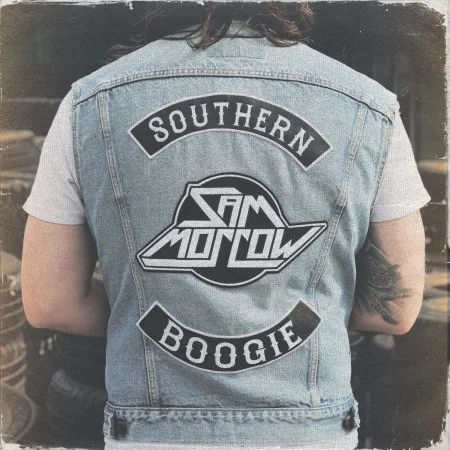
The contemporary roots-rock landscape has long searched for the elusive intersection where the dusty authenticity of Texas honky-tonk meets the blistering, high-octane drive of southern rock. With his sixth studio release, Southern Boogie, released via Copaco Records, singer-songwriter Sam Morrow delivers a 35-minute, nine-track masterclass that answers that exact creative calling. Eschewing the more subdued Americana stylings of his earlier work, Morrow has engineered a deliberate pivot toward a muscular, guitar-driven aesthetic. The album, which bursts out of the speakers with a raw, unadulterated urgency, is designed to be played loud, positioning Morrow alongside modern genre heavyweights while nodding respectfully to the storied traditions of southern rock royalty.
The Evolutionary Journey: From Austin Roots to Nashville Stages
To understand the sonic weight and thematic maturity of Southern Boogie, one must examine the winding geographical and personal trajectory of its creator. Born and raised in the vibrant musical ecosystem of Austin, Texas, Morrow spent his formative years absorbing the rich, eclectic sounds of the Lone Star State. However, as a young adult, his path took him westward to California. It was during this period in California that Morrow achieved personal sobriety, a monumental turning point that stabilized his life and catalyzed his professional entry into the music industry as an Americana and roots artist.
This era bore creative fruit in 2014 with the release of his debut studio album, Ephemeral. Over the subsequent decade, Morrow built a dedicated following through consistent touring and critically well-received releases that established him as a compelling voice in the modern roots scene. Yet, the gravitational pull of his home state remained strong.
In 2023, Morrow made a decisive return to Texas, a homecoming that fundamentally recalibrated his artistic compass. The re-immersion in Texas culture and its distinct musical heritage triggered a desire to shed his softer edges in favor of a harder-hitting, high-energy sonic identity. Following his return to Texas, Morrow made a subsequent move to Nashville, Tennessee, where he achieved a significant career milestone by making his debut at the hallowed Grand Ole Opry. This trifecta of life changes—sober stabilization in California, a Texas homecoming, and the validation of a Nashville milestone—created the perfect storm of inspiration that birthed Southern Boogie.
Musical Architecture and All-Star Collaborations
Southern Boogie thrives on a collaborative chemistry that matches Morrow’s hardened vocal delivery. To achieve the robust, high-voltage soundscape he envisioned, Morrow enlisted an elite roster of studio musicians and vocalists who understand the nuances of blues, country, and southern rock.

The instrumental backbone of the album is anchored by Matt Hubbard on keys, whose textural piano and organ work provide both rhythmic punch and harmonic depth. Drummer Bryan McGrath and bassist John Michael Schoepf lock into a formidable rhythm section, driving the album’s relentless tempo shifts and steady grooves. Joseph Wullard adds dynamic color to the arrangements with sharp saxophone lines that elevate the tracks beyond standard guitar-rock fare.
The true heavy lifting of the album’s signature sound, however, falls upon a formidable quartet of guitarists: Ricky Ray Jackson, Damon Atkins, Eli Wulfmeier, and Leroy Powell. This multi-guitar attack ensures that every track is layered with stinging slide work, crunchy rhythm chords, and soaring leads that recall the legendary twin- and triple-guitar formations of the Allman Brothers Band and the Marshall Tucker Band. Providing the vital vocal counterweights are backing vocalists Tameca Jones and Paige Plaisance, whose soulful harmonies inject warmth and grit into Morrow’s reflections.
Track-by-Track Breakdown: Lyrical Themes and Sonic Landscapes
The album opens with "Cruisin’," a track propelled by a driving slide guitar and an undeniable boogie rhythm. Lyrically, Morrow establishes the album’s thematic preoccupation with turbulent relationships and personal resilience. He details a partner who disapproves of his lifestyle, noting wryly that she "don’t like my money," "loves to tell me no," claims his band "got no soul," and restricts his whiskey consumption. Despite being pushed to walk a straight line, Morrow asserts his independence, declaring that he will go "cruisin’ with or without you."
On "Lucretia," the tempo accelerates into an all-out rocker infused with country-tinged vocal phrasings. Morrow searches for solace, noting that he is "looking for a good place to fall apart, between her arms is a good place to start," as he navigates the ongoing struggle to break free from personal ruts. This introspective resilience bleeds directly into "Hard Lessons," where Morrow reflects on the cyclical nature of his mistakes, singing, "Make it up as I move along. Different lines, same damn song, the takeaway from every mistake. Them ‘Hard Lessons’ get easier to take."
The theme of romantic misadventures continues with "South Texas Women," a track where Morrow surveys his history of failed relationships. Weary from years of travel, he confesses, "I’ve been traveling so long. I’ve been wasting my songs, been blind to all the signs. Them ‘South Texas Women’ they always on my mind." This sense of existential wandering persists in "In The Bag," where Morrow examines the search for tangible change, singing about wasting time with "a shiny dime and some polished steel" while trying to hold onto something stronger than his own internal fortitude.
The energy peaks with "Saturday Night," a high-octane anthem anchored by a relentless beat and vivid imagery of nightlife culture. Morrow paints a picture of a raucous weekend scene featuring a "Short skirt, cheap flirt," rejecting modern dance music ("Don’t play me no disco dirt") in favor of Pabst Blue Ribbon, outlaw women, and an atmosphere where nobody is looking for a fight "unless you want to step outside."

Following the barroom bravado of "Saturday Night," Morrow confronts heartache head-on in "Juanita," lamenting, "Oh ‘Juanita’, you left me black and blue. Lately, I been feeling I ain’t no thing to you." He then intentionally dials back the tempo with "Put It in a Song," a country-tinged reflection on the relentless demands of the touring lifestyle. Over a steady groove, he delivers a cynical yet romanticized view of his profession: "I got gas in the tank and amphetamine for the road. Losing my voice for the sake of rock and roll. Bad Habits, bad women, never staying too long. Don’t get hung on them done ya wrongs. Go on put it in a song."
The album reaches its dramatic climax with "Wedding Ring," a powerful, guitar-heavy closer. Pleading with a reluctant partner against her father’s wishes, Morrow declares, "I don’t care what your daddy say, I’m gonna make you mine someday. Cross my heart this ain’t a fling, I’m gonna buy you a wedding ring," before ultimately begging her, "Please don’t go."
Genre Placement and Industry Implications
Stylistically, Southern Boogie bridges the gap between classic southern rock tropes and the modern iteration of the genre. Music critics and industry analysts will undoubtedly draw direct comparisons to contemporary torchbearers of the roots-rock resurgence, such as Robert Jon and the Wreck and Blackberry Smoke, while recognizing the foundational DNA of 1970s southern rock pioneers like the Allman Brothers and the Marshall Tucker Band.
Morrow’s vocal performance throughout the nine tracks is characterized by an impressive range and an unvarnished grit that perfectly matches the heavy, guitar-driven instrumentation. By stepping away from the gentler acoustic boundaries of traditional Americana and fully embracing a harder-edged, high-energy paradigm, Morrow has expanded his artistic perimeter.
As Southern Boogie makes its way to listeners and radio programmers via Copaco Records, its reception will likely cement Morrow’s status as a versatile artist capable of shifting fluidly between the hallowed halls of country music history and the sweaty, amplifiers-to-eleven environment of the modern southern rock club circuit. In doing so, Morrow has not only reinvented his own sound but has also contributed a vital, high-proof entry to the contemporary American rock canon.