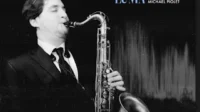
Equally Stupid Returns with a More Measured, Melodic Evolution on Escape from The Unhappy Society

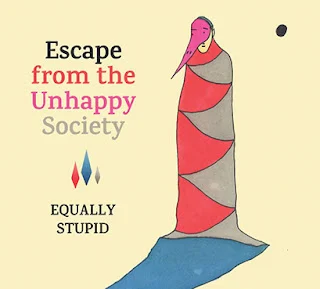
The contemporary European improvised music scene has long served as a crucible for borderless collaboration, bringing together instrumentalists from diverse cultural and stylistic backgrounds to push the boundaries of modern jazz, rock, and avant-garde composition. Among the ensembles emerging from this vibrant ecosystem is the multinational trio Equally Stupid, a group comprising Icelandic guitarist Sigurður Rögnvaldsson, Finnish saxophonist Pauli Lyytinen, and Swiss drummer David Meier. Following their abrasive and fiercely energetic 2014 debut, Exploding Head, the trio returned three years later with their sophomore full-length recording, Escape from The Unhappy Society. Released to critical intrigue, the album marked a significant departure in compositional philosophy, trading the visceral, in-your-face aggression of their earlier work for a more spacious, melodic, and deeply textured sonic landscape. This release not only underscored the group’s rapid maturation as a unified ensemble but also highlighted broader trends within contemporary European jazz, where artists increasingly blur the lines between structured composition, free improvisation, and rock-inflected muscularity.
Main Facts of the Release
Escape from The Unhappy Society captures a transnational trio operating at the height of its collaborative synergy. Recorded with a clear focus on sonic space and dynamic contrast, the album features nine original compositions that showcase the distinct instrumental voices of Rögnvaldsson, Lyytinen, and Meier. At the core of the album’s textural shift is Rögnvaldsson’s transition toward the baritone guitar, an instrument that introduces a significantly darker, richer lower register to the group’s harmonic foundation. This is complemented by Lyytinen’s versatile command of tenor, alto, and bass saxophones, enhanced by subtle electronic effects that allow his tone to shift seamlessly from warm, round acoustics to biting, modernist angularity. Anchoring the interplay is Meier, whose foundational work on the drums avoids standard time-keeping in favor of complex muscularity, spatial textures, and responsive, dynamic percussion. Together, the trio manages to pivot away from the brashness of Exploding Head without sacrificing the raw, organic human element that defines their approach to modern creative music.
Chronology and Background of the Ensemble
The trajectory of Equally Stupid can be traced back to the burgeoning network of young European jazz musicians who migrated to cultural hubs like Amsterdam, Berlin, and Zurich, where cross-pollination between disparate music scenes fosters unique artistic partnerships. Formed in the early 2010s, the trio quickly established a reputation for high-energy performances that owed as much to the sonic volume and attitude of underground rock as they did to the complex harmonic structures of contemporary jazz.
In 2014, the trio made its recorded debut with Exploding Head. That album was widely characterized by critics as a relentless, edgy, and abrasive statement—a brash introduction that relied heavily on driving guitar riffs, piercing saxophone lines, and a relentlessly intense rhythm section. While the album successfully captured the raw adrenaline of their live performances, the members of Equally Stupid recognized the artistic necessity of expanding their palette. Over the subsequent three years, the trio engaged in extensive touring and compositional workshops, gradually shifting their focus toward nuance, negative space, and lyricism. This developmental period culminated in the recording and 2017 release of Escape from The Unhappy Society, an album that represented a deliberate aesthetic counterweight to their debut while retaining the underlying technical prowess that initially brought them together.
Musical Analysis and Compositional Structure
A detailed examination of the compositions on Escape from The Unhappy Society reveals a deliberate move away from linear, high-velocity romps toward atmospheric exploration and intricate counterpoint. Tracks such as Fool’s Paradise exemplify this stylistic pivot. Built upon a foundation of deeper rhythms and the resonant, unaccustomed timbre of Rögnvaldsson’s baritone guitar, the track features lilting saxophone phrasing from Lyytinen that floats above the harmonic framework. Accompanied by Meier’s delicate, brush-driven percussion, the piece establishes an introspective mood that would have been entirely out of place on the group’s debut recording.
Conversely, the ensemble ensures that long-time followers are not left without the intricate interplay that defined their early work. The track Paranoia serves as a primary exhibit of the trio’s enduring ability to combine technical rigor with playful interaction. Here, the riffing saxophone and driving guitar weave through one another in a dynamic, childlike chase. This playful tension eventually resolves into a soaring, lyrical solo before seamlessly reverting to the energetic, game-like thematic material of the introduction.
Throughout the album’s nine tracks—which include Politician’s Nightmare, Birdlife, Legacy to the Children of the 21st Century, Cruising Back to Mother Earth, The Garden of Edward James, Transpiration, and the title track—the band maintains a cohesive narrative arc. The sequencing deliberately balances contemplative, spacious meditations with moments of angular, muscular interplay, ensuring that the listener experiences a dynamic journey rather than a static collection of songs.
Production and the Preservation of Organic Sound
In the contemporary landscape of recorded jazz, many releases suffer from over-production, where digital editing and excessive mastering compress the dynamic range to the point of sterile perfection. Equally Stupid actively resisted this tendency during the creation of Escape from The Unhappy Society. Despite the album’s polished execution and sophisticated arrangements, the production retains a gritty, organic warmth that honors the traditions of improvised music.
Industry analysts and critics have frequently noted the challenge of translating the raw energy of live European avant-garde jazz into a studio environment without losing its vitality. By relying on natural acoustic blends, real-time interplay, and minimal reliance on corrective studio trickery, the trio preserved the spontaneous humanness of their performances. The sound has been colorfully described by reviewers as possessing a "dirty rice and beans" quality—grounded, unpretentious, and deeply satisfying—proving that high technical proficiency does not need to come at the expense of emotional resonance and warmth.
Broader Impact and Industry Implications
The release of Escape from The Unhappy Society resonated well beyond the immediate circle of the trio’s dedicated fanbase, signaling important shifts in how young European artists approach ensemble playing in the 21st century. By demonstrating artistic growth that prioritizes restraint and lyricism over sheer volume and speed, Equally Stupid set a precedent for stylistic versatility within the genre.
The album’s reception also highlights the viability of multinational collaborative models in modern music. Operating across geographic boundaries, artists like Rögnvaldsson, Lyytinen, and Meier reflect a borderless artistic community that draws on distinct regional traditions—Icelandic, Finnish, and Swiss—while forging a unified, contemporary voice. As the global jazz market continues to diversify, recordings like Escape from The Unhappy Society serve as case studies in how ensembles can successfully evolve, challenging listener expectations while remaining rigorously committed to the art of the music itself.