The landscape of contemporary jazz is undergoing a profound transformation, moving away from the rigid definitions of genre toward a more fluid, interactive, and globally connected musical language. This shift is not occurring in traditional concert halls or through the standardized promotion of major record labels alone, but rather within the hyper-intimate environments of digital performance spaces. From the curated aesthetic of NPR’s Tiny Desk and the raw, rhythmic energy of KEXP’s Seattle studio to the underground live sessions in Johannesburg and the minimalist focus of COLORS, a new paradigm of jazz discovery is emerging. These platforms have effectively democratized the "bandstand," allowing audiences to observe the mechanics of musical creation—the subtle glance between bandmates, the technical mastery of a rhythm section, and the spontaneous decision-making inherent in improvisation—in real time.
This week, the digital footprint of this evolution was significant, marked by a convergence of diverse styles ranging from Korean pansori-funk to South African neo-soul and Jamaican-Irish hip-hop. These performances share a common thread: they eschew the polished artifice of traditional music videos in favor of an unfiltered, human-centric approach that invites viewers to engage with the music’s structural details.
A Chronology of Digital Discovery: September 4–11, 2026
The week began with the momentum of Mac Ayres’ Tiny Desk performance, which premiered on September 4. The session, which showcased Ayres’ jazz-inflected neo-soul, demonstrated the "long tail" effect of high-quality digital content. Initially garnering 223,855 views, the video experienced a massive surge, reaching 575,858 views by September 11—a 157% increase in just seven days. This trajectory suggests that when a performance is compelling enough to encourage repeated viewings and peer-to-peer recommendations, it transcends the typical shelf-life of a promotional video, effectively becoming a cornerstone of the artist’s digital catalog.
Simultaneously, the South Korean ensemble Leenalchi captivated a global audience with their September 4 performance on KEXP. By September 11, the video had accrued 148,926 views. The group’s fusion of traditional pansori narrative singing with modern, bass-heavy funk provided a masterclass in cross-cultural synthesis. By stripping away chordal instruments and focusing on the interplay between two bassists and four vocalists, Leenalchi demonstrated that listeners are increasingly receptive to complex, genre-bending music when the rhythmic foundation is legible and the performance is visually transparent.
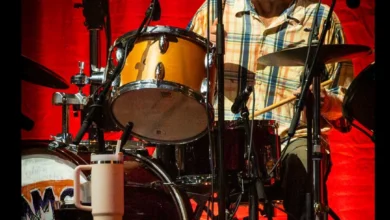
The week’s most prominent mainstream event occurred on September 10, when Tori Kelly’s Tiny Desk Concert debuted. With 520,769 views and 21,434 likes within the first 24 hours, the performance underscored the power of pop-adjacent artists utilizing jazz-informed arrangements to reach broader demographics. Kelly’s choice to treat the desk as a legitimate bandstand, supported by an all-woman ensemble including drummer Taylor Gordon (The Pocket Queen), provided a high-fidelity look at the technical rigor required to sustain a groove in a live setting.
Technical Analysis: The Anatomy of Performance
The success of these videos is rooted in their ability to make the invisible labor of musicians visible. In the case of Tori Kelly, the arrangement of Stevie Wonder’s "Don’t You Worry ‘Bout a Thing" served as a litmus test for the ensemble’s collective timing and harmonic restraint. By highlighting the exchange of glances and the subtle breath before a horn or vocal entrance, these platforms allow jazz enthusiasts and casual listeners alike to appreciate the "jazz language"—defined here as tone, interaction, and the ability to reshape material on the fly.
This technical transparency was also a hallmark of Kalia Vandever’s KEXP session, uploaded on September 7. With 40,629 views over four days, the performance offered a quiet counter-narrative to the higher-volume uploads of the week. Vandever’s use of looping and the physical resonance of the trombone challenged the notion that digital engagement requires high-tempo or high-energy content. By allowing silence and decay to function as compositional tools, Vandever signaled a shift toward "headphone-first" jazz, where the camera serves as a magnifying glass for sonic texture rather than a spectacle of virtuosity.
The Rise of Independent and Localized Platforms
While major platforms dominate the view counts, independent venues are proving to be essential incubators for new talent. Iam6teen’s performance at August House in Johannesburg, uploaded on September 8, provides a critical case study in engagement metrics. With 7,321 views and 591 likes by September 11, the video achieved an 8.1% like-to-view ratio—the highest engagement rate among the performances analyzed this week.
This high level of engagement suggests that niche, authentic performances in intimate settings foster a deeply committed audience. For global listeners, these videos provide a "first-mover" advantage, allowing them to participate in the early career growth of international artists. This, in turn, creates a decentralized network of discovery that operates outside the influence of major label PR cycles.
Spontaneity and the Role of Uncurated Content
The week also served as a reminder that the most impactful moments are not always the result of professional production. On September 5, during the DC JazzFest, a spontaneous collaboration occurred when Stevie Wonder joined the Trinidadian soca group Kes. The resulting audience-captured video, which saw Wonder weave his classic "I Just Called to Say I Love You" into the group’s "Savannah Grass," garnered 16,881 views.
This footage serves as an important document of the cross-pollination between American soul, Caribbean soca, and the jazz festival circuit. The "roughness" of the clip—the shaky camera, the crowd’s raw reaction, and the lack of post-production polish—enhanced the sense of authenticity. It reinforced the idea that Wonder, even decades into his career, remains a bridge between disparate musical traditions and generations. The timing of this moment, which coincided with the announcement of his 50th-anniversary tour for Songs in the Key of Life, amplified its cultural relevance, demonstrating how social media can transform a fleeting festival moment into a sustained news event.
Implications for the Future of Jazz
The data collected between September 4 and 11, 2026, points to a definitive shift in how jazz is consumed and defined. The "jazz language" is no longer confined to the improvisation of a soloist over a rhythm section; it is now a framework through which artists in R&B, neo-soul, hip-hop, and traditional folk organize their musical interactions.
The implications for artists and stakeholders are clear:
- The Bandstand is Digital: The most valuable promotional space is one that allows for the documentation of the musical process rather than just the final product.
- Genre Fluidity is Necessary: The most successful performances this week were those that ignored traditional genre boundaries, instead focusing on the quality of interaction and the "pocket" of the music.
- The Value of Intimacy: As production values have increased, the "intimate" or "unguarded" aesthetic has become a currency. Viewers are actively seeking out the visual details—the guitarist’s chord voicings, the drummer’s rhythmic choices, and the communication between performers—that were previously obscured by the distance of a traditional concert hall.
Conclusion
As the music industry continues to adapt to the digital-first reality, the platforms that facilitate these intimate exchanges are becoming the primary gatekeepers of jazz discovery. By prioritizing the visibility of the musician’s choice-making process, platforms like Tiny Desk, KEXP, COLORS, and independent studios are successfully reshaping jazz as a universal mode of organization—a way of engaging with rhythm, harmony, and presence that is not tied to a specific era or shelf in a record store.
Whether it is a globally recognized star like Tori Kelly adapting to the nuances of a small studio or an emerging artist like Iam6teen showcasing the vibrant pulse of a Johannesburg venue, the common denominator is the elevation of the listener’s experience. The camera has become an essential member of the band, capturing the subtle, fleeting moments of connection that define the contemporary jazz experience. As we look forward, it is evident that the future of this musical language lies in the ability to bridge the gap between global audiences and the intimate, real-time performance spaces where the most compelling musical stories are currently being written.