In Tune With Wonderlick’s Tim Quirk: Teaching Old-Time Musicians Your Weird Indie Rock Songs

The Genesis of a Unique Sound
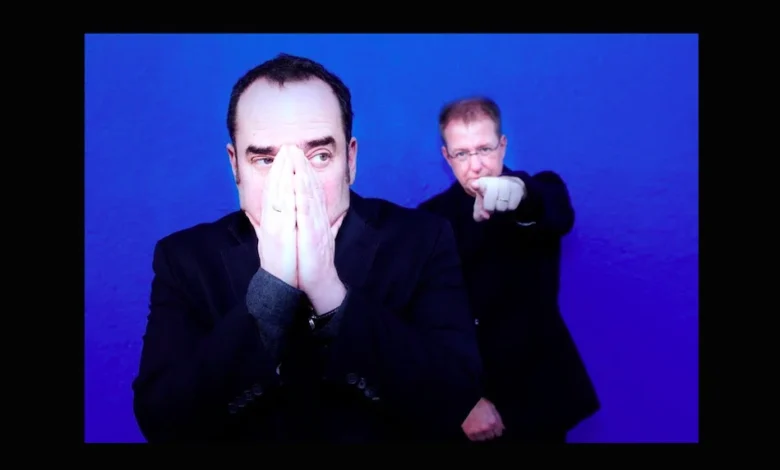
For many years, the duo known as Wonderlick operated within the traditional framework of touring musicians, often utilizing standard studio setups and session players to round out their sound. However, as the pair reflected on the specific energy they generated during their acoustic house tours—characterized by a spontaneous, immediate, and highly personal connection with their audience—they realized that traditional recording methods were failing to capture the essence of their artistry.
“It’s just me and Jay, two acoustic guitars, two voices,” Tim Quirk explained when discussing the limitations of their previous live experiences. The challenge, therefore, was to synthesize that palpable intimacy with the high-fidelity polish required for contemporary radio play. Their solution was to venture into the heart of Appalachia, specifically to the town of Floyd, Virginia. Floyd is recognized within the regional music community as a hub for traditional old-time music, boasting a high density of virtuoso instrumentalists. To bridge the gap between their indie-rock roots and the local tradition, the duo enlisted the expertise of mobile recording engineer and fiddler Mike Mitchell.
Challenging Genre Conventions
Despite the Appalachian setting and the inclusion of local talent, both Quirk and Blumenfield emphasize that Wonderlick Loves You is not a folk album. Instead, the project was designed as a creative experiment: an attempt to observe how the structures of contemporary indie-rock compositions would respond when interpreted by musicians steeped in the traditions of old-time fiddling and banjo picking.
This juxtaposition is perhaps most evident in the track "How to Fly," an ode to the legendary daredevil Evel Knievel. While searching for the perfect vocal texture to suit the track’s narrative, the duo encountered 15-year-old banjo player Margo MacSweeney at a local jamboree. According to Quirk, MacSweeney’s voice possessed an uncanny, timeless quality, evocative of 1920s field recordings—a stark contrast to her youthful appearance. Her inclusion on the track, and subsequently as a background vocalist on other songs, provides a haunting, archival weight that anchors the modern themes of the album.
Thematic Depth: Love, Loss, and Heroism
Wonderlick Loves You serves as a meditation on the concept of love—not as a collection of romantic ballads, but as an exploration of human behavior, longing, and the lengths to which individuals will go to receive validation. The tracks are populated by characters who struggle with these themes: a young man grappling with jealousy over a peer’s illness, a daughter defined by her persistent anxiety, and the aforementioned Evel Knievel, whose death-defying stunts are framed as a desperate, spectacular search for public adoration.
The track "Eric" is particularly emblematic of the album’s emotional gravity. Inspired by Doris Lund’s 1974 memoir Eric—which chronicles the life and death of the author’s son, who succumbed to leukemia—the song serves as a bridge between childhood envy and adult empathy. Quirk, reflecting on his own reaction to the book as a child, admits he was once drawn to the attention afforded to the dying boy. Now, through the lens of maturity, he reframes the song’s intent, aspiring to embody the selfless, nurturing love displayed by Eric’s mother.
A Chronology of Grief and Collaboration
The production of the album was marked by profound personal circumstances that inevitably colored the final recordings. The tracking of "Eric" and the broader project occurred in the immediate aftermath of the passing of Jay Blumenfield’s mother. This period of mourning added a layer of solemnity to the studio sessions, particularly regarding the lyrics of the title track.
Quirk, acting as a steward of his partner’s experience, took specific care in the vocal delivery of the song. Knowing the strength of the bond between Blumenfield and his mother, Quirk insisted on singing the more vulnerable passages himself to ensure that the listener would never misinterpret the lyrics as a reflection of familial estrangement. This act of artistic protection highlights the deep, intuitive partnership between the two musicians—a collaboration that serves as the backbone of the entire Wonderlick project.
Technical and Cultural Implications
The decision to record in Floyd, Virginia, reflects a growing trend in independent music where artists seek out "sonic authenticity" by embedding themselves in geographically distinct music scenes. By moving away from the antiseptic environment of city studios, Wonderlick successfully captured a specific, resonant atmosphere that is difficult to replicate through digital synthesis.
From an analytical standpoint, the album provides a case study in cross-pollination. When indie-rock songwriting structures—which typically rely on pop-oriented chord progressions and modern rhythmic pacing—are subjected to the syncopated, drone-heavy, and rhythmically fluid nature of Appalachian old-time music, the result is a hybrid sound that feels both nostalgic and avant-garde. The success of this collaboration hinges on the technical proficiency of the session players, who had to adapt their improvisational style to the rigid, deliberate nature of the duo’s written compositions.
The Role of Jay Blumenfield
While Quirk is often the public face and lyricist of the duo, he remains insistent that the integrity of Wonderlick is entirely dependent on Jay Blumenfield’s contribution. Blumenfield’s influence on the project is multifaceted: his intuitive approach to guitar arrangements, his keen ear for talent—such as his early identification of Margo MacSweeney’s potential—and his ability to harmonize with Quirk’s idiosyncratic vocal style are the elements that allow the "weird" indie songs to function as a cohesive record.
Broader Impact and Industry Reception
The release of Wonderlick Loves You arrives at a time when listeners are increasingly gravitating toward projects that prioritize authentic, human-centric narratives over high-production, impersonal pop. The album’s focus on the "unlovable" or the "disturbed" characters of the world provides a refreshing counterbalance to the sentimentality often found in modern songwriting.
By stripping away the artifice of standard rock production, Quirk and Blumenfield have managed to create a work that feels urgent, yet historically grounded. As the album finds its audience, it serves as a testament to the idea that the most effective way to capture human emotion in music is to physically place oneself in an environment where that emotion has been expressed for generations. Whether or not the duo continues this collaborative experiment, Wonderlick Loves You stands as a significant milestone in their career, proving that even after years of performance, an artist can still find new methods of expression by reaching into the unknown and trusting in the unexpected.
Ultimately, the album invites a broader conversation about the nature of hero worship, the persistence of grief, and the quiet, persistent nature of love. As Quirk noted during the final stages of the project, the goal was never to create a "folk record," but rather to see what happens when disparate worlds collide. In that objective, Wonderlick has succeeded, offering a record that is as intellectually challenging as it is emotionally resonant. The professional maturity displayed in this latest release suggests that the duo is not merely following a creative whim, but is actively evolving their craft to reflect the complexities of the world around them.
Related posts: