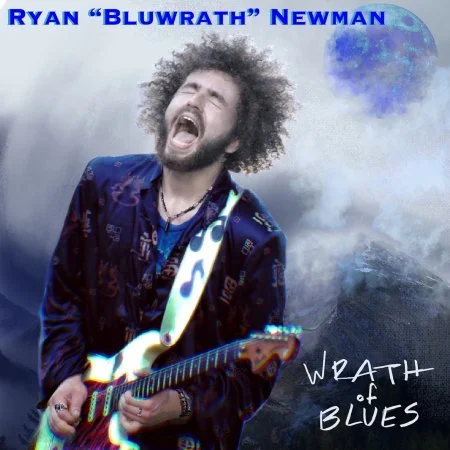
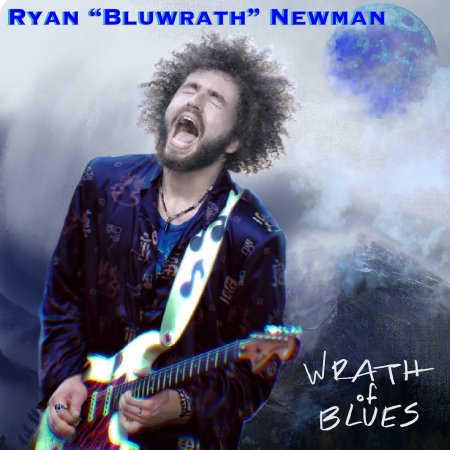
Connecticut-based blues guitarist Ryan “Bluwrath” Newman has officially arrived on the contemporary roots music scene with his debut full-length studio release, Wrath of Blues. Issued via Blind Raccoon in 2026, the 14-track, 57-minute record represents an ambitious entry point for a relative newcomer. Produced alongside Jon Grossbard, the album has rapidly defied expectations for a freshman release, climbing into the top 10 of the Roots Music Report charts and securing a coveted position within the top 20 of the Living Blues charts. By fusing classic covers with a solitary original composition, Newman and his extensive ensemble have crafted a project that functions simultaneously as a tribute to blues canon staples and an energetic showcase of modern musicianship.
Main Facts and Tracklist Architecture
Wrath of Blues offers a sprawling journey through the idioms of electric blues, soul, rock, and even touches of disco and reggae. The project wastes no time establishing its foundational influences, opening with a charging rendition of the Elmore James classic "Dust My Broom." Throughout the 14 tracks, Newman leans heavily into canonical material closely associated with titans of the genre, including B.B. King, Stevie Ray Vaughan, Jimi Hendrix, and Albert Collins.
However, rather than relying on a static power trio format, Newman surrounds himself with a dynamic revolving door of talent. The album features five distinct lead vocalists, a robust horn section, and stellar organ work from Vic Washington. This expansive arrangement gives Wrath of Blues the texture and pacing of a curated musical variety show. Notable tracks range from high-octane guitar workouts like "Texas Flood" and "Be Careful With A Fool" to unexpected detours such as Bob Marley’s reggae anthem "Get Up, Stand Up" and a disco-infused, cheeky reading of The Rolling Stones’ "Miss You."
Chronology and Production Background
The conceptualization and recording of Wrath of Blues mark the culmination of years of regional performing for Newman across the New England circuit. Working closely with producer Jon Grossbard, Newman sought to capture the visceral energy of a live bar band while maintaining the sonic clarity and arrangement sophistication required for national radio airplay and chart success.
The sequencing of the album showcases a careful balance between historical reverence and stylistic unpredictability. The earliest historical touchstone on the record is Hoagy Carmichael’s 1942 standard "Baltimore Oriole," which demonstrates Newman’s willingness to look past standard electric blues blueprints. Conversely, mid-century jump blues gets a heavy-hitting revival on Earl King’s "Come On," powered by driving background vocals and a horn section that anchors the track’s momentum. The sole original composition on the record, "Leaving This World Tonight," arrives as a mid-album centerpiece, giving listeners an unadulterated look at Newman’s personal songwriting voice and his distinct guitar vocabulary.
Supporting Data and Musical Analysis
Musically, Newman displays a calculated restraint that separates him from many contemporary guitar shredders. Rather than launching into indulgent, multi-minute solo excursions, he utilizes concise phrasing that honors the emotional gravity of the songs. His admiration for guitar luminaries is evident, yet measured; his solos on tracks like "Leaving This World Tonight" nod clearly to Stevie Ray Vaughan, Jimi Hendrix, and Albert Collins without slipping into mere imitation.
The collaborative nature of Wrath of Blues is perhaps its greatest strength. Organist Vic Washington not only contributes essential Hammond textures alongside Newman’s guitar work but also steps up to deliver authentic, world-weary lead vocals on a moving rendition of "The Thrill Is Gone." Meanwhile, vocalist Arlene Wow breathes hard-rock nostalgia into Jeff Beck’s "Let Me Love You," creating a 1970s blues-rock hybrid that stands as one of the record’s finest achievements. Wow returns later in the tracklist to anchor Aretha Franklin’s "Good To Me As I Am To You," closing out the 57-minute journey with deep-pocketed soul conviction.
Additional stylistic diversity is provided by eclectic choices like Bob Dylan’s "Highway 61 Revisited," where Newman adapts the whimsical lyrical cadence to fit comfortably within his vocal range, proving that his interpretive skills extend well beyond standard twelve-bar templates.
Official Responses and Industry Reception
While traditional press releases from independent blues labels often hype debut efforts, the independent chart data for Wrath of Blues speaks volumes about its actual reception. Distributed and promoted through Blind Raccoon—a prominent publicity and management firm representing roots and blues artists—the album quickly caught the attention of blues programmers nationwide.
Industry analysts point to the record’s heavy reliance on well-known source material as a strategic asset for commercial viability. By reinterpreting familiar songs with fresh arrangements, horn arrangements, and multi-vocalist dynamics, Newman has provided radio DJs and music directors with a highly accessible product. This broad stylistic scope has directly fueled its ascent onto the Roots Music Report and Living Blues charts, validating the collaborative production choices made by Newman and Grossbard.
Broader Impact and Future Implications
The release of Wrath of Blues establishes Ryan "Bluwrath" Newman as a formidable new name in the Northeast American blues ecosystem. By bridging the gap between traditional cover-band accessibility and modern, highly produced studio arrangements, Newman has carved out a distinct niche for himself.
As the album continues to circulate on radio and streaming platforms, Newman is preparing to take the project on the road. He will bring his revitalized spin on classic blues and roots music to the live music venues, listening rooms, and bars of New England throughout the fall and winter seasons. For the regional blues scene, Newman’s rapid chart ascent serves as a reminder that traditional genres can still thrive when executed with technical precision, collaborative vision, and a genuine respect for the historical canon.