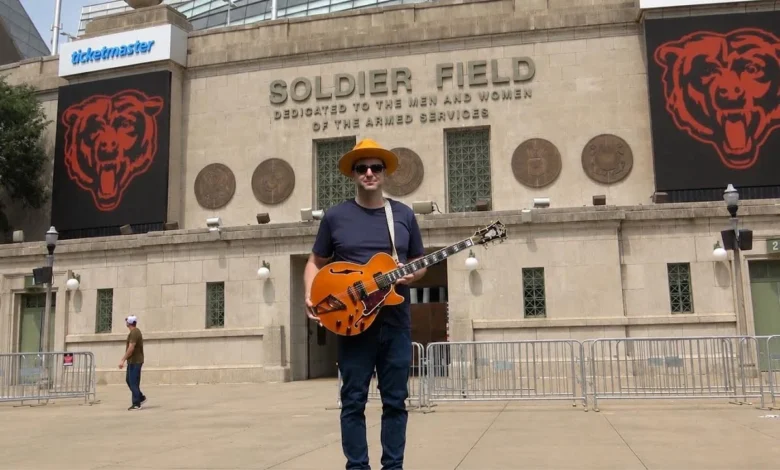
As the Chicago Bears prepare to embark on another high-stakes season at Soldier Field, the intersection of sports culture and local artistic expression has found a new rallying cry in the form of Brant Buckley’s latest musical endeavor. Buckley, a dedicated Chicago blues musician and contributor to American Blues Scene, has synthesized the city’s storied musical heritage with its fervent professional football fandom in his song, We Love Da Bears. The accompanying music video, which has garnered nearly 18,000 views, serves as a visual love letter to the city, blending the raw, rhythmic energy of the blues with a cinematic montage of Chicago’s most iconic landmarks.
The project represents a calculated effort to bridge the gap between the soulful traditions of Chicago’s blues scene and the high-octane environment of the National Football League. By placing the Bears within the broader context of the city’s architectural and historical identity, Buckley has created a piece of media that resonates not just with football enthusiasts, but with the broader Chicago public.
The Genesis of a Fan Anthem
The inspiration for the project traces back to a singular moment of observation in July. Buckley, while reviewing archival imagery of the fan experience at Soldier Field, was struck by the palpable intensity and emotional investment of the spectators. This visual stimulus served as the catalyst for the songwriting process. The resulting composition, We Love Da Bears, was tracked at the renowned Mystery Street Recording studio in Chicago.
Technically, the recording is notable for its specific tuning. Buckley opted to record the track in 432 Hz, a frequency often associated with resonance and natural vibration. In professional audio circles, this choice is frequently discussed for its perceived ability to foster a sense of connection and emotional grounding. For Buckley, the decision was thematic: the song was intended to facilitate a connection between the fans, the team, and the physical geography of Chicago itself.
Visualizing the City: A Montage of Identity
The music video serves as a comprehensive tour of the city, moving beyond the confines of the football stadium to include sites that represent the cultural backbone of Chicago. The inclusion of the Muddy Waters mural is particularly significant, as it acknowledges the city’s status as a global epicenter for the blues. By juxtaposing this mural with images of the Wrigley Building, The Bean, the Chicago Theatre, the lions of the Art Institute, and the towering silhouette of Soldier Field, the video constructs a narrative of shared pride.
Buckley’s objective in the production was to ensure that the football team was viewed as an extension of the city’s infrastructure and history rather than an isolated entity. This approach mirrors the broader trend of "city branding" in sports, where franchises align themselves with the aesthetic and cultural values of their home markets to deepen fan loyalty.
Chronology of Production and Release
- July: The conceptual phase begins following Buckley’s analysis of fan photography at Soldier Field.
- Recording Phase: Buckley tracks the song at Mystery Street Recording, focusing on 432 Hz tuning to emphasize the communal aspect of the anthem.
- Post-Production: The montage sequence is curated, featuring a specific list of landmarks to ensure the city’s diversity of character is represented.
- Release: The music video is debuted to the public, coinciding with the pre-season buildup for the Chicago Bears.
- Current Status: The video reaches the 18,000-view milestone as the regular season approaches, indicating a sustained engagement from the local fan base.
Supporting Data and Cultural Context
The release of an anthem like We Love Da Bears arrives at a time when the Chicago Bears are under intense scrutiny regarding their future venue plans and team performance. With the NFL’s emphasis on "Game Day Experience," music has become a primary tool for teams to manage crowd energy. The Chicago Bears organization has historically relied on iconic sounds—such as the classic "Bear Down, Chicago Bears" fight song—to define their identity.
Buckley’s contribution adds a contemporary blues layer to this tradition. Data from the music industry suggests that fan-generated content, such as independent anthems, plays a significant role in modern sports marketing. These tracks often see spikes in streaming activity during home game weekends, as fans curate playlists that mirror the atmosphere of the stadium. For an independent artist like Buckley, reaching 18,000 views in a niche market demonstrates a successful synthesis of audience demographics: the blues-listening demographic and the professional sports demographic.
Analysis of the Intersection of Blues and Sports
The Chicago blues tradition is built on themes of resilience, community, and the struggles of urban life. Similarly, the narrative of the Chicago Bears—a team that historically prides itself on "tough, blue-collar football"—aligns well with the ethos of the blues. Buckley’s work highlights this synergy. By utilizing the blues scale to underscore the physical landscape of the city, he bridges the gap between the aesthetic of the music and the aggressive, hard-hitting nature of the sport.
From a sociological perspective, this anthem functions as a "place-making" tool. Place-making in urban studies refers to the process of creating quality places that people want to live, work, and play in. When a musician highlights the Art Institute lions and the Chicago Theatre in a song about a football team, they are reinforcing the importance of these landmarks as the "living room" of the city. This fosters a sense of collective ownership among the residents.
Implications for Future Fan Engagement
As teams across the NFL look for ways to deepen their ties to their local communities, the success of independent projects like Buckley’s provides a template for future collaboration. While large-scale marketing campaigns are standard, the "bottom-up" approach—where an artist creates content that feels authentic to the fan experience—often achieves higher levels of emotional resonance.
The use of 432 Hz tuning, while technical, also speaks to a desire for "authentic" sound in an era of highly processed, digital music. This aligns with the "gritty" image that the Chicago Bears have cultivated over decades. If the song continues to gain traction throughout the season, it may become a staple in the pre-game atmosphere, potentially influencing future stadium playlist curation.
Official and Industry Perspective
While the Chicago Bears organization has not issued a formal statement regarding the track, the trend of teams incorporating local music into their brand identity is well-documented. Industry analysts suggest that when artists contribute to the cultural fabric of a city’s sports scene, it provides a "third-party validation" of the team’s importance. It shifts the narrative from a corporate sports product to a civic institution.
For Brant Buckley, the project remains a labor of love. His intent was never to replace the traditional fight song, but to provide a modern, blues-driven alternative that acknowledges the specific pride associated with living in Chicago. The feedback from the audience, reflected in the viewing numbers, suggests that there is a significant demand for media that views the Bears not just as a professional franchise, but as a core component of the city’s broader identity.
Conclusion
The release of We Love Da Bears serves as a case study in how niche art forms can successfully penetrate mainstream sports culture. By grounding his work in the history of the Chicago blues and the geography of the city, Brant Buckley has successfully created an anthem that transcends the typical limitations of fan-made content. As the season progresses, the song’s continued reach will likely serve as a barometer for how fans perceive the connection between their team and their city.
Ultimately, the significance of the project lies in its ability to synthesize the various elements of Chicago—the architecture, the musical legacy, and the intense sports fandom—into a single, coherent narrative. Whether at the tailgate, in a local pub, or during the commute to Soldier Field, the song provides a soundtrack for the city’s shared experience. As the Bears return to the field, they do so accompanied by the sounds of the blues, a fitting tribute to a city that has long defined itself by its resilience, its history, and its unwavering loyalty to its own.