Catalonia Issues Posthumous Pardon for Hundreds of Victims of Historic Witch Trials to Address Centuries of Gender-Based Persecution

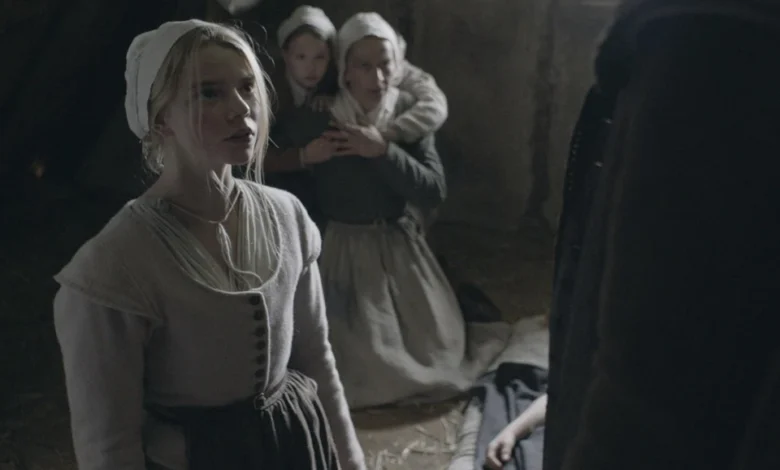
The Parliament of Catalonia has taken a significant step toward reconciling with its dark historical past by passing a resolution to posthumously pardon more than 700 individuals, predominantly women, who were prosecuted, tortured, and executed for the crime of witchcraft between the 15th and 18th centuries. This landmark decision, approved in late 2021 with a definitive majority of 114 votes in favor and only 21 against, represents a formal admission by the regional government that these victims were the targets of systematic gender-based persecution rather than practitioners of the supernatural. Beyond the legal pardons, the resolution encourages local municipalities to rename streets and public squares in honor of the victims, effectively shifting the historical narrative from one of "witchcraft" to one of "femicide."
The "No Eran Bruixes" Campaign and the Legislative Response
The legislative push was the culmination of a widespread cultural movement in Spain titled "No Eran Bruixes, Eren Dones" (They Were Not Witches, They Were Women). This campaign, supported by historians, feminist organizations, and cultural advocates, sought to reclaim the dignity of those who were marginalized and murdered during the early modern period. The movement argued that the term "witch" was historically weaponized against women who stepped outside of traditional societal norms, including healers, midwives, and those who lived independently of male guardianship.
During the parliamentary debate, Jenn Díaz, a member of the Catalan Parliament, underscored the contemporary relevance of this historical redress. Speaking to Vice News and other international outlets, Díaz stated, “We are heiresses of the witches, the poisoners, and the healers. There has been an evolution—today they call us feminazis. There is a connection between witch hunts and femicide. We want reparation and an understanding that the past is not as distant as we think.”
The measure received support from various political factions, including the pro-independence parties and the left-wing En Comú Podem, though it faced opposition from the far-right Vox party, which argued that the parliament should focus on modern-day issues rather than "rewriting history." Proponents, however, argued that historical memory is a vital component of modern human rights.

Catalonia as an Epicenter of European Witch Hunts
While popular culture often associates witch trials with the 17th-century events in Salem, Massachusetts, the phenomenon was far more pervasive and lethal across Europe. Catalonia holds a unique and grim distinction in this history: it was one of the first regions in Europe to carry out organized witch hunts. Historians point to the Ordinacions d’Àneu, a set of local laws enacted in 1424 in the Pyrenean valley of Àneu, as the first recorded legal text in Europe to regulate the crime of witchcraft as a specific legal category.
Between 1580 and 1630, the "Great Witch Hunt" reached its peak across the continent. During this window, an estimated 50,000 people were sentenced to death for witchcraft in Europe. Approximately 80 percent of these victims were women. In Catalonia, the trials were characterized by their localized nature. Unlike other parts of Spain where the central Inquisition maintained a tighter grip on legal proceedings, many Catalan trials were conducted by secular, local courts under the jurisdiction of feudal lords.
The Role of the Spanish Inquisition vs. Local Secular Courts
A common historical misconception is that the Spanish Inquisition was the primary driver of witch executions. In reality, the Inquisition was often skeptical of witchcraft claims. In 1610, following a major trial in Logroño, the Inquisition issued a set of instructions that made it significantly harder to prosecute witches, requiring higher standards of evidence and expressing doubt that "witches" actually possessed supernatural powers.
However, rural Catalonia operated under a different legal landscape. Because local feudal lords and village councils had the authority to conduct their own trials, they were often more susceptible to the superstitions and panics of the peasantry. When the Inquisition was not called in to intervene, the accused had little hope of a fair trial. In these local secular courts, a confession obtained under torture was typically sufficient for a conviction. In contrast, when the Inquisition did take over Catalan cases, the accused were often acquitted or given lighter sentences due to a lack of empirical evidence.
Social and Economic Triggers for Accusations
The accusations of witchcraft in Catalonia rarely occurred in a vacuum; they were almost always the result of social tension, environmental catastrophe, or economic hardship. In the agrarian societies of the 16th and 17th centuries, unexplained events were frequently attributed to "maleficium," or harmful magic.

Key triggers for a witch hunt included:
- Natural Disasters: Severe hailstorms or unseasonable frosts that destroyed crops were often blamed on women accused of "calling the clouds."
- Sudden Illness or Death: The unexplained death of an infant or a sudden livestock plague would lead villagers to search for a scapegoat within their community.
- Traditional Medicine: Women who acted as healers or midwives (remayeres) were particularly vulnerable. Their knowledge of herbs and the human body was viewed with suspicion by the male-dominated clergy and nascent medical profession.
- Social Marginalization: Widows, older women living alone, or those who were outspoken were frequently targeted, as they lacked the social protection of a husband or father.
The methods of execution in Catalonia also reflected the pragmatism of the era. While burning at the stake was the preferred method of the Church in many parts of Europe (symbolizing the purification of the soul), Catalan secular courts frequently opted for hanging. This was considered a "cheaper" alternative that did not require the extensive consumption of firewood, which was a valuable resource in many rural areas.
Chronology of Witchcraft Redress in Europe
Catalonia’s recent legislative action is part of a broader, albeit slow, trend of European nations confronting their history of judicial murder.
- 1424: The Ordinacions d’Àneu in Catalonia becomes the first European law to criminalize witchcraft.
- 1610: The Spanish Inquisition’s "Edict of Silence" begins to curb witch trials in much of Spain.
- 1782: Anna Göldi is executed in Switzerland, often cited as the "last witch" in Europe.
- 2008: The Swiss government officially pardons Anna Göldi, acknowledging she was the victim of a "judicial murder."
- 2011: Norway unveils the Steilneset Memorial in Vardø, commemorating the 91 people burned at the stake in the Finnmark witch trials.
- 2021: The Catalan Parliament passes the resolution to pardon over 700 victims.
- 2022: Nicola Sturgeon, then First Minister of Scotland, issued a formal apology to the estimated 4,000 people (mostly women) accused of witchcraft in Scotland between 1563 and 1736.
Modern Implications and Historical Analysis
The decision by the Catalan government is more than a symbolic gesture; it is a reflection of how modern societies use historical memory to shape current social values. By reclassifying these trials as "femicide," the government is acknowledging that the root cause of the violence was not religious fervor alone, but a structural misogyny that sought to control women’s bodies, knowledge, and social standing.
Sociologists note that the rhetoric used in the 17th century to demonize women—accusing them of being "unnatural," "dangerous to children," or "agents of chaos"—parallels modern forms of online harassment and the marginalization of women in political spheres. The use of the term "feminazi," as mentioned by MP Jenn Díaz, illustrates the persistence of using "monstrous" labels to silence women who challenge the status quo.

Furthermore, the initiative to rename streets is a practical attempt to rewrite the geography of the region. For centuries, the names of the judges and lords who signed death warrants have graced the plazas of Catalan villages, while the names of the women they killed were relegated to dusty archives or forgotten entirely. By placing the names of the victims on street signs, the government aims to ensure that the history of the "witch" is replaced by the history of the woman.
Conclusion
The posthumous pardon of 700 individuals in Catalonia serves as a powerful reminder of the fragility of justice during times of collective hysteria. It highlights the importance of institutional accountability, even centuries after the crimes were committed. As Catalonia moves forward with its plan to honor these victims, the region sets a precedent for other nations to examine their own histories of persecution. The resolution asserts that while the victims cannot be brought back, their dignity can be restored, and their stories can serve as a warning against the modern-day "witch hunts" that continue to target vulnerable populations. Through this act of restorative justice, Catalonia bridges the gap between its medieval shadows and its modern democratic aspirations.